
Backpacking Stove Types Explained
Compare backpacking stove types by fuel, burner count, weight, simmering, cold-weather use, group cooking, fire rules, and beginner friendliness.
Draft status: Step 9 completed on 2026-07-04. This is article prose only, not the final structured blog object. Internal guide slugs still need verification before object build.
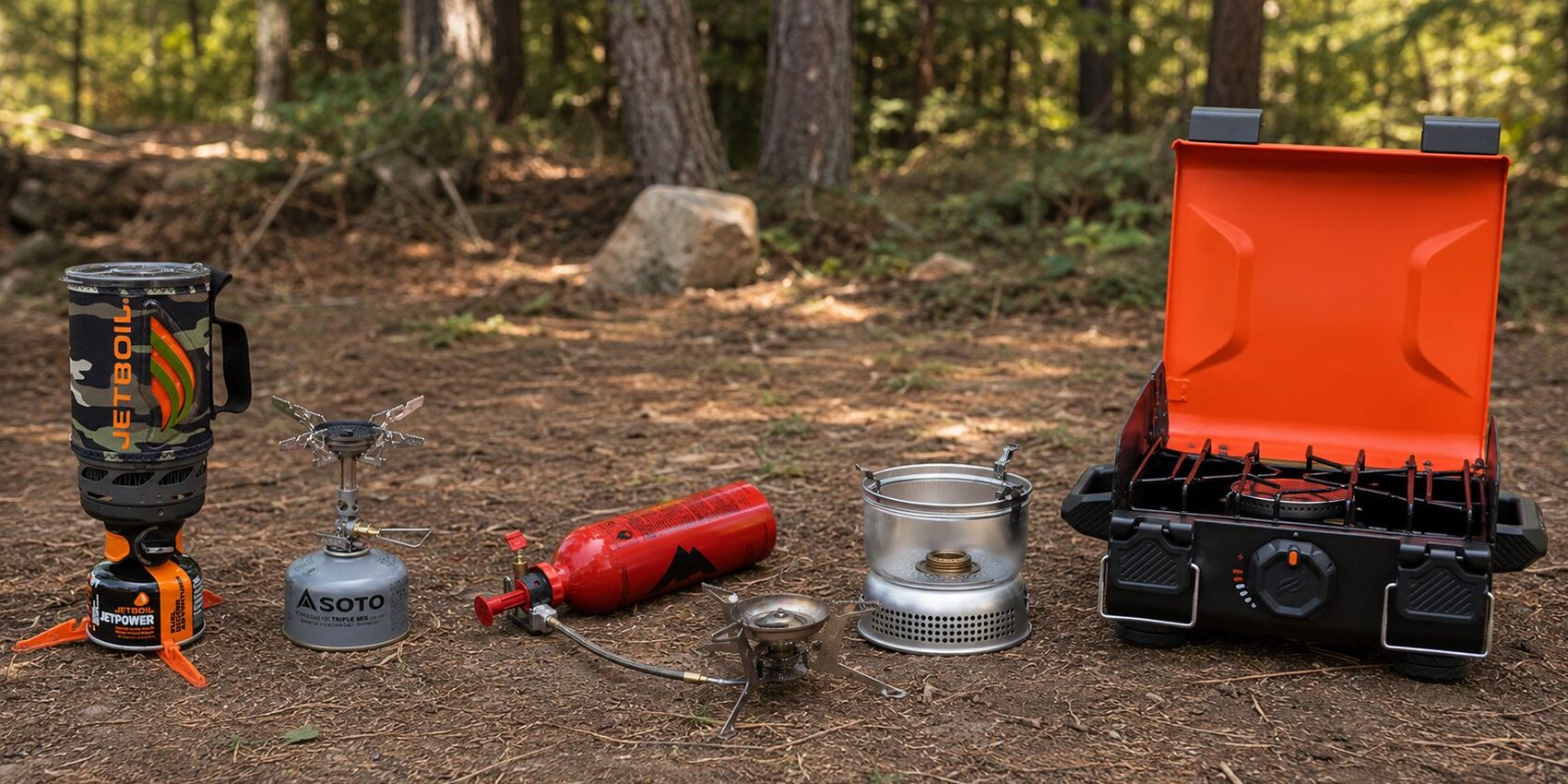
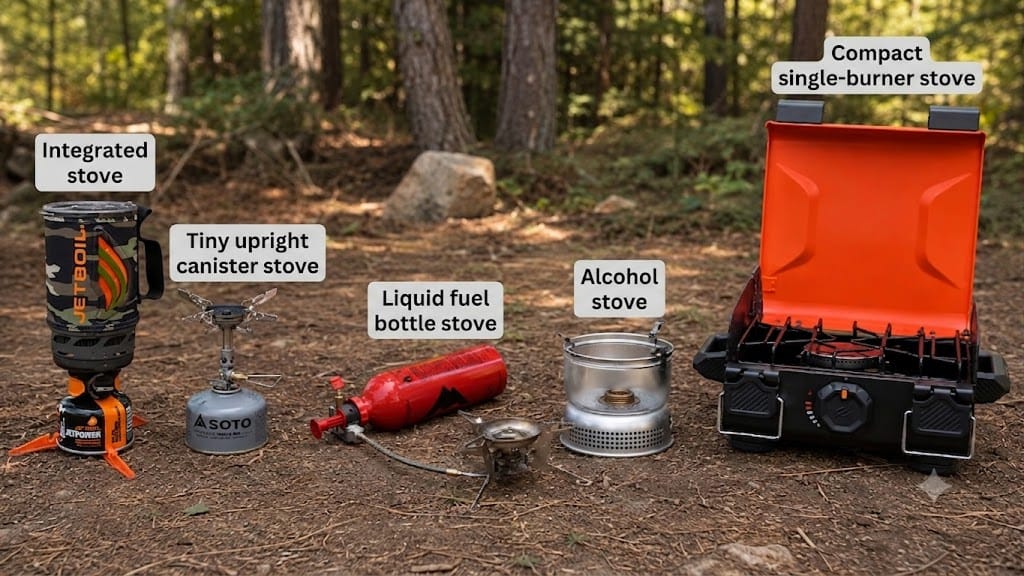
The main backpacking stove types are canister stoves, integrated canister systems, remote canister stoves, liquid fuel stoves, alcohol stoves, solid fuel stoves, and wood-burning stoves. Burner count is a separate decision: the small cartridge-style canister stoves many backpackers use are usually compact single-burner backpacking stoves, while two-burner camp stoves usually fit car camping, base camps, vehicle-supported trips, and some group cooking.
The best stove type depends on what you cook, how many people you feed, expected temperatures, fuel availability, fire restrictions, pot stability, and whether you need simmer control or just boiled water.
The REI backpacking stove guide is the primary source for the stove categories and their tradeoffs. For safety, treat fire rules as local and current. The National Park Service includes fire as part of the Ten Essentials, but land managers decide what stove and flame types are allowed in specific areas.
The Main Backpacking Stove Types
| Stove type | Fuel | Best for | Watch out for |
|---|---|---|---|
| Upright canister stove | Isobutane-propane canister | Beginner backpacking, solo meals, simple boiling | Pot stability, cold performance, and fuel-canister waste |
| Integrated canister system | Isobutane-propane canister | Fast, efficient water boiling | Less flexible for real cooking and simmering |
| Remote canister stove | Isobutane-propane canister with hose | Wider pot support, some cold-weather setups | More parts and usually more weight |
| Liquid fuel stove | White gas or multi-fuel options | Winter, groups, international trips | Priming, maintenance, spills, and weight |
| Alcohol stove | Denatured alcohol or similar fuel | Minimalist fair-weather trips where allowed | Slow boil times, wind sensitivity, fire restrictions |
| Solid fuel stove | Fuel tablets | Emergency or very minimal cooking | Odor, residue, slower performance, limited control |
| Wood-burning stove | Small twigs and biomass | Fuel-free carry where fires are allowed | Fire bans, wet fuel, soot, and Leave No Trace concerns |
Burner count is not the same as stove type. A tiny upright canister stove that screws onto a fuel cartridge is a single-burner backpacking stove. So are many remote canister, liquid-fuel, alcohol, and solid-fuel setups. That is different from a larger tabletop single-burner camp stove. A two-burner stove is usually a larger camp-stove format, even when it uses propane or canister fuel.
If this is your first backpacking stove, start with an upright canister stove unless your trip clearly points elsewhere. It is the easiest category to use, light, compact, and widely supported by backpacking cookware.
Backpacking Stove Types Compared
| Factor | Canister | Liquid fuel | Alcohol or solid fuel | Wood |
|---|---|---|---|---|
| Beginner ease | High | Moderate to low | Moderate | Moderate |
| Weight | Low to moderate | Higher | Very low stove weight | Low stove weight, no carried fuel |
| Simmer control | Good on many models | Good on many models | Limited | Limited |
| Cold-weather performance | Mixed; better with regulated or remote setups | Strong | Weak to mixed | Depends on dry fuel and conditions |
| Group cooking | Best with stable setups | Strong | Poor to limited | Limited |
| Fuel availability | Good in many outdoor stores | Good for some routes, strong internationally with multi-fuel stoves | Varies | Depends on legal and dry local fuel |
| Fire restriction risk | Usually better than open-flame alternatives, but check rules | Usually good where stoves are allowed | Often restricted in burn bans | Often restricted in burn bans |
Stove weight is only one part of the decision. Fuel weight, fuel efficiency, pot compatibility, wind performance, and trip length all affect the real carry.
Which Stove Type Is Best for Beginners?
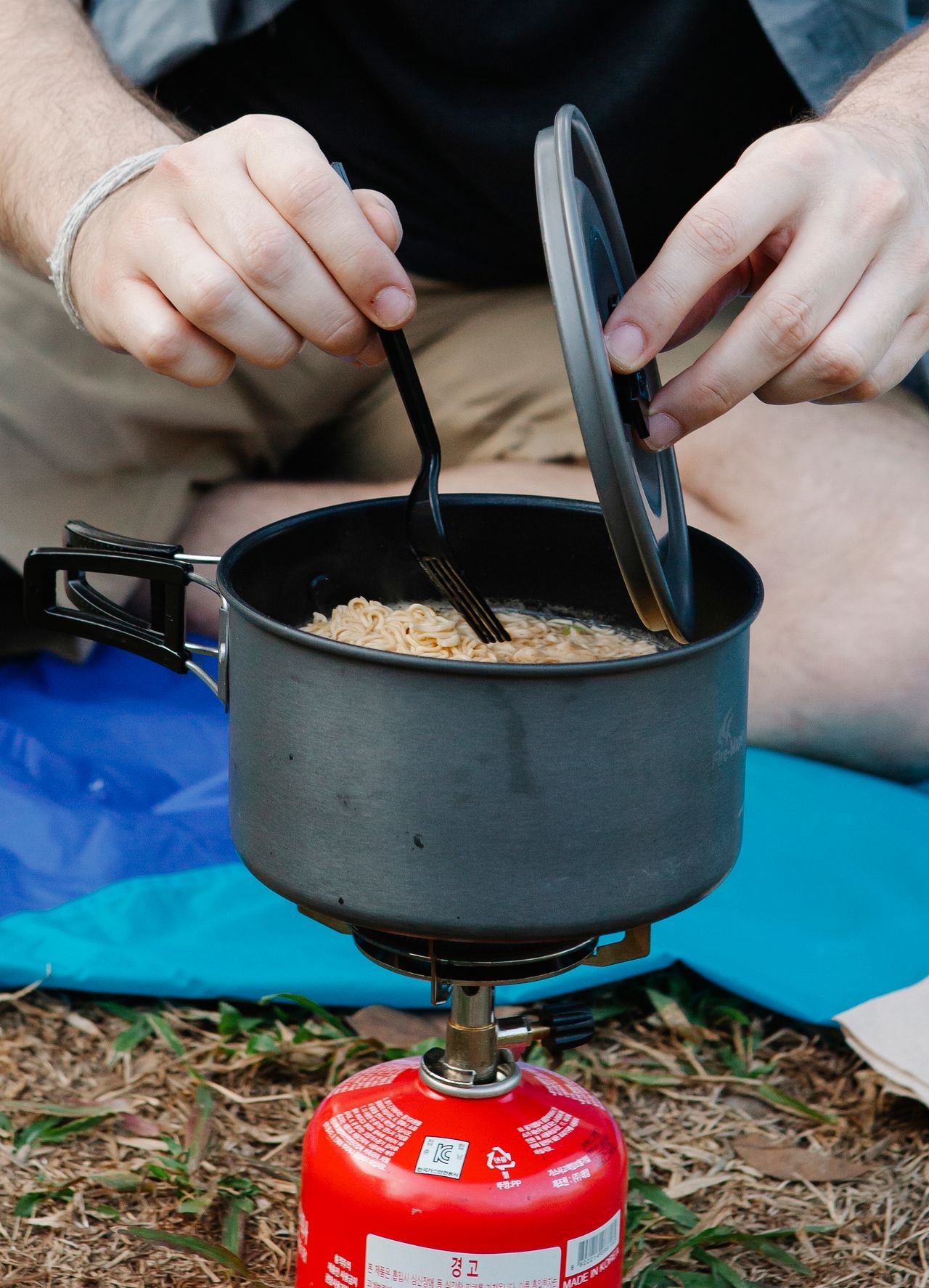
For most beginners, an upright canister stove is the best starting point. It screws onto a fuel canister, lights easily, simmers on many models, and does not require priming.
Integrated canister systems can also be beginner-friendly if your meals are mostly freeze-dried dinners, coffee, and oatmeal. They boil water quickly and efficiently. They are less ideal if you want to cook in a wider pot, simmer sauces, or feed a group from one stove.
| Trip scenario | Best starting type | Why |
|---|---|---|
| Solo weekend backpacking | Upright canister | Simple, light, compact, easy to learn |
| Freeze-dried meals only | Integrated canister | Fast water boiling and fuel efficiency |
| Two to three people cooking meals | Remote canister or liquid fuel | Better stability and pot support |
| Winter backpacking | Liquid fuel or cold-capable remote canister | Better cold performance with the right setup |
| International travel | Multi-fuel liquid stove | Fuel availability can be broader |
| Fire-restriction areas | Check current local rules | Allowed stove types vary by place and date |
| Vehicle-supported base camp or group cooking | Two-burner camp stove | More cooking surface and independent burners when weight is less important |
Single-Burner vs Two-Burner Stoves
Compact single-burner backpacking stoves dominate backpacking because they are smaller, lighter, and easier to pack. This includes the small cartridge-style canister stoves many hikers screw directly onto a fuel canister. For most solo hikers, couples, and small backpacking groups that mostly boil water or cook one pot at a time, one compact burner is enough.
Two-burner stoves are real and important in the broader outdoor stove market, but they usually belong closer to car camping, base camps, paddling trips, overlanding, and group cooking. They let you run two pots or a pot and pan at once, but the extra burner, frame, fuel setup, and cookware space usually add bulk that normal backpackers do not want to carry.
| Burner setup | Best for | Watch out for |
|---|---|---|
| Tiny upright canister stove | Solo or two-person backpacking, boil-only meals, small pots | One pot at a time; large pans can be unstable |
| Low-profile single-burner setup | Larger backpacking pots, some group meals, cold-capable remote canister or liquid fuel systems | More parts and weight than a tiny upright stove |
| Tabletop single-burner camp stove | Car camping, simple camp kitchens, vehicle-supported cooking | Usually bulkier than backpackers want to carry |
| Compact two-burner camp stove | Car camping, base camp, paddling or vehicle-supported trips, group meals | Usually too bulky or heavy for normal backpacking |
| Tabletop two-burner propane stove | Camp kitchens and family camping | Better treated as camping-stove gear, not a backpacking stove |
If you see a compact dual-burner stove marketed toward outdoor cooking, judge it by packed weight, packed size, fuel type, pot support, and whether your trip actually needs two active burners. For backpacking, two smaller single-burner setups can sometimes be more flexible than one large two-burner stove.
When Specialized Stove Types Make Sense
Liquid fuel stoves
Liquid fuel stoves make sense in cold weather, high-output cooking, longer trips, group cooking, and places where canisters are hard to find. They are powerful and refillable, but they take more skill. You may need to prime the stove, maintain it, and manage liquid fuel carefully.
Alcohol stoves
Alcohol stoves appeal to minimalists because the stove can be extremely light and simple. The tradeoff is slower cooking, limited control, wind sensitivity, and fire-rule concerns. They are not the best default for beginners who want reliable hot meals.
Solid fuel stoves
Solid fuel tablets can be compact and simple for emergency or minimalist use. They are usually not the most pleasant choice for everyday backpacking meals because they can smell, leave residue, and offer limited control.
Wood-burning stoves
Wood-burning stoves avoid carrying fuel, but they depend on dry legal fuel at camp. They can create soot, take more time, and may be banned during fire restrictions. They are a niche tool, not a universal lightweight answer.
Stove Type vs Cookware and Fuel Planning
Your stove and backpacking cookware need to work together. A tiny upright canister stove can feel unstable under a large pot. An integrated stove may lock into its own pot well but be awkward with other cookware. A remote canister stove gives a wider base and can work better with larger pots.
Wind matters too. REI warns against using a full windscreen around an on-canister stove because trapped heat can create a fuel-canister hazard. Remote canister and liquid fuel setups may allow safer wind protection, depending on design.
Fuel planning depends on meals, water temperature, wind, stove efficiency, group size, and trip length. A stove that looks heavier may carry less fuel over a longer trip if it is more efficient for your use case.
Fire Rules and Safety
Do not assume a stove is allowed because it is small. Fire restrictions vary by land manager, season, drought level, and stove design. Canister and liquid fuel stoves with shutoff valves are often treated differently from alcohol or wood stoves, but the exact rule is local.
Before a trip, check:
- Current fire restrictions for the exact area.
- Whether the stove needs an on/off valve.
- Whether alcohol, solid fuel, or wood stoves are prohibited.
- Whether open flames are banned.
- Whether campfires and wood collection are allowed.
Also avoid cooking inside a tent or enclosed shelter. Use a stable surface, protect the stove from tipping, and let hot parts cool before packing.
Build the menu first, then compare backpacking food options so boil count, cookware size, and fuel planning follow the meals you will actually carry.
FAQ
What are the different types of backpacking stoves?
The main types are upright canister stoves, integrated canister systems, remote canister stoves, liquid fuel stoves, alcohol stoves, solid fuel stoves, and wood-burning stoves. Each type uses different fuel and fits different trips.
What type of backpacking stove is best for beginners?
An upright canister stove is usually best for beginners because it is simple, compact, and easy to light. Integrated canister systems are also beginner-friendly when you mostly boil water for dehydrated meals.
Is a two-burner stove good for backpacking?
Usually not for normal backpacking. A two-burner stove can make sense for car camping, base camp, paddling, vehicle-supported trips, or group cooking where packed weight matters less. For most backpacking trips, a tiny upright canister stove or another compact single-burner backpacking stove is easier to carry.
Are alcohol stoves good for backpacking?
Alcohol stoves can be good for minimalist fair-weather trips where they are legal and the user understands their limits. They are slower, more wind-sensitive, and often less appropriate during fire restrictions.
Are wood-burning stoves allowed on backpacking trips?
Sometimes, but not always. Wood-burning stove rules depend on the land manager, current fire restrictions, and local conditions. Check the exact area before relying on a wood stove.
Are liquid fuel stoves better in winter?
Often, yes. Liquid fuel stoves are commonly used for winter and cold-weather trips because they can perform better in low temperatures and support snow melting. They are heavier and require more maintenance than canister stoves.
What is the difference between a canister stove and an integrated stove system?
An upright canister stove is a burner that screws onto a fuel canister and works with a separate pot. An integrated stove system connects the burner and pot into a more efficient boil-water setup, but it is usually less flexible for simmering and cooking.
Do backpacking stoves need special cookware?
Not always, but pot compatibility matters. Small upright stoves work best with appropriately sized lightweight pots. Integrated systems often use their own pot. Wider group pots may need a more stable remote canister or liquid fuel setup.
Related Guides
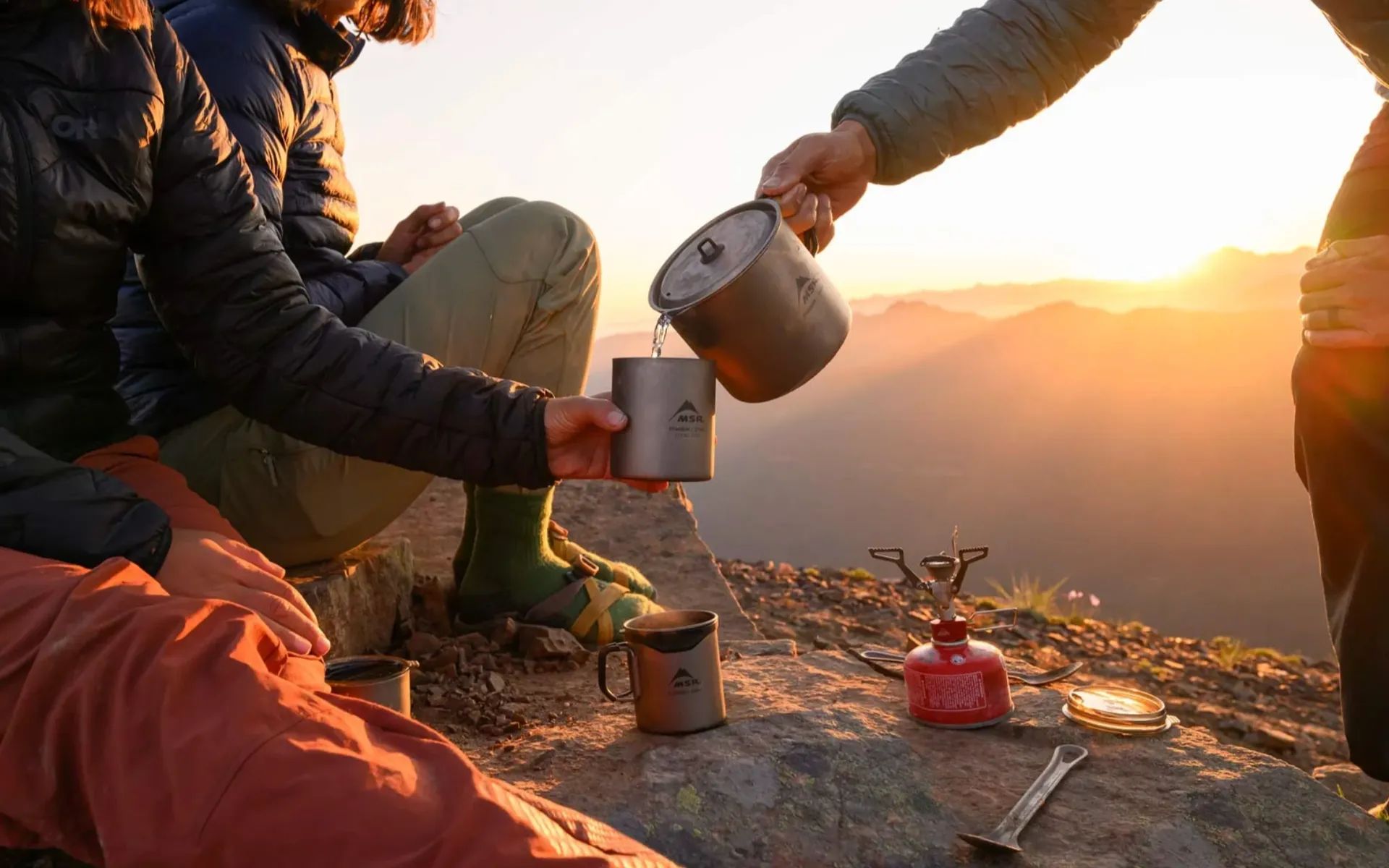
Best Backpacking Stoves
This guide compares the best backpacking stoves, highlighting their strengths and weaknesses to help you choose the right one for your outdoor adventures.
Best Backpacking Cookware
This guide compares the best backpacking cookware, highlighting top options for durability, portability, and performance to help you choose the right set for your outdoor adventures.
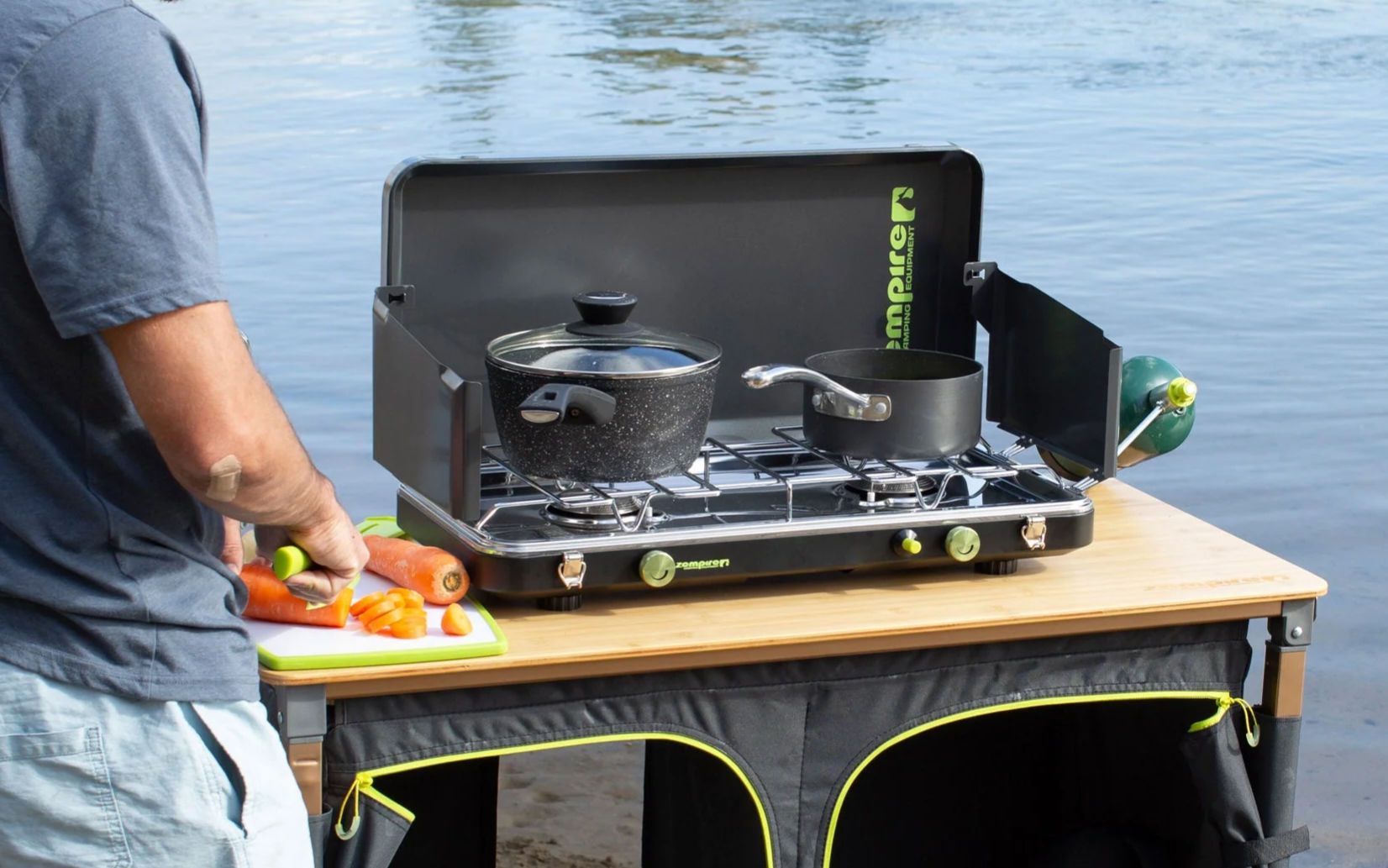
Best Portable Gas Stove For Camping
This guide compares the best camping stoves, highlighting their strengths and weaknesses to help you choose the right one for your outdoor adventures.
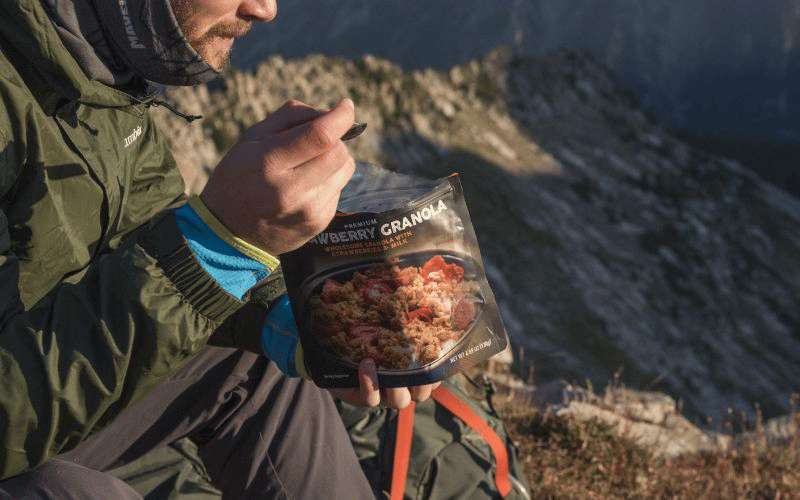
Best Backpacking Food
This guide compares top backpacking food options, highlighting taste, convenience, and nutrition to help you choose the best meals for your outdoor adventures.