
Dynastar M-Pro 85 vs Völkl Blaze 86
Why You Can Trust Us
- Side-by-side analysis based on real user feedback
- Unbiased comparisons, not influenced by partnerships
- Updated as new data becomes available
We may earn from affiliate links at no extra cost to you.
| M-Pro 85 | Blaze 86 | |
|---|---|---|
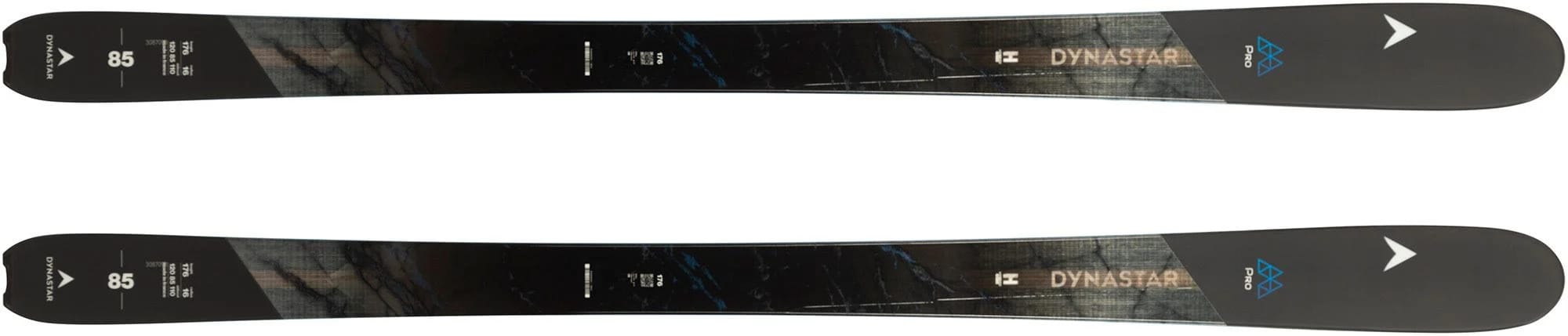 | 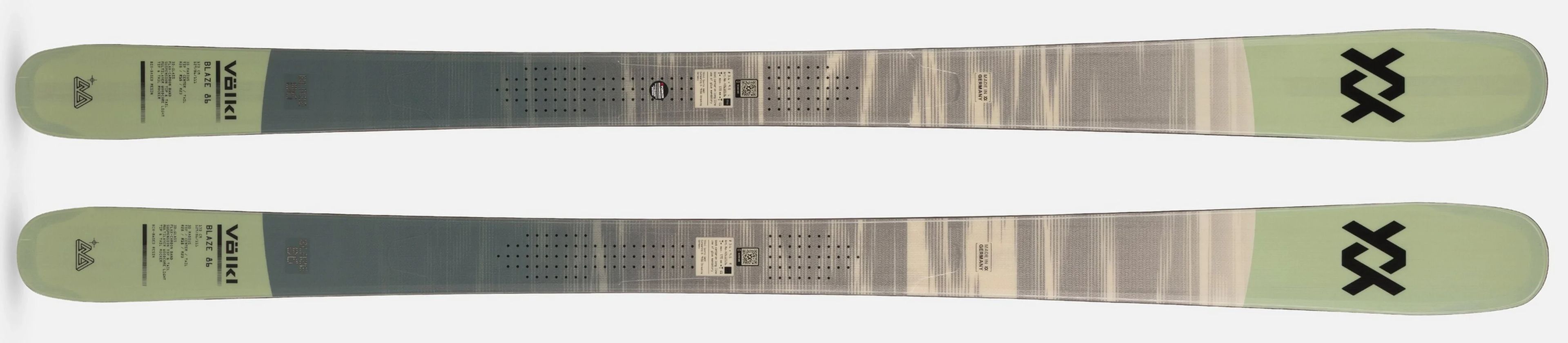 VS | |
| Waist Width | 85 mm | 86 mm |
| Turn Radius | 16 m at 176 cm (12-17 m by size) | 13 m center radius at 166 cm (3D Radius) |
| Rocker Profile | Directional tip and tail rocker, camber underfoot | Tip and tail rocker, camber underfoot |
| Included Binding | US sets include Look Xpress 11 GW (DIN 3.5-11) | Flat (no binding included) |
| Weight | 4.1 lb at 176 cm (retailer listing) | 3.2 lb per ski, no binding (166 cm) |
| Length Range | 158, 167, 176, 185 cm | 146, 152, 159, 166, 173, 180 cm |
| Warranty | 2 Years (Rossignol Group US policy) | 2 Years (Völkl limited) |
| Sidecut | 120-85-110 mm (176 cm) | 129-86-111 mm |
| Core Material | Hybrid Core: poplar + PU | Multilayer Woodcore Light (FSC wood) |
| Construction | Full sidewall with Rocket Frame Ti insert | Full ABS sidewall, flax-carbon and glass layers, no titanal |
| Ability Level | Intermediate to expert (Dynastar) | Intermediate (Amazon listing) |
| Dynastar M-Pro 85 | Völkl Blaze 86 |
|---|---|
| |
| Waist Width | |
85 mm | 86 mm |
| Turn Radius | |
16 m at 176 cm (12-17 m by size) | 13 m center radius at 166 cm (3D Radius) |
| Rocker Profile | |
Directional tip and tail rocker, camber underfoot | Tip and tail rocker, camber underfoot |
| Included Binding | |
US sets include Look Xpress 11 GW (DIN 3.5-11) | Flat (no binding included) |
| Weight | |
4.1 lb at 176 cm (retailer listing) | 3.2 lb per ski, no binding (166 cm) |
| Length Range | |
158, 167, 176, 185 cm | 146, 152, 159, 166, 173, 180 cm |
| Warranty | |
2 Years (Rossignol Group US policy) | 2 Years (Völkl limited) |
| Sidecut | |
120-85-110 mm (176 cm) | 129-86-111 mm |
| Core Material | |
Hybrid Core: poplar + PU | Multilayer Woodcore Light (FSC wood) |
| Construction | |
Full sidewall with Rocket Frame Ti insert | Full ABS sidewall, flax-carbon and glass layers, no titanal |
| Ability Level | |
Intermediate to expert (Dynastar) | Intermediate (Amazon listing) |
Stability
M-Pro 85
Blaze 86
Stability determines how calmly a ski holds its line when speed picks up, the snow firms up or a turn runs longer than planned. The Blaze 86 is the stronger performer here, with buyers repeatedly saying it feels more stable at speed and gains greater stability and power from its flatter profile. Reviewers describe it as reliable on fast firm slopes and less damp and stable than mid-80s groomers, which is a meaningful edge for skiers who like to open up. The M-Pro 85 has a lively, light build that many buyers enjoy, but feedback is more cautious on this point. Its light construction is not made for very aggressive or high-speed skiing, and it gives up some dampness and stability compared with full-metal skis. For a buyer who mostly skis groomers at a measured pace, the gap may matter less, but anyone who wants to push speed on firm terrain should favor the Blaze 86.
Forgiveness
M-Pro 85
Blaze 86
Forgiveness describes how much a ski tolerates imperfect balance, late weight shifts and rough lines, which is central to any beginner-oriented choice. The M-Pro 85 earns positive comments for being available without demanding a lot of the skier and for its user-friendly tip shape. One buyer, however, found its stiff tail demanding and dependent on consistent skier input. The Blaze 86 has less feedback overall, but reviewers praise its flex as not too stiff, which supports a more tolerant feel while technique is still developing. Both skis are approachable, and the feedback is limited on both sides. The evidence leans toward the Blaze 86 being easier to live with when skills are still settling, while the M-Pro 85 rewards a centered stance and a willingness to work the tail.
Ease Of Use
M-Pro 85
Blaze 86
Ease of use is where most buyers decide whether a ski feels like an extension of their legs or a chore to turn, and it matters most for skiers still building confidence. The Blaze 86 leads here, with reviewers describing it as easy to shorten and turn, super maneuverable and intuitive to initiate without thinking hard. Buyers also note easy steering in deeper snow and high mobility in trees, which broadens its appeal. The M-Pro 85 is praised for quick, agile handling, turning around on a dime with a short radius and coming across the fall line easily thanks to its progressive tip rocker. Some comments add that its responsive feel rewards centered, balanced input rather than a passive stance. Both skis are easy to turn, but the Blaze 86 is the more relaxed choice for a beginner who wants low effort in every turn shape.
Edge Grip
M-Pro 85
Blaze 86
Edge grip determines how confidently a ski bites on groomed snow and holds a carved arc, which is a skill most beginners eventually want to develop. The M-Pro 85 has the stronger reputation here. Buyers say it carves short 16 meter arcs cleanly, holds very well on edge even without metal, and gets great grip from the tail during carving turns, with camber underfoot credited for the hold. The Blaze 86 earns positive but limited feedback, with reviewers noting decent grip on firmer snow and a longer effective edge once the ski is carved into a turn. Because the Blaze 86 has far fewer comments, its edge performance is less certain than the M-Pro 85's. Buyers who plan to carve tight turns on groomers should lean toward the M-Pro 85, while those who spend most of their time off-piste will care less about this category.
Smoothness
M-Pro 85
Blaze 86
Smoothness affects fatigue and comfort over a full day, especially on chopped or firm snow where vibration can make a ski feel harsh. The M-Pro 85 is the clear leader, with buyers describing a quiet, damped ride and crediting polyurethane in the Hybrid Core and sidewalls with taking the buzz out of the snow. A few reviewers say it is smoother than higher-end metal skis. The Blaze 86 feedback is split. Some reviewers report a vibration-y feel and chatter from the lighter tips on pure ice, while others point to suspension in the tips and tails that reduces vibration and gives a smooth ride. Buyers who ski a lot of variable or icy snow will likely appreciate the M-Pro 85 more, and anyone sensitive to buzz through the boots should weight this category heavily.
Versatility
M-Pro 85
Blaze 86
Versatility matters because most beginners and intermediates want one ski that can handle groomers, soft snow, bumps and occasional trees without a second pair. The Blaze 86 is the broader option. Reviewers describe it as extremely versatile across all-mountain, resort and light touring use, and praise its strength in bumps, trees and soft snow. Its flatter profile makes different turn shapes easier, and buyers note it works with a wide range of boots and bindings from tech pin to alpine. Some feel it is not ideal for all-day touring and a little heavy. The M-Pro 85 also performs well across conditions. Reviewers say it handles snow, moguls, trees and changing conditions, performs better than expected in soft snow and offers good off-piste performance from its rocket tip. Comments also note it has less float than some wider skis, and off-trail trees and variable snow require actively unweighting the tail. The Blaze 86 offers the wider range, while the M-Pro 85 is the more on-trail friendly choice that still handles off-piste well.
Trust & Transparency
- Data-driven rankings from real user reviews
- Affiliate partnerships don't influence our methodology
We may earn commission from links.
Conclusion & Final Verdict:
Choose the Blaze 86 if you want the easiest turning, more stability at speed and the widest range of uses, from resort cruising to bumps, trees and light touring. It is the stronger all-round pick for a beginner who expects to progress quickly.
Choose the M-Pro 85 if you want better edge hold on groomers, a smoother and quieter ride, and an included binding in US sets. It is the better fit for someone who wants to learn clean carving on firm snow and does not plan to push at high speed.
Related Comparisons
Blizzard Black Pearl 88vsVölkl Blaze 86
The Black Pearl 88 is the smoother, more damped and stable choice that can grow with you into off-piste and firm terrain, while the Blaze 86 is the quicker, lighter, more maneuverable pick for turning easily in trees and soft snow. Choose the Black Pearl 88 for steadier speed and a calmer ride, and the Blaze 86 if nimble turn shaping matters most.
Dynastar M-Pro 85vsK2 Blur 79
The Dynastar M-Pro 85 is the livelier, better-edging choice for beginners who want quick turn entry, clean short carves and a smooth, quiet ride. The K2 Blur 79 suits learners who put a higher priority on a steadier, more supportive feel while they build confidence.
Dynastar M-Pro 85vsLINE Pandora 92
The Dynastar M-Pro 85 is the better pick for intermediate skiers who want a quieter, more precise carver with stronger edge grip. The LINE Pandora 92 suits beginners and anyone who wants an easy, forgiving ski that handles soft snow, variable terrain and park use.
Dynastar M-Pro 85vsRossignol Arcade 84
The Dynastar M-Pro 85 is the easier, lighter pick for beginners and intermediates who want quick turn entry and a versatile all-rounder. The Rossignol Arcade 84 is a smoother, more planted front-side carver for skiers ready to push speed, but it is less forgiving for newcomers.
Dynastar M-Pro 85vsSalomon Stance 80
The Stance 80 is the easier and more forgiving choice for a true beginner, with a softer tip, a lower ability ceiling and a longer warranty. The M-Pro 85 suits intermediates who want a wider, smoother and more lively ski that can handle a wider range of snow.
Dynastar M-Pro 85vsVölkl Blaze 82
The Blaze 82 is the better fit for a developing skier who wants forgiveness, a friendly feel and stability at speed. The M-Pro 85 suits skiers who want firmer edge grip and a smoother, quieter ride across varied snow.