
Gregory Nano 18 H2O vs Osprey Manta 34
Why You Can Trust Us
- Side-by-side analysis based on real user feedback
- Unbiased comparisons, not influenced by partnerships
- Updated as new data becomes available
We may earn from affiliate links at no extra cost to you.
| Gregory Nano 18 H2O | Osprey Manta 34 | |
|---|---|---|
 |  VS | |
| Capacity | 1098 cu in | 2074 cu in |
| Weight | 1.18 lb | 3.13 lb |
| Hip Belt | Removable webbing | Hipbelt included |
| Hydration Sleeve | Hydration sleeve | Hydration sleeve |
| Bladder Capacity | 101.4 fl oz | 84.5 fl oz |
| Warranty | Lifetime | Lifetime |
| Compression Strap | N/A | Side compression straps |
| Mesh Back Panel | Mesh backpanel | Mesh backpanel |
| Sternum Strap | Sternum strap | Sternum strap |
| Rain Cover | N/A | Included |
| Frame Sheet | Frameless | N/A |
| Side Pockets | Mesh side pockets | Side pockets |
| Trekking Pole Attachment | N/A | Pole attachment |
| Gregory Nano 18 H2O | Osprey Manta 34 |
|---|---|
| |
| Capacity | |
1098 cu in | 2074 cu in |
| Weight | |
1.18 lb | 3.13 lb |
| Hip Belt | |
Removable webbing | Hipbelt included |
| Hydration Sleeve | |
Hydration sleeve | Hydration sleeve |
| Bladder Capacity | |
101.4 fl oz | 84.5 fl oz |
| Warranty | |
Lifetime | Lifetime |
| Compression Strap | |
N/A | Side compression straps |
| Mesh Back Panel | |
Mesh backpanel | Mesh backpanel |
| Sternum Strap | |
Sternum strap | Sternum strap |
| Rain Cover | |
N/A | Included |
| Frame Sheet | |
Frameless | N/A |
| Side Pockets | |
Mesh side pockets | Side pockets |
| Trekking Pole Attachment | |
N/A | Pole attachment |
Comfort
Gregory Nano 18 H2O
Osprey Manta 34
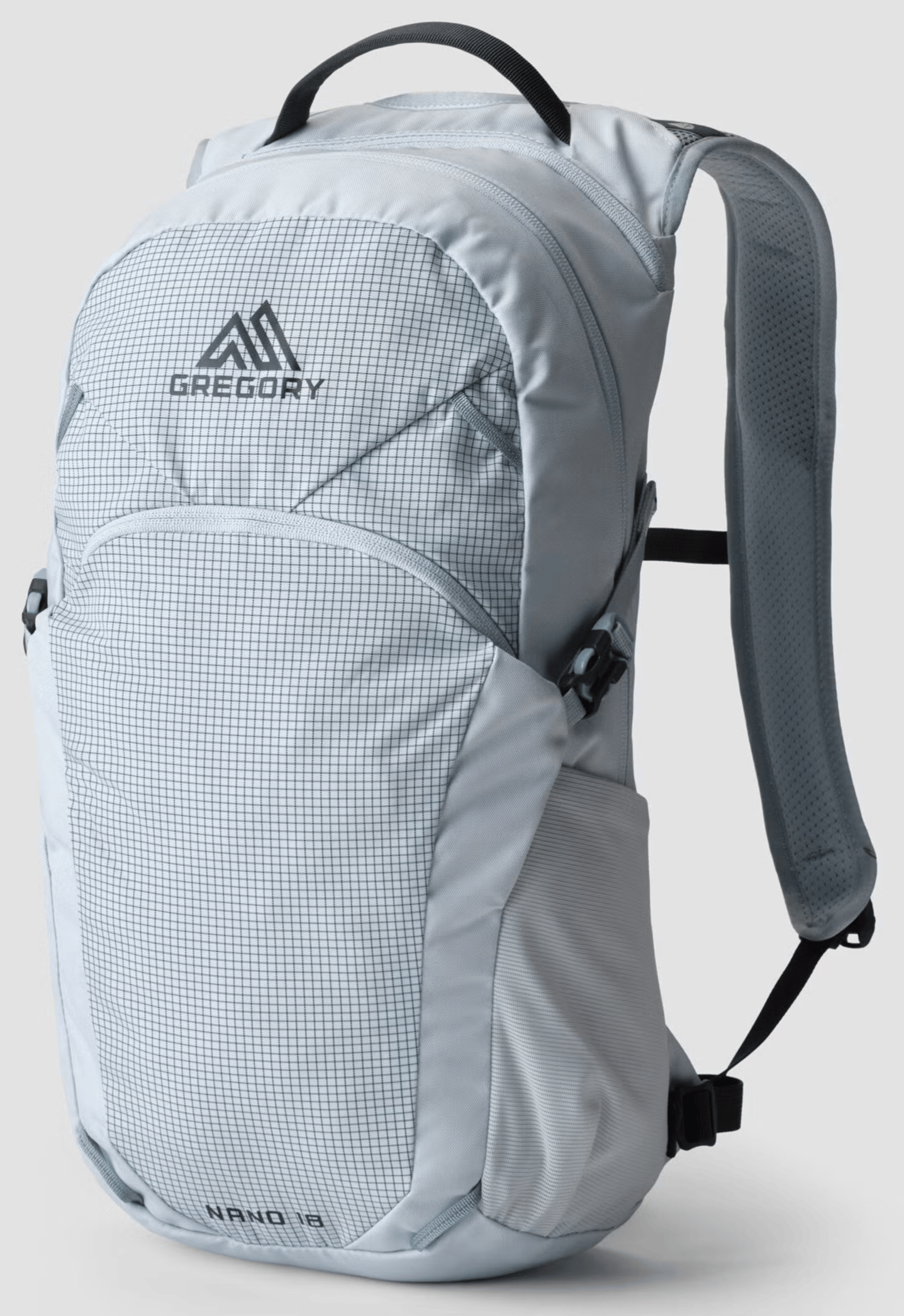
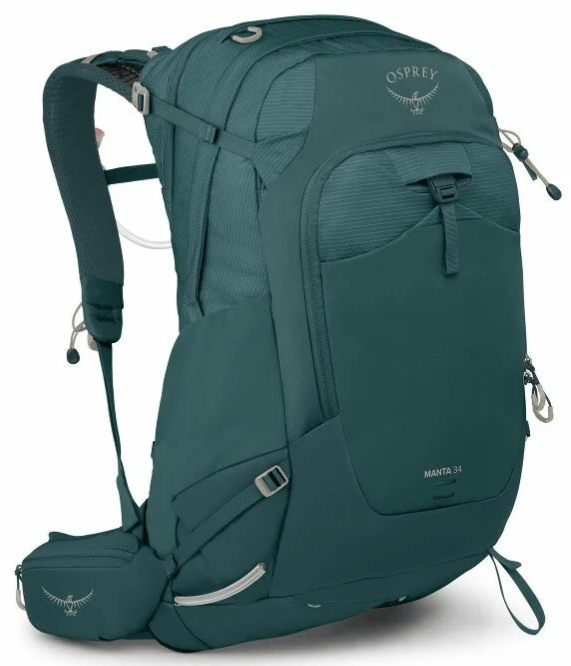
Comfort is the foundation of any successful hike, determining whether you can enjoy the trail or spend the day fighting fatigue and chafing. For hydration packs, this means finding a balance between soft padding, adjustable fit systems, and materials that move with your body. The Gregory Nano 18 H2O achieves a 4.8/5 rating by utilizing plus-size straps, a supportive waist belt, and stability foam that distributes load evenly, ensuring a pleasant fit even during extended wear. The Osprey Manta 34 follows closely with a 4.7/5 rating, leveraging its AirScape back panel and tensioned mesh to create a gap that prevents heat buildup while providing thick, supportive straps and a hip-hugging belt. While the Gregory edges out slightly in raw comfort scores due to its lightweight, soft feel, the Osprey's adjustable suspension system offers a more customizable fit for varied body types, making this category a practical tie for most users.
Durability
Gregory Nano 18 H2O
Osprey Manta 34
Durability ensures your pack survives the abrasion of rocks, the stress of heavy loads, and the elements over years of use. Buyers look for high-quality zippers, reinforced stitching, and materials that resist fraying or tearing under pressure. The Osprey Manta 34 takes the lead here with a 4.8/5 rating, praised for its beefed-up construction, heavy-duty mesh, and the brand's renowned All Mighty Guarantee that promises repair or replacement. The Gregory Nano 18 H2O scores a solid 4.6/5, utilizing high-quality GRS recycled materials and sturdy buckles that handle wear and tear well, though it lacks the same level of heavy-duty reinforcement found in the Osprey. For hikers tackling rough, technical environments or carrying heavy loads, the Osprey's robust build and warranty provide a clear advantage in long-term reliability.
Ventilation
Gregory Nano 18 H2O
Osprey Manta 34
Effective ventilation is critical for preventing a sweaty back and maintaining body temperature during strenuous climbs or hot days. This category evaluates how well a pack's design allows air to circulate between the pack and the wearer's skin. Both packs excel in this area, earning near-identical scores of 4.8/5 for the Gregory and 4.7/5 for the Osprey. The Gregory utilizes a die-cut back panel and mesh straps that create channels for airflow, keeping the back cool and dry. Similarly, the Osprey employs its AirScape system and tensioned mesh to maintain a space between the pack and the body, significantly reducing moisture buildup. Since both designs effectively manage heat and moisture through advanced mesh technologies, neither holds a decisive advantage, resulting in a tie for hikers prioritizing breathability.
Accessibility
Gregory Nano 18 H2O
Osprey Manta 34
Accessibility determines how easily you can reach water, snacks, and gear without stopping or removing your pack. High scores in this category reflect thoughtful pocket placement, intuitive zipper pulls, and features like magnetic closures or quick-access sleeves. Both the Gregory Nano 18 H2O and the Osprey Manta 34 achieve a perfect 4.8/5 rating, demonstrating exceptional user-friendly designs. The Gregory offers convenient pole pockets, water bottle access, and a quick-disconnect hose system that allows for easy refills on the go. The Osprey matches this with an external cargo area, hip belt pockets, a Stow-on-the-Go trekking pole system, and a magnetic sternum strap for rapid adjustments. With both packs offering extensive, well-placed access points for essentials, the choice here depends on specific feature preferences rather than overall performance, making it a tie.
Stability
Gregory Nano 18 H2O
Osprey Manta 34
Stability is crucial for maintaining balance and control, especially when navigating uneven terrain or carrying heavier loads. A stable pack stays close to the body, preventing sway and reducing the risk of injury or fatigue. The Osprey Manta 34 dominates this category with a 4.8/5 rating, utilizing a light wire frame, external compression straps, and load lifters that lock the pack firmly against the back. In comparison, the Gregory Nano 18 H2O scores 4.6/5, relying on a waist belt, sternum strap, and stability foam to keep the load centered, which works well for lighter loads but offers less rigid support than the Osprey. For technical hikes or when carrying extra gear, the Osprey's superior frame and compression system provide a noticeably more secure and balanced experience.
Organization
Gregory Nano 18 H2O
Osprey Manta 34
Organization refers to the variety and utility of pockets, compartments, and attachment points available for storing gear. A well-organized pack allows hikers to separate wet items, secure tools, and access small essentials without rummaging through the main compartment. The Osprey Manta 34 is the clear winner with a 4.9/5 rating, featuring a massive main compartment, dedicated hydration sleeve, hip belt pockets, and numerous external attachment points for poles and ice axes. The Gregory Nano 18 H2O scores a respectable 4.7/5 but is noted for having limited internal organization and fewer pockets, which can be a drawback for those carrying diverse gear. While the Gregory suffices for minimalist day hikes, the Osprey's extensive array of storage options makes it the superior choice for hikers who need to carry and organize a wide range of equipment.
Trust & Transparency
- Data-driven rankings from real user reviews
- Affiliate partnerships don't influence our methodology
We may earn commission from links.
Conclusion & Final Verdict:
The choice between the Gregory Nano 18 H2O and the Osprey Manta 34 ultimately depends on your hiking style and gear needs.
- Choose the Gregory Nano 18 H2O if: You prioritize ultralight speed and maximum breathability for long, fast day hikes. Its featherweight design (1.18 lb) and excellent ventilation make it perfect for runners or hikers who carry minimal gear and want to stay cool without the bulk of a frame.
- Choose the Osprey Manta 34 if: You need a robust, feature-rich pack for technical terrain or longer day hikes. With double the capacity, superior stability, an integrated rain cover, and extensive organization, it is the better tool for hikers carrying heavier loads or requiring reliable gear management on rugged trails.
While the Gregory wins on weight and bladder capacity, the Osprey dominates in durability, stability, and organization, making it the more versatile option for serious outdoor adventures.
Related Comparisons
Gregory Nano 18 H2OvsGregory Swift 16 H2O
The Gregory Nano 18 H2O dominates in comfort, ventilation, and stability with a lightweight, breathable design, while the Swift 16 H2O offers a roomier main compartment but falls short on durability and overall performance.
Gregory Nano 18 H2OvsNEMO Persist Men's 30L Endless Promise All-Adventure Backpack
The Gregory Nano 18 H2O dominates in comfort, ventilation, and stability with its lightweight mesh design, while the NEMO Persist 30L offers superior capacity and organization for longer adventures, though it trails in airflow and overall ratings.
Gregory Nano 18 H2OvsREI Co-op Traverse 35 Pack - Men's
The Gregory Nano 18 H2O excels in comfort, ventilation, and accessibility for day hikes, while the REI Co-op Traverse 35 Pack offers superior stability, organization, and capacity for longer treks.
Gregory Nano 18 H2OvsUnigear Hydration Pack Backpack with 70 oz 2L Water Bladder
The Gregory Nano 18 H2O excels in comfort and ventilation for long trails, while the Unigear Hydration Pack offers rugged durability and extensive organization at a budget-friendly price.
MARCHWAY Tactical Molle Hydration Pack Backpack with 3L TPU Water BladdervsGregory Nano 18 H2O
Compare the budget-friendly MARCHWAY Tactical Molle Pack with the premium Gregory Nano 18 H2O to find the perfect hydration solution for your next hike.
MARCHWAY Tactical Molle Hydration Pack Backpack with 3L TPU Water BladdervsOsprey Manta 34
Compare the budget-friendly MARCHWAY Tactical Molle Pack with the premium Osprey Manta 34 to find the best hydration solution for your hiking style.