
Jones Mountain Twin vs CAPiTA Mercury
Why You Can Trust Us
- Side-by-side analysis based on real user feedback
- Unbiased comparisons, not influenced by partnerships
- Updated as new data becomes available
We may earn from affiliate links at no extra cost to you.
| Mountain Twin | Mercury | |
|---|---|---|
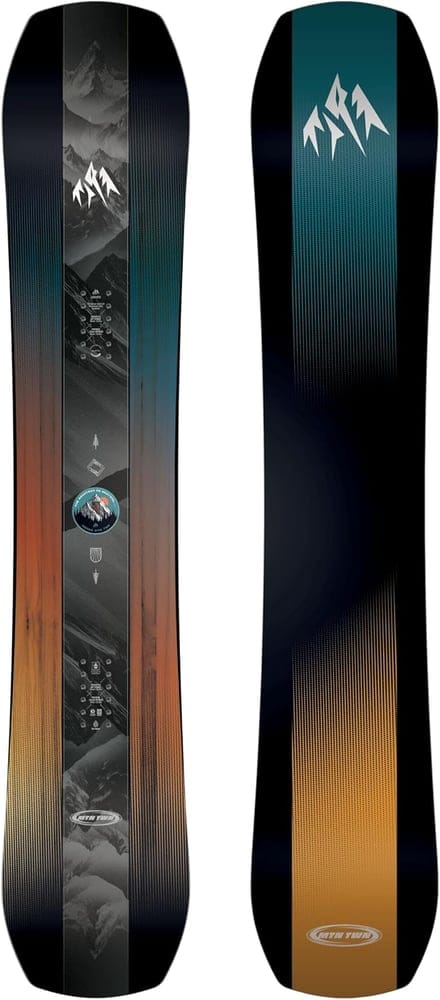 | 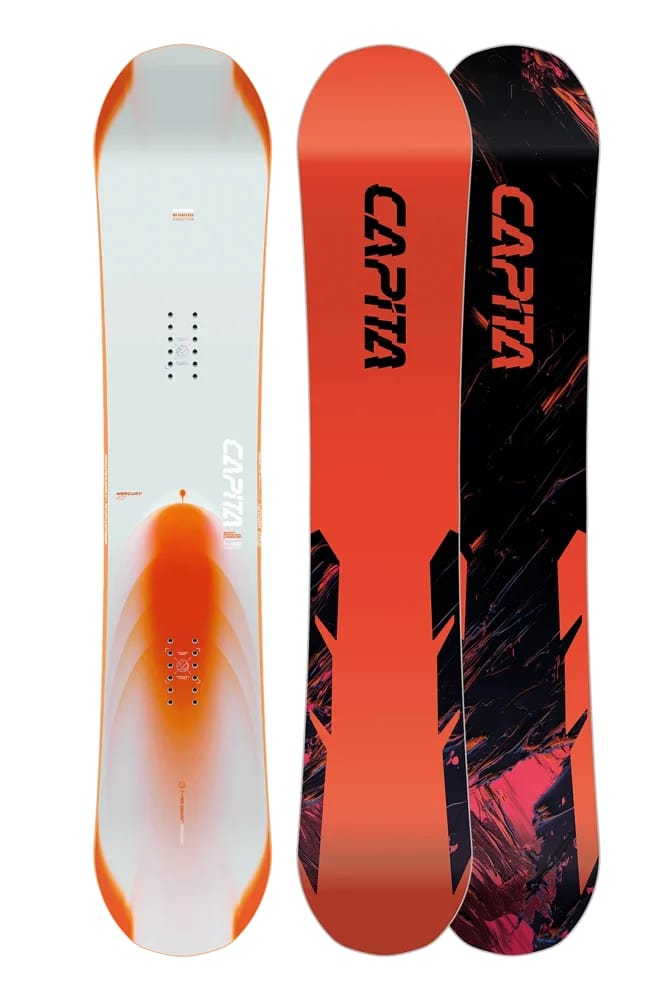 VS | |
| Camber Profile | CamRock | RESORT V2 |
| Flex | 6/10 | 6.5 |
| Shape | Directional Twin | Directional |
| Waist Width | 244 mm to 282 mm | 147: 249 mm |
| Ability Level | Intermediate | Intermediate to Advanced |
| Size Range | 149 to 168W | 147 to 162W |
| Warranty | 2 Years + 1 Free Year Extension | 2 Years |
| Sidecut Radius | 7.2–8.5 m | 147: 7.15 m |
| Rider Weight | 110 to 220+ lb | 80 to 220 lb |
| Stance | Reference 20.5–22.8 in; centered (0 setback) | 20 in to 23 in |
| Base | Sintered 8000 Base | HYPERDRIVE™ Base (sintered polyethylene) |
| Core And Laminates | Master Core; Biax Fiberglass; BComp Carbon Flax Stringer | Core: HOVER CORE™; Laminates: HOLYSHEET™ Tri/Bi fiberglass with MAGIC BEAN™ resin |
| Inserts | Freeride/Freestyle Pack | 2 × 4 |
| Jones Mountain Twin | CAPiTA Mercury |
|---|---|
| |
| Camber Profile | |
CamRock | RESORT V2 |
| Flex | |
6/10 | 6.5 |
| Shape | |
Directional Twin | Directional |
| Waist Width | |
244 mm to 282 mm | 147: 249 mm |
| Ability Level | |
Intermediate | Intermediate to Advanced |
| Size Range | |
149 to 168W | 147 to 162W |
| Warranty | |
2 Years + 1 Free Year Extension | 2 Years |
| Sidecut Radius | |
7.2–8.5 m | 147: 7.15 m |
| Rider Weight | |
110 to 220+ lb | 80 to 220 lb |
| Stance | |
Reference 20.5–22.8 in; centered (0 setback) | 20 in to 23 in |
| Base | |
Sintered 8000 Base | HYPERDRIVE™ Base (sintered polyethylene) |
| Core And Laminates | |
Master Core; Biax Fiberglass; BComp Carbon Flax Stringer | Core: HOVER CORE™; Laminates: HOLYSHEET™ Tri/Bi fiberglass with MAGIC BEAN™ resin |
| Inserts | |
Freeride/Freestyle Pack | 2 × 4 |
Edge Control
Mountain Twin
Mercury
Edge control matters for all-mountain riders because it determines how confidently a board carves groomers, handles pitches, and holds on firm or icy snow. The Mountain Twin is the stronger carver, with reviewers repeatedly describing confident grip, quick and forgiving turn initiation, and strong arcing on groomers and steeper pitches. Its mellow disrupted side cut and added contact points along the edge are credited with good hold on icy days, and some riders say it dives in and out of turns with ease. The Mercury also carves well, with a progressive side cut and death grip edge hold that bite in deeper and firmer carves, and it turns easily across the mountain including in switch. However, several riders find it slower to initiate turns edge to edge, and a few report it washing out on the heel side in thick cement. Some Mountain Twin riders also note a slight slide-out at times. For buyers who prioritize quick, precise carving, the Mountain Twin is the clear pick, while the Mercury suits all-mountain carvers who value a firm, deep bite over fast direction changes.
Stability
Mountain Twin
Mercury
Stability matters because it keeps a board composed when you land jumps, ride through rough snow, or push speed on steeper terrain. The Mercury is the more stable board, with reviewers describing a confident, locked-in feel underfoot that holds across conditions and stays steady in the air. Riders say it stays predictable at speed, feels solid for almost any size feature, and does not feel hooky or twitchy at slower speeds. A few riders feel it could be even more planted when pushed hard. The Mountain Twin is planted on steeper pitches thanks to its camber profile and fairly stiff flex, but it is less steady in chunder and when landing or taking off in harder pack. For riders who regularly hit rough or firm terrain and want a board that stays locked in, the Mercury is the better choice. Buyers who mostly carve groomers and steeper pitches may find the Mountain Twin's stability more than adequate.
Smooth Ride
Mountain Twin
Mercury
Smooth ride determines how much a board jars you over bumps, chop, and chatter, which affects fatigue over a full day. The Mountain Twin is the smoother ride, with reviewers praising its forgiving rocker-camber profile, comfortable medium flex, and a feel that cradles the rider without bouncing. Many describe it as very smooth over bumps and consistent across almost every condition. It is not the most damping board in its class, however, and some riders feel chatter on edge at higher speeds. The Mercury is comfortable and stays composed over chop and uneven snow, and riders say it is less bucky and bouncy in messy conditions. Its reverse camber blend can feel loopy to some, and harder hits on the uphill side or nose chatter can come through. For a softer, more forgiving ride on varied terrain, the Mountain Twin is the better fit, while the Mercury delivers a firmer, more controlled feel that can handle chop with some resistance.
Speed
Mountain Twin
Mercury
Speed matters for riders who want to carry momentum across flats, traverses, and groomers, and to maintain pace into jumps. The Mercury is clearly faster, with a Hyperdrive sintered base and energetic flex that reviewers describe as holding speed on groomers, hardpack, and in chop, with buyers reporting that it stays fast all season. Riders say it feels good across a wide range of speeds and maintains its pace in the park. The Mountain Twin is no slouch, and reviewers say it holds speed better than some comparable boards and glides easily through traverses. Its base glide is not quite as fast as the best-in-class options, so riders focused purely on maximum pace on groomers will likely prefer the Mercury. The tradeoff is that the Mercury is less quick to initiate turns, so riders who prioritize pace over quick direction changes should choose it, while those who want speed with nimble turns may prefer the Mountain Twin.
Powder Float
Mountain Twin
Mercury
Powder float matters because it determines how close to the surface a board rides in soft snow and how easily it turns on deep days. The Mountain Twin is the stronger powder board, with reviewers saying the spoon contour and rocker tip and tail keep it near the surface, handle fresh snow well, and ride over bumps and powder-like terrain. Riders also get directional float when setting back, and the extra nose length helps it float. The Mercury also performs well in powder, with reviewers praising its reverse-blend elevated contact points, playful feel on deep days, and solid performance in deep cement. Its float is less pronounced in light, dry snow, where some riders find the setback makes directional float feel less noticeable. Comparing the two, the Mountain Twin has the edge for buyers who spend a lot of time in fresh snow, while the Mercury is a capable powder option for riders who mostly ride firmer or heavier conditions.
Park Play
Mountain Twin
Mercury
Park play matters for riders who spend time on jumps, rails, boxes, and butters, since pop, press control, and switch stability define how the board feels on features. The Mercury is a dedicated park board, with reviewers praising its easy pop, responsive butters, solid press and rail control, and strong performance into kickers and jibs. Riders report it spins well off rails, locks in on 50/50s, and feels confident on boxes and kickers. Switch riding is praised overall, though a few riders say the nose and tail feel odd when riding switch. The Mountain Twin is also very playful, with strong ollie pop, easy buttering, good takeoffs and landings on natural features, and switch riding that many riders call a highlight. Some riders find it a little loose in the park, so it suits intermediate to advanced freestyle riders. Both boards earn strong park ratings, so the choice comes down to whether you prefer the Mercury's dedicated freestyle focus or the Mountain Twin's playful all-mountain balance.
Trust & Transparency
- Data-driven rankings from real user reviews
- Affiliate partnerships don't influence our methodology
We may earn commission from links.
Conclusion & Final Verdict:
Choose the Jones Mountain Twin if you want a playful, forgiving board that carves with confidence, floats well in fresh snow, and has strong switch riding in the park. It is the better pick for intermediate to advanced riders who spend most of their time on groomers, pitches, and soft snow, and it comes with a longer warranty.
Choose the CAPiTA Mercury if you prioritize speed, stability, and a dedicated freestyle feel. It holds speed through chop and into jumps, stays locked in across conditions, and is a favorite for butters, presses, and jibbing. It suits riders who want a more planted, predictable board, but expect slower edge-to-edge turns.
Related Comparisons
CAPiTA MercuryvsLib Tech Skunk Ape Camber
The Lib Tech Skunk Ape Camber is the better pick for riders who spend most of their time carving firm groomers and icy runs, while the CAPiTA Mercury suits park-focused riders who want a playful, stable all-mountain board with a faster base.
CAPiTA MercuryvsNever Summer Infinity
The CAPiTA Mercury is the better choice for park riders and anyone who prioritizes pop, speed, and playful freestyle riding. The Never Summer Infinity suits carvers and mixed-terrain riders who want grounded stability, locked-in edge hold, and a smoother ride.
CAPiTA MercuryvsRIDE Warpig
The CAPiTA Mercury is the stronger pick for park riders and speed-focused all-mountain riders who want stability and pop, while the RIDE Warpig suits riders who want a tighter carving feel and more float for mixed snow days.
Jones Mountain TwinvsBataleon Whatever
Mountain Twin is the stronger pick for riders who want confident carving, grip on ice, and a playful park feel with good switch riding. Whatever suits buyers who prioritize easy buttering, soft-snow float, and a predictable flex, though its edge hold is less reliable.
Jones Mountain TwinvsCAPiTA D.O.A.
The Jones Mountain Twin is the better choice for riders who want confident carving, softer bump absorption, and better powder float, while the CAPiTA D.O.A. suits park-focused riders who prioritize jibbing, pop, and fast glide. Pick the Mountain Twin for all-mountain versatility and the D.O.A. for freestyle-first resort riding.
Jones Mountain TwinvsCAPiTA The Equalizer
The Jones Mountain Twin is the stronger all-mountain carver and powder pick, with firmer edge hold and a smoother, more forgiving ride for intermediate riders. The CAPiTA Equalizer suits advanced riders who want fast glide and a playful park feel.