
Nidecker Rift Pro vs Vans Hi-Standard OG
Why You Can Trust Us
- Side-by-side analysis based on real user feedback
- Unbiased comparisons, not influenced by partnerships
- Updated as new data becomes available
We may earn from affiliate links at no extra cost to you.
| Rift Pro | Hi-Standard OG | |
|---|---|---|
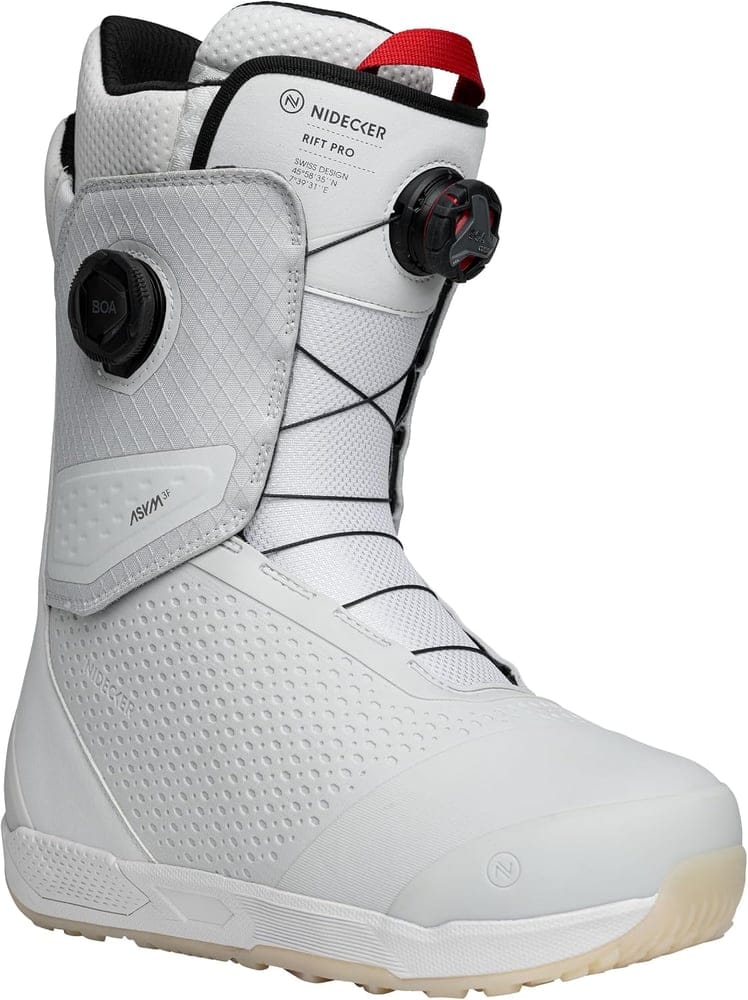 | 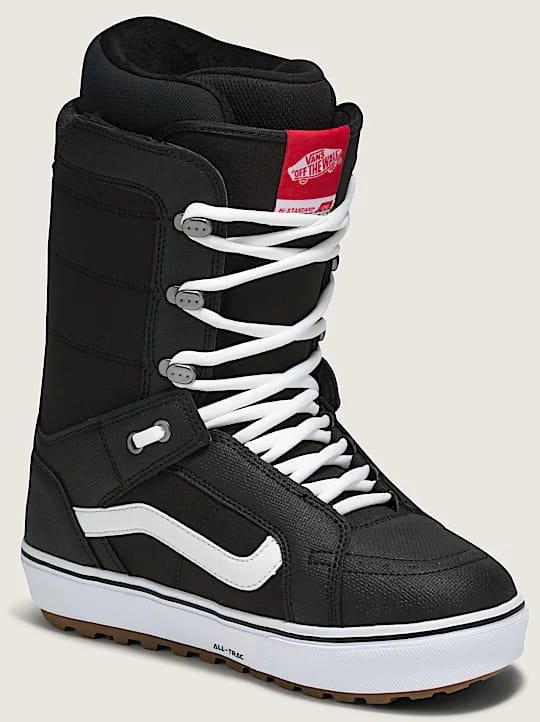 VS | |
| Flex | Mid-stiff (3/5) | Soft-medium (4-5/10) |
| Closure System | Dual BOA® Fit System with H5 Coiler™ dials | Traditional lace |
| Binding Compatibility | Standard strap bindings (Supermatic® compatible) | Standard strap bindings |
| Liner Type | Silver heat-moldable liner | V1 UltraCush™ Liner |
| Warranty | 1 Year | N/A |
| Footbed Type | 3D Pro insole | V1 PopCush™ Footbed |
| Outsole Type | Surface rubber outsole | V1 Waffle Lug with All-Trac cold weather rubber compound |
| Size Range | US Men's 7–13 | US Men's 7–13 |
| Nidecker Rift Pro | Vans Hi-Standard OG |
|---|---|
| |
| Flex | |
Mid-stiff (3/5) | Soft-medium (4-5/10) |
| Closure System | |
Dual BOA® Fit System with H5 Coiler™ dials | Traditional lace |
| Binding Compatibility | |
Standard strap bindings (Supermatic® compatible) | Standard strap bindings |
| Liner Type | |
Silver heat-moldable liner | V1 UltraCush™ Liner |
| Warranty | |
1 Year | N/A |
| Footbed Type | |
3D Pro insole | V1 PopCush™ Footbed |
| Outsole Type | |
Surface rubber outsole | V1 Waffle Lug with All-Trac cold weather rubber compound |
| Size Range | |
US Men's 7–13 | US Men's 7–13 |
Comfort
Rift Pro
Hi-Standard OG
Comfort matters in a boot because it determines whether you can stay on the mountain all day without hot spots, pinching or fatigue. Buyers of the Rift Pro often describe a liner and foam that feel good and do not pinch the sides, which is a real strength. However, some find the insole thin and soft, the forefoot can press on bunions or sensitive feet, the thick foam can dampen board feedback, and the boot can feel uncomfortable at first. The Hi-Standard OG earns the stronger comfort reputation, with buyers praising its cushioned, warm liner, fur-lined feel that helps the foot slide in, and a softer flex that is comfortable for beginners. Its drawbacks are a few seam irritations on the pinky toe and instep, some heel pressure from the J bar, and a liner that can run warm for some riders. Overall, the Hi-Standard OG is the more comfortable out-of-the-box choice, while the Rift Pro is comfortable once you accept a break-in period and a firmer feel.
Fit
Rift Pro
Hi-Standard OG
Fit determines heel hold, forefoot room and how much the boot moves on your foot, which affects both control and comfort. The Rift Pro uses dual BOA dials and a secure heel lockdown that many riders find easy to dial in, but its sizing is inconsistent: some find the toe box wide or the boot a touch big, while others report a loose forefoot or a heel that is too narrow. Buyers also mention a snug fit around the ankle and the option of a heat-moldable liner for extra room, but a thinner liner limits that molding. The Hi-Standard OG gets stronger fit feedback, with a pull-string harness that snugs the liner, traditional laces with an instep lockout that helps prevent heel lift, and a heat-moldable liner that many riders say creates a nice, secure fit. Some riders with longer toes find the neoprene toe pushes them forward, and the profile can look bulky. The Hi-Standard OG is the more reliable choice for a locked-in heel, while the Rift Pro can be excellent if it fits your foot but requires careful try-on checks.
Support
Rift Pro
Hi-Standard OG
Support affects how precisely a boot transmits your movements to the board and how stable your ankle and arch feel over long days. The Rift Pro has a medium-stiff, responsive flex and a supportive ankle strap that give confident control on all-mountain terrain. Some riders, however, find it stiff at first and feel the rigidity can limit ankle articulation, and a few say better boots exist for heel lift. The Hi-Standard OG has a supportive spine and a footbed that many buyers consider better than others at its price point, especially the removable insole in the newer version that supports the arch well. Its main weakness is that the stock footbed has no real posting, so the arch can collapse, and some riders recommend swapping in an aftermarket insole. The Rift Pro is the stronger choice for riders who want firm, stable support as-is, while the Hi-Standard OG needs an insole upgrade to match that stability.
Board Feel
Rift Pro
Hi-Standard OG
Board feel describes how directly you sense the snow and the board through the boot, which matters for carving precision and for riders who want to feel every turn. The Rift Pro is middle-of-the-road here: some buyers describe an isolated feel from underfoot through the binding, while others say it works well with most boards. Its stiffer, responsive flex is good for control but does not stand out for direct feedback. The Hi-Standard OG earns a stronger board feel reputation, with buyers praising its soft park flex, playful response and the way lacing options adjust the articulation. Its flexibility also benefits advanced freestyle riders who want range of motion. The tradeoff is that its softer flex gives less stability at speed on hard snow. For riders who prioritize feel and playfulness, the Hi-Standard OG is the better pick, while the Rift Pro suits those who want a steadier platform.
Traction
Rift Pro
Hi-Standard OG
Traction matters on icy resort runs, on hikes to a backcountry drop and on slippery wooden decks or wet pavement around lodges. Both boots perform well here, and buyers rate their outsoles similarly. The Rift Pro uses a rubber outsole with a grip pattern that many riders describe as dependable on snow and around resort terrain, and it is one of its more consistent selling points. The Hi-Standard OG uses a waffle-style outsole that buyers describe as grippy, prevents slipping and feels super grippy on the vulcanized rubber version. Its newer waffle tread has also been described as wearing aggressively on concrete, which can matter if you walk a lot on hard surfaces. Because both are strong and the feedback is encouraging but limited, neither boot has a clear edge, so choose based on whether you walk more on pavement or on snow.
Durability
Rift Pro
Hi-Standard OG
Durability decides how many seasons a boot will last before it breaks down, which matters for anyone who rides often or pays a premium for a boot. The Rift Pro earns its strongest reputation here, with buyers praising the TPU shell that resists breakdown, the double-stitched, abrasion-resistant seams and a tough toe area that holds up well over time. Many expect it to last several seasons and to outlast stiffer boots. Its weak points are that the dual-density foam can pack out over time and that toe nicks can wear the toe area faster than the rubber. The Hi-Standard OG gets a more mixed durability picture, with some buyers praising its reinforced stitching and durable lace hooks, while others report that the spine can crease under hard use, the foam packs out and the shell is less robust. For riders who want a boot to last multiple seasons, the Rift Pro is the clear choice, while the Hi-Standard OG is better suited to riders who replace boots more often.
Trust & Transparency
- Data-driven rankings from real user reviews
- Affiliate partnerships don't influence our methodology
We may earn commission from links.
Conclusion & Final Verdict:
Choose the Nidecker Rift Pro if you want a durable, supportive all-mountain boot that is built to last several seasons and comes with a one-year warranty. Its TPU shell, reinforced seams and firmer, responsive flex are its main strengths, but you should try it on carefully because sizing is inconsistent.
Choose the Vans Hi-Standard OG if you are a beginner or a park and freestyle rider who wants a comfortable, warm, playful boot that locks in the heel and feels good from the first run. Plan to add an aftermarket insole for arch support and expect it to show wear sooner than the Rift Pro.
Related Comparisons
Burton Ruler BOAvsVans Hi-Standard OG
The Burton Ruler BOA is the better choice for comfort, fit, support and board feel, thanks to its dual-zone BOA lacing and stiffer, connected ride. The Vans Hi-Standard OG suits beginners and park riders who want a softer, more forgiving flex and an easy break-in.
Nidecker Rift Provsthirtytwo Lashed
The Rift Pro is the better pick for riders who want a durable, all-mountain boot with strong traction and a longer expected life, while the Lashed suits anyone who prioritizes a dialed-in fit, cushier comfort and firmer support for bigger jumps.
Nidecker Rift ProvsUnion Reset Pro
Choose the Reset Pro if board feel and a close, low-profile connection to your binding matter most. Choose the Rift Pro if you want a more durable, supportive all-mountain boot with better grip, and you are willing to try it on because its fit is less predictable.
Nidecker Rift ProvsVans Infuse
The Nidecker Rift Pro suits riders who want a durable, comfortable boot with a medium-stiff feel and will accept a less direct board connection. The Vans Infuse is the better choice for riders who want a more responsive board feel, a more adaptable fit and stronger heel hold, and who don't mind replacing the liner sooner.
Nidecker Rift ProvsVans Luna Ventana Pro
The Luna Ventana Pro is the better all-round pick for riders who want out-of-the-box comfort, responsive board feel and strong grip. The Rift Pro suits buyers who prioritize a durable all-mountain boot with a one-year warranty and men's sizes up to 13.
RIDE Lasso ProvsNidecker Rift Pro
The RIDE Lasso Pro suits riders who want a locked-in heel, a rigid support spine and more direct board feel, while the Nidecker Rift Pro is the better choice for buyers who prioritize long-term durability and a more comfortable liner.