
Nitro Bianca TLS vs RIDE Hera
Why You Can Trust Us
- Side-by-side analysis based on real user feedback
- Unbiased comparisons, not influenced by partnerships
- Updated as new data becomes available
We may earn from affiliate links at no extra cost to you.
| Bianca TLS | Hera | |
|---|---|---|
 |  VS | |
| Flex | Medium (7/10 response) | Medium |
| Closure System | TLS+ speed lacing with internal liner lacing | BOA® Fit System (H5 dial) with BOA® Tongue Tied™ |
| Binding Compatibility | Standard strap bindings | Standard strap bindings |
| Liner Type | Cloud 10 liner | Removable Intuition™ Support Foam Liner |
| Warranty | 2 Years | 1 Year |
| Footbed Type | N/A | Impacto Ultra Insole (3D formed dual density) |
| Outsole Type | Vibram Outsole made of Icetrek Compound | Impact Rubber Cup Sole |
| Size Range | US Women's 5.5–11 (Mondo 23.0–28.5) | US Women's 5–11 |
| Nitro Bianca TLS | RIDE Hera |
|---|---|
| |
| Flex | |
Medium (7/10 response) | Medium |
| Closure System | |
TLS+ speed lacing with internal liner lacing | BOA® Fit System (H5 dial) with BOA® Tongue Tied™ |
| Binding Compatibility | |
Standard strap bindings | Standard strap bindings |
| Liner Type | |
Cloud 10 liner | Removable Intuition™ Support Foam Liner |
| Warranty | |
2 Years | 1 Year |
| Footbed Type | |
N/A | Impacto Ultra Insole (3D formed dual density) |
| Outsole Type | |
Vibram Outsole made of Icetrek Compound | Impact Rubber Cup Sole |
| Size Range | |
US Women's 5.5–11 (Mondo 23.0–28.5) | US Women's 5–11 |
Comfort
Bianca TLS
Hera
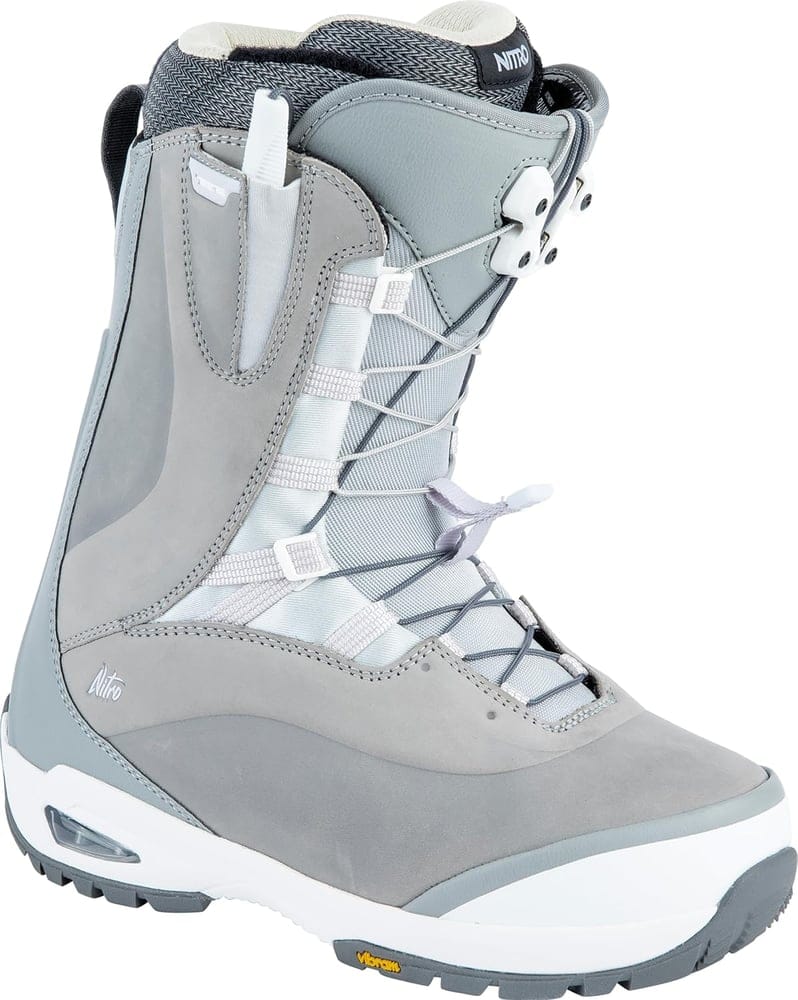
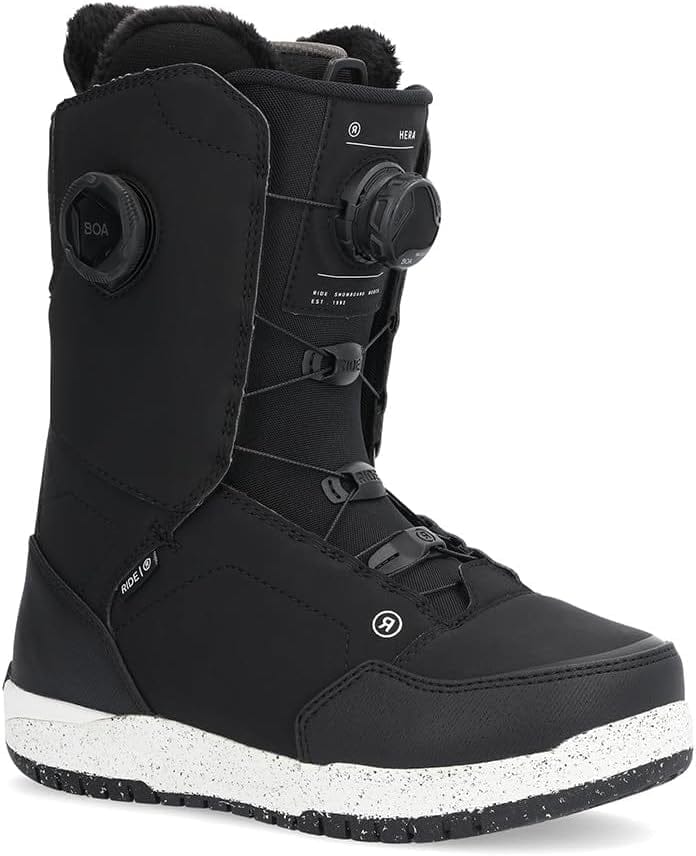
Comfort matters because a boot that chills or aches will ruin a long day on the mountain no matter how well it rides. The Bianca TLS earns the edge here with its Cloud liner, heel airbag, and D3O padding, which buyers say absorbs chatter and reduces foot fatigue. Therminator reflective lining is repeatedly praised for keeping feet warm, and the Ortholite footbed and flex mesh are credited with natural flex and no pressure points. Some riders report toe strap pressure over the foot and a welded seam under the strap. The Hera is also comfortable, with an Eco+ Slime midsole, Impacto Ultra insole, softer inner liner, and heat-reflective foil that buyers find cushy and warm. Its complaints center on toe strap pressure and a seam that can be felt inside the liner. For most buyers who put comfort first, the Bianca TLS is the stronger choice.
Fit
Bianca TLS
Hera
Fit matters because a boot that shifts at the heel causes blisters and reduces control. Both boots lock the heel well, but they do it differently. The Bianca TLS uses TLS plus zonal lacing and internal liner lacing to create a custom, heat-moldable fit that buyers describe as snug with no heel lift, and its removable power strap lets narrow calves and shins take up volume. Its drawbacks are a learning curve to dial in the TLS system and a fit that is not especially wide. The Hera counters with dual BOA dials, a tongue-tied system that pulls the tongue down and pushes the ankle into the heel pocket, and an adjustable calf system that suits bigger or athletic calves. Its main caution is a U-shaped J-bar that is not designed for very narrow heels, and buyers note that the lack of neoprene at the toes limits bulge and stretch. The Bianca suits riders who want fine-tuned adjustability, while the Hera is quicker to dial in and accommodates a wider range of calf sizes. Overall the fit categories are effectively even.
Support
Bianca TLS
Hera
Support matters for control on edge and for protection on landings and hard impacts. The Bianca TLS gets strong feedback for its 3D molded foam spine, ankle panels, multi-piece back spine, and C-bar wrap, which buyers say provide lateral stiffness and all-day hold. Its airbag heel adds protection on big jumps, although the ankle articulation is shallow and needs some break-in time. The Hera relies on vertical ankle articulation and a TPU rebound back spine that return energy when you drive into the heel, paired with focused heel lockdown from the tongue-tied system. That combination produces a steady, connected feel. Both boots score the same overall, so the choice depends on preference: the Bianca offers a firmer, more protective all-around platform, while the Hera emphasizes rebound and a direct heel connection.
Board Feel
Bianca TLS
Hera
Board feel matters because it determines how directly the boot transfers your leg input into the board. The Bianca TLS benefits from its auto power strap, which buyers say drives more force into toe-side and heel-side turns and gives a responsive, stiffer feel. The main drawback is that the sole can dampen very aggressively, so riders who want maximum feedback may need a lower-profile boot. The Hera's impact rubber cup sole and underfoot foam give good board feel while dampening vibration, and the boot reacts quickly from side to side. Its softer medium flex suits all-mountain riding but is not built for aggressive charging, which is reflected in its lower board feel score. The Bianca is the better choice for riders who want power transfer, while the Hera suits relaxed all-mountain riders who prefer a softer, quicker feel.
Traction
Bianca TLS
Hera
Traction matters on hardpack and ice, where a boot that slips can be dangerous. The Bianca TLS has strong buyer praise for its Vibram outsole with Arctic Grip pads, with riders describing the blue speckles as acting like mini spikes and the grip as dependable on icy ground in any conditions. The Hera's less aggressive lug pattern is its main caution, and buyers note it gives less grip on icy terrain. Feedback on the Hera's traction is limited, but it points in one direction. If you spend a lot of time on hard snow or ice, the Bianca is the clear pick, while the Hera is better suited to softer conditions.
Durability
Bianca TLS
Hera
Durability matters because a boot that breaks down after a season loses value quickly. The Hera stands out with its toe seam wrap, double-stitched lace protection, premium PU materials, and Rebound 3.0 heel counter that holds its shape, all of which buyers credit for multi-season wear. Its high-wear areas also get a rubberized feel and HDR material for added longevity. The Bianca TLS has a durable, reliable Vibram outsole, dependable TLS lacing, a reinforced spine, a rubber toe cap, and a real leather upper. Its weak spot is the lack of a guard for speed zone cables, which buyers say risks damage. The Hera is the better long-term investment, while the Bianca still holds up well on its outsole and lacing system.
Trust & Transparency
- Data-driven rankings from real user reviews
- Affiliate partnerships don't influence our methodology
We may earn commission from links.
Conclusion & Final Verdict:
The Nitro Bianca TLS is the better all-around pick for most riders. It wins on comfort, board feel, traction, and warranty, and its custom fit and supportive platform make it a strong choice for carvers and anyone who rides icy terrain often.
The RIDE Hera is the smarter choice if durability and simplicity matter most. It has the stronger long-term build, a more straightforward BOA-based fit, a wider calf adjustment range, and a softer, quicker feel for relaxed all-mountain riding. Choose the Hera if you have a narrow heel only after checking the fit carefully, and choose the Bianca if you want the most warmth and control.
Related Comparisons
Nitro Bianca TLSvsBurton Limelight BOA
The Nitro Bianca TLS is the stronger pick for riders who want more support, sharper board response, and better ice grip, with a custom-tuned fit. The Burton Limelight BOA suits buyers who prefer simple dual BOA lacing, a sturdier-wearing outsole, and a softer, easier-going ride.
Nitro Bianca TLSvsBurton Photon Step On
The Nitro Bianca TLS suits riders who want a warm, precisely adjustable fit with strong ice grip, while the Burton Photon Step On suits buyers who prize roomy cushioning and already ride Step On bindings. Pick the Bianca for dialed-in support and warmth, or the Photon for all-day ease and quick Step On entry.
Nitro Bianca TLSvsK2 Orton
The Nitro Bianca TLS is the better pick for comfort-focused riders who want a warm, easy-to-customize boot with strong grip on ice. The K2 Orton suits riders who want firmer, more responsive support, a livelier board feel and a more durable build.
Nitro Bianca TLSvsNitro Team TLS
The Nitro Bianca TLS is the better pick for riders who want a warmer, more customizable fit and stronger ice grip, while the Nitro Team TLS suits buyers who prioritize long-term durability and a cushy, broken-in feel.
Nitro Bianca TLSvsVans Luna Ventana Pro
The Nitro Bianca TLS suits riders who want a snug, customizable fit and a warmer, more cushioned ride, while the Vans Luna Ventana Pro is the better pick for stiffer board response and a tougher, longer-lasting build. Both earn strong comfort and traction marks, so the choice comes down to fit and feel versus durability.
RIDE HeravsBurton Limelight BOA
The Hera offers the firmer heel lock and more rebound support, while the Limelight BOA is the more comfortable, warmer boot with better grip on ice. Pick the Hera for responsive all-mountain control, or the Limelight BOA for all-day comfort and walking traction.