
Nitro Team vs CAPiTA Mercury
Why You Can Trust Us
- Side-by-side analysis based on real user feedback
- Unbiased comparisons, not influenced by partnerships
- Updated as new data becomes available
We may earn from affiliate links at no extra cost to you.
| Team | Mercury | |
|---|---|---|
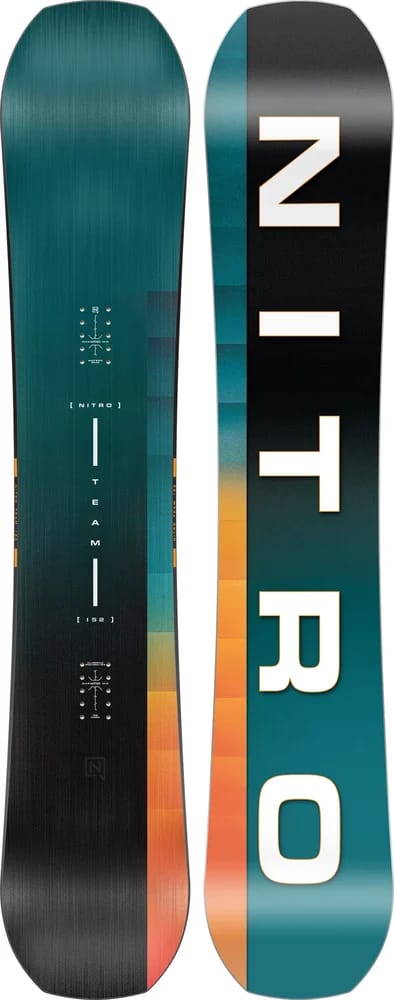 | 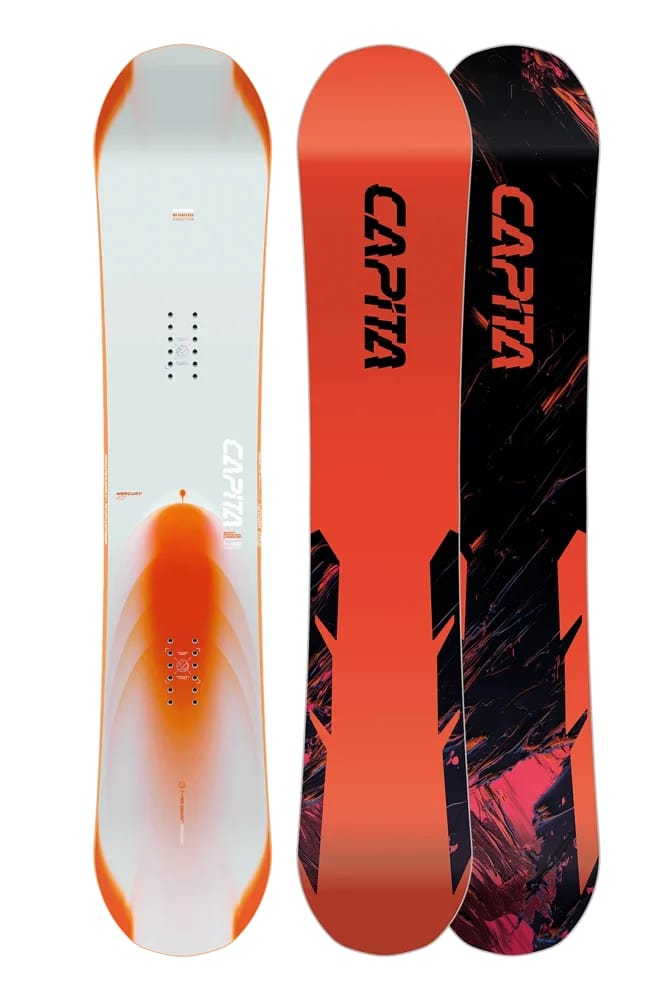 VS | |
| Camber Profile | Trüe Camber | RESORT V2 |
| Flex | 7 / 10 | 6.5 |
| Shape | Directional Twin | Directional |
| Waist Width | 152: 250 mm | 147: 249 mm |
| Ability Level | Not specified by Nitro | Intermediate to Advanced |
| Size Range | 152, 155, 157, 157W, 159, 159W, 162, 162W, 165W | 147 to 162W |
| Warranty | 2 Years | 2 Years |
| Sidecut Radius | 152: 10.7 / 6.8 / 10.7 m | 147: 7.15 m |
| Rider Weight | 152: 110-155 lb | 80 to 220 lb |
| Stance | 152: 18.9-23.6 in | 20 in to 23 in |
| Base | Sintered EcoSpeed HD Base | HYPERDRIVE™ Base (sintered polyethylene) |
| Core And Laminates | Powerlite Core, Bi-Lite Laminates | Core: HOVER CORE™; Laminates: HOLYSHEET™ Tri/Bi fiberglass with MAGIC BEAN™ resin |
| Inserts | Not specified by Nitro | 2 × 4 |
| Nitro Team | CAPiTA Mercury |
|---|---|
| |
| Camber Profile | |
Trüe Camber | RESORT V2 |
| Flex | |
7 / 10 | 6.5 |
| Shape | |
Directional Twin | Directional |
| Waist Width | |
152: 250 mm | 147: 249 mm |
| Ability Level | |
Not specified by Nitro | Intermediate to Advanced |
| Size Range | |
152, 155, 157, 157W, 159, 159W, 162, 162W, 165W | 147 to 162W |
| Warranty | |
2 Years | 2 Years |
| Sidecut Radius | |
152: 10.7 / 6.8 / 10.7 m | 147: 7.15 m |
| Rider Weight | |
152: 110-155 lb | 80 to 220 lb |
| Stance | |
152: 18.9-23.6 in | 20 in to 23 in |
| Base | |
Sintered EcoSpeed HD Base | HYPERDRIVE™ Base (sintered polyethylene) |
| Core And Laminates | |
Powerlite Core, Bi-Lite Laminates | Core: HOVER CORE™; Laminates: HOLYSHEET™ Tri/Bi fiberglass with MAGIC BEAN™ resin |
| Inserts | |
Not specified by Nitro | 2 × 4 |
Edge Control
Team
Mercury
Edge control matters because it determines how confidently a board carves, sets up turns, and grips on firm or icy snow. The Team earns its score from buyers who praise its quick, fluid edge-to-edge transition, easy toe-to-heel engagement, and ankle steering, along with recycled stainless steel edges that hold well in most conditions without feeling catchy. Buyers also say short, tight, and medium carves feel easy, and deep carves do not wash out. The Mercury, meanwhile, earns praise for its progressive side cut and death grip edge hold, which bite confidently in deeper and firmer carves and carve well across the mountain, including in switch. Its main drawback is that it is slower to initiate turns edge to edge, and some riders report it can wash out on the heel side in thick cement. Because both boards score the same, the practical verdict is a tie: the Team suits riders who want quick, easy turn initiation, while the Mercury suits those who want deeper, more locked-in carving.
Stability
Team
Mercury
Stability is important because it keeps a board predictable at speed, through landings, and in variable terrain, which is where confidence builds for most riders. The Team's true camber gives it a solid, stable feel that buyers describe as confidence-inspiring for beginner to intermediate riders, and its stiffness is considered sufficient for most terrain. The Mercury scores higher, with buyers consistently describing it as stable and predictable at speed, very confident underfoot, and locked in during jumps and in the air. Some riders feel it could be even more planted when pushed hard, but it rarely feels hooky or twitchy. For most buyers the Mercury offers the more consistent stability, while the Team remains a solid choice for riders who value a classic camber feel.
Smooth Ride
Team
Mercury
Smooth ride matters because chop, frozen push piles, and moguls can quickly wear down riders who want to keep their legs fresh. The Team receives a mixed-to-positive signal, though buyers note it can get bucked around in choppy terrain like frozen push piles and moguls. The Mercury's damp, flexible construction helps it stay composed over chop and uneven snow, and buyers say it plows through messy conditions with less bouncing. The trade-off is that harder hits on the uphill side and some nose chatter can come through, so the Mercury offers a firm but controlled ride rather than a fully cushioned one. Overall the two boards land at the same score, so the Mercury is the better bet for rough-snow riding, while the Team remains comfortable on groomed terrain.
Speed
Team
Mercury
Speed matters for riders who want a board that holds pace on groomers, through chop, and into jumps without losing energy. The Team has a fast sintered base that holds wax well, and buyers say it keeps speed up in powder and on groomers, though the feedback is more limited. The Mercury stands out here, with a Hyperdrive sintered base that buyers describe as built to go fast, energetic V stringers that add tip energy, and a base that stays quick all season. Buyers also say it holds its speed through chop and into jumps. The trade-off is that the Mercury is less quick to initiate turns, so it fits riders who prioritize pace over quick direction changes. For speed-focused buyers the Mercury is the clear pick.
Powder Float
Team
Mercury
Powder float matters because it determines how easily a board stays on top of deep snow and how much effort a day of pow demands. The Team's 15 mm setback helps the nose stay up in deep snow, and buyers say it floats better than expected, though they note it takes some skill to ride well in powder. The Mercury's reverse blend and elevated contact points help it float and ride playfully in soft and deep snow, and buyers say it performs well on powder days and holds its own in heavy cement. Light, dry snow gives it less buoyancy, and its setback can make directional float feel less pronounced than dedicated powder boards. For buyers who ride powder regularly, the Mercury offers the more reliable float, while the Team is a capable option for occasional deep days.
Park Play
Team
Mercury
Park play matters because park riding is a core use for many all-mountain buyers, covering jumps, rails, boxes, and switch tricks. The Team is praised for boosting well off side hits and jumps, being balanced across small, medium, and large features, and locking in nose and tail presses, with camber that cradles rails and boxes. Buyers say switch riding feels no different from regular riding, which is a real strength. The Mercury is the more celebrated park board, with buyers calling it a dedicated park board, easy to ollie and butter, fun for spins and rail slides, and excellent for kickers and switch riding. Some riders note that the nose and tail can feel odd in switch, but overall the Mercury is the clear favorite for freestyle-focused riders. The Team remains a strong park board for riders who want stability and balance, while the Mercury wins for riders who want playful freestyle character.
Trust & Transparency
- Data-driven rankings from real user reviews
- Affiliate partnerships don't influence our methodology
We may earn commission from links.
Conclusion & Final Verdict:
Choose the Nitro Team if you want a stable, true-camber board that is comfortable in the park, holds an edge easily, and turns quickly. It is a confident all-mountain option for beginner to intermediate riders who split time between groomers and terrain parks.
Choose the CAPiTA Mercury if you ride fast, spend a lot of time on jumps and rails, or want better powder float and a damp, controlled ride through chop. It is the stronger freestyle and speed board, with the trade-off of slower turn initiation and a firmer feel on rough snow.
Related Comparisons
Nitro TeamvsBataleon Whatever
Nitro Team is the better all-rounder for riders who want stable, confident edge hold, pop in the park, and speed on groomers. Bataleon Whatever suits riders who prioritize butters, rails, and powder float over carving performance.
Nitro TeamvsCAPiTA D.O.A.
Nitro Team suits riders who want a stable, confident true-camber board that works across the park and the rest of the mountain, while CAPiTA D.O.A. is the stronger choice for park-first riders who want standout pop, easy jibbing, and a softer, playful twin feel. Choose Team for all-mountain versatility and better powder float; choose D.O.A. when freestyle comes first.
Nitro TeamvsCAPiTA The Equalizer
Nitro Team is the steadier true-camber choice for riders who want confident edge hold and a stable feel in the park and across the mountain. CAPiTA The Equalizer suits riders who want a playful, buttery board that soaks up bumps and excels at freestyle, powder, and speed.
Nitro TeamvsGNU Banked Country
The Nitro Team suits park-focused riders who want playful pop, a stable true-camber feel, and a fast low-maintenance base, while the GNU Banked Country suits riders who prioritize carving grip, a damp smooth ride, and stronger powder float.
Nitro TeamvsJones Mountain Twin
Mountain Twin is the stronger all-round pick for riders who want confident carving, a smoother and more forgiving ride, better powder float and playful switch riding, and it suits intermediate to advanced riders. Team suits riders who prioritize a stable true-camber feel, a fast base and a planted park board.
Nitro TeamvsJones Twin Sister
Jones Twin Sister is the stronger all-mountain pick for riders who want sharper edge grip, a damper ride, and more stability at speed. Nitro Team suits beginners to intermediates who prioritize a stable true-camber feel and balanced park performance.