
Onyx A/M-24 Automatic/Manual Inflatable Life Jacket vs NRS Chinook PFD
Why You Can Trust Us
- Side-by-side analysis based on real user feedback
- Unbiased comparisons, not influenced by partnerships
- Updated as new data becomes available
We may earn from affiliate links at no extra cost to you.
| A/M-24 Automatic/Manual Inflatable Life Jacket | NRS Chinook PFD | |
|---|---|---|
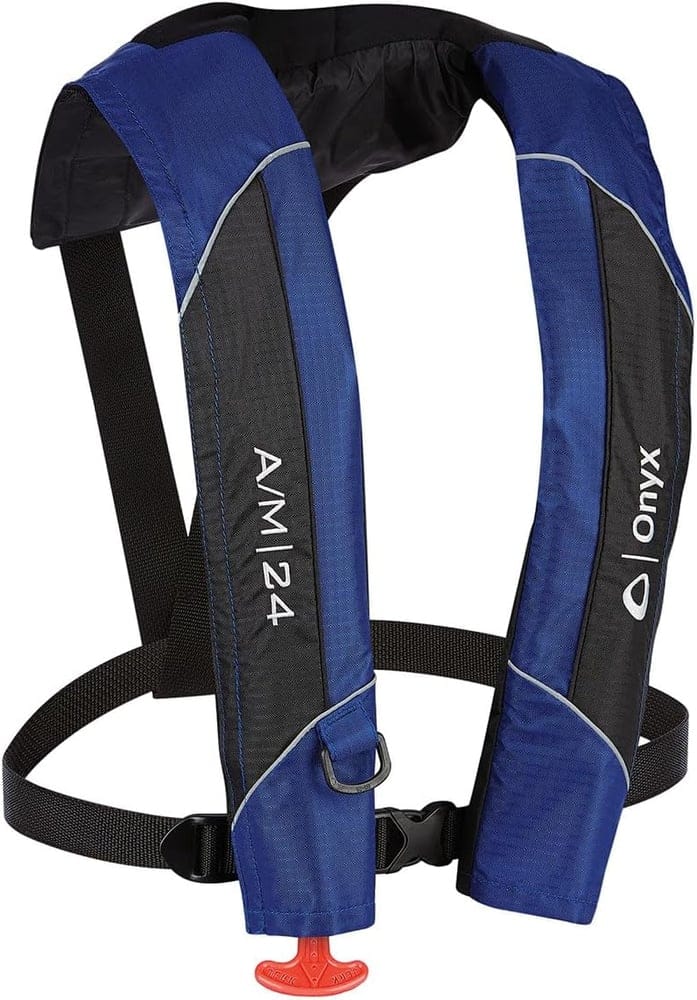 | 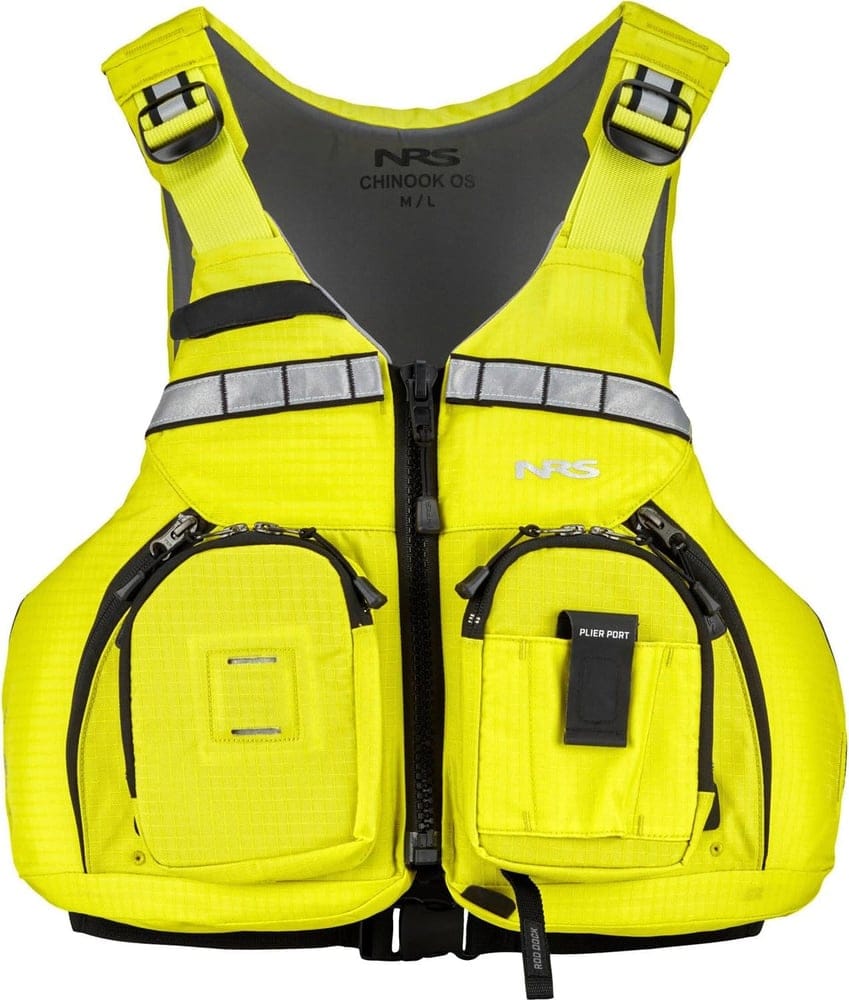 VS | |
| Inflation Type | Water activated or pull cord (automatic/manual) | Manual |
| Foam Core | Not applicable — inflatable bladder | Closed-cell foam |
| Material | Nylon | Outer Fabric: 420 denier ripstop nylon |
| Reflective Accents | Reflective material | N/A |
| Warranty | 1 Year Limited Warranty | Limited Warranty (duration not specified) |
| Attachment Points | D-ring | N/A |
| Fabric Denier | 200 den | 420 |
| Meshback | N/A | Yes |
| Number Of Pockets | N/A | 3 |
| Padding | N/A | Lightweight closed-cell foam with Orbit Fit System |
| USCG Type / Performance Level | Type V inflatable; Type III performance | Level 70 |
| Design Flotation | Not specified in reviewed source | XS/M: 14.6 lb; M/L: 15.75 lb; XL/XXL: 15.75 lb |
| Chest Size / User Weight Range | 30–52 in chest; adult universal | XS/M: 30–38 in, 90–154 lb; M/L: 36–46 in, 88+ lb; XL/XXL: 44–56 in, 88+ lb |
| Entry System | Front buckle closure | YKK zipper entry |
| Adjustment System | Adjustable body belt | 4 side and 2 shoulder adjustments |
| Back Profile | Low-profile | Medium-profile |
| CO2 Cylinder / Rearming Requirement | Replaceable CO2 cylinder; automatic/manual inflation; manual conversion cap; cylinder weight not specified | Not applicable — inherently buoyant |
| Onyx A/M-24 Automatic/Manual Inflatable Life Jacket | NRS Chinook PFD |
|---|---|
| |
| Inflation Type | |
Water activated or pull cord (automatic/manual) | Manual |
| Foam Core | |
Not applicable — inflatable bladder | Closed-cell foam |
| Material | |
Nylon | Outer Fabric: 420 denier ripstop nylon |
| Reflective Accents | |
Reflective material | N/A |
| Warranty | |
1 Year Limited Warranty | Limited Warranty (duration not specified) |
| Attachment Points | |
D-ring | N/A |
| Fabric Denier | |
200 den | 420 |
| Meshback | |
N/A | Yes |
| Number Of Pockets | |
N/A | 3 |
| Padding | |
N/A | Lightweight closed-cell foam with Orbit Fit System |
| USCG Type / Performance Level | |
Type V inflatable; Type III performance | Level 70 |
| Design Flotation | |
Not specified in reviewed source | XS/M: 14.6 lb; M/L: 15.75 lb; XL/XXL: 15.75 lb |
| Chest Size / User Weight Range | |
30–52 in chest; adult universal | XS/M: 30–38 in, 90–154 lb; M/L: 36–46 in, 88+ lb; XL/XXL: 44–56 in, 88+ lb |
| Entry System | |
Front buckle closure | YKK zipper entry |
| Adjustment System | |
Adjustable body belt | 4 side and 2 shoulder adjustments |
| Back Profile | |
Low-profile | Medium-profile |
| CO2 Cylinder / Rearming Requirement | |
Replaceable CO2 cylinder; automatic/manual inflation; manual conversion cap; cylinder weight not specified | Not applicable — inherently buoyant |
Safety
A/M-24 Automatic/Manual Inflatable Life Jacket
NRS Chinook PFD
Safety is the core purpose of any PFD, dictating how quickly and reliably a wearer can stay afloat in an emergency. A higher safety rating means more confidence that the vest will perform when it matters most. The NRS Chinook scores 4.1/5, bolstered by dedicated knife and strobe‑light attachment points and solid buoyancy, while the Onyx A/M‑24 sits at 3/5 despite its dual inflation system. For users who prioritize built‑in rescue accessories and a proven safety rating, the Chinook is the clear winner.
Comfort
A/M-24 Automatic/Manual Inflatable Life Jacket
NRS Chinook PFD
Comfort determines whether a PFD can be worn for hours without chafing or fatigue, which is crucial for long paddles or fishing trips. The Onyx A/M‑24 earns a 4.6/5 rating, with buyers repeatedly noting its barely‑there feel, low‑profile shell, and adjustable straps that prevent rubbing. The NRS Chinook, while still comfortable at 4.3/5, feels more like a traditional vest due to its foam core and contoured panels. If a near‑weightless, non‑restrictive fit is your top priority, the A/M‑24 leads the pack.
Durability
A/M-24 Automatic/Manual Inflatable Life Jacket
NRS Chinook PFD
Durability matters because a PFD must survive sun, salt, and repeated use without degrading. The Onyx A/M‑24’s nylon construction and taped seams earn a 4.8/5 rating, with users praising its long‑term resilience. The NRS Chinook scores 4.4/5, built from 420‑denier ripstop nylon that also holds up well but trails slightly behind the A/M‑24’s reputation. For those seeking the most rugged, long‑lasting option, the Onyx jacket wins.
Lightweight
A/M-24 Automatic/Manual Inflatable Life Jacket
NRS Chinook PFD
A lightweight PFD reduces fatigue and makes packing easier, especially for active paddlers who move a lot. The Onyx A/M‑24 dominates this category with a 4.8/5 rating, praised for its ultra‑light design and minimal bulk. The NRS Chinook, at 3.6/5, is noted as moderately weighted due to its foam core and additional features. When minimizing weight is paramount, the A/M‑24 is the obvious choice.
Visibility
A/M-24 Automatic/Manual Inflatable Life Jacket
NRS Chinook PFD
Visibility helps rescuers locate a wearer in low‑light conditions, a factor that can be enhanced by bright colors or attachment points for lights. The Chinook edges ahead with a 3.3/5 rating, thanks to a dedicated strobe‑light attachment that adds practical visibility. The A/M‑24 lacks specific visibility features and sits at 3/5, offering no clear advantage. For paddlers who often operate at dawn, dusk, or in fog, the Chinook provides the better solution.
Breathability
A/M-24 Automatic/Manual Inflatable Life Jacket
NRS Chinook PFD
Breathability keeps a PFD from becoming a sauna on hot days, influencing comfort and performance. The Onyx A/M‑24 scores 4.1/5, with users noting its moisture‑friendly design that stays cool during warm‑weather fishing. The NRS Chinook trails at 3.4/5, offering mesh panels but receiving fewer mentions of cooling benefits. If staying cool in heat is a priority, the A/M‑24’s design gives it the edge.
Trust & Transparency
- Data-driven rankings from real user reviews
- Affiliate partnerships don't influence our methodology
We may earn commission from links.
Conclusion & Final Verdict:
Verdict: If you value ultra‑light weight, a barely‑there feel, and the security of an automatic inflatable system, the Onyx A/M‑24 is the better pick. If you need higher safety ratings, built‑in gear storage, and extra rescue accessories, the NRS Chinook PFD will serve you better.
Both jackets are solid choices, but the decision comes down to whether comfort and minimal bulk outweigh the added safety features and utility of the Chinook.
Related Comparisons
O'Neill Super Lite USCG Life VestvsOnyx A/M-24 Automatic/Manual Inflatable Life Jacket
O'Neill Super Lite offers inherent buoyancy and USCG Type III safety, while Onyx A/M-24 is an inflatable with automatic/manual options. Choose O'Neill for simplicity, Onyx for minimal bulk.
Onyx A/M-24 Automatic/Manual Inflatable Life JacketvsBluestorm Cirrus 26 Life Jacket
The Onyx A/M‑24 excels in comfort, durability and ultra‑lightweight design, while the Bluestorm Cirrus 26 provides higher buoyancy and a longer warranty, making it the safer pick for demanding water activities.
Onyx A/M-24 Automatic/Manual Inflatable Life JacketvsNRS Ninja PFD
Onyx A/M-24 is ultra-light and comfy for all-day wear; NRS Ninja PFD offers better safety and storage. Choose Onyx for comfort, NRS for protection.
Onyx A/M-24 Automatic/Manual Inflatable Life JacketvsNRS Vapor PFD
The Onyx A/M‑24 shines with ultra‑lightweight comfort and dual inflation options, whereas the NRS Vapor scores higher on safety and visibility. Pick the A/M‑24 for minimal bulk and flexibility, or the Vapor if you value a stronger safety rating and brighter colors.
Onyx A/M-24 Automatic/Manual Inflatable Life JacketvsO'Brien Impulse Women's Life Jacket
The Onyx A/M‑24 offers a lightweight, low‑profile inflatable design with dual inflation, while the O'Brien Impulse provides a USCG‑approved neoprene vest with a higher safety rating; choose Onyx for active paddling comfort, O'Brien for traditional buoyancy and durability.
Onyx A/M-24 Automatic/Manual Inflatable Life JacketvsO'Brien Men's Traditional Life Jacket - Black
The Onyx A/M‑24’s lightweight inflatable design excels in comfort, durability and breathability, while O’Brien’s traditional vest wins on safety and visibility—choose the former for active paddling, the latter for high‑visibility safety.