
Rome Ravine Pro vs Jones Mountain Twin
Why You Can Trust Us
- Side-by-side analysis based on real user feedback
- Unbiased comparisons, not influenced by partnerships
- Updated as new data becomes available
We may earn from affiliate links at no extra cost to you.
| Ravine Pro | Mountain Twin | |
|---|---|---|
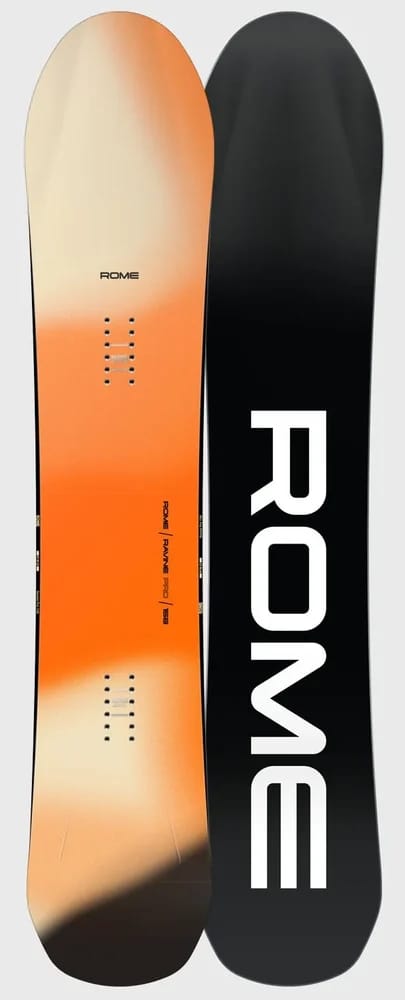 | 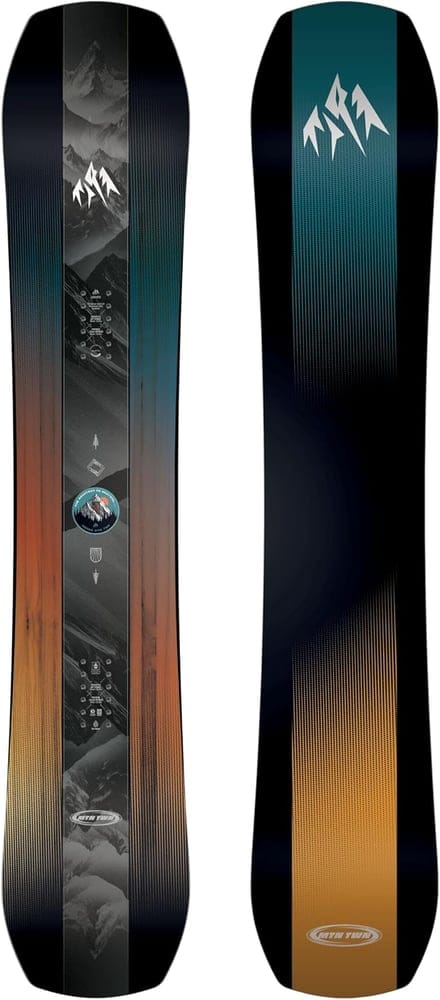 VS | |
| Camber Profile | Free-the-Ride Camber: rocker in the nose, flat underfoot up front, camber in the tail | CamRock |
| Flex | 8 (Playful to Precise scale) | 6/10 |
| Shape | Directional (Directional Diamond 3D nose) | Directional Twin |
| Waist Width | 152: 255 mm | 244 mm to 282 mm |
| Ability Level | Advanced-Expert | Intermediate |
| Size Range | 152–165W | 149 to 168W |
| Warranty | 2 Years | 2 Years + 1 Free Year Extension |
| Sidecut Radius | 152: 5.7 / 7.0 / 5.2 m | 7.2–8.5 m |
| Rider Weight | 152: 126-170 lb | 110 to 220+ lb |
| Stance | 152: 19.4-24.1 in | Reference 20.5–22.8 in; centered (0 setback) |
| Base | SinterSpeed Base | Sintered 8000 Base |
| Core And Laminates | SuperPop Core, Carbon Omega HotRod, Biax Lower Glass, Triax Upper Glass, Flax Impact Plates, Directional Flax Walls | Master Core; Biax Fiberglass; BComp Carbon Flax Stringer |
| Inserts | 24 inserts | Freeride/Freestyle Pack |
| Rome Ravine Pro | Jones Mountain Twin |
|---|---|
| |
| Camber Profile | |
Free-the-Ride Camber: rocker in the nose, flat underfoot up front, camber in the tail | CamRock |
| Flex | |
8 (Playful to Precise scale) | 6/10 |
| Shape | |
Directional (Directional Diamond 3D nose) | Directional Twin |
| Waist Width | |
152: 255 mm | 244 mm to 282 mm |
| Ability Level | |
Advanced-Expert | Intermediate |
| Size Range | |
152–165W | 149 to 168W |
| Warranty | |
2 Years | 2 Years + 1 Free Year Extension |
| Sidecut Radius | |
152: 5.7 / 7.0 / 5.2 m | 7.2–8.5 m |
| Rider Weight | |
152: 126-170 lb | 110 to 220+ lb |
| Stance | |
152: 19.4-24.1 in | Reference 20.5–22.8 in; centered (0 setback) |
| Base | |
SinterSpeed Base | Sintered 8000 Base |
| Core And Laminates | |
SuperPop Core, Carbon Omega HotRod, Biax Lower Glass, Triax Upper Glass, Flax Impact Plates, Directional Flax Walls | Master Core; Biax Fiberglass; BComp Carbon Flax Stringer |
| Inserts | |
24 inserts | Freeride/Freestyle Pack |
Edge Control
Ravine Pro
Mountain Twin
Edge control determines how confidently a board carves groomers, holds on icy patches, and engages in tight trees, which makes it central to any all-mountain board. The Jones Mountain Twin edges out the Rome Ravine Pro here, 4.6 to 4.4, with buyers praising its confident grip, quick and forgiving turn initiation, and strong arcing on pitches and icy days. Riders describe it as easy to steer, diving in and out of turns with a mellow side cut that grips well, though a few mention a slight slide-out at times. The Ravine Pro also earns strong praise, with many buyers calling it a trench digger that cranks turns with minimal knee drive and holds an edge on medium and long carves. Its tri-radial side cut eases entry and exit, but some find it slower to transition, takes more effort to press into the nose, and lacks some nimbleness with the stiffer tail. For buyers who want the most forgiving, easy-to-initiate carving, the Mountain Twin is the practical pick, while riders who want a powerful, locked-in carve will be well served by the Ravine Pro.
Stability
Ravine Pro
Mountain Twin
Stability shows how composed a board stays at speed, on firm chatter, and when landing off hits, which matters for riders who push their pace. The Rome Ravine Pro clearly leads here, 4.4 to 3.9, with buyers describing it as solid underfoot while ripping around the resort and never pushed around or squirrely. Riders also report substantial stability out of the tail, and its stiff flex and construction are repeatedly cited as planted and confident. The Ravine Pro is not flawless, since some riders get bucked around when hitting frozen ground. The Jones Mountain Twin feels planted on steeper pitches thanks to its camber profile and fairly stiff flex, but it is less steady in chunder and when landing or taking off in harder pack. Riders who spend time on rough, firm, or variable terrain should favor the Ravine Pro, while those mostly on groomers and pitches will find the Mountain Twin stable enough.
Smooth Ride
Ravine Pro
Mountain Twin
Smooth ride reflects how much vibration reaches your feet and how forgiving the board feels over bumps, which affects comfort over a full day. The Jones Mountain Twin wins this category, 4.4 to 4.1, with buyers praising its smooth absorption of bumps, forgiving rocker-camber profile, and medium flex that holds without bouncing. Many describe it as consistent across most conditions and easy on the body, though it is not the most damping board in its class and some riders feel chatter on edge at higher speeds. The Rome Ravine Pro earns good marks for dampening, thanks to its flax material and impact plates, and buyers say it plows through chunder and crud while feeling cozy underfoot. Some riders report the tail skipping over giant moguls, and a few describe it as skippy in mogul fields. Riders who prioritize soaking up bumps and staying comfortable through long days will prefer the Mountain Twin, while those who want a damp, muted feel in heavy snow will still appreciate the Ravine Pro.
Speed
Ravine Pro
Mountain Twin
Speed matters for riders who want to open up on groomers, hold momentum on long runs, and stay composed in fast carves. The Rome Ravine Pro leads here, 4.2 to 3.3, with buyers describing its sintered speed base as fast and comfortable across a wide range of speeds, and noting that it feels confident at high velocity. Its quick rebound adds to the sense of control when pushing hard. The Jones Mountain Twin holds speed reasonably well and glides easily through traverses, but its base glide is not as fast as some comparable boards, and it trails the Ravine Pro for pure glide on groomers. The Mountain Twin has far less speed-related feedback than the Ravine Pro, so this gap should be read as a directional signal rather than a certainty. Buyers focused on maximum speed should lean toward the Ravine Pro, while those who mostly cruise and carve at moderate speeds will not feel a major limitation with the Mountain Twin.
Powder Float
Ravine Pro
Mountain Twin
Powder float matters on an all-mountain board because deep days are where many riders feel the biggest difference in performance. The Rome Ravine Pro wins this category, 4.8 to 4.4, with buyers praising its directional diamond nose, which displaces soft snow and keeps the nose up in deep powder. Riders say it floats very nicely, does not require much work in deep snow, and is easier to manage in the trees, and some describe it as outrageously fun in 30 to 40 cm of fresh snow. The Jones Mountain Twin also floats well thanks to its spoon contour and rocker tip and tail, with riders saying it stays near the surface and rides over bumps and powder-like terrain. Setting the stance back adds directional float to the Mountain Twin, making it a strong pick for mixed all-mountain powder days. Riders who chase deep snow most weekends should choose the Ravine Pro, while those who want good powder performance alongside groomers and bumps will find the Mountain Twin very capable.
Park Play
Ravine Pro
Mountain Twin
Park play covers pop, buttering, switch riding, and how well a board handles jumps and features, which matters for riders who spend time in the terrain park. The Jones Mountain Twin wins clearly, 4.7 to 3.9, with buyers praising strong pop and snap on ollies, easy buttering with a tail that loads up and springs out, and switch riding that many describe as a highlight. Riders call it playful and report good takeoffs and landings on park features, though some find it a little loose in the park. The Rome Ravine Pro has a catch-free diamond nose that is fun for swiveling around the resort and gives a solid platform to pop off, and riders report confidence getting airtime with predictable takeoffs. However, its directional shape and stiff flex make it feel more like a novelty in proper park laps, it jibs like a stiffer board, and some say the tail loses hold when buttering. Park-focused riders should choose the Mountain Twin, while the Ravine Pro suits riders who only hit features casually.
Trust & Transparency
- Data-driven rankings from real user reviews
- Affiliate partnerships don't influence our methodology
We may earn commission from links.
Conclusion & Final Verdict:
Choose the Rome Ravine Pro if your riding is focused on deep powder, stable high-speed cruising, and planted carves on firm snow. It wins on float, stability, and speed, and suits advanced to expert riders who want a board that feels solid when the pace picks up.
Choose the Jones Mountain Twin if you spend much of your time in the park, value switch riding and easy buttering, or want forgiving turn initiation and a comfortable ride over bumps. It is the more versatile pick for intermediate to advanced riders who want a playful all-mountain board, and it also has the edge on warranty and size range.
Related Comparisons
Never Summer Proto Type 3vsRome Ravine Pro
The Never Summer Proto Type 3 is the better choice for riders who want one true twin board with locked-in carving, quick edge changes, and strong park and switch riding. The Rome Ravine Pro suits riders who spend most of their time in deep snow and trees and value a directional, planted feel with excellent float.
Nitro TeamvsRome Ravine Pro
Nitro Team is the better choice for park-focused riders who want a playful true-camber board that boosts well and locks in presses, while Rome Ravine Pro suits riders who prioritize deep-snow float, stability, and powerful carving. Pick the Team for park laps and an approachable feel, or the Ravine Pro for powder days and aggressive carving.
Rome Ravine ProvsBataleon Whatever
The Rome Ravine Pro is the better choice for deep powder, firm-edge carving, and fast, stable all-mountain riding, while the Bataleon Whatever suits riders who spend most of their time buttering, pressing, and hitting rails in the park. Pick the Ravine Pro for big-mountain range and the Whatever for playful freestyle days.
Rome Ravine ProvsCAPiTA D.O.A.
The Rome Ravine Pro is the stronger all-mountain pick for powder, carving, and stable high-speed riding, while the CAPiTA D.O.A. suits park riders who want a playful twin tip for jibs, presses, and butters.
Rome Ravine ProvsCAPiTA Mercury
The Rome Ravine Pro is the better choice for deep powder, tree runs, and confident carving on firm snow, while the CAPiTA Mercury suits riders who want a faster, more playful all-mountain board with strong park performance.
Rome Ravine ProvsCAPiTA The Equalizer
The Rome Ravine Pro is the stronger choice for deep powder, precise carving, and high-speed stability, while the CAPiTA The Equalizer suits riders who spend more time in the park and want easy switch riding and playful pop. Pick the Ravine Pro for powder and firm groomers, or the Equalizer for jibs, jumps, and a softer, more playful ride.