
Salomon Assassin vs Bataleon Whatever
Why You Can Trust Us
- Side-by-side analysis based on real user feedback
- Unbiased comparisons, not influenced by partnerships
- Updated as new data becomes available
We may earn from affiliate links at no extra cost to you.
| Assassin | Whatever | |
|---|---|---|
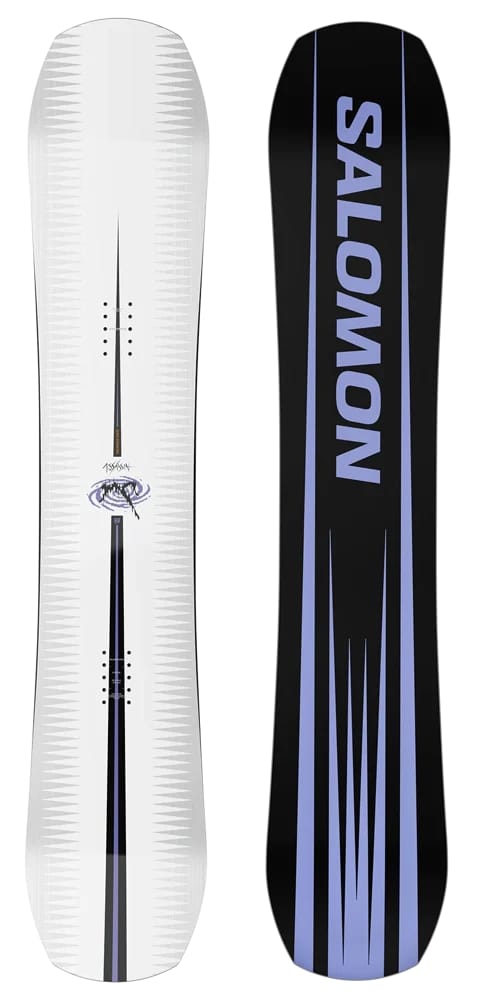 | 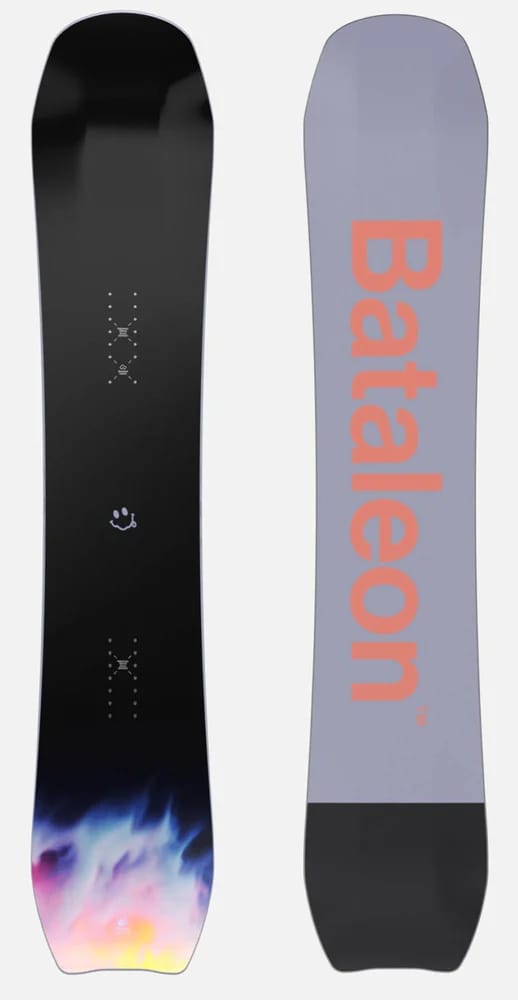 VS | |
| Camber Profile | Rock Out Camber | 3BT with Sidekick, medium camber |
| Flex | Medium | 5.0 |
| Shape | Directional Twin | Directional twin |
| Waist Width | 150: 248 mm | 138: 236 mm |
| Ability Level | Advanced, Intermediate | Intermediate to Advanced |
| Size Range | 150, 153, 156, 158W, 159, 162, 163W, 165 | 138, 144, 148, 151, 154, 156W, 157, 159W, 162W |
| Warranty | 2 Years | 2 Years |
| Sidecut Radius | 150: 7.1 m | 138: 6.85 m |
| Rider Weight | Not published by Salomon | 138: 91-135 lb |
| Stance | Not published by Salomon | 138: 16.9-21.7 in |
| Base | Base Material: Sintered EG | Hyper Glide S |
| Core And Laminates | Core Construction: Popster | Core: Woodcore Light Core 50/50 Paulownia and poplar |
| Inserts | 4 × 2 Inserts | 28 inserts (+2 backseat inserts) |
| Salomon Assassin | Bataleon Whatever |
|---|---|
| |
| Camber Profile | |
Rock Out Camber | 3BT with Sidekick, medium camber |
| Flex | |
Medium | 5.0 |
| Shape | |
Directional Twin | Directional twin |
| Waist Width | |
150: 248 mm | 138: 236 mm |
| Ability Level | |
Advanced, Intermediate | Intermediate to Advanced |
| Size Range | |
150, 153, 156, 158W, 159, 162, 163W, 165 | 138, 144, 148, 151, 154, 156W, 157, 159W, 162W |
| Warranty | |
2 Years | 2 Years |
| Sidecut Radius | |
150: 7.1 m | 138: 6.85 m |
| Rider Weight | |
Not published by Salomon | 138: 91-135 lb |
| Stance | |
Not published by Salomon | 138: 16.9-21.7 in |
| Base | |
Base Material: Sintered EG | Hyper Glide S |
| Core And Laminates | |
Core Construction: Popster | Core: Woodcore Light Core 50/50 Paulownia and poplar |
| Inserts | |
4 × 2 Inserts | 28 inserts (+2 backseat inserts) |
Edge Control
Assassin
Whatever
Edge control matters for any all-mountain board because it determines how confidently you can carve, change direction, and hold a line on groomed or firm snow. Buyers who spend most of their day cruising and carving will feel the difference quickly. The Assassin earns the stronger reputation here, with buyers repeatedly describing it as easy to get from edge to edge, smooth rather than hooky, and secure when laying into turns on hard snow. Its reverse camber makes entering and exiting turns feel natural, and riders often note that it grips well and carves exceptionally well in short and medium turns. The main caveat is that a hard, aggressive carve can overpower the board, and a few riders found it could lose control on a shaded icy patch. The Whatever is a more mixed performer on edge. Some riders appreciate its quick, maneuverable short carves and its two extra contact points on icy areas, but many report it feels washy, washes out when driving off the tail, and disengages earlier than wanted in hard carves. For buyers who want a dependable carving partner, the Assassin is the clear choice, while the Whatever suits riders who mostly make short, playful turns.
Stability
Assassin
Whatever
Stability affects how composed a board feels at speed, through chop, and when landing or stepping up to bigger features. A board that feels planted gives riders confidence to explore the whole mountain, while a squirrelly board can be tiring and unpredictable. The Assassin generally comes across as stable and reliable, with riders describing good energy under their feet, a true feel from nose to tail, and confidence when stepping up to larger features. Its rocker-camber blend is praised for balancing stability with playfulness, though a few riders noted the nose can fold if a hard carve is pushed too far. The Whatever receives more mixed feedback. Some riders find its midsection very stable and feel confident at higher speeds, but others describe it as getting knocked around in rutted terrain, feeling lively because of its softer nose and tail, and being thrown around on bigger lines. Buyers who ride aggressively or in variable snow will likely find the Assassin more reassuring, while the Whatever may feel livelier and less planted in demanding conditions.
Smooth Ride
Assassin
Whatever
Smooth ride describes how much chatter, vibration, and fatigue reach your feet and legs across varied snow. A comfortable board lets you ride longer and handle crud, chopped-up snow, and firm icy patches without beating up your body. The Assassin is praised for its damped feel, with rubber inlays and rails that soak up chatter and crud, and buyers note that vibrations from icy spots don't carry strongly to the knees or feet. Its forgiving flex and reverse camber help it stay calm over variable terrain, although some riders feel chatter at higher speeds and in the tips. The Whatever is also rated highly for comfort, with many riders describing it as easy to ride, predictable, and manageable. Its middle-of-the-road flex and dual-radius tubes are praised for damping, and it doesn't tend to ache the back foot, though some riders noticed nose and tail vibration when charging on firm snow. Both boards offer a comfortable ride, so this category is essentially even, and the choice comes down to whether you prefer the Assassin's damped stability or the Whatever's easygoing, predictable flex.
Speed
Assassin
Whatever
Speed in this context refers to how well a board tracks, glides, and stays composed when you are going fast or building momentum into jumps. Riders who like to cruise hard or hit features at pace will care most about this. The Assassin performs well here, with buyers describing it as fast, consistent in glide through the season, and stable when tracking into jumps at good speed. Its sintered base is noted for being fast, and riders say it feels quick and responsive when moving around the mountain. Some riders warned that bombing very steep hills at extreme speeds may reach its limits, and that it can feel too hot if you come in fast without control. The Whatever gets less praise for high-speed riding. Its feedback is split, with several riders saying it is excellent fun at lower speeds in the resort but that it is not a high-speed charger and becomes a challenge once speed builds. For buyers who want a board that holds up when pushing pace, the Assassin is the stronger option, while the Whatever is better suited to relaxed, lower-speed riding.
Powder Float
Assassin
Whatever
Powder float determines how easily a board stays on top of soft snow, which is important for anyone who rides deep days or goes looking for fresh snow in the trees. A board that floats well feels effortless and fun in deep conditions. The Whatever stands out here, with many riders describing it as brilliant in deep, soft snow and exceptionally capable for an all-mountain board. Its directional shape and extra nose surface area help it rise, and the SideKick is credited with funneling powder away from the rider. Riders also say it behaves surprisingly well in powder for a twin. Some note that it is not on the same level as a dedicated powder board. The Assassin also floats respectably, with buyers describing it as floaty and enjoyable in powder and noting that the nose and tail rise early and the centered feel makes powder days fun. However, several riders said its float is more limited, that compressed snow in the trees can be hard to stay on top of, and that its five-by-two inserts can limit how much float you can tune. If powder is a priority, the Whatever has the edge, while the Assassin is a capable choice for mixed days.
Park Play
Assassin
Whatever
Park play covers how a board handles jumps, rails, presses, butters, and general freestyle riding, which is central to any board that leans toward freestyle. Park riders want pop, control, and an easy feel when they spin and press. The Assassin is strongly praised in the park, with buyers describing its organic pop off jumps and lips, true pop on kickers, and a poppy, reactive feel. Riders say it handles small to medium features well, locks into rails and presses, and feels like a true twin when riding switch. Some noted that buttering is doable but not especially easy, that it can wash out on back-seat landings, and that it is somewhat bulky for jibbing. The Whatever is also a very good park board, but in a different way. It is widely praised for easy butters and nose and tail presses, with riders calling its butters standout and very surfy, and it is comfortable on jibs, rails, and mellow features. However, several riders said it lacks pop off jumps, that the three-base-tech construction makes popping harder, and that a slightly longer nose can clip on rails and jumps. For buyers who want a poppy, all-around park board, the Assassin is the stronger pick, while the Whatever is best for riders who prioritize buttering and easy presses.
Trust & Transparency
- Data-driven rankings from real user reviews
- Affiliate partnerships don't influence our methodology
We may earn commission from links.
Conclusion & Final Verdict:
Choose the Salomon Assassin if you want one board that carves cleanly, handles speed and chatter well, and still pops and presses in the park. It is the more confident all-around performer and the stronger choice for resort riders who spend most of their time on firm or variable snow.
Choose the Bataleon Whatever if you ride soft snow often or your day is built around easy butters, presses, and rails. It floats better in powder, feels easygoing at lower speeds, and is more fun on mellow park terrain, but it is less reliable on hard carves and at high speed.
Related Comparisons
Salomon AssassinvsCAPiTA D.O.A.
The Assassin is the stronger carver and smoother all-mountain ride for riders who want damp, reactive performance on groomers and in the park, while the D.O.A. is the better choice for riders who prioritize jibbing, pop, and tech tricks.
Salomon AssassinvsCAPiTA Mercury
The Salomon Assassin suits riders who want quick, damp edge-to-edge carving and lively park pop, while the CAPiTA Mercury suits riders who prioritize stability, speed, and all-around park performance. Choose the Assassin for responsive carving and the Mercury for a planted, fast feel.
Salomon AssassinvsCAPiTA The Equalizer
The Salomon Assassin is the stronger all-mountain carver with a damper, more stable ride and a true-twin park feel, while the CAPiTA The Equalizer is the more playful, powder-friendly choice with a softer flex. Pick the Assassin for firm-snow carving and versatility, or the Equalizer if you spend more time in powder and bumps.
Salomon AssassinvsGNU Banked Country
The Salomon Assassin suits riders who want quick edge-to-edge carving, lively park pop and a true-twin feel, while the GNU Banked Country fits those who prioritize a damp, smooth all-day ride, stronger powder float and a locked-in camber carve.
Salomon AssassinvsJones Mountain Twin
The Salomon Assassin suits riders who want fast, fluid carving, a damp and stable ride, and a board that holds speed well across the resort. The Jones Mountain Twin is the better pick for those who want more grip on icy groomers, a more comfortable flex, and stronger float in fresh snow, with both boards performing well in the park.
Salomon AssassinvsJones Twin Sister
The Assassin suits riders who prioritize carving, park pop, and speed, while the Twin Sister suits those who want a quieter, more composed ride with stronger stability and damping. Choose based on whether your riding leans toward freestyle and fast carving or steady, chatter-free cruising.