
Vans Hi-Standard OG vs K2 Orton
Why You Can Trust Us
- Side-by-side analysis based on real user feedback
- Unbiased comparisons, not influenced by partnerships
- Updated as new data becomes available
We may earn from affiliate links at no extra cost to you.
| Hi-Standard OG | Orton | |
|---|---|---|
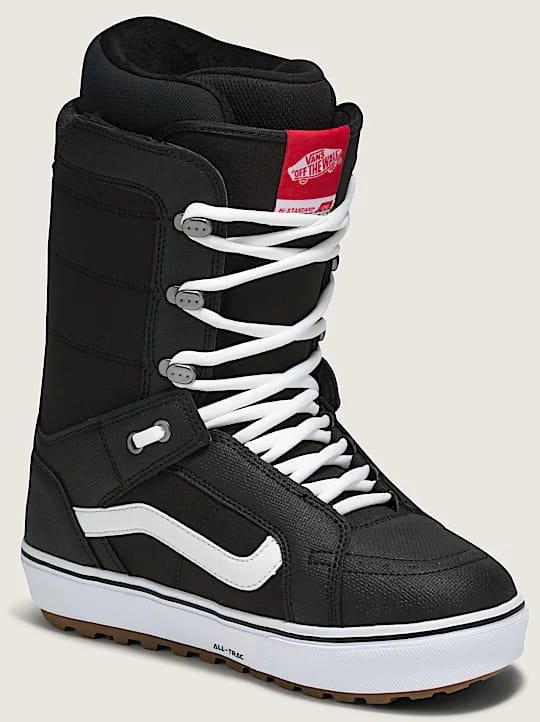 | 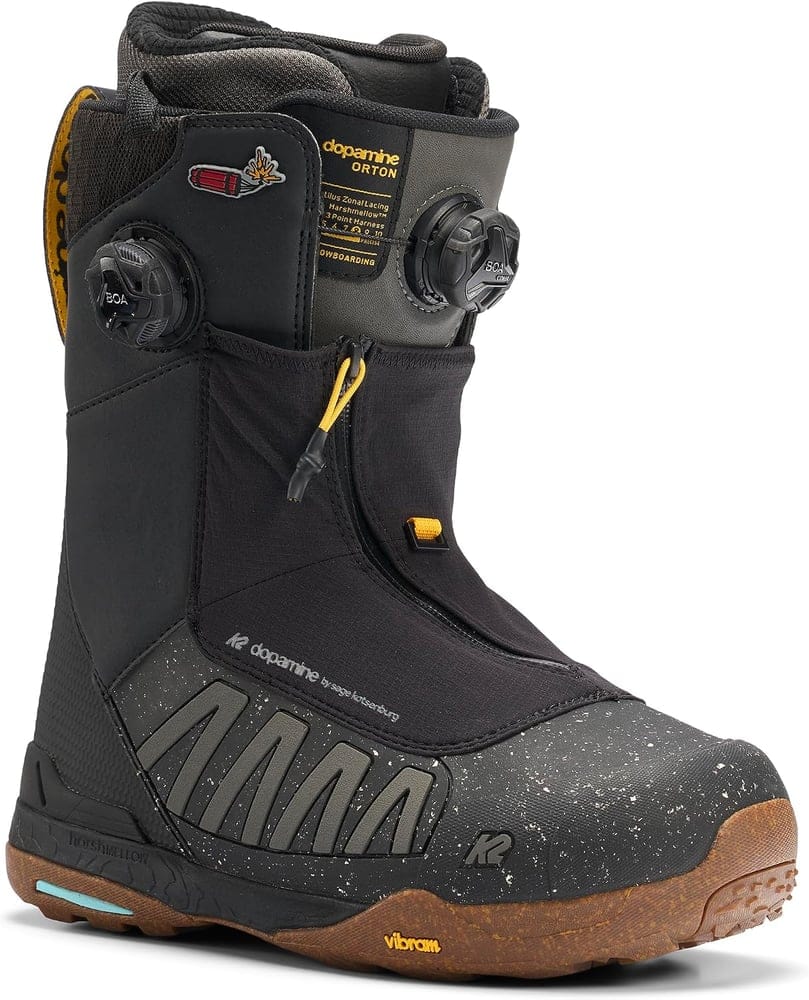 VS | |
| Flex | Soft-medium (4-5/10) | Stiff |
| Closure System | Traditional lace | Dual-zone BOA® Fit System Powered by H5 |
| Binding Compatibility | Standard strap bindings | Standard strap bindings |
| Liner Type | V1 UltraCush™ Liner | Intuition® Pro Foam 3D heat-moldable liner |
| Warranty | N/A | 1 Year |
| Footbed Type | V1 PopCush™ Footbed | Eco-Harshmellow™ Pro Insole |
| Outsole Type | V1 Waffle Lug with All-Trac cold weather rubber compound | Vibram® V5 Outsole with Harshmellow™ |
| Size Range | US Men's 7–13 | US Men's 7–13 (Women's 8–14) |
| Vans Hi-Standard OG | K2 Orton |
|---|---|
| |
| Flex | |
Soft-medium (4-5/10) | Stiff |
| Closure System | |
Traditional lace | Dual-zone BOA® Fit System Powered by H5 |
| Binding Compatibility | |
Standard strap bindings | Standard strap bindings |
| Liner Type | |
V1 UltraCush™ Liner | Intuition® Pro Foam 3D heat-moldable liner |
| Warranty | |
N/A | 1 Year |
| Footbed Type | |
V1 PopCush™ Footbed | Eco-Harshmellow™ Pro Insole |
| Outsole Type | |
V1 Waffle Lug with All-Trac cold weather rubber compound | Vibram® V5 Outsole with Harshmellow™ |
| Size Range | |
US Men's 7–13 | US Men's 7–13 (Women's 8–14) |
Comfort
Hi-Standard OG
Orton
Comfort matters in snowboard boots because you may spend a full day in them, and a liner that bruises, pinches, or traps cold can end a session early. Buyers consistently describe the Hi-Standard OG as cushioned and warm, with a fur-lined feel that helps the foot slide in and a thick liner that dampens impacts. Its neoprene toe box is praised for preventing toe crushing, and its airflow perforations and insole vents help keep feet from getting sweaty. Some buyers, however, report pressure from the J-bar on the heel and seams felt on the pinky toe and instep. The Orton is praised for being comfortable right out of the box, with heat-reflective tape and blanket panels that help keep feet warm through long days. Its lack of tongue eyelets reduces pressure points, and the toe strap does not crush small toes, though a side seam in the liner may be felt by some feet. Because both boots earn strong comfort marks with different trade-offs, this category is a tie: choose the Hi-Standard OG for plush, easy-entry padding and the Orton for warmth and a quieter, more secure feel.
Fit
Hi-Standard OG
Orton
Fit determines how much heel lift you get, how much energy reaches the board, and whether your foot stays put during aggressive riding. The Hi-Standard OG uses a pull-string harness and traditional laces with an instep lockout that cinch the heel, and its heat-moldable liner and footbed are praised for a comfortable, secure shape. Buyers note that the neoprene toe can push out longer toes, the profile can look bulky, and the foot and heel run wider. The Orton stands out here, with a wider forefoot, a narrower U-shaped heel with minimal lift, and a heat-moldable Intuition liner that conforms to the foot. Its dual BOA zones let riders set upper and lower tightness separately, and the harness is sewn into the shell for a precise fit, though buyers mention the liner top can push out on bigger calves and that the fit differs from other K2 boots. For most riders who want a dialed-in, adjustable fit, the Orton is the clear choice; the Hi-Standard OG is a solid option for a simpler, more forgiving fit.
Support
Hi-Standard OG
Orton
Support affects how well a boot holds your ankle and arch, how steady you feel at speed, and how much rebound you get on landings. The Hi-Standard OG earns credit for a supportive spine and a footbed that buyers rate above other boots at its price, and its V1 and V2 footbeds are praised for arch support. However, the lack of posting means the arch can collapse over time, and several buyers recommend replacing the stock insole with an aftermarket option. The Orton delivers firmer, more responsive support, with a rigid ankle area, urethane backspine that provides rebound, a rigid tongue, and multi-density foam at the ankle. Its hard footbed posting and aggressive flex rating give steady control, and stiffness can be adjusted if needed. Riders who want a soft, forgiving flex can get it from the Hi-Standard OG, but if you want steady, dependable support for aggressive riding and hard landings, the Orton is the stronger choice.
Board Feel
Hi-Standard OG
Orton
Board feel is how directly a boot transmits your inputs to the snow and how much vibration reaches your feet. The Hi-Standard OG's soft, medium-flex park design is praised for a playful feel, a range of motion that suits freestyle riding, and lacing options that let you adjust articulation. Beginners tend to find its flex easy to control, while advanced freestyle riders value the flexibility. The Orton is described by buyers as very responsive and able to transfer power into turns, and its Harshmellow foam and rubber damping help reduce vibration for a quieter, more controlled ride. Buyers describe it as able to flex and be tweaked while still feeling precise. If you prefer a playful, lively park feel, the Hi-Standard OG suits you; for carving and all-mountain control with less buzz through the bindings, the Orton has the edge.
Traction
Hi-Standard OG
Orton
Traction matters most when you are hiking, walking through lodges, or riding in icy conditions where grip keeps you upright. The Hi-Standard OG's waffle outsole is praised by buyers as grippy and slip-resistant, with its vulcanized rubber sole described as very grippy in the V1 version and its single-piece reverse waffle outsole praised in the V2 version. Some buyers note the tread wears aggressively on concrete. The Orton's Vibram V5 outsole is praised for grip in cold temperatures and for a nice tread pattern, though buyer feedback on it is limited. Both soles earn solid marks, and the Hi-Standard OG has a slight edge in buyer-reported grip, so it is the better pick if sure footing off the board matters most. The Orton's Vibram sole is still a good choice for snow riding, but its traction is less proven.
Durability
Hi-Standard OG
Orton
Durability shows up in seam strength, shell material, and how well the boot handles years of hard use. The Hi-Standard OG's buyers mention a more durable shell material and reinforced stitching, but also note that the spine can crease under hard pushing and that the foam packs out over time. Its V2 double-posted lace hooks are praised for not ripping out. The Orton is described as well built, with double-stitched gusset seams, scratch-resistant fabric, a very durable toe cap, robust H4 knobs, and an Endo backstay designed for longevity. Its reduced excess material and minimal stitching help seams hold up to regular wear and wet conditions, and its backspine is described as more durable. Buyers see the Orton as the stronger long-term investment, while the Hi-Standard OG's durability is more mixed.
Trust & Transparency
- Data-driven rankings from real user reviews
- Affiliate partnerships don't influence our methodology
We may earn commission from links.
Conclusion & Final Verdict:
Choose the Vans Hi-Standard OG if you are a beginner or a park and freestyle rider who wants a soft, playful, comfortable boot that breaks in quickly and feels cushioned and warm. Plan on an aftermarket insole for arch support.
Choose the K2 Orton if you want precise control, a dialed-in fit with dual BOA adjustment, firmer support, a damper and more responsive board feel, and a boot built to last. It is the better all-around pick for all-mountain and carving riders and for anyone who wants a warranty and a broader size range.
Related Comparisons
Vans Hi-Standard OGvsBurton Limelight BOA
The Vans Hi-Standard OG is a soft, playful, comfort-first boot for beginners and park riders who want a forgiving flex and a warm liner that needs little break-in. The Burton Limelight BOA suits riders who want the more precise, adjustable fit, stronger traction, and longer-lasting build.
Vans Hi-Standard OGvsBurton Photon Step On
The Vans Hi-Standard OG is a soft, playful, comfort-first boot for beginners and park riders who want a traditional lace fit and standard bindings. The Burton Photon Step On is the stronger all-day performer with better support and grip, but it needs Step On bindings.
Vans Hi-Standard OGvsK2 Maysis
The Vans Hi-Standard OG suits beginners and park riders who want a soft, playful, comfortable flex, while the K2 Maysis suits riders who want a more responsive medium-stiff feel, a locking dual BOA fit, and stronger support for precise turn control.
Vans Hi-Standard OGvsNitro Bianca TLS
The Vans Hi-Standard OG is a soft-flexing, easy-to-ride choice for beginners and park riders who want a forgiving feel. The Nitro Bianca TLS is the stronger all-round boot, with a warmer liner, more precise lacing, and better ice grip for riders who want more control.
Vans Hi-Standard OGvsNitro Team TLS
The Vans Hi-Standard OG is the softer, more playful and comfort-first choice, with a heat-moldable liner and easy break-in that suits beginners and park riders. The Nitro Team TLS is the firmer, more supportive boot with stronger traction and durability for riders who want steady control and a grippy sole.
Vans Hi-Standard OGvsRIDE Hera
The Vans Hi-Standard OG suits beginners and park riders who want a soft, playful, warm boot that needs little break-in. The RIDE Hera is the better pick for all-day mountain riders who want a locked-in BOA fit, stronger support, and longer-lasting build.