
Völkl Blaze 86 vs Völkl Blaze 82
Why You Can Trust Us
- Side-by-side analysis based on real user feedback
- Unbiased comparisons, not influenced by partnerships
- Updated as new data becomes available
We may earn from affiliate links at no extra cost to you.
| Blaze 86 | Blaze 82 | |
|---|---|---|
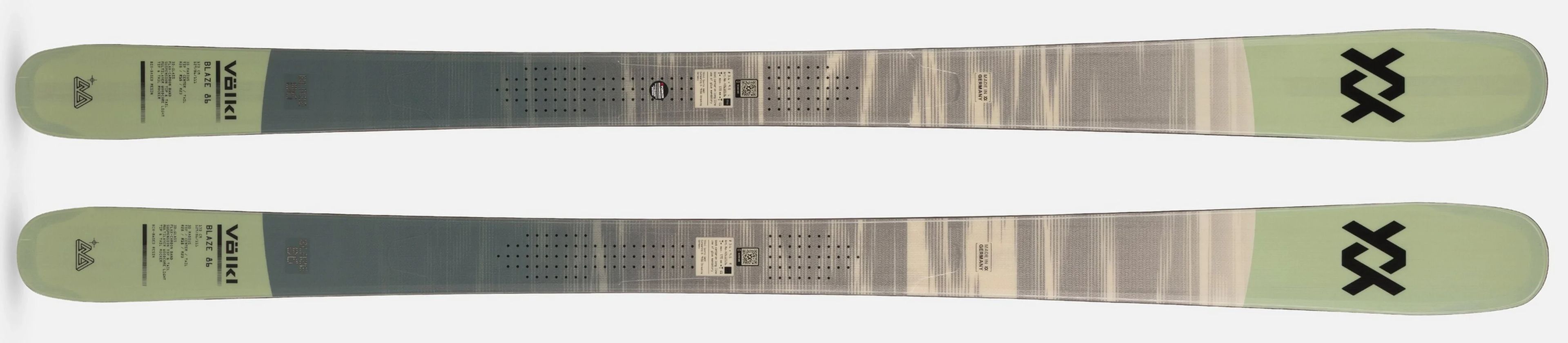 | 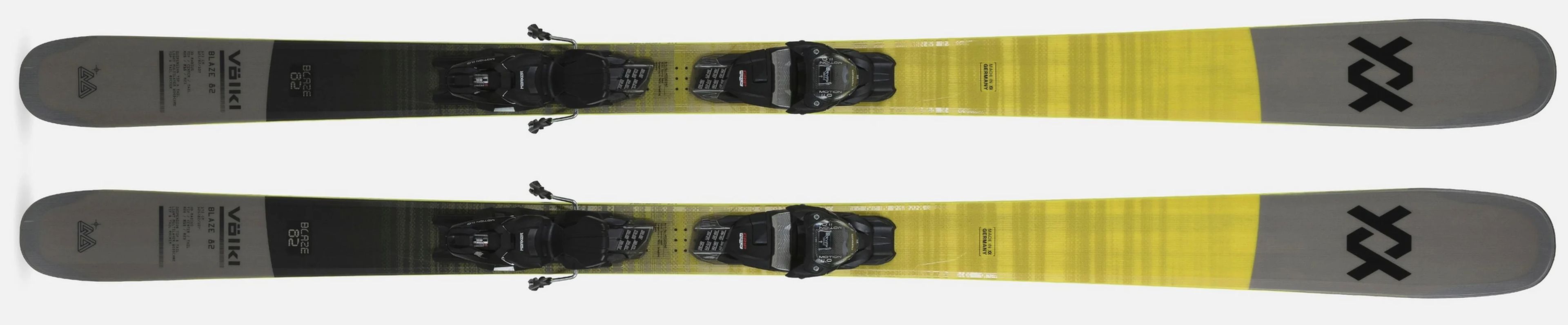 VS | |
| Waist Width | 86 mm | 82 mm |
| Turn Radius | 13 m center radius at 166 cm (3D Radius) | 13 m center radius at 166 cm (3D Radius) |
| Rocker Profile | Tip and tail rocker, camber underfoot | Tip and tail rocker, camber underfoot |
| Included Binding | Flat (no binding included) | Marker vMotion 11 GW (premounted vMotion plate) |
| Weight | 3.2 lb per ski, no binding (166 cm) | 3.5 lb per ski, no binding (166 cm) |
| Length Range | 146, 152, 159, 166, 173, 180 cm | 146, 152, 159, 166, 173, 180 cm |
| Warranty | 2 Years (Völkl limited) | 2 Years (Völkl limited) |
| Sidecut | 129-86-111 mm | 125-82-107 mm |
| Core Material | Multilayer Woodcore Light (FSC wood) | Multilayer Woodcore Light |
| Construction | Full ABS sidewall, flax-carbon and glass layers, no titanal | Full ABS sidewall, Suspension Tips & Tails |
| Ability Level | Intermediate (Amazon listing) | Ambitious beginner to intermediate (Völkl) |
| Völkl Blaze 86 | Völkl Blaze 82 |
|---|---|
| |
| Waist Width | |
86 mm | 82 mm |
| Turn Radius | |
13 m center radius at 166 cm (3D Radius) | 13 m center radius at 166 cm (3D Radius) |
| Rocker Profile | |
Tip and tail rocker, camber underfoot | Tip and tail rocker, camber underfoot |
| Included Binding | |
Flat (no binding included) | Marker vMotion 11 GW (premounted vMotion plate) |
| Weight | |
3.2 lb per ski, no binding (166 cm) | 3.5 lb per ski, no binding (166 cm) |
| Length Range | |
146, 152, 159, 166, 173, 180 cm | 146, 152, 159, 166, 173, 180 cm |
| Warranty | |
2 Years (Völkl limited) | 2 Years (Völkl limited) |
| Sidecut | |
129-86-111 mm | 125-82-107 mm |
| Core Material | |
Multilayer Woodcore Light (FSC wood) | Multilayer Woodcore Light |
| Construction | |
Full ABS sidewall, flax-carbon and glass layers, no titanal | Full ABS sidewall, Suspension Tips & Tails |
| Ability Level | |
Intermediate (Amazon listing) | Ambitious beginner to intermediate (Völkl) |
Stability
Blaze 86
Blaze 82
Stability matters for beginners and intermediates because it determines whether a ski stays calm when speed builds or the snow changes under foot. Buyers who ski faster or on firmer snow will notice the difference most. The Blaze 86 earns praise for feeling more stable at speed, with reviewers pointing to the greater power and steadiness that comes from its flatter profile and its reliability on fast, firm slopes. Some reviewers also say it is less damp than mid-80s groomer skis, which is a useful note for buyers comparing it with narrower options. The Blaze 82 scores slightly higher overall, with reviewers saying it stays surprisingly steady for such a light ski and holds together when pushed hard. For most beginners who are not yet skiing at high speed, the two are close, but the Blaze 82 offers the better balance of calm and light weight. Buyers who regularly ski fast on hard snow should weigh the Blaze 86's flatter, more planted feel.
Forgiveness
Blaze 86
Blaze 82
Forgiveness is the quality that lets a developing skier make mistakes without the ski punishing them. It is especially important for beginners who are still learning balance and timing. The Blaze 82 is the clearer choice here, with reviewers describing tip rocker that adds forgiveness alongside maneuverability and a friendly, compliant feel that helps a skier learn different turns and speeds. The Blaze 86 receives fewer comments on this point, and the feedback mainly notes that its flex is not too stiff. That is encouraging, but the evidence is thinner. A beginner who wants a ski that feels understanding and predictable will likely find the Blaze 82 the better fit, while the Blaze 86 is more demanding to learn on.
Ease Of Use
Blaze 86
Blaze 82
Ease of use describes how quickly a ski responds to input and how natural it feels to turn, shorten turns and move through trees or deeper snow. For beginners this often decides whether a ski feels fun or frustrating. The Blaze 86 is praised for being quick, maneuverable and intuitive, with reviewers saying it makes turn initiation feel natural, swivels easily thanks to its flat base and is easy to steer in deeper snow and trees. The Blaze 82 is also described as very easy to ski, approachable and friendly, with its light weight reducing fatigue over a long day. The Blaze 86 edges ahead on the strength of its agility and mobility, but both skis are easy to turn, so the gap is modest. A beginner who wants a light, forgiving ski for groomers will be well served by either, while a skier who expects to play in tight terrain may prefer the Blaze 86.
Edge Grip
Blaze 86
Blaze 82
Edge grip determines how confidently a ski holds an edge on firm snow, which is important for carving and for controlling turns on groomed runs. A ski with good grip feels secure and predictable when the snow is icy or firm. The Blaze 82 earns stronger feedback here, with reviewers describing impressive grip from tip to tail, a metal plate under the binding that adds grip on piste and good edge contact that allows carves at higher edge angles. Its one caveat is that aggressive, high-speed skiers may find the grip falls short. The Blaze 86 is described as having decent grip on firmer snow and a longer effective edge in carved turns, but there is less feedback overall. For beginners working on groomers, the Blaze 82 is the more reassuring choice, while the Blaze 86 is a reasonable option for skiers who spend more time off-piste.
Smoothness
Blaze 86
Blaze 82
Smoothness affects comfort and confidence on rough or icy snow, where vibration can tire a skier and make the ski feel unsettled. Beginners often ski on hard-packed or variable snow, so this matters more than it might seem. The Blaze 82 is viewed as the smoother ski, with reviewers saying its suspension-style tips and tails reduce chatter and keep the ride calm, and that rubber dampening controls jittery vibration. The Blaze 86 receives mixed feedback: some buyers describe a vibration-y feel, and its lighter tips can chatter on pure ice, although the tip and tail suspension is also credited with reducing vibration. The Blaze 86 is therefore a less comfortable choice on hardpack and ice. Buyers who ski mostly on groomers or variable snow should lean toward the Blaze 82.
Versatility
Blaze 86
Blaze 82
Versatility matters for buyers who want one ski for many kinds of snow and terrain, from resort groomers to trees and light touring. A versatile ski lets a developing skier grow without needing a second pair too soon. The Blaze 86 is the standout here, with reviewers describing it as extremely versatile across all-mountain, resort and light touring use, strong in bumps, trees and soft snow and capable of working with both tech and alpine bindings. Reviewers also note it mixes on and off trail skiing well and is a good fit for intermediates. Its drawbacks are that it is a little heavy for all-day touring and not a dedicated touring ski. The Blaze 82 is also praised as versatile across skill levels, performing well in trees, moguls and tight terrain, with touring potential through skin attachment. It is not a true powder ski, although it handles fresh snow off-piste. The Blaze 86 offers the broader all-mountain range, while the Blaze 82 covers most beginner needs with a lighter setup.
Trust & Transparency
- Data-driven rankings from real user reviews
- Affiliate partnerships don't influence our methodology
We may earn commission from links.
Conclusion & Final Verdict:
Choose the Blaze 82 if you are a beginner or early intermediate who wants a light, forgiving ski that is easy to turn, grips well on groomers and rides more smoothly on firm snow. Its included binding also makes it a simpler purchase.
Choose the Blaze 86 if you want one ski for more terrain and are comfortable with a little more vibration. It is more stable at speed, more versatile in bumps, trees and soft snow, and better suited to occasional light touring or off-piste days, though it is less forgiving and less smooth on ice.
Related Comparisons
Blizzard Black Pearl 88vsVölkl Blaze 82
The Black Pearl 88 is the more stable, smoother, and more versatile choice for skiers who want a ski that grows with them across groomers, off-piste, and softer snow. The Blaze 82 is the friendlier, lighter pick for true beginners who want easy turning, better forgiveness, and a mounted binding included.
Blizzard Black Pearl 88vsVölkl Blaze 86
The Black Pearl 88 is the smoother, more damped and stable choice that can grow with you into off-piste and firm terrain, while the Blaze 86 is the quicker, lighter, more maneuverable pick for turning easily in trees and soft snow. Choose the Black Pearl 88 for steadier speed and a calmer ride, and the Blaze 86 if nimble turn shaping matters most.
Dynastar M-Pro 85vsVölkl Blaze 82
The Blaze 82 is the better fit for a developing skier who wants forgiveness, a friendly feel and stability at speed. The M-Pro 85 suits skiers who want firmer edge grip and a smoother, quieter ride across varied snow.
Völkl Blaze 82vsLINE Pandora 92
The Blaze 82 is the friendlier, more forgiving pick for beginners who want a stable, approachable ski for groomers and trees. The Pandora 92 is the more versatile option for skiers who spend time in softer snow and the park.
Völkl Blaze 86vsLINE Pandora 92
The Völkl Blaze 86 is the quicker, more maneuverable ski with a bit more edge grip on firm snow, while the LINE Pandora 92 feels smoother and more forgiving in softer snow and variable terrain. Choose the Blaze for lively turns in trees and bumps, and the Pandora if you want an easy, playful ski that is less demanding while you learn.
Salomon Stance 80vsLINE Pandora 92
The Stance 80 suits a true beginner who wants an easygoing, forgiving ski that is simple to start turns on and holds a solid carve on groomers. The Pandora 92 is the better pick for a developing skier who wants a nimble, versatile ski that handles soft snow and park features.