
Atomic Bent 100 vs Rossignol Sender 100
Why You Can Trust Us
- Side-by-side analysis based on real user feedback
- Unbiased comparisons, not influenced by partnerships
- Updated as new data becomes available
We may earn from affiliate links at no extra cost to you.
| Bent 100 | Sender 100 | |
|---|---|---|
 | 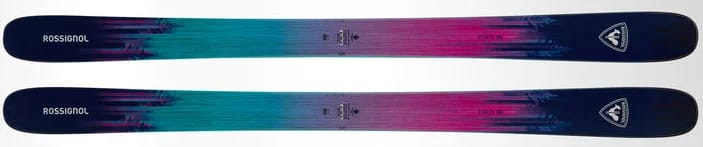 VS | |
| Waist Width | 100 mm | 100 mm (99-101 mm across lengths) |
| Turn Radius | 19 m at 179 cm | 18 m at 178 cm |
| Rocker Profile | Powder Rocker 20/65/15 (tip and tail rocker, camber underfoot) | Twin Rocker (tip and tail rocker, camber underfoot) |
| Metal Layers | No metal | No metal |
| Length Range | 158-186 cm | 162-190 cm |
| Weight | 3.7 lb per ski at 179 cm | 4.2 lb per ski at 178 cm |
| Warranty | N/A | N/A |
| Sidecut Dimensions | 128.5-100-119 mm | 131-100-123 mm |
| Core Material | Light Woodcore (poplar wood core) | PEFC Poplar wood |
| Sidewall | Duracap Sidewall | Rectangular full sidewall |
| Atomic Bent 100 | Rossignol Sender 100 |
|---|---|
| |
| Waist Width | |
100 mm | 100 mm (99-101 mm across lengths) |
| Turn Radius | |
19 m at 179 cm | 18 m at 178 cm |
| Rocker Profile | |
Powder Rocker 20/65/15 (tip and tail rocker, camber underfoot) | Twin Rocker (tip and tail rocker, camber underfoot) |
| Metal Layers | |
No metal | No metal |
| Length Range | |
158-186 cm | 162-190 cm |
| Weight | |
3.7 lb per ski at 179 cm | 4.2 lb per ski at 178 cm |
| Warranty | |
N/A | N/A |
| Sidecut Dimensions | |
128.5-100-119 mm | 131-100-123 mm |
| Core Material | |
Light Woodcore (poplar wood core) | PEFC Poplar wood |
| Sidewall | |
Duracap Sidewall | Rectangular full sidewall |
Stability
Bent 100
Sender 100
Stability matters in this group because all-mountain skiers regularly move from chopped snow to groomers and need a ski that stays composed when speed builds. The Sender 100 has the clear advantage here, earning praise for being stable in crud, very smooth at speed, and stiff underfoot so it does not fold when skied hard. Its wood core and honeycomb air tip are credited with damping chatter and keeping the tips from skittering. The Bent 100 is still a stable ski for most skiers, holding its line on groomers and staying composed through chatter, but reviewers note it reaches its limit at very high speeds. A buyer who skis fast or aggressively in variable snow should lean toward the Sender 100, while a more moderate skier will find the Bent 100 perfectly capable.
Edge Grip
Bent 100
Sender 100
Edge grip is the most important difference between these two skis for anyone who spends time on firm groomers or ice. The Sender 100 stands out with locked-in, rock-solid hold on ice and a carving feel that reviewers compare to a dedicated carving ski, with a nice footprint on edge that does not release or chatter. The Bent 100 can carve and holds an edge adequately on groomers, but reviewers say it lacks the bite of dedicated GS carvers, feels less grippy in the extremities, and can feel grabby underfoot. Its edge hold is solid rather than elite, so it is best suited to skiers who prioritize playfulness over precise carving. If firm-snow carving is a regular part of your skiing, the Sender 100 is the more confident choice.
Maneuverability
Bent 100
Sender 100
Maneuverability shapes how the ski feels in trees, bumps and tight terrain, where quick direction changes matter more than top-end stability. Both skis earn strong marks here, with the Bent 100 praised for being extremely light, playful and quick through trees, and able to make short slalom-style turns with little effort. The Sender 100 earns similarly strong feedback for being nimble in bumps, easy to pivot, and quick to release and smear out of turns, with reviewers noting it is especially flickable and easy to switch. Some reviewers say the Sender 100 can have trouble with very short swing turns, which is a small caveat. Because both skis feel agile, buyers can choose based on feel: the Bent 100 is lighter and more playful, while the Sender 100 feels more energetic and precise.
Forgiveness
Bent 100
Sender 100
Forgiveness matters for skiers who are still building confidence or who regularly land awkwardly in variable terrain. The Sender 100 earns strong praise for being stable on big landing errors and for tapered tip and tail shapes that help you recover from bad situations without feeling demanding. The Bent 100 is also forgiving, especially from the tail, and reviewers say it does not punish skiers who sit back, which makes it a confidence builder in freeride and freestyle skiing. The Sender 100 holds a modest edge here based on more feedback about recovering from mistakes. Either ski will help a developing skier, but the Sender 100 is the more reassuring pick when conditions get messy.
Powder Performance
Bent 100
Sender 100
Powder performance matters for skiers who want to chase fresh snow on a single pair of skis. The Bent 100 handles deep powder well, with its convex tip adding flotation without extra width, and reviewers say it floats nicely in fresh snow. Some skiers still point to a wider ski for heavier powder days, so the Bent 100 is not a dedicated powder ski. The Sender 100 is described as floating through a few inches of fresh powder, but feedback is thinner and some reviewers see it as less capable in deeper snow. For buyers who expect regular deep days, the Bent 100 is the stronger choice.
Versatility
Bent 100
Sender 100
Versatility is the core promise of both skis, since each is designed as a single-ski answer for varied resort terrain. The Bent 100 is praised as one of the most versatile twin tips, handling groomers, powder, park and trees while working for both intermediate and advanced skiers. The Sender 100 earns comparable praise for being a balanced, symmetrical freestyle-leaning all-mountain ski that works well across the resort, is fun in the park, and switches easily, though its mount point trades some directional performance for park feel. Both skis offer a broad range of tools, so the decision depends on whether you want a lighter, looser twin for mixed terrain or a slightly more powerful, freestyle-capable all-mountain ski.
Trust & Transparency
- Data-driven rankings from real user reviews
- Affiliate partnerships don't influence our methodology
We may earn commission from links.
Conclusion & Final Verdict:
Choose the Atomic Bent 100 if you want a lighter, more playful ski that turns quickly through trees and bumps, handles park and powder well, and works as a true one-ski quiver for intermediate and advanced skiers who do not spend much time carving hard on ice.
Choose the Rossignol Sender 100 if you ski fast, carve firm groomers, or need a more stable and forgiving ski in crud and variable snow. It is the stronger all-mountain option for skiers who want confident edge grip and composure at speed, while still skiing playfully in trees and moguls.
Related Comparisons
Atomic Bent 100vsLINE Pandora 99
The Bent 100 is the lighter, quicker twin tip for trees, park and all-around use, while the Pandora 99 offers more stability and edge grip at speed. Pick the Bent 100 for agile, lightweight skiing and the Pandora 99 for more confidence on firm snow and faster runs.
Atomic Bent 100vsNordica Enforcer 94
The Bent 100 is the lighter, more playful and more versatile choice for skiers who want one ski for trees, powder, park and groomers. The Enforcer 94 suits confident drivers who put a premium on damped stability and firm-snow edge grip at speed.
Atomic Bent 100vsNordica Santa Ana 92
Atomic Bent 100 is the lighter, more playful and more versatile twin tip for quick turns in trees, park and mixed terrain, suiting intermediate to advanced skiers. Nordica Santa Ana 92 is the more planted, damped and stable choice for advanced skiers who want firmer-snow edge hold and smooth rides at speed.
Atomic Bent 100vsSalomon QST 100
The Bent 100 is the lighter, quicker twin tip for skiers who want agile, playful turns through trees and bumps, while the QST 100 is the more stable, better-carving all-mountain ski with stronger float. Choose the Bent 100 for playful intermediate to advanced riding and the QST 100 for a single ski that handles the whole mountain with more confidence.
Atomic Bent 100vsStöckli Stormrider 88
The Atomic Bent 100 is the lighter, quicker twin tip for skiers who want one playful ski for trees, park, and mixed terrain, while the Stöckli Stormrider 88 is the firmer, more planted carver for groomers and icy days. Choose the Bent 100 for agility and the Stormrider 88 for stability and edge hold at speed.
Atomic Bent 100vsVölkl M7 Mantra
The Atomic Bent 100 is the lighter, playful one-ski choice for quick turns through trees and varied terrain, while the Völkl M7 Mantra is the stiffer, more demanding pick for strong skiers who want locked-in edge grip and composure at speed on firm snow.