
Black Diamond Guide BT vs PIEPS Pro IPS
Why You Can Trust Us
- Side-by-side analysis based on real user feedback
- Unbiased comparisons, not influenced by partnerships
- Updated as new data becomes available
We may earn from affiliate links at no extra cost to you.
| Guide BT | Pro IPS | |
|---|---|---|
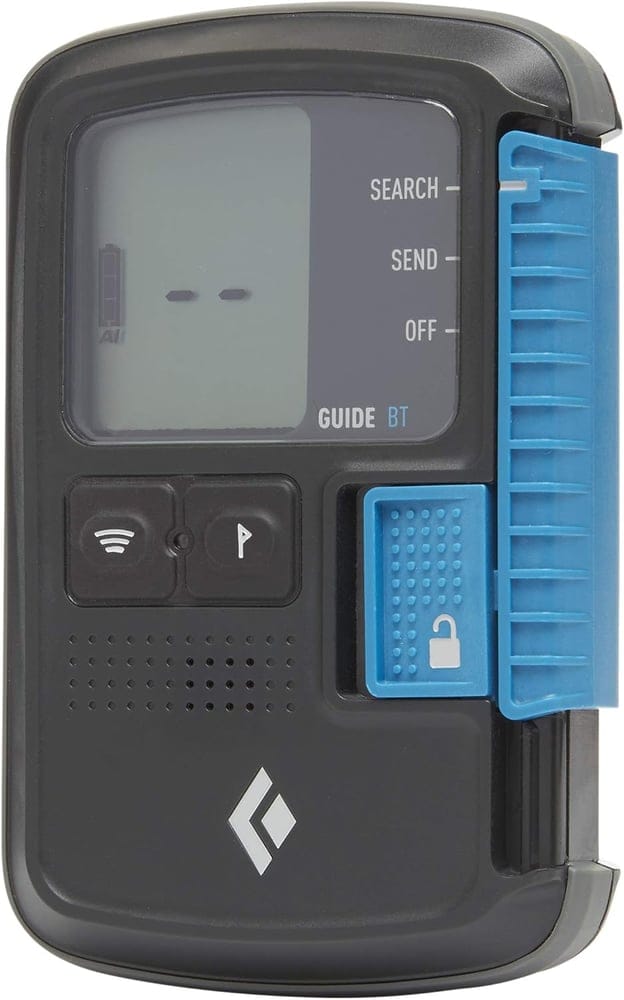 | 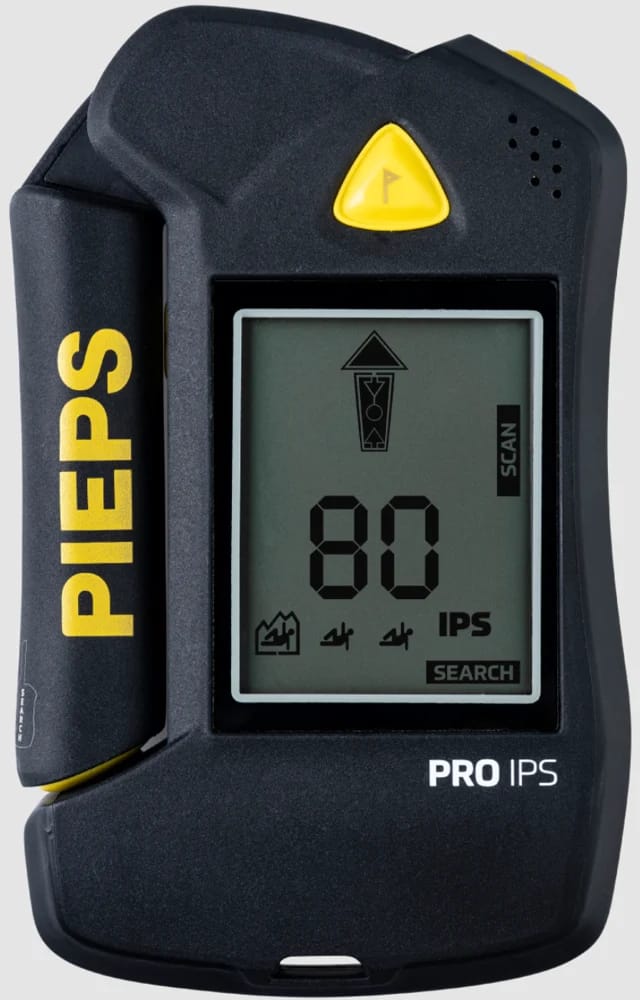 VS | |
| Antenna Count | 3 | 3 |
| Range | 197 ft (60 m max range) | 230 ft (70 m max range) |
| Multiple Burial Marking | Yes | Yes |
| Weight | 7.9 oz (225 g, with batteries) | 7.5 oz (212 g, with batteries) |
| Battery Life | ≈400 hr send (alkaline) | ≈600 hr (lithium) | ≥600 hr send (alkaline) | ≥800 hr (lithium) |
| Warranty | 2 years; 5 years with registration | 2 years; 5 years with app registration |
| Frequency | 457 kHz | 457 kHz |
| Auto Revert Timer | Yes | Yes (secondary-avalanche switchover) |
| Battery Type | 3 × AAA (alkaline or lithium) | 3 × AAA (alkaline or lithium) |
| Bluetooth | Yes | Yes |
| Dimensions | 4.53 × 2.95 × 1.10 in | 4.72 × 2.95 × 0.94 in |
| Black Diamond Guide BT | PIEPS Pro IPS |
|---|---|
| |
| Antenna Count | |
3 | 3 |
| Range | |
197 ft (60 m max range) | 230 ft (70 m max range) |
| Multiple Burial Marking | |
Yes | Yes |
| Weight | |
7.9 oz (225 g, with batteries) | 7.5 oz (212 g, with batteries) |
| Battery Life | |
≈400 hr send (alkaline) | ≈600 hr (lithium) | ≥600 hr send (alkaline) | ≥800 hr (lithium) |
| Warranty | |
2 years; 5 years with registration | 2 years; 5 years with app registration |
| Frequency | |
457 kHz | 457 kHz |
| Auto Revert Timer | |
Yes | Yes (secondary-avalanche switchover) |
| Battery Type | |
3 × AAA (alkaline or lithium) | 3 × AAA (alkaline or lithium) |
| Bluetooth | |
Yes | Yes |
| Dimensions | |
4.53 × 2.95 × 1.10 in | 4.72 × 2.95 × 0.94 in |
Accuracy
Guide BT
Pro IPS
Accuracy matters because a beacon is only useful if its distance readout and direction guidance help a searcher reach a buried transceiver quickly. Buyers generally find the Guide BT precise when pinpointing buried transceivers, with GPS-referenced distance readings described as close to real distances in several reports. Some users noted a small overestimate at longer range, and one reading of 19 m against an actual 15 m was described as off. The Pro IPS receives mixed feedback, with one reported reading of 61 m against about 40 m actual distance, although many buyers praised how directly it guides them to a buried signal from far away. Small arrow corrections help when a searcher drifts off course. The Guide BT is the stronger choice for distance readings that stay close to reality, while the Pro IPS is more useful when long-distance guidance matters most, provided the searcher expects the readout to overstate range.
Durability
Guide BT
Pro IPS
Durability matters because avalanche beacons are often carried in wet, cold and rough conditions where moisture can cause failures. The Guide BT has built-in water resistance in both models that buyers describe as a practical advantage on wet, snowy backcountry days. There is little feedback on long-term toughness against drops and impacts, so buyers should weigh the Guide BT against more proven rugged beacons before assuming it will hold up to heavy use. The Pro IPS received too little feedback on durability to show a clear strength or weakness. For a buyer who expects a lot of wet-weather use, the Guide BT has the better-documented advantage, but neither product has enough evidence to guarantee long-term toughness.
Ease Of Use
Guide BT
Pro IPS
Ease of use matters because a searcher under pressure needs to switch modes, read the display and find the right button without hesitation. The Guide BT's app-based settings are praised as very easy to adjust, and the Fleet manager app is described as really good, with Bluetooth updates available for the beacon hardware. Directional arrow guidance and a mark function help searchers follow direction and flag a transceiver location during a real search. Analog mode is more advanced and takes practice to master, so newer users should train with it before relying on it on a tour. The Pro IPS receives more critical feedback, with recurring complaints that the button layout is unclear, that some button presses do nothing, and that buyers had to consult the manual after the auto revert. The Guide BT is clearly easier for most users to set up and operate, while the Pro IPS requires more study before the first tour.
Field Reliability
Guide BT
Pro IPS
Field reliability matters because a beacon has to lock on and keep working when conditions are messy and the stakes are high. The Pro IPS receives strongly positive feedback here, with buyers describing solid overall performance, a reliable lock-on to transceivers and range that feels noticeably longer in the field. Several buyers said they trusted it to detect a transceiver at around 50 meters. The Guide BT also has useful field features, including a smart antenna that switches when interference is detected, which helps it keep working in tricky conditions. Its wider scan-mode tolerance can shorten effective range, so buyers have to trade broad detection for maximum distance. For buyers who prioritize reach and dependable lock-on, the Pro IPS has the stronger reputation, while the Guide BT remains a capable option that accepts some range tradeoff.
Signal Clarity
Guide BT
Pro IPS
Signal clarity matters because a crowded or interfered signal can make it hard to know which transceiver is closest and where the real target is. The Pro IPS is praised for detecting interfered transceivers earlier and for amplifying its transmit signal above interference, and buyers also mention that its longer antenna reduces on-screen interference. Feedback is mostly positive, although a smaller set of complaints keeps it from feeling flawless. The Guide BT groups signals into distance bands in scan mode, which gives a clearer overall picture of nearby transceivers, and its three circular antennas support reception. Some users reported weak or intermittent signals and shifting numbers that caused confusion, so buyers should practice reading the display before relying on it. Overall, the Pro IPS offers the clearer advantage in signal handling, while the Guide BT's distance-band display is useful once the searcher learns to read it.
Comfort
Guide BT
Pro IPS
Comfort matters because a beacon is carried against the body for hours and should be easy to reach and wear. Buyer feedback on both products did not provide enough detail to show a standout benefit or a major drawback. The Guide BT and Pro IPS both received the same neutral comfort rating, so neither product gains a clear edge here. Buyers should handle both beacons in person or try them with their usual carry setup, because the physical fit is a personal decision that the available feedback does not settle.
Trust & Transparency
- Data-driven rankings from real user reviews
- Affiliate partnerships don't influence our methodology
We may earn commission from links.
Conclusion & Final Verdict:
Choose the Black Diamond Guide BT if you want the easiest setup, a strong Fleet manager app, arrow guidance, a mark function and built-in water resistance for wet conditions. Confirm that any used unit was inspected or replaced under the 2022 CPSC recall, and plan practice time before relying on analog mode.
Choose the PIEPS Pro IPS if long-range lock-on, earlier detection of interfered signals and longer battery life matter more to you. Plan time to learn its button layout, because the controls are the main weak point, and allow a margin for its distance readout, which can overstate range.
Related Comparisons
Backcountry Access Tracker SvsPIEPS Pro IPS
The Backcountry Access Tracker S suits beginners who want a simple, compact beacon with an easy-to-learn interface. The PIEPS Pro IPS is the better choice for experienced users who prioritize field range, lock-on, and longer battery life, and can accept less intuitive buttons.
Black Diamond Guide BTvsOrtovox Focus Voice
The Focus Voice is the stronger choice for most backcountry users, thanks to spoken search guidance, better field reliability, and a lighter build. The Guide BT suits buyers who want app-based settings, longer battery life on replaceable AAA cells, and water resistance.
Mammut Barryvox 2vsBlack Diamond Guide BT
The Barryvox 2 is the simpler, lighter choice for teaching new partners and for touring with a slim pocket-friendly unit. The Guide BT suits buyers who want app-based settings, water resistance and directional guidance and are willing to practice its analog mode.
Mammut Barryvox 2vsPIEPS Pro IPS
The Barryvox 2 is the easier beacon for new partners and anyone who wants a lighter, smaller unit with simple operation. The Pro IPS suits experienced users who prioritize stronger lock-on in the field and longer battery life, provided they are willing to learn its less intuitive buttons.
Mammut Barryvox S2vsBlack Diamond Guide BT
The Barryvox S2 is the better choice for buyers who want voice-guided, glove-friendly searching and a lighter, slimmer carry. The Guide BT suits those who prefer app-based setup, built-in water resistance, and a scan mode that groups signals by distance.
Mammut Barryvox S2vsPIEPS Pro IPS
The Barryvox S2 suits buyers who want simple, glove-friendly guided searching and a lighter carry, while the Pro IPS fits buyers who prioritize longer field range and battery life and can accept a less intuitive button layout.