
Burton Custom Camber vs Rome Ravine Pro
Why You Can Trust Us
- Side-by-side analysis based on real user feedback
- Unbiased comparisons, not influenced by partnerships
- Updated as new data becomes available
We may earn from affiliate links at no extra cost to you.
| Custom Camber | Ravine Pro | |
|---|---|---|
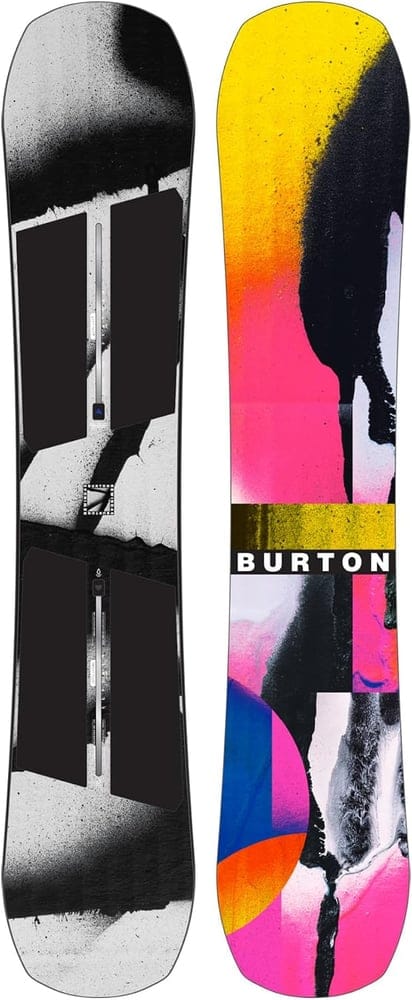 | 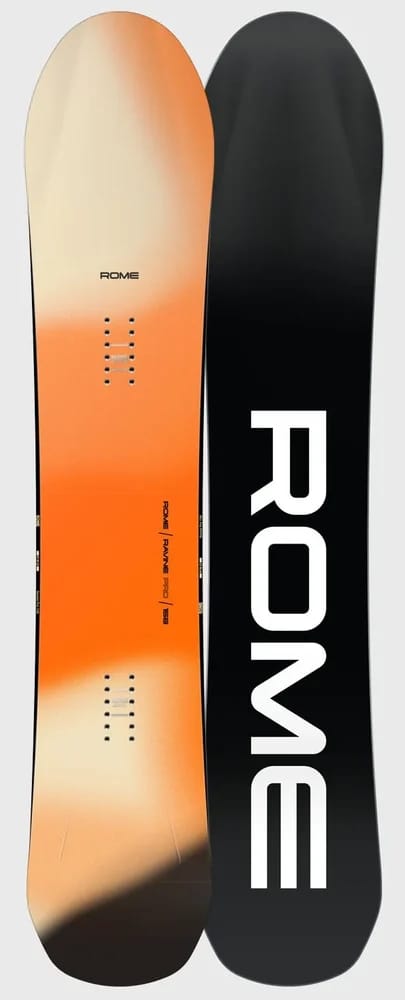 VS | |
| Camber Profile | Camber | Free-the-Ride Camber: rocker in the nose, flat underfoot up front, camber in the tail |
| Flex | Twin Flex | 8 (Playful to Precise scale) |
| Shape | All Mountain Directional Shape | Directional (Directional Diamond 3D nose) |
| Waist Width | 150: 248 mm | 152: 255 mm |
| Ability Level | Expert, Intermediate | Advanced-Expert |
| Size Range | 150–170W | 152–165W |
| Warranty | 3 Years | 2 Years |
| Sidecut Radius | 150: 7.4 m | 152: 5.7 / 7.0 / 5.2 m |
| Rider Weight | 150: 120–180 lb | 152: 126-170 lb |
| Stance | 150: 19.9 in | 152: 19.4-24.1 in |
| Base | Sintered WFO Base | SinterSpeed Base |
| Core And Laminates | Super Fly II 700G Core with Dualzone EGD; 45° Carbon Highlights Fiberglass | SuperPop Core, Carbon Omega HotRod, Biax Lower Glass, Triax Upper Glass, Flax Impact Plates, Directional Flax Walls |
| Inserts | The Channel Board Mount | 24 inserts |
| Burton Custom Camber | Rome Ravine Pro |
|---|---|
| |
| Camber Profile | |
Camber | Free-the-Ride Camber: rocker in the nose, flat underfoot up front, camber in the tail |
| Flex | |
Twin Flex | 8 (Playful to Precise scale) |
| Shape | |
All Mountain Directional Shape | Directional (Directional Diamond 3D nose) |
| Waist Width | |
150: 248 mm | 152: 255 mm |
| Ability Level | |
Expert, Intermediate | Advanced-Expert |
| Size Range | |
150–170W | 152–165W |
| Warranty | |
3 Years | 2 Years |
| Sidecut Radius | |
150: 7.4 m | 152: 5.7 / 7.0 / 5.2 m |
| Rider Weight | |
150: 120–180 lb | 152: 126-170 lb |
| Stance | |
150: 19.9 in | 152: 19.4-24.1 in |
| Base | |
Sintered WFO Base | SinterSpeed Base |
| Core And Laminates | |
Super Fly II 700G Core with Dualzone EGD; 45° Carbon Highlights Fiberglass | SuperPop Core, Carbon Omega HotRod, Biax Lower Glass, Triax Upper Glass, Flax Impact Plates, Directional Flax Walls |
| Inserts | |
The Channel Board Mount | 24 inserts |
Edge Control
Custom Camber
Ravine Pro
Edge control matters because it determines how confidently a board carves, how quickly it changes direction and how well it grips on firm snow. The Custom Camber is praised for being very responsive and precise from edge to edge, with a locked-in carving line, quick transitions and extra bite on ice and firm snow from its edge tech. Its edge hold is at its best in good conditions, though some riders say it lets go early on hard patches, falls apart in mint snow and rewards committed technique. The Ravine Pro earns strong marks for holding a powerful, controlled edge that digs trenches and cranks through medium and long carves with minimal knee drive. Its tri-radial sidecut eases entry and exit from turns, and buyers say it carves well even in tight trees without catching a toe or heel. Some riders note slower edge-to-edge response and more effort to engage the nose, plus less nimbleness from the stiffer tail. For most carvers who want consistent grip and a planted carving feel, the Ravine Pro is the stronger choice, while the Custom Camber suits riders who value quick, nimble turn initiation.
Stability
Custom Camber
Ravine Pro
Stability determines how a board feels at speed, in landings and when snow gets variable, which affects confidence for every rider level. The Custom Camber feels centered and planted, with buyers saying it powers through variable snow and lands solidly with plenty of support. Its full camber gives a firm, stable feel, but riders who get off their game can find it less forgiving and catchy to stay on top of. The Ravine Pro is described as solid underfoot while ripping around the resort, never pushed around or squirrely, with a lot of stability coming out of the tail. Its stiff flex pattern and quite stiff construction give a secure platform, though some riders say it gets bucked around when hitting frozen ground. Overall the Ravine Pro reads as the more reassuring board for aggressive riding across mixed terrain, while the Custom Camber offers stability that rewards a committed, centered stance.
Smooth Ride
Custom Camber
Ravine Pro
Smooth ride matters because it controls fatigue, comfort and how much the board chatters over hard, bumpy or broken snow. The Custom Camber is praised for powering through bumpy, chopped-up terrain with little chatter in the nose and tail at speed, which makes it a comfortable all-mountain choice. Some heavier riders find it bucks and bounces too much, and it can chatter on aggressive straight-line runs or feel less fun in uneven snow. The Ravine Pro gets strong feedback for its flax material and impact plates, which buyers describe as very damp, cozy and super smooth, soaking up bombs and plowing through chunder and crud. Its balance of dampness and poppiness is well regarded, though a few riders say the tail skips over giant moguls and the board feels skippy in bumps. Buyers who ride chopped snow and fast bombs will likely find the Ravine Pro more forgiving, while the Custom Camber works well for riders who want a lively feel and can handle some buzz.
Speed
Custom Camber
Ravine Pro
Speed matters for groomers, hardpack and long runs where a board needs to glide, hold its line and feel confident as velocity builds. The Custom Camber uses a sintered base that buyers find glides well, comes up to speed comfortably and feels confident on groomers and hardpack at a medium-fast to fast pace. Some riders say it does not point as well as expected, so it feels more stable than like a dedicated speed machine. The Ravine Pro also uses a fast sintered speed base and is described as comfortable across a wide range of speeds, holding up well when riders push harder and quick to rebound out of turns. The Ravine Pro has fewer total comments, but they are consistently positive. For riders who spend a lot of time going fast on open runs, the Ravine Pro has the stronger reputation, while the Custom Camber remains a solid, predictable option at moderate to high speed.
Powder Float
Custom Camber
Ravine Pro
Powder float matters for riders who chase deep days, because a board that stays up in soft snow is easier to ride and less tiring. The Custom Camber offers a confident, floaty feel thanks to its longer nose and setback stance, which keep the nose up in soft snow and power through it. Buyers describe its powder performance as good rather than exceptional, and some say its directional camber is not the easiest to float, that it can get messy in uneven snow and that it is not the best powder board available. Riders who ride deep days often pair it with a dedicated directional powder board. The Ravine Pro is one of the more persuasive powder options in its category, with a directional diamond nose and 3D shaping that displace soft snow and funnel it out to the side, preventing piling. Buyers say it floats very nicely, does not demand much effort in deep snow, held up well in dry powder and is easier to manage in the trees. For a single board that prioritizes deep-day float, the Ravine Pro is clearly the better choice.
Park Play
Custom Camber
Ravine Pro
Park play matters for riders who spend time on jumps, rails, boxes and switch laps, where pop, landing stability and freestyle versatility shape the day. The Custom Camber is a standout here, with lively pop, easy ollies, strong spring and energy underfoot and a true-twin feel that makes side hits, rollers and natural features fun. Buyers say it feels the same riding switch, handles park landings well and offers a high-performance, jump-leaning feel without much compromise. Its drawbacks are that buttering and presses can be harder on the full camber, and the nose press can take extra effort. The Ravine Pro has a catch-free nose that riders enjoy for swiveling around the resort, and it gives a confident platform for pop and airtime, with predictable takeoffs and lovely landings. However, its directional shape makes it feel more like a novelty in proper park laps, it is quite stiff for the terrain park, it jibs like a stiffer board and buttering is weaker, with the tail losing hold. It still handles jumps, drops, switch riding and wheelies. For park-focused buyers, the Custom Camber is the clear choice.
Trust & Transparency
- Data-driven rankings from real user reviews
- Affiliate partnerships don't influence our methodology
We may earn commission from links.
Conclusion & Final Verdict:
Choose the Burton Custom Camber if you ride mostly in the park, value lively pop, true-twin switch riding and a long warranty, and you are comfortable with a full camber that rewards committed technique.
Choose the Rome Ravine Pro if you spend most of your time on powder days, carving groomers, riding through chop and going fast, and you want a damp, stable board that floats well and holds an edge with control.
For a single all-mountain board that covers the widest range of conditions, the Ravine Pro is the stronger overall pick, while the Custom Camber is the better tool for park-focused riders.
Related Comparisons
Burton Custom CambervsNever Summer Infinity
The Burton Custom Camber suits riders who want a lively, park-friendly board with strong pop and a true-twin feel, while the Never Summer Infinity fits riders who put stability, edge hold and a smooth ride on hardpack and mixed terrain first.
Burton Custom CambervsNever Summer Proto Type 3
The Burton Custom Camber is the livelier freestyle-leaning board with a true-twin feel that suits riders who want pop in the park and planted stability on firm snow. The Never Summer Proto Type 3 is the more versatile all-rounder, with stronger edge hold, deep-snow float and speed, making it the better choice for carving and powder days.
Burton Custom CambervsNitro Team
The Burton Custom Camber suits riders who want lively pop, a true-twin feel and strong park performance, while the Nitro Team suits riders who want a stable, forgiving true-camber board with dependable edge hold. Both earn 3.8 out of 5, so riding style should decide the choice.
Burton Custom CambervsRIDE Warpig
The Burton Custom Camber suits riders who spend most of their time in the park and want lively pop with a true-twin feel, while the RIDE Warpig suits riders who prioritize carving, powder float and a steadier all-mountain ride. Both earn the same overall rating, so choose based on where you ride most.
Burton Custom CambervsSalomon Assassin
The Salomon Assassin is the stronger all-round pick for edge control, damping and park play, while the Burton Custom Camber suits riders who want more pop and planted stability. Choose the Assassin for smoother carving and a forgiving ride, or the Custom Camber if lively jumps and a locked-in feel matter most.
Salomon AssassinvsRome Ravine Pro
The Salomon Assassin suits riders who want a playful, poppy all-mountain board for park laps, jumps, and switch riding, while the Rome Ravine Pro suits powder seekers and aggressive carvers who want better float and a stiffer, more planted ride at speed.