
Salomon Assassin vs Rome Ravine Pro
Why You Can Trust Us
- Side-by-side analysis based on real user feedback
- Unbiased comparisons, not influenced by partnerships
- Updated as new data becomes available
We may earn from affiliate links at no extra cost to you.
| Assassin | Ravine Pro | |
|---|---|---|
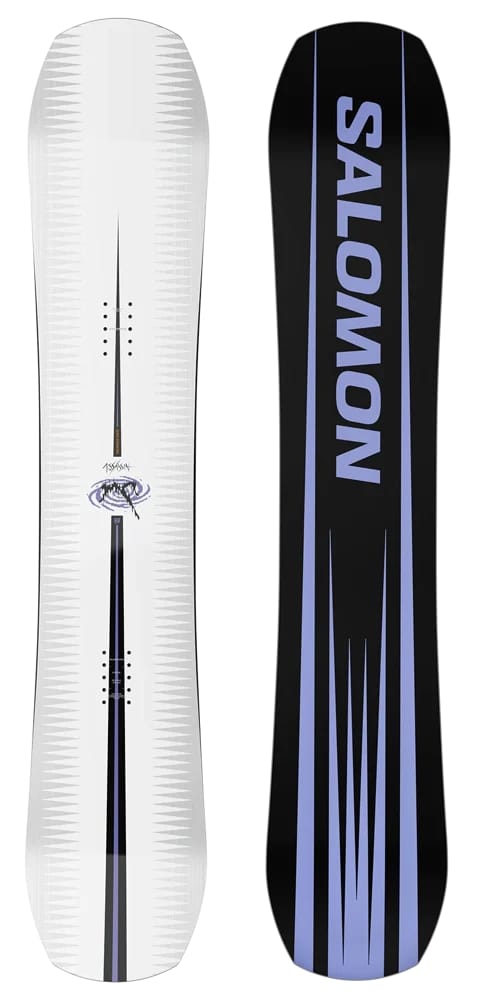 | 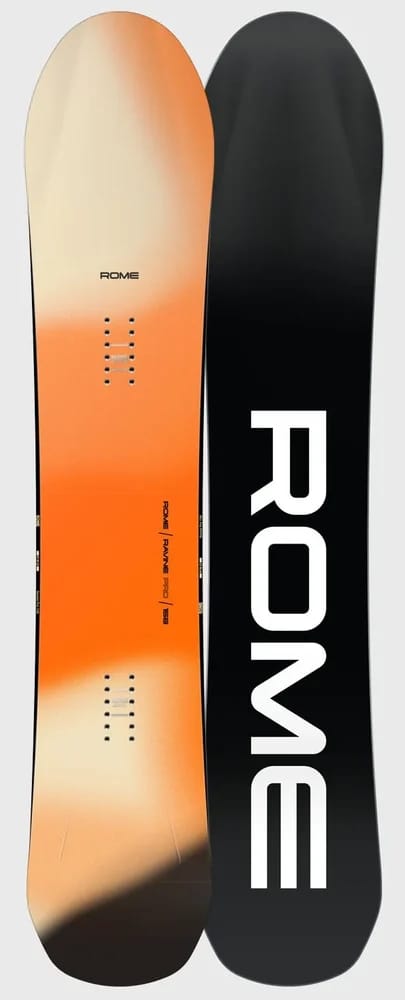 VS | |
| Camber Profile | Rock Out Camber | Free-the-Ride Camber: rocker in the nose, flat underfoot up front, camber in the tail |
| Flex | Medium | 8 (Playful to Precise scale) |
| Shape | Directional Twin | Directional (Directional Diamond 3D nose) |
| Waist Width | 150: 248 mm | 152: 255 mm |
| Ability Level | Advanced, Intermediate | Advanced-Expert |
| Size Range | 150, 153, 156, 158W, 159, 162, 163W, 165 | 152–165W |
| Warranty | 2 Years | 2 Years |
| Sidecut Radius | 150: 7.1 m | 152: 5.7 / 7.0 / 5.2 m |
| Rider Weight | Not published by Salomon | 152: 126-170 lb |
| Stance | Not published by Salomon | 152: 19.4-24.1 in |
| Base | Base Material: Sintered EG | SinterSpeed Base |
| Core And Laminates | Core Construction: Popster | SuperPop Core, Carbon Omega HotRod, Biax Lower Glass, Triax Upper Glass, Flax Impact Plates, Directional Flax Walls |
| Inserts | 4 × 2 Inserts | 24 inserts |
| Salomon Assassin | Rome Ravine Pro |
|---|---|
| |
| Camber Profile | |
Rock Out Camber | Free-the-Ride Camber: rocker in the nose, flat underfoot up front, camber in the tail |
| Flex | |
Medium | 8 (Playful to Precise scale) |
| Shape | |
Directional Twin | Directional (Directional Diamond 3D nose) |
| Waist Width | |
150: 248 mm | 152: 255 mm |
| Ability Level | |
Advanced, Intermediate | Advanced-Expert |
| Size Range | |
150, 153, 156, 158W, 159, 162, 163W, 165 | 152–165W |
| Warranty | |
2 Years | 2 Years |
| Sidecut Radius | |
150: 7.1 m | 152: 5.7 / 7.0 / 5.2 m |
| Rider Weight | |
Not published by Salomon | 152: 126-170 lb |
| Stance | |
Not published by Salomon | 152: 19.4-24.1 in |
| Base | |
Base Material: Sintered EG | SinterSpeed Base |
| Core And Laminates | |
Core Construction: Popster | SuperPop Core, Carbon Omega HotRod, Biax Lower Glass, Triax Upper Glass, Flax Impact Plates, Directional Flax Walls |
| Inserts | |
4 × 2 Inserts | 24 inserts |
Edge Control
Assassin
Ravine Pro
Edge control matters on every groomer and in every hard carve, because it determines how confidently a board grips, changes direction, and releases the turn. Both boards earn the same strong rating here, so neither has a clear overall advantage. The Assassin is praised for gripping well on hard snow, moving edge to edge quickly, and feeling smooth rather than hooky, with buyers noting there is nothing to hang up on and that toe-to-heel transitions are easy. Its main weak points are a tendency to slide on a shaded icy spot and the possibility of being overpowered if a carve is laid over too aggressively. The Ravine Pro earns praise for holding a strong edge, cranking into turns with minimal knee drive, and carving well in tight trees, with a few buyers describing it as a trench digger. Some reviewers found its edge-to-edge response slower and noted that the stiffer tail can reduce nimbleness. For a buyer who wants quick, playful transitions the Assassin is a good fit, while a buyer who wants a powerful, locked-in carve will find the Ravine Pro just as capable.
Stability
Assassin
Ravine Pro
Stability determines whether a board stays composed at speed, over chatter, and when landing or pushing into bigger features. The Ravine Pro has the clear edge here, with buyers repeatedly describing it as solid underfoot while ripping around the resort and rarely feeling pushed around or squirrely. Its stiff construction and firm flex pattern give it a planted feel that many riders associate with confidence in aggressive terrain. The Assassin is still regarded as stable and reliable, with buyers saying it handles most conditions and feels very true from nose to tail, but its stability is less consistently praised. A recurring complaint is that the nose can fold during a hard carve if the board is ridden too aggressively, and one reviewer felt it lacked stability compared with another model. Riders who push hard at speed or want a board that feels locked in should lean toward the Ravine Pro, while riders who want a stable but more playful ride can still be happy on the Assassin.
Smooth Ride
Assassin
Ravine Pro
Smooth ride matters because chatter, ice, and crud can quickly tire a rider on a long day across variable resort snow. The Ravine Pro has the better reputation here, with buyers consistently praising the flax material and impact plates for dampening vibration and giving a smoother, more confident ride when plowing through chunder or soaking up bigger bumps. Several reviewers described it as very damp while still retaining some poppiness. Its main drawbacks are that the tail can skip over giant moguls and that it can feel skippy in bumps. The Assassin is also comfortable and forgiving, with its rubber damping and reverse camber taking the edge off choppy terrain, and buyers say icy-spot vibration does not carry up into the knees or feet. However, some riders still feel chatter in the tips and resonating underfoot at higher speeds, and a few mention a jarring sensation. Overall, the Ravine Pro is the better choice for a rider who wants the most damped ride on rough or heavy snow, while the Assassin remains comfortable for most resort days.
Speed
Assassin
Ravine Pro
Speed matters for riders who spend time carving long runs, cruising fast on groomers, or taking jumps with momentum, because it reflects how well a board glides and stays composed at velocity. Both boards are rated closely, and both are praised for fast bases that hold up through the season, so this category is effectively a tie. The Assassin is described as fast and smooth, with buyers saying it tracks well into jumps, cruises easily at high speed, and has a super fast glide, though a few reviewers noted that very high speeds on steep hills may reach its limits. Its quick turn initiation and snappy response also make it feel lively at speed. The Ravine Pro's sintered base is repeatedly described as fast, and buyers say it feels confident and stays comfortable across a wide variety of speeds, with some noting that it rebounds quickly and was loved going fast. Riders who prioritize quick, responsive speed for lively runs may prefer the Assassin, while riders who want a confident, comfortable high-speed glide will find both boards well suited.
Powder Float
Assassin
Ravine Pro
Powder float matters for anyone who chases deep days, because it decides whether the board stays up near the surface or sinks and requires constant effort. The Ravine Pro is the clear leader here, with buyers praising its diamond nose and 3D shaping for displacing soft snow, funneling powder out to the sides, and staying up in deeper snow without requiring much work. Reviewers described it as a good all-around powder board that stays manageable in the trees and feels especially capable in dry powder. The Assassin can still float and some riders find it fun in powder, with its extra nose surface area and reverse camber helping in softer snow, but its float is more limited and more directional. Buyers mention that compressed fresh snow in trees is harder to stay in, and that its inserts and setback limit how much float it delivers. For a rider who spends most days in deep snow, the Ravine Pro is the better board, while the Assassin is better suited to mixed resort days where powder is occasional.
Park Play
Assassin
Ravine Pro
Park play matters for riders who spend time on jumps, rails, boxes, and switch lines, because it determines how easily a board pops, presses, and rides in the terrain park. The Assassin is the clear winner here, with buyers describing it as poppy, reactive, and playful, with organic pop off lips and kickers and a true-twin feel for switch riding. Its buttering and pressing are generally praised, and it locks into rails and springs into action on medium-sized jumps. Some reviewers noted that it can wash out on back-seat landings and that buttering is doable but not especially easy, and one reviewer felt it was bulky for jibbing. The Ravine Pro is more of a novelty in proper park laps because its directional shape and stiff flex make it feel less natural for buttering and jibbing. Buyers do report that it can handle jumps, drops, and switch riding, with predictable takeoffs and lovely landings, and it retains a freestyle feel for a board with a directional diamond nose. For a rider who wants a playful, park-capable all-mountain board, the Assassin is the better choice, while the Ravine Pro is better for riders who spend more time carving and floating than riding the park.
Trust & Transparency
- Data-driven rankings from real user reviews
- Affiliate partnerships don't influence our methodology
We may earn commission from links.
Conclusion & Final Verdict:
Choose the Salomon Assassin if you ride the park, want a poppy and playful board that switches easily, and carve well on firm groomers without wanting a stiff, locked-in feel. Choose the Rome Ravine Pro if powder and tree days are a big part of your riding, you want the most damped and planted ride at speed, and you prefer a stiffer board that carves powerfully. Both boards are strong on edge control and speed, so the decision comes down to whether you value park playfulness or deep-snow float and stability.
Related Comparisons
Burton Custom CambervsRome Ravine Pro
The Burton Custom Camber suits park riders and carvers who want lively pop, easy ollies and a true-twin feel, while the Rome Ravine Pro is the stronger pick for deep powder, speed and a smoother ride through chop. Choose the Custom Camber for freestyle-leaning all-mountain riding and the Ravine Pro if powder and stability matter more.
Burton Custom CambervsSalomon Assassin
The Salomon Assassin is the stronger all-round pick for edge control, damping and park play, while the Burton Custom Camber suits riders who want more pop and planted stability. Choose the Assassin for smoother carving and a forgiving ride, or the Custom Camber if lively jumps and a locked-in feel matter most.
Never Summer Proto Type 3vsRome Ravine Pro
The Never Summer Proto Type 3 is the better choice for riders who want one true twin board with locked-in carving, quick edge changes, and strong park and switch riding. The Rome Ravine Pro suits riders who spend most of their time in deep snow and trees and value a directional, planted feel with excellent float.
Never Summer Proto Type 3vsSalomon Assassin
The Proto Type 3 is the stronger choice for locked-in carving, stability at speed, and deep powder, while the Assassin suits riders who spend more time in the park and want snappier pop. Pick the Proto Type 3 for versatile all-mountain riding and the Assassin for freestyle-leaning days.
Salomon AssassinvsNever Summer Infinity
The Salomon Assassin is the better pick for park-focused riders who want poppy, switch-friendly play with quick edge-to-edge carving, while the Never Summer Infinity suits riders who prioritize planted stability, stronger edge hold on ice and hardpack, and a smoother ride on rough snow.
Salomon AssassinvsRIDE Warpig
The Assassin is the stronger pick for riders who want quick edge-to-edge carving, lively park play, and a damped ride. The Warpig suits those who want a wider directional board with more powder float and a steady feel, though it is less playful in the park.