
CAPiTA D.O.A. vs Jones Twin Sister
Why You Can Trust Us
- Side-by-side analysis based on real user feedback
- Unbiased comparisons, not influenced by partnerships
- Updated as new data becomes available
We may earn from affiliate links at no extra cost to you.
| D.O.A. | Twin Sister | |
|---|---|---|
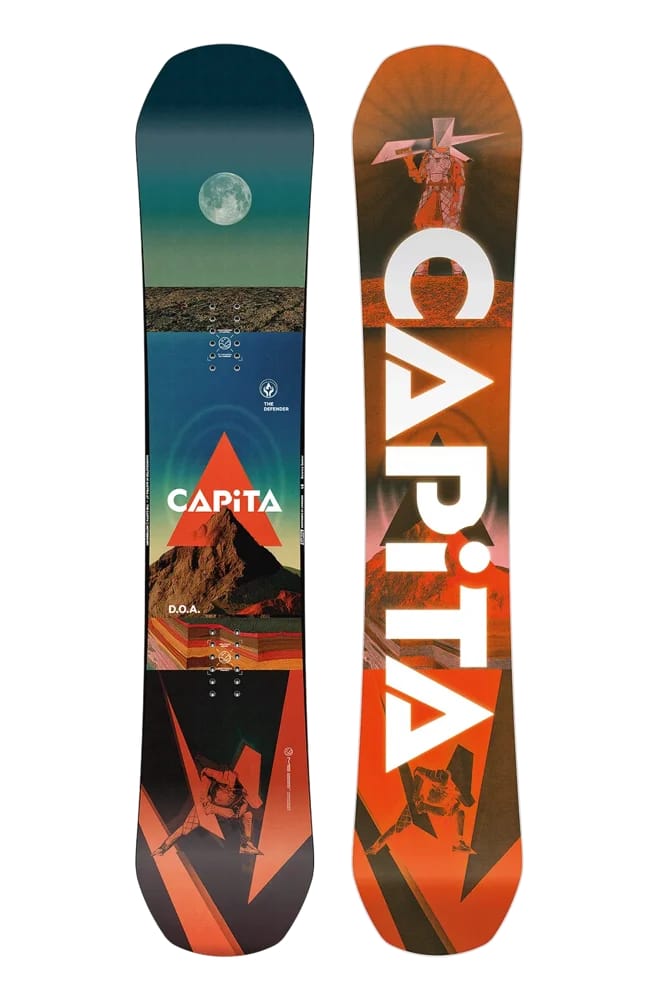 | 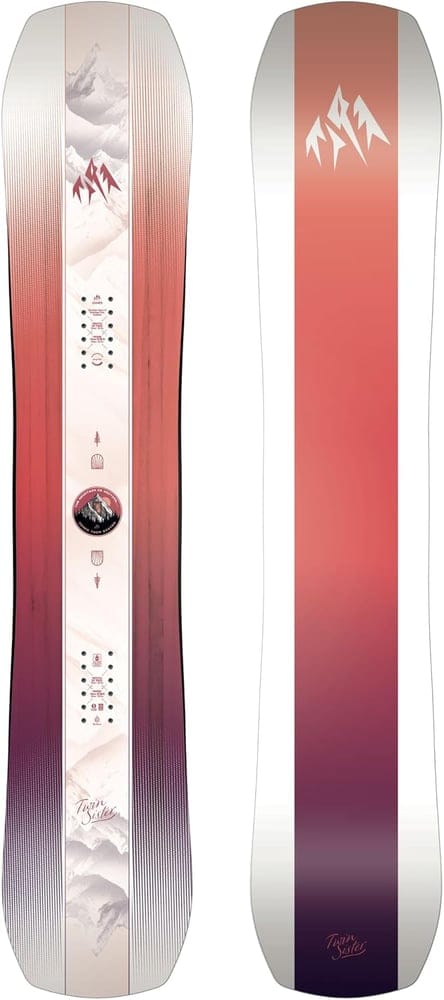 VS | |
| Camber Profile | Resort V1 + Flat Kick Tech | CamRock |
| Flex | TWIN 5.5 | Medium & balanced |
| Shape | TRUE TWIN | Directional Twin |
| Waist Width | 148: 244 mm | 140: 238 mm |
| Ability Level | Intermediate to Advanced | Intermediate |
| Size Range | 148–164, 151W–163W | 140, 143, 146, 149, 152, 155 |
| Warranty | 2 Years | 2+1 Warranty |
| Sidecut Radius | 148: 7.6 m | 140: 6.6 m |
| Rider Weight | 148: 90–150 lb | 140: 90-140 lb |
| Stance | 148: 20 in | 140: 19.3 in |
| Base | QUANTUM DRIVE™ running base | Sintered 8000 Base |
| Core And Laminates | Core: P2 Superlight™ Core | Master Core dual density wood core (Paulownia and Poplar); Biax Fiberglass laminate; ampliTex Carbon / Flax Stringers |
| Inserts | Not specified by CAPiTA | Freeride/Freestyle Pack |
| CAPiTA D.O.A. | Jones Twin Sister |
|---|---|
| |
| Camber Profile | |
Resort V1 + Flat Kick Tech | CamRock |
| Flex | |
TWIN 5.5 | Medium & balanced |
| Shape | |
TRUE TWIN | Directional Twin |
| Waist Width | |
148: 244 mm | 140: 238 mm |
| Ability Level | |
Intermediate to Advanced | Intermediate |
| Size Range | |
148–164, 151W–163W | 140, 143, 146, 149, 152, 155 |
| Warranty | |
2 Years | 2+1 Warranty |
| Sidecut Radius | |
148: 7.6 m | 140: 6.6 m |
| Rider Weight | |
148: 90–150 lb | 140: 90-140 lb |
| Stance | |
148: 20 in | 140: 19.3 in |
| Base | |
QUANTUM DRIVE™ running base | Sintered 8000 Base |
| Core And Laminates | |
Core: P2 Superlight™ Core | Master Core dual density wood core (Paulownia and Poplar); Biax Fiberglass laminate; ampliTex Carbon / Flax Stringers |
| Inserts | |
Not specified by CAPiTA | Freeride/Freestyle Pack |
Edge Control
D.O.A.
Twin Sister
Edge control matters because it determines how confidently a board turns, grips, and holds its line when you carve hard or the snow gets firm. The D.O.A. earns praise for precise, controlled edge-to-edge response, and riders say it makes quick short turns and corduroy feel nimble and direct. Its carbon-reinforced build also delivers a catch-free feel on the rail and a tail that holds an edge while sliding. Some riders, however, wanted a bit more bite and direction when pushing harder, and a few felt it did not fully commit at high speed. The Twin Sister scores higher here, with buyers describing traction on sketchy terrain, responsive edge-to-edge movement, and clean maneuverability. A minority mention slower turn initiation, but most say it turns easily and holds an edge well. If you ride firm snow or aggressive lines, the Twin Sister is the more dependable choice, while the D.O.A. suits riders who value quick, controlled carving over maximum grip.
Stability
D.O.A.
Twin Sister
Stability shapes how confident a board feels when you load it at speed, land jumps, or ride rough high-performance terrain. The D.O.A. feels solid and centered underfoot for many riders, including on landings and in high-performance zones, thanks to its carbon-reinforced construction. Some buyers, though, say the tail is softer than the nose and wish for a firmer back end, which can feel looser when you push. The Twin Sister is rated higher, with riders calling it very durable and super stable at high speeds. Its main drawback is that a few riders feel it becomes slightly unstable at the upper end of its speed range. For a buyer who regularly carries speed or lands big features and wants a planted feel, the Twin Sister offers the stronger advantage. The D.O.A. remains a secure choice for moderate speeds and freestyle riding where a slightly looser tail is less of a concern.
Smooth Ride
D.O.A.
Twin Sister
Smooth ride covers how a board absorbs chop, bumps, and uneven snow, and how much vibration reaches your feet during long runs. The D.O.A. is soft, forgiving, and comfortable while cruising, and riders report it skips over push piles and uneven spots with a predictable feel. Its rocker also helps it stay catch-free in mixed conditions. The trade-off is that its softer flex can feel less damped than a stiffer board, especially for riders who want a firm, quiet ride at speed. The Twin Sister earns the higher score, with buyers praising its damp, low-chatter feel and the pre-loaded tension that makes movements feel dynamic and fluid. Spoon-like beveling helps it roll smoothly heel to toe, and several riders say it stays solid on landings. A few riders found chop sketchy, but most reported little underfoot chatter. If you prioritize a damp, stable feel through rough snow, the Twin Sister is the better fit, while the D.O.A. suits riders who want a softer, more forgiving flex.
Speed
D.O.A.
Twin Sister
Speed matters because it affects how a board behaves on groomers, how fast it glides from the base, and how well it holds composure as you go faster. The D.O.A. is praised for feeling fun and controllable at moderate speeds, and it rides well across a broad range of speeds with a fast base glide when waxed. Its main limitation is that it feels less composed on high-speed jumps, and riders who want top-end speed need to keep the base waxed. The Twin Sister is described as meant to go fast, with buyers saying speed comes easily and that it handles speed well. That feedback is more limited in volume, however, and some riders note it can feel slightly unstable at higher speeds. Overall, the D.O.A. gets the edge here for a broad, controllable speed range, while the Twin Sister appeals to riders who want to open up on groomers, though its strengths are supported by fewer reviews.
Powder Float
D.O.A.
Twin Sister
Powder float determines how easily a board stays on top of soft snow and how much effort it takes to keep the nose up. The Twin Sister performs well in powder for many riders, with rocker and beveling that funnel snow out to the sides and help it slash through pockets in heavier or wetter snow. Some buyers feel it is heavier and floats less in deep snow, though most say it still performs in those conditions. The D.O.A. has mixed powder feedback: some riders describe a floaty, catch-free ride, while others say the nose sinks and they need to shift weight onto the back foot to keep it up. The Twin Sister therefore has the clearer advantage in soft snow. Neither board is a dedicated powder ride, so powder-focused buyers should treat both as capable all-mountain options, with the Twin Sister being the more reliable of the two.
Park Play
D.O.A.
Twin Sister
Park play matters most for riders who spend serious time in the terrain park, hitting jumps, jibbing rails, and butter or press tricks. The D.O.A. is a clear standout here, with buyers describing strong pop, easy and capable jibbing, and presses and butters that spring out cleanly. Its twin tip shape with identical nose and tail makes it a go-to for technical tricks and confident hits on bigger features, and riders often call it a true all-arounder in the park. The Twin Sister is also playful and fun, with pop for side hits and air, a mellow feel on smaller features, and good performance on bigger jumps. Riders note it butters nicely and rides switch well, though a few say it is not super forgiving for learning tricks and that it is not their go-to park board. For a buyer whose main goal is freestyle riding, the D.O.A. offers the more focused advantage. The Twin Sister is a strong secondary choice for riders who want a park-capable board that also excels at everything else on the mountain.
Trust & Transparency
- Data-driven rankings from real user reviews
- Affiliate partnerships don't influence our methodology
We may earn commission from links.
Conclusion & Final Verdict:
Choose the CAPiTA D.O.A. if the park is your main playground. It offers the strongest pop, easiest jibbing, and most confident presses and butters, along with a broad, controllable speed range. Its softer flex and mixed powder performance are the trade-offs.
Choose the Jones Twin Sister if you want a more complete all-mountain board. It holds an edge better on sketchy terrain, feels more stable at speed, and rides damper through chop, while still performing well in the park and in softer snow. Its extra year of warranty is a practical bonus. Riders who want a board for everything from groomers to side hits will find the Twin Sister the more balanced option.
Related Comparisons
CAPiTA D.O.A.vsCAPiTA The Equalizer
The D.O.A. is the stronger park and jib board, with a twin tip built for presses, butters, and tech tricks. The Equalizer suits riders who want a playful all-mountain board that floats better in light powder and soaks up bumps more smoothly.
CAPiTA D.O.A.vsGNU Banked Country
The CAPiTA D.O.A. is the better choice for park-first riders who want strong pop, easy jibbing, and a true twin shape. The GNU Banked Country suits advanced riders who prioritize locked-in carving, damped all-day comfort, and better powder float.
CAPiTA D.O.A.vsNever Summer Infinity
The CAPiTA D.O.A. is the better choice for park-focused riders who want strong pop, easy jibbing, and twin-tip tricks. The Never Summer Infinity suits riders who value stability, locked-in edge hold on firm snow, and a damp, comfortable ride across mixed terrain.
CAPiTA MercuryvsCAPiTA D.O.A.
The CAPiTA Mercury is the better choice for riders who want a stable, fast all-mountain board that also handles powder and park laps well, while the D.O.A. suits park riders who prioritize jibbing, pop, and a softer, more forgiving feel.
CAPiTA MercuryvsJones Twin Sister
The Mercury is the stronger pick for park riders, powder days, and fast all-mountain riding, while the Twin Sister is better for quick edge-to-edge turns, a damper ride, and dependable grip on sketchy snow. Choose the Mercury if you want a freestyle-friendly board that carries speed, or the Twin Sister if you want a playful, easy-turning, smooth-riding all-mountain option.
CAPiTA The EqualizervsJones Twin Sister
Choose The Equalizer if park riding, switch tricks, and easy float in light to moderate powder come first. Choose the Twin Sister if you want more dependable edge hold, stability at speed, and a damp ride that stays calm on chop.