
Dynastar M-Pro 98 W vs Stöckli Stormrider 88
Why You Can Trust Us
- Side-by-side analysis based on real user feedback
- Unbiased comparisons, not influenced by partnerships
- Updated as new data becomes available
We may earn from affiliate links at no extra cost to you.
| M-Pro 98 W | Stormrider 88 | |
|---|---|---|
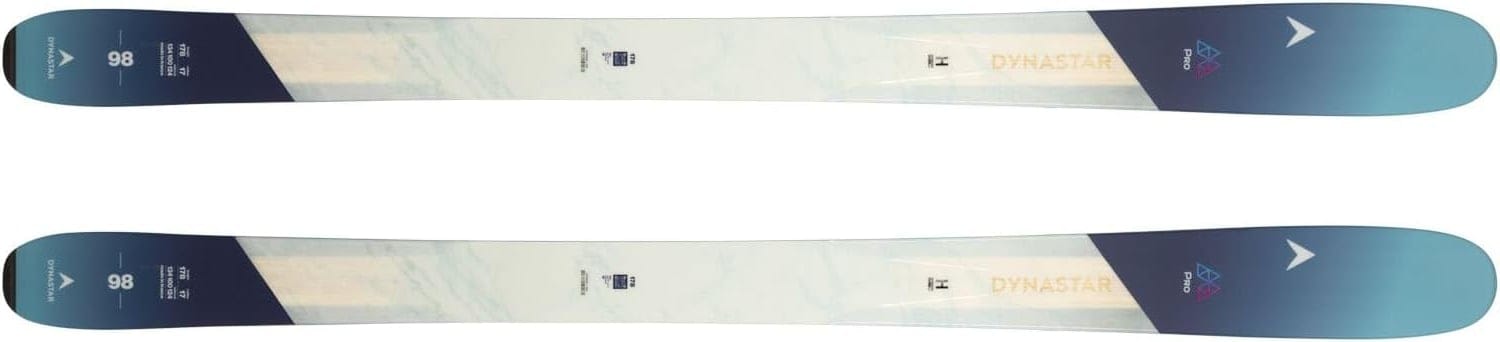 |  VS | |
| Waist Width | 98 mm | 88 mm |
| Turn Radius | 15 m at 162 cm | 18.3 m at 179 cm |
| Rocker Profile | Progressive Rocker (Rocker/Camber/Rocker) | Powder Rocker and Tail Rocker |
| Metal Layers | Titanal (layer count not specified) | Titanal (layer count not specified) |
| Length Range | 154-170 cm | 169-184 cm |
| Weight | N/A | 7.8 lb per pair at 179 cm |
| Warranty | 1 Year | Up to 4 Years |
| Sidecut Dimensions | 133-98-123 mm | 128-88-114 mm |
| Core Material | Hybrid Core 2.0 Poplar Tri Directionnal PU | Wood core (Sandwich System) |
| Sidewall | Full sidewall construction | POLYWALL |
| Dynastar M-Pro 98 W | Stöckli Stormrider 88 |
|---|---|
| |
| Waist Width | |
98 mm | 88 mm |
| Turn Radius | |
15 m at 162 cm | 18.3 m at 179 cm |
| Rocker Profile | |
Progressive Rocker (Rocker/Camber/Rocker) | Powder Rocker and Tail Rocker |
| Metal Layers | |
Titanal (layer count not specified) | Titanal (layer count not specified) |
| Length Range | |
154-170 cm | 169-184 cm |
| Weight | |
N/A | 7.8 lb per pair at 179 cm |
| Warranty | |
1 Year | Up to 4 Years |
| Sidecut Dimensions | |
133-98-123 mm | 128-88-114 mm |
| Core Material | |
Hybrid Core 2.0 Poplar Tri Directionnal PU | Wood core (Sandwich System) |
| Sidewall | |
Full sidewall construction | POLYWALL |
Stability
M-Pro 98 W
Stormrider 88
Stability matters for an all-mountain ski because it determines how calm the ski feels at speed, over chatter and through variable terrain. The M-Pro 98 W earns praise for a sturdy build, with its metal layers damping vibration and its full sidewalls keeping the ride quiet and composed. Buyers describe it as stable in steep terrain, predictable in challenging snow and never twitchy. The Stormrider 88 is the more widely praised ski in this area, with buyers repeatedly describing it as planted, damp close to the feet and nearly silent at speed, and noting that it absorbs icy bumps and shows little tip flutter. Some buyers say it can buck when it hits something in poor visibility and that it is not a charger, but the overall pattern is a smooth, solid ride. Both skis feel stable, but the Stormrider 88 delivers the more refined, chatter-free feel, so it is the stronger choice for buyers who prioritize calm at speed on firm snow.
Edge Grip
M-Pro 98 W
Stormrider 88
Edge grip determines how confidently a ski bites when you tilt it onto its edges, especially on firm snow and ice where most all-mountain skis are tested hardest. The M-Pro 98 W has good grip from its metal underfoot and feels happiest when railing carves, with buyers appreciating a firm but not overly aggressive hold on corduroy. Some buyers wanted more bite through the very end of the turn, and one noted that an older model felt like it was hanging on at the tail. The Stormrider 88 is clearly stronger here, with many buyers reporting it held an edge on both firm hardpack and ice, carved clean arcs and felt grippy at the tail. Buyers also praised its smoothness once on edge, though a few felt it lacks the raw power and grip of more aggressive carvers. For buyers who want to carve groomers and trust their edges on ice, the Stormrider 88 is the better pick.
Maneuverability
M-Pro 98 W
Stormrider 88
Maneuverability matters because it affects how easily a ski changes direction, how it handles bumps and how much effort it takes to keep turns quick in tight terrain. The M-Pro 98 W stands out here, with buyers describing it as more agile than wider skis, easy to pivot and quick to swing into turns, while its rocker and short contact length make it feel nimble in bumps and trees. Many buyers highlighted clean, round turns and smooth exits, and a few noted that it changes direction with ease without feeling sluggish. The Stormrider 88 is more of a mixed story, with buyers praising its soft tips and smooth initiation but saying that its wider tails limit how easily it turns in tight spots and that it can feel less easy than more shaped skis. Some found it required more work to get through the front section of bumps, although others said trees still felt easy. For buyers who prioritize quick, playful turns in tight terrain, the M-Pro 98 W is clearly the better choice.
Forgiveness
M-Pro 98 W
Stormrider 88
Forgiveness matters for skiers who are still refining timing, load and balance, because a forgiving ski keeps working even when inputs are imperfect. The Stormrider 88 is clearly more forgiving, with buyers calling it trustworthy, easy to balance on and not punishing while traversing. Its wider tails make it easier to hang on and forgive timing errors, and buyers said it asks for no perfect timing and offers enough forgiveness on steeper terrain. The M-Pro 98 W takes a more neutral position: buyers say it never forces you into one turn shape or size, which is useful, but few described it as an especially forgiving ski, and a small set of comments point to it not being a clear strength. For less experienced or intermediate skiers who want a confidence-building ski, the Stormrider 88 is the better choice, while the M-Pro 98 W suits those who value a flexible turn shape more than a safety net.
Powder Performance
M-Pro 98 W
Stormrider 88
Powder performance matters for an all-mountain ski because deep and soft snow is where rocker and width show their strengths. The M-Pro 98 W is the clear winner here, with buyers describing its long rocker as a strong floater that stays afloat with a bouncy feel, handles deep snow with powerful control and works well in soft snow and the trees. Several buyers said it floats very well in powder and in variable snow. The Stormrider 88 is more mixed, with some buyers saying it works through powder, bump zones and soft piles at the sides of runs, while others did not like it in deep snow and said it busts through soft piles. It is best viewed as a firm-snow ski first, so buyers who regularly ski deep powder will be better served by the M-Pro 98 W.
Versatility
M-Pro 98 W
Stormrider 88
Versatility matters because most buyers want one ski that can handle groomers, crud, bumps and changing snow without a major compromise. Both skis earn strong marks here. The M-Pro 98 W is praised for working across a broad range of conditions and terrain, blending all-mountain and freeride use, handling crud and chop and suiting skiers who mix speeds and snow types. Buyers also said it is versatile enough to progress an intermediate skier. The Stormrider 88 receives similarly strong feedback, with buyers calling it an upscale all-mountain carver that handles bad and refrozen snow, works as a daily driver and performs in warm crud and corduroy alike. Some buyers said it has enough performance for experts with finesse. A few felt its versatility was not a highlight compared with its carving strengths. Because both skis cover a wide range of conditions, the choice comes down to whether you want a more playful, powder-leaning all-mountain ski or a more carving-focused one that still handles variable snow.
Trust & Transparency
- Data-driven rankings from real user reviews
- Affiliate partnerships don't influence our methodology
We may earn commission from links.
Conclusion & Final Verdict:
Pick the Dynastar M-Pro 98 W if you want a nimble, powder-friendly all-mountain ski that pivots easily in bumps and trees and stays composed in variable snow.
Pick the Stöckli Stormrider 88 if you spend most of your time on firm groomers and ice, want a damp, quiet ride that forgives imperfect timing, and value strong edge hold above all.
For most skiers who prioritize carving and forgiveness, the Stormrider 88 is the safer buy, while skiers who prioritize powder, quick turns and playful handling should choose the M-Pro 98 W.
Related Comparisons
Blizzard Rustler 9vsStöckli Stormrider 88
The Rustler 9 is the more playful, versatile one-ski quiver for skiers who want quick turns in bumps and tight terrain, plus comfort in softer snow. The Stormrider 88 suits firm-snow carvers who want a quiet, planted ride with more forgiveness and stronger edge hold on ice.
Dynastar M-Pro 98 WvsRossignol Sender 100
The Dynastar M-Pro 98 W is the better choice for skiers who want a stable, floaty all-mountain ski for powder, soft snow and variable terrain. The Rossignol Sender 100 suits those who prioritize firm-snow carving, quick flickable turns and playful freestyle versatility.
Dynastar M-Pro 98 WvsSalomon QST 100
The M-Pro 98 W is the quicker, more playful pick for trees, bumps, and soft snow, while the QST 100 is the stronger all-rounder with better carving grip and forgiveness. Choose the Dynastar for agile turning and the Salomon if you want one ski for the whole mountain.
Dynastar M-Pro 98 WvsVölkl M7 Mantra
The Dynastar M-Pro 98 W is the more agile, floaty and forgiving choice for skiers who want one playful all-mountain ski that turns easily in bumps, trees and powder. The Völkl M7 Mantra is the stronger carver for advanced skiers who prize ice and firm-snow grip and can handle a stiff, demanding ski.
Elan Ripstick 96 Black EditionvsStöckli Stormrider 88
The Elan Ripstick 96 Black Edition is the quicker, lighter, more playful choice for agile skiers who want to ski trees, moguls and soft snow. The Stöckli Stormrider 88 is the calmer, more stable carver that grips firm snow and ice and forgives timing mistakes, so choose it for groomers and hardpack.
Fischer Ranger 96vsDynastar M-Pro 98 W
The Dynastar M-Pro 98 W is the stronger all-mountain pick for skiers who want agile turns, better powder float and a more composed ride in variable snow. The Fischer Ranger 96 suits intermediate skiers who want a forgiving, smooth daily driver.