
Dynastar M-Pro 98 W vs Salomon QST 100
Why You Can Trust Us
- Side-by-side analysis based on real user feedback
- Unbiased comparisons, not influenced by partnerships
- Updated as new data becomes available
We may earn from affiliate links at no extra cost to you.
| M-Pro 98 W | QST 100 | |
|---|---|---|
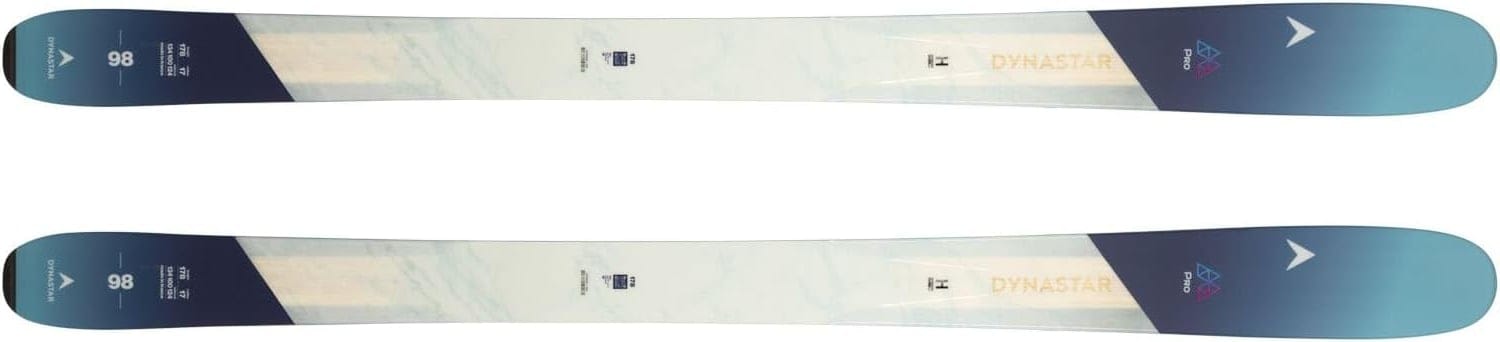 | 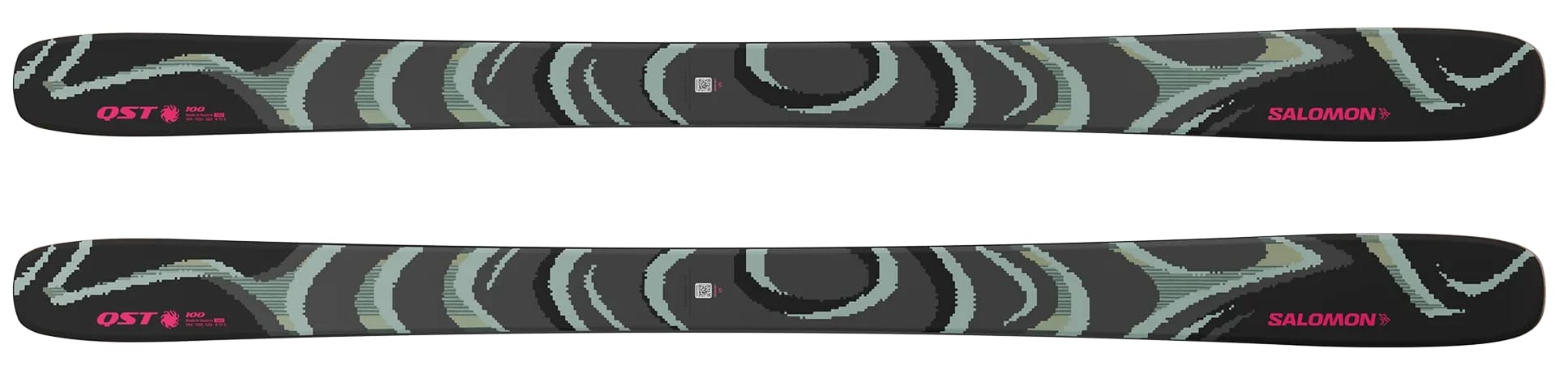 VS | |
| Waist Width | 98 mm | 100 mm |
| Turn Radius | 15 m at 162 cm | 17.5 m at 180 cm |
| Rocker Profile | Progressive Rocker (Rocker/Camber/Rocker) | Freeride profile (17% tip rocker, camber, 21% tail rocker) |
| Metal Layers | Titanal (layer count not specified) | 1 (Ti Binding Reinforcement underfoot) |
| Length Range | 154-170 cm | 148-188 cm |
| Weight | N/A | 4.1 lb per ski at 180 cm |
| Warranty | 1 Year | 2 Years |
| Sidecut Dimensions | 133-98-123 mm | 134-100-122 mm |
| Core Material | Hybrid Core 2.0 Poplar Tri Directionnal PU | Full poplar woodcore |
| Sidewall | Full sidewall construction | Full sandwich |
| Dynastar M-Pro 98 W | Salomon QST 100 |
|---|---|
| |
| Waist Width | |
98 mm | 100 mm |
| Turn Radius | |
15 m at 162 cm | 17.5 m at 180 cm |
| Rocker Profile | |
Progressive Rocker (Rocker/Camber/Rocker) | Freeride profile (17% tip rocker, camber, 21% tail rocker) |
| Metal Layers | |
Titanal (layer count not specified) | 1 (Ti Binding Reinforcement underfoot) |
| Length Range | |
154-170 cm | 148-188 cm |
| Weight | |
N/A | 4.1 lb per ski at 180 cm |
| Warranty | |
1 Year | 2 Years |
| Sidecut Dimensions | |
133-98-123 mm | 134-100-122 mm |
| Core Material | |
Hybrid Core 2.0 Poplar Tri Directionnal PU | Full poplar woodcore |
| Sidewall | |
Full sidewall construction | Full sandwich |
Stability
M-Pro 98 W
QST 100
Stability matters in an all-mountain ski because it determines whether the ski stays calm at speed, through chop, and on hard snow. Buyers of the M-Pro 98 W consistently describe a sturdy, composed feel, with the metal layers damping vibration and the polyurethane sidewalls giving a quiet ride, and testers said it felt predictable in steep and challenging terrain. The QST 100 earns similar praise for a damp, stable feel at high speed, credited to basalt stringers and cork dampeners in the tip and tail along with a sturdier tail that tracks true. Its main complaint is chatter on pure ice, which shows up as a limit on blue-ice days rather than a general stability problem. Overall both skis feel stable, with the M-Pro offering a firmer, metal-driven calm and the QST a lighter, damped calm that holds up well at speed. Neither has a clear edge here, so the choice comes down to whether you prefer the metal-backed feel or the composite damping.
Edge Grip
M-Pro 98 W
QST 100
Edge grip determines how confidently a ski holds an arc on firm groomers, and for many skiers it is the difference between carving and skidding. The M-Pro 98 W gets credit for good edge hold from its metal underfoot, a preference for being railed on edge, and a grip that stays controlled rather than aggressive. Some buyers wanted it to bite harder through the very end of the turn, and one reported the tail felt like it was hanging on at the finish. The QST 100 receives more consistently strong carving feedback, with buyers calling it very satisfying and describing a camber section that feels locked in on groomers. Its taper shape hooks just enough to pull through a carve without feeling overly hooky, and that grip comes from the construction rather than metal. For buyers who prioritize carving on firm snow, the QST 100 is the clear choice, while the M-Pro is a capable but less decisive carver.
Maneuverability
M-Pro 98 W
QST 100
Maneuverability shapes how easily a ski turns, pivots, and reacts in tight terrain, which is central to the appeal of both skis. The M-Pro 98 W is praised as more agile than wider skis, easy to swish into turns, nimble in the trees, and quick to change direction, with buyers pointing to its short contact length and rocker. The QST 100 draws even more maneuverability feedback, with buyers describing easy steering through trees and tight spaces, quick turn initiation, and turns that feel low effort, though a few noted it is still somewhat wiggly on flat ground and a small number felt it was slightly less agile than its predecessor. Both skis are clearly quick and easy to turn, and the difference is more about feel than capability. The M-Pro tends to feel lighter and more playful in short-radius turns, while the QST feels turnier and more stable through longer rhythmic turns. Neither has a decisive edge, so both are strong choices for skiers who value quick turning.
Forgiveness
M-Pro 98 W
QST 100
Forgiveness describes how well a ski recovers from mistakes and absorbs unexpected terrain, which matters most to intermediate skiers and anyone still refining their technique. The M-Pro 98 W earns a modest forgiveness score, with buyers noting it never forces a particular turn shape or size, which gives flexibility, but feedback is thin and it is not seen as a strong strength. The QST 100 earns a noticeably better forgiveness rating thanks to softer tips and tails, a rocker profile that helps correct mistakes, and a ski that almost finishes the turn for the skier. Buyers say it is easy to regain control and absorbs changes in terrain well. The trade-off is that a few reviewers found it less approachable than the QST 98 and a bit demanding for true beginners. For skiers who want a ski that helps them recover, the QST 100 is the better pick, while the M-Pro is more about flexibility of turn shape than safety net.
Powder Performance
M-Pro 98 W
QST 100
Powder performance matters because both skis are marketed for soft snow and must float without sacrificing control. The M-Pro 98 W earns strong praise for its long rocker, which buyers say makes it a nice floater that stays on top with a bouncy feel, and several said it is fun in the trees and easy to control in deep snow. The QST 100 is described as floating incredibly well, with buyers saying they never felt a lack of flotation, that the broader tip gives extra lift, and that it floats better than the QST 98 at speed. Both skis have strong powder credentials, and the QST's float comes with more consistent praise across varied snow, while the M-Pro's bouncy, playful float suits skiers who enjoy a lively feel in soft snow. Because both are highly regarded, the difference is one of personality rather than a clear advantage.
Versatility
M-Pro 98 W
QST 100
Versatility is the core promise of an all-mountain ski, so it is the category that best explains which of these skis suits a single-quiver buyer. The M-Pro 98 W is described as working across a variety of conditions, blending all-mountain and freeride use, and handling crud, chop, and variable snow, with buyers saying it is versatile enough to help an intermediate progress. The QST 100 receives an even broader set of feedback, with buyers calling it one of the most versatile skis of its season, handling nearly all snow except pure blue ice, performing well across trees, trails, bumps, and even park and jumps. Its wide sweet spot across skier types and its freestyle-friendly tail are standout points, though a few buyers noted limited appeal for dedicated park use. Both skis are strong all-mountain options, and the QST's broader range of feedback gives it a slight edge in breadth, while the M-Pro is a very capable choice for skiers who spend most of their time in variable and off-piste conditions.
Trust & Transparency
- Data-driven rankings from real user reviews
- Affiliate partnerships don't influence our methodology
We may earn commission from links.
Conclusion & Final Verdict:
Choose the Dynastar M-Pro 98 W if you want a lively, quick-turning ski that feels agile in trees, bumps, and soft snow, with a quiet and composed ride from its metal construction.
Choose the Salomon QST 100 if you want one ski that carves more confidently on groomers, forgives mistakes better, and covers the widest range of conditions and terrain, along with a longer warranty and a broader length range.
For most single-quiver all-mountain buyers, the QST 100 is the stronger all-rounder, while the M-Pro is the better choice for skiers who prize a nimble, playful feel.
Related Comparisons
Dynastar M-Pro 98 WvsNordica Santa Ana 92
The Dynastar M-Pro 98 W is the more agile, float-friendly ski, with quicker pivots and stronger powder and all-conditions versatility. The Nordica Santa Ana 92 suits buyers who want more forgiveness and a planted, damped feel on firm snow, though it rewards advanced skiers.
Dynastar M-Pro 98 WvsStöckli Stormrider 88
Choose the Dynastar M-Pro 98 W for agile turns, easy float in powder and playful variable snow, or the Stöckli Stormrider 88 for a quieter, grippier, more forgiving carver that excels on firm groomers and ice.
Dynastar M-Pro 98 WvsVölkl M7 Mantra
The Dynastar M-Pro 98 W is the more agile, floaty and forgiving choice for skiers who want one playful all-mountain ski that turns easily in bumps, trees and powder. The Völkl M7 Mantra is the stronger carver for advanced skiers who prize ice and firm-snow grip and can handle a stiff, demanding ski.
Elan Ripstick 96 Black EditionvsSalomon QST 100
The Ripstick 96 Black Edition is the quicker, lighter ski for agile skiers who want easy turn initiation and a mobile feel, while the QST 100 is the stronger all-rounder for skiers who want more damping, carving grip, and float. Pick the Ripstick for playful, lighter-weight use and the QST 100 for one ski that handles nearly everything.
Fischer Ranger 96vsDynastar M-Pro 98 W
The Dynastar M-Pro 98 W is the stronger all-mountain pick for skiers who want agile turns, better powder float and a more composed ride in variable snow. The Fischer Ranger 96 suits intermediate skiers who want a forgiving, smooth daily driver.
Head Kore 94 TivsSalomon QST 100
The Head Kore 94 Ti is the calmer, damper pick for skiers who want one ski for unpredictable days and firm or chopped snow. The Salomon QST 100 suits buyers who want more float in new snow, quicker turns through trees, and stronger carving on groomers.