
Fischer Ranger 96 vs Salomon QST 100
Why You Can Trust Us
- Side-by-side analysis based on real user feedback
- Unbiased comparisons, not influenced by partnerships
- Updated as new data becomes available
We may earn from affiliate links at no extra cost to you.
| Ranger 96 | QST 100 | |
|---|---|---|
 | 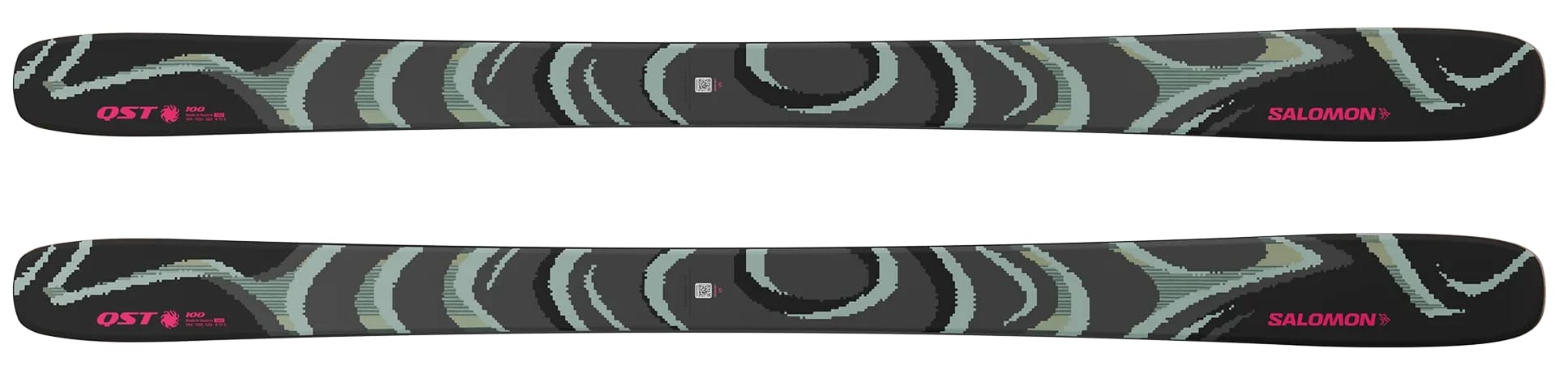 VS | |
| Waist Width | 96 mm | 100 mm |
| Turn Radius | 17 m at 173 cm | 17.5 m at 180 cm |
| Rocker Profile | Freeski Rocker (tip and tail rocker) | Freeride profile (17% tip rocker, camber, 21% tail rocker) |
| Metal Layers | 1 (Shaped Ti 0.5 mm titanal inlay) | 1 (Ti Binding Reinforcement underfoot) |
| Length Range | 159-187 cm | 148-188 cm |
| Weight | 4.1 lb per ski at 173 cm | 4.1 lb per ski at 180 cm |
| Warranty | N/A | 2 Years |
| Sidecut Dimensions | 128-96-119 mm | 134-100-122 mm |
| Core Material | Beech-poplar wood core | Full poplar woodcore |
| Sidewall | Sandwich sidewall (ABS) | Full sandwich |
| Fischer Ranger 96 | Salomon QST 100 |
|---|---|
| |
| Waist Width | |
96 mm | 100 mm |
| Turn Radius | |
17 m at 173 cm | 17.5 m at 180 cm |
| Rocker Profile | |
Freeski Rocker (tip and tail rocker) | Freeride profile (17% tip rocker, camber, 21% tail rocker) |
| Metal Layers | |
1 (Shaped Ti 0.5 mm titanal inlay) | 1 (Ti Binding Reinforcement underfoot) |
| Length Range | |
159-187 cm | 148-188 cm |
| Weight | |
4.1 lb per ski at 173 cm | 4.1 lb per ski at 180 cm |
| Warranty | |
N/A | 2 Years |
| Sidecut Dimensions | |
128-96-119 mm | 134-100-122 mm |
| Core Material | |
Beech-poplar wood core | Full poplar woodcore |
| Sidewall | |
Sandwich sidewall (ABS) | Full sandwich |
Stability
Ranger 96
QST 100
Stability matters for an all-mountain ski because it determines how calm the ski feels at speed and over bumpy, variable snow. The Ranger 96 earns praise for a quiet, vibration-soaking ride, with buyers describing it as smooth, sturdy, and comfortable when skiing fast, and noting that its metal inlay absorbs chatter on uneven terrain and chunder. Some testers felt it lacked energy and that the shovels could feel like they give way when leaning forward. The QST 100 is the more stable ski overall, with basalt stringers and cork dampeners in the tip and tail that buyers repeatedly credit for a calm, damped feel and reliable tracking at high speed. Its main weakness is chatter on pure ice, which matters only on blue-ice days. For most buyers who ski fast and want composure across varied snow, the QST 100 is the clear winner here.
Edge Grip
Ranger 96
QST 100
Edge grip determines how confidently a ski holds on groomers and firm snow, which matters most for carving and for skiers who spend time on hardpack. The Ranger 96 holds an edge well for its class, helped by its stiffer flex, metal, and thick wood core, and buyers say its camber gives them something to push against in carves. However, it is described as not the strongest carving ski and may lose grip on firmer snow than slightly soft conditions. The QST 100 is noticeably stronger here, with buyers calling it very satisfying and extraordinarily good in a carve, even without much metal. Its taper hooks just enough to carve without feeling overly hooky. A buyer who wants a confident carving ski on firm groomers should choose the QST 100, while the Ranger 96 is adequate for mixed conditions.
Maneuverability
Ranger 96
QST 100
Maneuverability shapes how easily a ski turns, pivots, and adapts in trees, bumps, and tight spaces. The Ranger 96 is light, easy to turn, and quick to release, with buyers describing very quick turns and a rocker profile that never fights them in tight spots. Some note it is not prone to hooking, which makes it playful. The QST 100 goes further, with many buyers describing it as very easy to steer, especially in trees and bumps, and calling its maneuverability off the charts. Its tip and tail rocker make it easy to roll into turns, pop out of bumps, and weave through technical terrain with low effort. A few buyers noted it still feels a bit wiggly on flat base, but for skiers who spend time in glades and bumps, the QST 100 is the more agile choice.
Forgiveness
Ranger 96
QST 100
Forgiveness matters for intermediate skiers and for anyone who wants a ski that makes mistakes less punishing. The Ranger 96 is praised for a supportive flex that is not overly stiff or demanding, and buyers say intermediates can have a good time on it, which helps them progress with one less variable to manage. The QST 100 is also described as forgiving, thanks to softer tips and tails that make it easy to get back in control and let the ski almost finish the turn. Some buyers, however, found it less approachable than its predecessor and a bit off-putting for true beginners. Both skis are reasonably forgiving for intermediates, so this category is effectively a tie, with the Ranger 96 a slightly easier starting point for newer skiers and the QST 100 offering more ease in varied terrain.
Powder Performance
Ranger 96
QST 100
Powder performance matters because an all-mountain ski should still deliver float when fresh snow arrives. The Ranger 96 handles crud, chop, and trees with a supple, predictable feel, and it is well suited to soft off-trail snow. Buyers do feel its width is narrower than they would want for a true powder ski. The QST 100 floats very well, with buyers reporting they never felt a lack of flotation, even in deeper snow and in trees with fresh snow. Its broader tip shape gives it extra lift, and buyers say it floats better at speed. If you ride a lot of deep days, the QST 100 is the stronger choice, while the Ranger 96 is a reasonable option for occasional soft-snow skiing.
Versatility
Ranger 96
QST 100
Versatility is the core promise of an all-mountain ski, and it determines how many days and conditions a single pair can cover. The Ranger 96 is widely described as a true daily driver that works across groomers, chop, crud, and soft snow, and buyers call it well rounded across skier types. Some note that it does not excel in one specific area and is not built for park, switch, or brand-new skiers. The QST 100 covers a broader range, with buyers describing it as capable across nearly all snow conditions, handling everything from groomers and bumps to trees, crud, and jumps. Many say it performs a level above across everything it does, and it is also freestyle friendly, with some buyers praising its park capability. Its limitations are mostly limited park focus and pure blue ice. Overall, the QST 100 is the more complete all-mountain option.
Trust & Transparency
- Data-driven rankings from real user reviews
- Affiliate partnerships don't influence our methodology
We may earn commission from links.
Conclusion & Final Verdict:
Choose the Fischer Ranger 96 if you want a smooth, damped, playful daily driver that suits intermediate and advanced skiers mostly on groomers, chop, and soft snow, and you value a calm, forgiving feel over peak performance.
Choose the Salomon QST 100 if you want the stronger all-mountain ski, with better carving, float, agility in trees and bumps, and a broader range of conditions and lengths. For most skiers who want one ski to cover the whole mountain, the QST 100 is the better overall pick.
Related Comparisons
Fischer Ranger 96vsBlizzard Black Pearl 94
Pick the Black Pearl 94 for stable, responsive carving at speed and easy turn starts. Pick the Ranger 96 if you want a smooth, playful daily driver that handles mixed snow with less demand on your technique.
Fischer Ranger 96vsBlizzard Rustler 9
The Ranger 96 is the smoother, more forgiving daily driver for intermediate and advanced skiers who want a damped ride on mixed snow. The Rustler 9 is the sharper, more playful twin-tip for skiers who carve firm groomers, ride bumps, and want to hit park and switch terrain.
Fischer Ranger 96vsK2 Mindbender 96
The Fischer Ranger 96 is the more versatile, quicker-turning daily driver for skiers who want one ski for groomers, chop, and soft snow. The K2 Mindbender 96 is the steadier, more planted choice for faster skiers who want stability at speed and a snappy turn feel.
Fischer Ranger 96vsLINE Pandora 99
The Fischer Ranger 96 is the smoother, more composed daily driver for mixed groomers and chop, while the LINE Pandora 99 is livelier, more agile, and better suited to soft snow, trees, and park-influenced riding. Choose the Ranger for calm all-mountain stability and the Pandora for playful, float-friendly skiing.
Fischer Ranger 96vsNordica Santa Ana 92
The Fischer Ranger 96 is the more versatile, smoother daily driver for intermediate to advanced all-mountain skiers who want a playful, forgiving ski. The Nordica Santa Ana 92 is the stronger performer for advanced and expert skiers who want more stability, edge grip, and tip float.
Fischer Ranger 96vsRossignol Sender 100
The Sender 100 is the stronger choice for skiers who want firm-snow carving, quick bump and tree handling, and park-friendly versatility. The Ranger 96 suits buyers who want a calmer, damper daily driver for mixed terrain and softer snow.