
Jones Mountain Twin vs Lib Tech Skunk Ape Camber
Why You Can Trust Us
- Side-by-side analysis based on real user feedback
- Unbiased comparisons, not influenced by partnerships
- Updated as new data becomes available
We may earn from affiliate links at no extra cost to you.
| Mountain Twin | Skunk Ape Camber | |
|---|---|---|
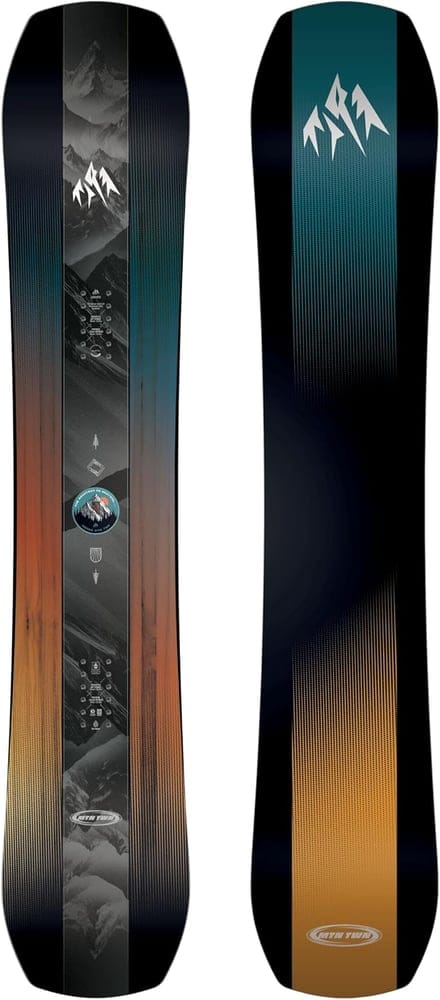 | 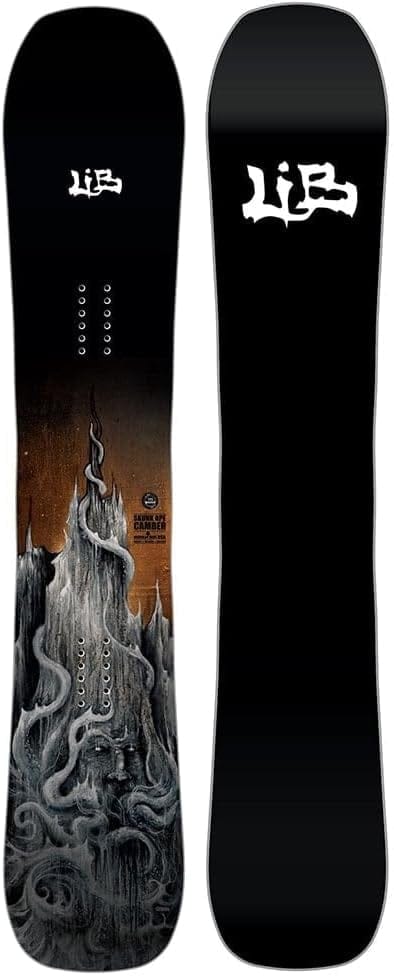 VS | |
| Camber Profile | CamRock | Traditional camber |
| Flex | 6/10 | 7 of 10 (10 = Firm) |
| Shape | Directional Twin | Directional twin |
| Waist Width | 244 mm to 282 mm | 157W: 268 mm |
| Ability Level | Intermediate | Intermediate to Advanced |
| Size Range | 149 to 168W | 157W, 161W, 163UW, 165W, 169W, 170UW, 173UW |
| Warranty | 2 Years + 1 Free Year Extension | 1 Year |
| Sidecut Radius | 7.2–8.5 m | 157W: 8.5 m |
| Rider Weight | 110 to 220+ lb | 157W: 140+ lb |
| Stance | Reference 20.5–22.8 in; centered (0 setback) | 21 in – 26 in |
| Base | Sintered 8000 Base | Sintered knife cut base |
| Core And Laminates | Master Core; Biax Fiberglass; BComp Carbon Flax Stringer | Core: Extended 60% aspen / 40% paulownia |
| Inserts | Freeride/Freestyle Pack | Not specified by Lib Tech |
| Jones Mountain Twin | Lib Tech Skunk Ape Camber |
|---|---|
| |
| Camber Profile | |
CamRock | Traditional camber |
| Flex | |
6/10 | 7 of 10 (10 = Firm) |
| Shape | |
Directional Twin | Directional twin |
| Waist Width | |
244 mm to 282 mm | 157W: 268 mm |
| Ability Level | |
Intermediate | Intermediate to Advanced |
| Size Range | |
149 to 168W | 157W, 161W, 163UW, 165W, 169W, 170UW, 173UW |
| Warranty | |
2 Years + 1 Free Year Extension | 1 Year |
| Sidecut Radius | |
7.2–8.5 m | 157W: 8.5 m |
| Rider Weight | |
110 to 220+ lb | 157W: 140+ lb |
| Stance | |
Reference 20.5–22.8 in; centered (0 setback) | 21 in – 26 in |
| Base | |
Sintered 8000 Base | Sintered knife cut base |
| Core And Laminates | |
Master Core; Biax Fiberglass; BComp Carbon Flax Stringer | Core: Extended 60% aspen / 40% paulownia |
| Inserts | |
Freeride/Freestyle Pack | Not specified by Lib Tech |
Edge Control
Mountain Twin
Skunk Ape Camber
Edge control matters on all-mountain boards because it determines how confidently you can carve groomers, hold a line on pitches, and stay locked in on firm or icy snow. The Jones Mountain Twin earns the stronger edge score of 4.6 compared with 4.4 for the Skunk Ape Camber, and reviewers praise its confident grip, quick and forgiving turn initiation, and strong arcing on groomers and pitches. Riders say it holds an edge well on icy days, and its mellow disrupted side cut and magna traction add contact points along the edge. The Skunk Ape Camber is the more aggressive grip option on hard snow, with reviewers describing tremendous edge hold, trenching, and a locked-in feel from its camber and Magne-Traction. Its tradeoffs are that it takes more effort to roll up onto the toe and heel edges and feels less quick when sketching through tight trees. The Mountain Twin is the easier board to steer and initiate with, while the Camber rewards riders who want maximum bite and don't mind the extra work. For most all-mountain riders the Mountain Twin wins this category, though carvers focused on hard snow may prefer the Camber's grip.
Stability
Mountain Twin
Skunk Ape Camber
Stability shapes how a board behaves at speed, in rough snow, and when you take off or land in firm pack. The Mountain Twin scores 3.9 against 3.7 for the Skunk Ape Camber, and its camber profile and fairly stiff flex give it a planted feel on steeper pitches. It is less steady in chunder and when landing or taking off in harder pack, so riders who spend time in rough or firm terrain should weigh that caution. The Skunk Ape Camber is often described as very stable and sturdy at higher speeds thanks to its wider platform, and many riders say it tracks well and holds steady. A few reviewers, however, find it does not track quite as precisely as they would like, so testing it matters if tracking accuracy is a priority. For a buyer who mostly rides fast groomers, the Camber's wide platform may feel more reassuring, but the Mountain Twin has the edge overall, especially on steep terrain. The Mountain Twin is the narrow winner here, while the Camber remains a solid choice for riders focused on speed stability.
Smooth Ride
Mountain Twin
Skunk Ape Camber
Smooth ride describes how a board absorbs bumps, chatter, and vibration, which affects how fresh you feel at the end of a long day. The Mountain Twin leads 4.4 to 3.8, with reviewers praising its forgiving rocker-camber profile and a medium flex that holds you without bouncing. Riders describe it as very smooth over bumps and consistent in almost every condition, though it is not the most damp option in its class and some riders notice chatter on edge at higher speeds. The Skunk Ape Camber is described as damp and able to absorb impact, laying riders down gently on rough terrain while keeping the tail composed rather than washy. Some riders find its full camber catchy or a little loose and twitchy, which can feel lively or demanding depending on preference. The Mountain Twin is the more comfortable and forgiving all-day ride, while the Camber suits riders who want damping in rough snow and enjoy the responsiveness of full camber. Overall the Mountain Twin is the better pick for comfort-focused riders.
Speed
Mountain Twin
Skunk Ape Camber
Speed covers base glide, how a board holds momentum on groomers and traverses, and how quickly it responds through turns. The two boards score close, 3.3 for the Mountain Twin and 3.2 for the Skunk Ape Camber, and the evidence on both is thin. The Mountain Twin is reported to hold speed better than comparable boards and to glide easily through traverses, though its base glide is not as fast as some rivals. The Skunk Ape Camber initiates turns quickly and has a stiffer side that helps it hold speed on groomers. Several owners, however, say its base glide is sluggish and wax fades fast, so frequent waxing is needed to keep it fast. Neither board is a clear speed specialist, so buyers chasing maximum glide should compare dedicated speed boards. For riders who want a practical all-mountain balance, either board can work, with the Mountain Twin having a slight edge for easy glide and the Camber's frequent waxing need as the main caution. This category is effectively a tie.
Powder Float
Mountain Twin
Skunk Ape Camber
Powder float matters for riders who chase deep snow and want a board that stays near the surface instead of diving. The Mountain Twin scores 4.4 against 3.4 for the Skunk Ape Camber, and reviewers credit its spoon contour and rocker tip and tail for keeping it above deep snow and riding over bumps and powder-like terrain. Riders also note directional float when they set back their stance, which makes it a strong all-mountain powder choice. The Skunk Ape Camber floats well in soft snow, with some riders calling it a dream in powder. Others feel it is not as good a float as dedicated powder competitors, which makes it better suited to riders who split time between powder and firm snow. For a buyer who wants to ride powder regularly, the Mountain Twin is the clearer pick. The Camber works well if powder is an occasional treat on mostly firm days.
Park Play
Mountain Twin
Skunk Ape Camber
Park play matters for riders who spend time on jumps, rails, boxes, and pipes, where pop, buttering, and switch riding define how the board feels. The Mountain Twin scores 4.7 against 4.2 for the Skunk Ape Camber, with reviewers highlighting strong pop and snap on ollies, easy buttering, good takeoffs and landings, and standout switch riding. Some riders find it a little loose in the park, so it suits intermediate to advanced freestyle riders. The Skunk Ape Camber is known for its pop, helping riders get off jumps, rollers, and ollies, and it feels playful and stable on boxes and rails. Its tradeoffs include butters that some riders find harder to land and one reviewer who was thrown off after a flat spin in and out of switch. The Mountain Twin is the stronger all-around park board, especially for riders who ride switch and do spins. The Camber is a poppy option for riders who prioritize stability on boxes and rails.
Trust & Transparency
- Data-driven rankings from real user reviews
- Affiliate partnerships don't influence our methodology
We may earn commission from links.
Conclusion & Final Verdict:
Pick the Jones Mountain Twin if you want a forgiving, comfortable all-mountain board that excels in the park, handles switch riding well, and floats nicely in powder. It is the better fit for intermediate to advanced riders who split time between groomers, pow days, and jumps, and it has the stronger warranty and a broader rider weight range.
Pick the Lib Tech Skunk Ape Camber if your priority is aggressive grip on hard snow and icy groomers, with a stable, damp feel at speed. It suits riders who enjoy driving a full-camber board hard and can accept more effort to get onto the edges, frequent waxing, and weaker float in deep snow.
Related Comparisons
Jones Mountain TwinvsCAPiTA D.O.A.
The Jones Mountain Twin is the better choice for riders who want confident carving, softer bump absorption, and better powder float, while the CAPiTA D.O.A. suits park-focused riders who prioritize jibbing, pop, and fast glide. Pick the Mountain Twin for all-mountain versatility and the D.O.A. for freestyle-first resort riding.
Jones Mountain TwinvsCAPiTA Mercury
The Jones Mountain Twin is the better choice for carving, powder days, and switch park riding, while the CAPiTA Mercury suits riders who want a faster, more planted board that stays locked in at speed and in the air.
Jones Mountain TwinvsGNU Banked Country
The Jones Mountain Twin is the more playful, precise carver with stronger powder float and switch riding, best for intermediate riders who want a forgiving all-mountain board. The GNU Banked Country suits advanced riders who want a damper, more stable ride with lively camber pop.
Jones Mountain TwinvsJones Twin Sister
Mountain Twin is the stronger all-mountain pick for carving precision, freestyle play, and fresh-snow float, while Twin Sister suits riders who want more stability at speed and a damp, poppy ride. Choose Mountain Twin for playful, versatile riding and Twin Sister for fast, steady cruising.
Jones Mountain TwinvsNever Summer Infinity
The Mountain Twin is the playful pick for intermediate to advanced riders who want strong park pop, easy switch riding, and good float in fresh snow. The Infinity suits buyers who prioritize a planted, damp, stable ride with locked-in edge hold at speed and on firm snow.
Jones Mountain TwinvsRIDE Warpig
The Jones Mountain Twin is the better pick for buyers who want playful park riding, strong switch performance, smooth comfort, and confident carving. The RIDE Warpig suits riders who want a wide, directional all-mountain board with a steady feel and better straight-line speed.