
LINE Pandora 99 vs Salomon QST 100
Why You Can Trust Us
- Side-by-side analysis based on real user feedback
- Unbiased comparisons, not influenced by partnerships
- Updated as new data becomes available
We may earn from affiliate links at no extra cost to you.
| Pandora 99 | QST 100 | |
|---|---|---|
 | 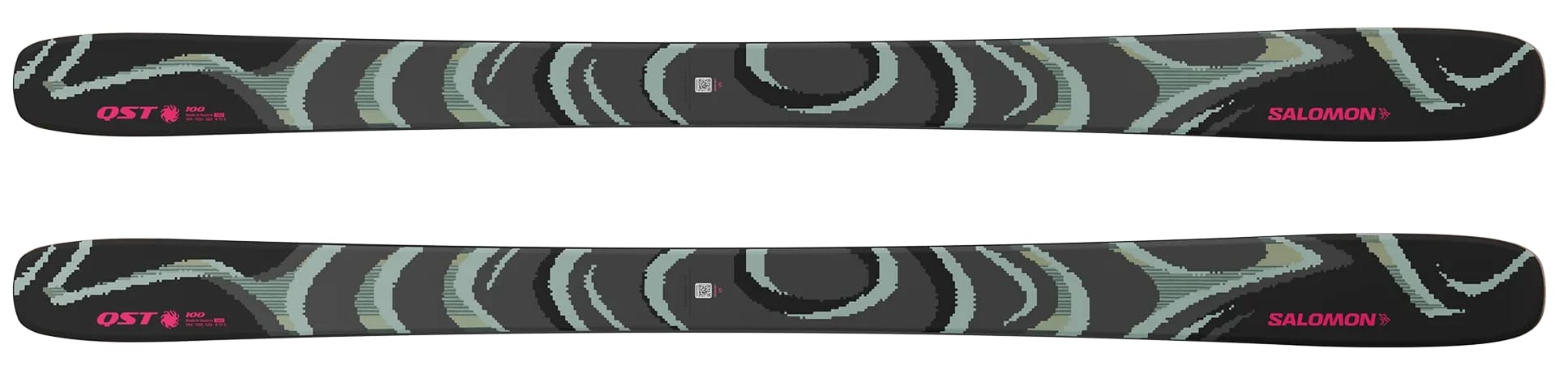 VS | |
| Waist Width | 99 mm | 100 mm |
| Turn Radius | 18 m at 177 cm (5CUT multi-radius sidecut) | 17.5 m at 180 cm |
| Rocker Profile | Rocker-camber-rocker (11 mm tip rise, 2 mm camber, 6 mm tail rise) | Freeride profile (17% tip rocker, camber, 21% tail rocker) |
| Metal Layers | No metal | 1 (Ti Binding Reinforcement underfoot) |
| Length Range | 149-184 cm | 148-188 cm |
| Weight | 4.3 lb per ski at 177 cm | 4.1 lb per ski at 180 cm |
| Warranty | N/A | 2 Years |
| Sidecut Dimensions | 130-99-120 mm | 134-100-122 mm |
| Core Material | Aspen veneer wood core | Full poplar woodcore |
| Sidewall | Capwall (Thick-Cut Sidewall) | Full sandwich |
| LINE Pandora 99 | Salomon QST 100 |
|---|---|
| |
| Waist Width | |
99 mm | 100 mm |
| Turn Radius | |
18 m at 177 cm (5CUT multi-radius sidecut) | 17.5 m at 180 cm |
| Rocker Profile | |
Rocker-camber-rocker (11 mm tip rise, 2 mm camber, 6 mm tail rise) | Freeride profile (17% tip rocker, camber, 21% tail rocker) |
| Metal Layers | |
No metal | 1 (Ti Binding Reinforcement underfoot) |
| Length Range | |
149-184 cm | 148-188 cm |
| Weight | |
4.3 lb per ski at 177 cm | 4.1 lb per ski at 180 cm |
| Warranty | |
N/A | 2 Years |
| Sidecut Dimensions | |
130-99-120 mm | 134-100-122 mm |
| Core Material | |
Aspen veneer wood core | Full poplar woodcore |
| Sidewall | |
Capwall (Thick-Cut Sidewall) | Full sandwich |
Stability
Pandora 99
QST 100
Stability matters in an all-mountain ski because it determines whether the ski stays composed when speed builds, when the snow surface changes, or when you charge through chatter. The Pandora 99 earns respectable feedback here, with buyers pointing to thicker sidewalls that add dampness, a stiffer flex that helps more aggressive skiing, and a sturdy underfoot feel that inspires confidence in the steeps. Some testers, however, noted that it lacks higher-end stability at speed and can feel less settled when pushed hard. The QST 100 is the clear leader in this category, with buyers repeatedly praising basalt stringers and cork dampeners in the tip and tail that calm vibration and keep the ski tracking true. Its sturdier tail and its tendency to stay composed at high speed gave it a noticeable edge in comparisons. The main negative for the QST 100 is chatter on pure ice, which can be a real issue on hardpacked days. For most buyers who ski fast or in variable conditions, the QST 100 is the more stable and reassuring choice.
Edge Grip
Pandora 99
QST 100
Edge grip determines how confidently a ski holds an arc on firm snow, which is crucial when you want to carve groomers rather than skid through them. The Pandora 99 gets positive feedback, with testers saying it sets an edge better than expected and that thicker underfoot sidewalls add support when you lean the ski onto its edge. Its long effective edge and 18 m turn radius help it stay engaged through the turn, though some buyers noted that without metal it carves less aggressively on groomers than a stiffer, metal-reinforced ski. The QST 100 stands out with much stronger carving feedback, with buyers calling it extraordinarily good and describing the camber section as locked in when carving. Its taper hooks just enough to allow clean carves without feeling overly grabby, and buyers reported that it gives enough grip on firm snow to rely on in a carve. If you spend much of your time on groomers and want a ski that rewards aggressive carving, the QST 100 is the better fit. The Pandora 99 is a capable carver but is less compelling if edge hold on firm snow is your priority.
Maneuverability
Pandora 99
QST 100
Maneuverability shapes how easily a ski turns, changes direction, and handles tight spaces, which matters most when you ski trees, bumps, and variable terrain. Both skis earned the same top-tier rating here, but they feel agile in different ways. The Pandora 99 is described as incredibly mobile, with lighter tips and tails that make it easy to throw sideways, smear, drift, and pop over small bumps, and buyers say it feels lively and playful at medium speeds. Some buyers noted it takes a lap to get used to. The QST 100 earns praise for steering very well through trees and tight spaces, with testers describing its maneuverability as off the charts and its turn initiation as very easy, especially in the tips. Its rocker profile reduces the effort needed to make turns, and its 18.5 m turn radius lets it wiggle through technical terrain with ease, though a few buyers said it still feels a bit wiggly on flat ground. If you want the quickest playful feel, the Pandora 99 is hard to beat. If you want easy, precise steering that stays composed through the turn, the QST 100 is an equally strong choice, so this category is effectively a tie.
Forgiveness
Pandora 99
QST 100
Forgiveness describes how well a ski lets you recover from mistakes and how approachable it feels at lower speeds, which matters for intermediates and anyone still building confidence. The Pandora 99 earns good marks for being fun at lower speeds and easy to use in trees, and buyers describe it as sitting on the more accessible side of the spectrum. A few buyers noted that it took some time to get used to. The QST 100 also earns positive feedback, with its softer tips and tails making it forgiving and easy to get back in control, and buyers say the ski almost finishes the turn for you and absorbs terrain changes well. At the same time, some testers found it less approachable than its predecessor and off-putting for true beginners. Overall the two skis are close in this category, with the Pandora 99 feeling a little more playful and the QST 100 feeling a little more composed. Both are good choices for intermediates, and neither is a clear winner for forgiveness.
Powder Performance
Pandora 99
QST 100
Powder performance matters because a ski that floats well keeps you on top of soft snow instead of sinking, which is a major part of the all-mountain experience. The Pandora 99 gets strong feedback as a great floater, with buyers pointing to its tip and tail rocker and the flotation it gives in soft snow, bumps, and trees. The QST 100 earns higher marks, with buyers reporting that it floats incredibly well and that they never felt a lack of flotation, even in deeper areas. Its broader tip shape and rocker are credited with giving it more float, and some testers noted it floats better at speed than its predecessor. Both skis handle powder well, but the QST 100 has the stronger reputation and is the better choice if deep snow is a frequent part of your skiing. The Pandora 99 remains a fun powder ski, especially for those who want a lighter, livelier feel in soft snow.
Versatility
Pandora 99
QST 100
Versatility is central to any all-mountain ski because it determines how many conditions, terrains, and skier styles a ski can handle. Both products earned top-tier versatility ratings, and buyers describe them as capable across most of the mountain. The Pandora 99 is praised for its twin-tip shape, which handles freestyle, park, switch skiing, and groomers as a directional twin, and it suits intermediates through experts who want a playful all-mountain ski. Its limitation is that its freestyle leanings give it less of a freeride-first feel. The QST 100 earns strong feedback as a one-ski quiver, with buyers saying it handles nearly all snow conditions except pure blue ice and works across groomers, trees, bumps, crud, and jumps. Its tail rise allows some freestyle fun, but it is not built for dedicated park skiing. The choice comes down to whether you want a playful, twin-tip-leaning all-mountain ski or a more carving-capable one-ski quiver, which makes this category a tie.
Trust & Transparency
- Data-driven rankings from real user reviews
- Affiliate partnerships don't influence our methodology
We may earn commission from links.
Conclusion & Final Verdict:
Choose the QST 100 if you want a damped, carving-capable one-ski quiver that holds up at speed, floats well in deep snow, and comes with a 2-year warranty. It is the stronger pick for skiers who spend time on groomers and in variable conditions, and it is less likely to feel out of place on any part of the mountain.
Choose the Pandora 99 if you prioritize a lively, playful feel in trees, bumps, and soft snow, and you want a twin-tip that works in the park and switch. It is an excellent choice for intermediates and freestyle-leaning experts who value agility over firm-snow precision.
Related Comparisons
Head Kore 94 TivsSalomon QST 100
The Head Kore 94 Ti is the calmer, damper pick for skiers who want one ski for unpredictable days and firm or chopped snow. The Salomon QST 100 suits buyers who want more float in new snow, quicker turns through trees, and stronger carving on groomers.
K2 Mindbender 96vsSalomon QST 100
The Mindbender 96 suits skiers who want a damp, stable, do-it-all ski that stays planted at speed. The QST 100 is the better pick for most all-mountain skiers, with stronger edge grip, float, and maneuverability.
LINE Pandora 99vsNordica Santa Ana 92
The LINE Pandora 99 is the more playful, versatile choice for skiers who want quick turns in trees, soft snow, and park features, while the Nordica Santa Ana 92 offers a more planted, damped ride for advanced skiers who prioritize stability on firm and variable snow. Both score 4.2/5 overall, so the choice comes down to whether you value agility or composure more.
LINE Pandora 99vsRossignol Sender 100
The Sender 100 is the stronger pick for firm-snow carving, stability at speed, and forgiveness, while the Pandora 99 is the better fit for powder, bumps, and playful tree skiing. Choose the Sender for a more committed all-mountain ski and the Pandora for a lighter, looser feel.
LINE Pandora 99vsStöckli Stormrider 88
The LINE Pandora 99 is the playful, float-friendly choice for skiers who want quick turns in trees, soft snow, and park features. The Stöckli Stormrider 88 is the firmer, quieter carver for buyers who spend most days on groomers and ice and want more forgiveness.
LINE Pandora 99vsVölkl M7 Mantra
The LINE Pandora 99 suits skiers who want a playful, agile twin-tip for trees, soft snow, and mixed terrain. The Völkl M7 Mantra is the better pick for strong skiers who prioritize firm-snow edge hold and stability at speed, though it is demanding for intermediates.