
Nidecker Rift Pro vs K2 Orton
Why You Can Trust Us
- Side-by-side analysis based on real user feedback
- Unbiased comparisons, not influenced by partnerships
- Updated as new data becomes available
We may earn from affiliate links at no extra cost to you.
| Rift Pro | Orton | |
|---|---|---|
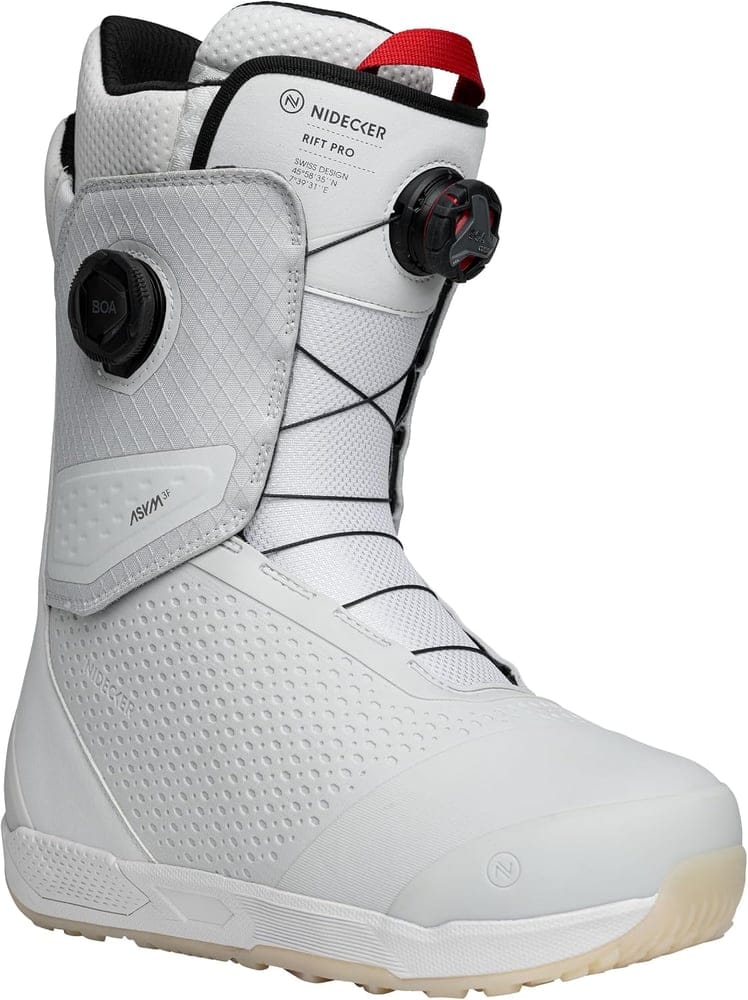 | 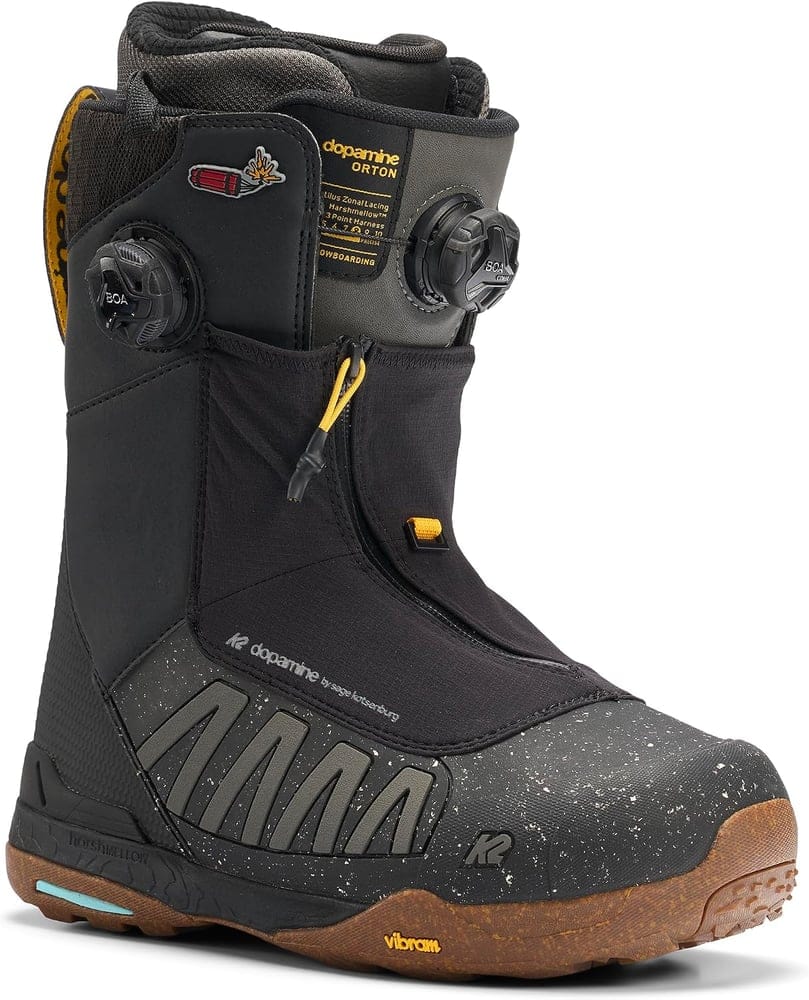 VS | |
| Flex | Mid-stiff (3/5) | Stiff |
| Closure System | Dual BOA® Fit System with H5 Coiler™ dials | Dual-zone BOA® Fit System Powered by H5 |
| Binding Compatibility | Standard strap bindings (Supermatic® compatible) | Standard strap bindings |
| Liner Type | Silver heat-moldable liner | Intuition® Pro Foam 3D heat-moldable liner |
| Warranty | 1 Year | 1 Year |
| Footbed Type | 3D Pro insole | Eco-Harshmellow™ Pro Insole |
| Outsole Type | Surface rubber outsole | Vibram® V5 Outsole with Harshmellow™ |
| Size Range | US Men's 7–13 | US Men's 7–13 (Women's 8–14) |
| Nidecker Rift Pro | K2 Orton |
|---|---|
| |
| Flex | |
Mid-stiff (3/5) | Stiff |
| Closure System | |
Dual BOA® Fit System with H5 Coiler™ dials | Dual-zone BOA® Fit System Powered by H5 |
| Binding Compatibility | |
Standard strap bindings (Supermatic® compatible) | Standard strap bindings |
| Liner Type | |
Silver heat-moldable liner | Intuition® Pro Foam 3D heat-moldable liner |
| Warranty | |
1 Year | 1 Year |
| Footbed Type | |
3D Pro insole | Eco-Harshmellow™ Pro Insole |
| Outsole Type | |
Surface rubber outsole | Vibram® V5 Outsole with Harshmellow™ |
| Size Range | |
US Men's 7–13 | US Men's 7–13 (Women's 8–14) |
Comfort
Rift Pro
Orton
Comfort matters in a snowboard boot because you wear it for full days on the mountain, and pressure points or a poorly padded footbed can turn a great run into a painful one. The Rift Pro earns a solid 3.6 out of 5 here, with many buyers saying the liner and foam feel good and do not pinch the sides. Some riders, however, find the insole thin and soft, and the boot can feel stiff or uncomfortable at first, with forefoot pressure and seams occasionally bothering riders with bunions or sensitive feet. The Orton scores higher at 4.2 out of 5, with buyers frequently calling it comfortable right out of the box thanks to its snug, cushioned Intuition liner, blanket panels and heat-reflective tape that help keep feet warm on long days. Its main comfort caveat is that a side seam in the liner may be felt by some feet, and a few buyers note the toe strap does not crush small toes. For most riders the Orton is the more comfortable choice, while the Rift Pro is a reasonable option if you prioritize a softer, more forgiving initial feel and can tolerate a break-in period.
Fit
Rift Pro
Orton
Fit is often the make-or-break factor in a snowboard boot, since a poor shape causes heel lift, loose forefoot space or cold toes no matter how good the rest of the boot is. The Rift Pro rates 3.4 out of 5 for fit, and buyer experiences are notably mixed: some find the toe box wide or the boot a touch big, while others report a loose forefoot or a heel that feels narrow. Its dual BOA dials and secure heel hold do help many riders dial things in, and a heat-moldable liner and internal harness add some adjustability, but sizing is hit or miss, so trying the boot on before buying is important. The Orton earns 4.4 out of 5 with a clearer pattern of praise, thanks to its wider forefoot, narrower heel with minimal heel lift, and a heat-moldable Intuition liner that conforms to the foot. Its dual BOA zonal lacing lets riders set upper and lower tightness independently, and buyers also mention accommodating bigger calves and a three-point harness that sews into the shell for precision. The Orton is the clear fit leader and the better bet for riders who have struggled with heel slip or want a customizable shape.
Support
Rift Pro
Orton
Support determines how much control you get when carving, landing jumps and riding hard snow, and it also affects how the boot feels at the ankle and shin. The Rift Pro scores 3.6 out of 5, with buyers describing a medium-stiff, responsive flex and a supportive ankle strap that give solid control for confident all-mountain riding. Some riders find it stiff at first, and a few say the rigidity can limit ankle articulation or that a multi-piece spine changes its rebound over time. The Orton rates 4.6 out of 5 with a firmer, more aggressive character, featuring a rigid ankle area, a urethane backspine that provides rebound, and multi-density foam that adds rigidity at the ankle. Its stiffness can be adjusted if needed, which gives riders some flexibility to tune the feel. Riders who want a softer, more forgiving flex will likely prefer the Rift Pro, but anyone seeking steady control and strong rebound on hard landings will find the Orton the more capable option.
Board Feel
Rift Pro
Orton
Board feel describes how directly you sense the snow and the board through the boot and binding, which matters most for riders who want precise edge control and quick, responsive turns. The Rift Pro scores 3.1 out of 5, and buyer impressions are split: some describe a more isolated sensation from underfoot through the binding, while others say it works well with most boards. Overall it lands in a neutral, middle-of-the-road zone rather than standing out as a strength. The Orton earns 4.3 out of 5, with buyers describing it as very responsive and able to transfer power into turns, while its Harshmellow foam and rubber damping reduce vibration for a quieter ride. That combination of responsiveness and damping suits riders who want to feel the board without being jarred by it. If board connection is a priority, the Orton is clearly the stronger choice, while the Rift Pro is adequate for riders who care more about comfort than direct feedback.
Traction
Rift Pro
Orton
Traction affects how confidently you walk across icy lots, climb lift lines and hold your footing in mixed terrain, which is useful even for riders who spend most of their time on the board. The Rift Pro earns 3.9 out of 5, with buyers praising its Vibram sole and tread pattern for dependable grip on snow and around resort terrain, making it one of the boot's more consistent selling points. The Orton scores 3.6 out of 5, with its Vibram V5 outsole and nice tread pattern praised for grip in cold conditions, though there is less buyer feedback overall, so it is a solid performer rather than a headline strength. Both boots should handle typical resort walking well, but the Rift Pro has the more established reputation for footing in this area. Shoppers who walk a lot in icy conditions may give the Rift Pro a slight edge, while the Orton is still a dependable choice for snow riding.
Durability
Rift Pro
Orton
Durability matters because a snowboard boot is subjected to repeated flexing, moisture, cold and abrasion over many seasons, and a boot that breaks down early is a poor investment. Both boots rate 4.4 out of 5 in this category, so they are effectively tied on durability. The Rift Pro is praised for a TPU shell that resists breakdown, abrasion-resistant double-stitched seams, a durable toe area and a reputation for lasting longer than many boots, though some buyers note that toe nicks wear faster and the dual-density foam may break down over time. The Orton is also well built, with double-stitched seams on a durable gusset, scratch-resistant fabric, a sturdy toe cap, an Endo backstay and minimal stitching that helps seams hold up to wet conditions. Riders who want a boot built for many seasons can reasonably choose either, with the Rift Pro offering a slightly more established reputation for longevity in the buyer feedback.
Trust & Transparency
- Data-driven rankings from real user reviews
- Affiliate partnerships don't influence our methodology
We may earn commission from links.
Conclusion & Final Verdict:
Choose the Nidecker Rift Pro if you want a durable, comfortable all-mountain boot with a softer, more forgiving feel, a stronger reputation for traction and a more budget-minded approach to long-term wear, and you are willing to try it on carefully because sizing is inconsistent.
Choose the K2 Orton if fit, board feel and support matter most to you. Its wider forefoot, narrower heel, heat-moldable liner and zonal BOA lacing deliver a more precise, customizable fit, while its responsive, damped ride and firm ankle support make it the stronger performance pick for aggressive riding. Expect a stiffer break-in and a possible side seam sensation.
Related Comparisons
K2 MaysisvsK2 Orton
The K2 Maysis is the comfort-first pick, with a soft cushioned liner, a heel gel cushion, and a responsive medium-stiff flex. The K2 Orton suits riders who want a precise custom fit and firmer, more aggressive support for steady control.
Nidecker Rift ProvsBurton Limelight BOA
The Burton Limelight BOA is the stronger pick for riders who want plush all-day cushioning, warmth and a more predictable fit. The Nidecker Rift Pro suits buyers who put long-term durability and a responsive all-mountain flex first, and who are willing to try on sizes carefully.
Nidecker Rift ProvsBurton Photon Step On
The Nidecker Rift Pro suits riders who value a long-lasting, medium-stiff all-mountain boot with standard binding compatibility, while the Burton Photon Step On is the better pick for all-day comfort, stronger grip and a more secure fit, provided you ride Step On bindings.
Nidecker Rift ProvsNitro Bianca TLS
The Nitro Bianca TLS is the better pick for riders who want warmth, a locked-in heel, strong grip and a responsive feel, with a 4.4/5 overall rating. The Nidecker Rift Pro suits buyers who put long-term durability first and are willing to try sizing on before buying, scoring 3.6/5 overall.
Nidecker Rift ProvsNitro Team TLS
The Nidecker Rift Pro is the better pick for riders who prioritize long-term durability and a responsive all-mountain flex, though sizing is inconsistent. The Nitro Team TLS is the stronger choice for buyers who want a comfortable, warm, supportive boot with better board feel and superior grip, and who are willing to deal with a fussier lacing system.
Nidecker Rift ProvsRIDE Hera
The Nidecker Rift Pro suits riders who want a tough, long-lasting all-mountain boot with stronger grip, while the RIDE Hera is the better choice for those who want a plusher, locked-in fit with more cushioning and quicker board feel.