
Nidecker Rift Pro vs RIDE Hera
Why You Can Trust Us
- Side-by-side analysis based on real user feedback
- Unbiased comparisons, not influenced by partnerships
- Updated as new data becomes available
We may earn from affiliate links at no extra cost to you.
| Rift Pro | Hera | |
|---|---|---|
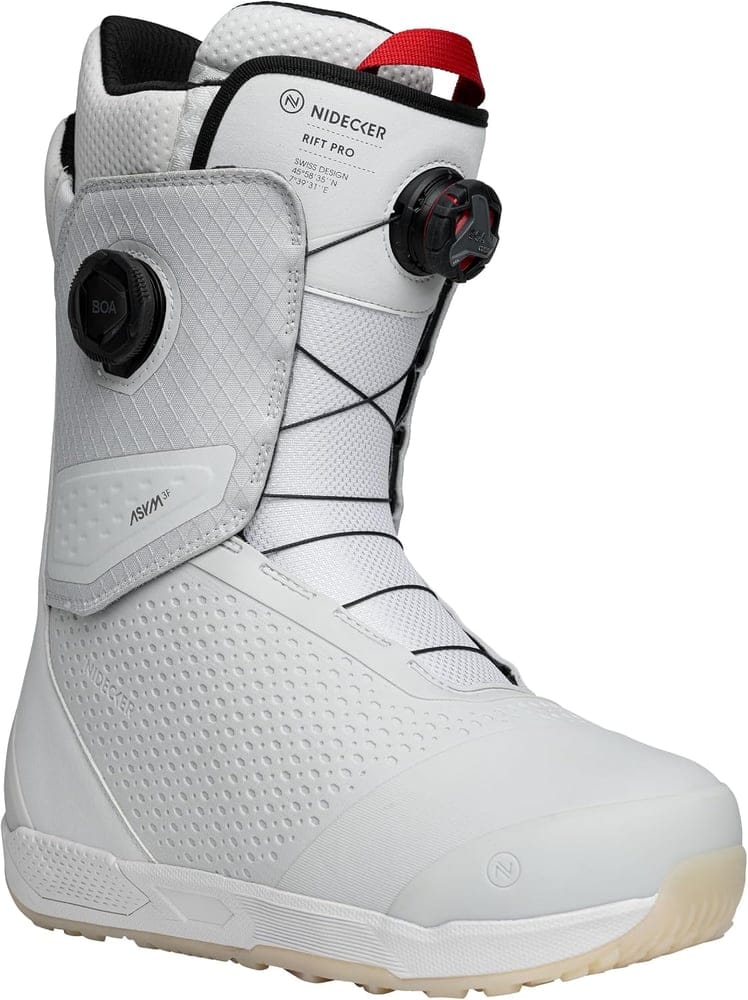 | 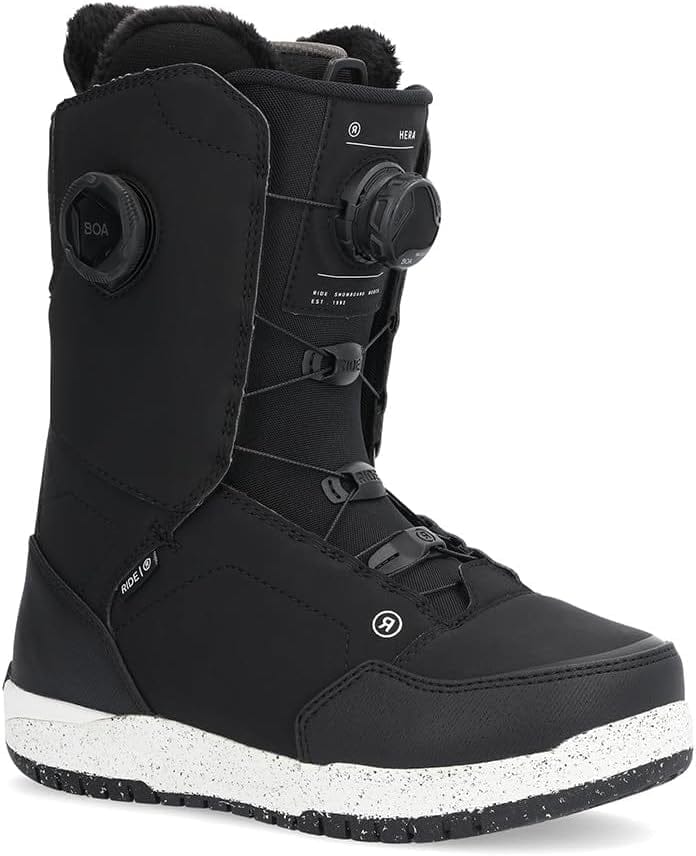 VS | |
| Flex | Mid-stiff (3/5) | Medium |
| Closure System | Dual BOA® Fit System with H5 Coiler™ dials | BOA® Fit System (H5 dial) with BOA® Tongue Tied™ |
| Binding Compatibility | Standard strap bindings (Supermatic® compatible) | Standard strap bindings |
| Liner Type | Silver heat-moldable liner | Removable Intuition™ Support Foam Liner |
| Warranty | 1 Year | 1 Year |
| Footbed Type | 3D Pro insole | Impacto Ultra Insole (3D formed dual density) |
| Outsole Type | Surface rubber outsole | Impact Rubber Cup Sole |
| Size Range | US Men's 7–13 | US Women's 5–11 |
| Nidecker Rift Pro | RIDE Hera |
|---|---|
| |
| Flex | |
Mid-stiff (3/5) | Medium |
| Closure System | |
Dual BOA® Fit System with H5 Coiler™ dials | BOA® Fit System (H5 dial) with BOA® Tongue Tied™ |
| Binding Compatibility | |
Standard strap bindings (Supermatic® compatible) | Standard strap bindings |
| Liner Type | |
Silver heat-moldable liner | Removable Intuition™ Support Foam Liner |
| Warranty | |
1 Year | 1 Year |
| Footbed Type | |
3D Pro insole | Impacto Ultra Insole (3D formed dual density) |
| Outsole Type | |
Surface rubber outsole | Impact Rubber Cup Sole |
| Size Range | |
US Men's 7–13 | US Women's 5–11 |
Comfort
Rift Pro
Hera
Comfort matters in a snowboard boot because riders often spend long days in them, and pressure points or a thin footbed can turn a good day into a tiring one. The Rift Pro earns praise for a liner and foam that do not pinch the sides, and its thicker foam helps dampen vibration. However, its insole is described as thin and soft by some buyers, and the boot can feel stiff or uncomfortable at first, with forefoot pressure and seams that may bother riders with bunions or sensitive feet. The Hera is the more comfortable boot overall, with an Eco+ Slime midsole and Impacto Ultra insole that add cushioning, a softer inner liner, and heat-reflective foil and bamboo-charcoal lining that help keep the foot warm and fresh. Some Hera buyers mention toe strap pressure and a seam that can be felt inside the liner, but these complaints are less frequent than the praise. For riders who prioritize all-day cushioning, the Hera is the clear pick.
Fit
Rift Pro
Hera
Fit is the most important factor in whether a snowboard boot performs well, because a poor fit causes heel lift, cold toes and wasted energy on the board. The Rift Pro gets a dialed-in feel from its dual BOA dials and a secure heel hold for many riders, but sizing is inconsistent, with some buyers finding the toe box wide or the boot slightly big while others report loose forefoot space or a narrow heel. Its heat-moldable liner can add room, and the internal harness and drawstring closure help with customization. The Hera gives a more locked-in result, with two internal harnesses, a tongue-tied BOA system that pulls the tongue down and pushes the ankle into the heel pocket, and an adjustable calf system for different calf sizes. Riders with very narrow heels should note that the U-shaped J-bar is not designed for them, and some want a slightly different heel and forefoot balance. Overall, the Hera offers a more predictable and secure fit, while the Rift Pro requires more careful try-on.
Support
Rift Pro
Hera
Support determines how well a boot transfers your input to the board and keeps the ankle and heel stable through turns. The Rift Pro offers a medium-stiff, responsive flex and a supportive ankle strap that give confident all-mountain control, though some riders find it stiff at first and say the rigidity can limit ankle articulation. Its multi-piece spine and articulating cuff are noted as helpful for handling breakdown over time. The Hera provides vertical ankle articulation and a Rebound TPU back spine that return energy when driving into the heel, along with focused heel lockdown from its tongue-tied system. Its articulated cuff is said to prevent shell distortion. Buyers who want a steady, connected feel through the heel and ankle will likely prefer the Hera, while riders who want a firmer, more traditional flex may still appreciate the Rift Pro.
Board Feel
Rift Pro
Hera
Board feel affects how precisely you can sense the snow and the board, which matters most for carving and quick edge changes. The Rift Pro is considered middle-of-the-road here, with some riders reporting a somewhat isolated sensation through the binding and less direct feedback, while others say it works well with most boards. The Hera is described as giving good board feel, thanks to its impact rubber cup sole and underfoot foam that dampen vibration while still letting the boot react quickly from side to side. Its softer medium flex suits all-mountain riding, but buyers note it is not built for aggressive charging, which is a reasonable tradeoff for most recreational riders. If you want a more responsive connection to the board, the Hera is the better choice, while the Rift Pro is a neutral option that is less defined in this area.
Traction
Rift Pro
Hera
Traction affects secure footing when walking through the lodge, climbing, and riding over varied resort snow. The Rift Pro stands out here, with its Vibram-style rubber outsole and tread pattern earning consistent praise for dependable grip on snow and around resort terrain. The Hera's less aggressive lug pattern is the main drawback noted for it, as it provides less grip on icy terrain. Riders who regularly encounter hard snow or ice should weigh this caution carefully, while those who mostly ride soft or groomed snow may find the difference less important. For shoppers who prioritize secure footing, the Rift Pro is the stronger choice.
Durability
Rift Pro
Hera
Durability matters because snowboard boots take a lot of abuse from edges, buckles, and repeated flexing, and a boot that breaks down early wastes money. Both boots earn strong durability ratings. The Rift Pro is praised for its TPU shell, abrasion-resistant double-stitched seams and tough toe area, with many buyers expecting it to last for seasons. Some note that toe nicks can break down faster than the rubber plastic, and that the dual-density foam may break down over time. The Hera is built with a toe seam wrap, double-stitched lace protection, premium PU materials and a Rebound 3.0 heel counter that holds its shape, along with rubberized high-wear areas. Both boots appear to be strong long-term options, so durability does not separate them meaningfully. Buyers can choose based on other factors such as fit or grip.
Trust & Transparency
- Data-driven rankings from real user reviews
- Affiliate partnerships don't influence our methodology
We may earn commission from links.
Conclusion & Final Verdict:
The Nidecker Rift Pro is the better pick for riders who prioritize a durable, grippy all-mountain boot with a responsive, medium-stiff flex, provided they can find a good fit after trying it on.
The RIDE Hera is the stronger choice for riders who want a comfortable, locked-in fit, better cushioning and a more connected feel underfoot, especially those with a heel that suits its U-shaped J-bar.
If fit, comfort and board feel matter most, choose the Hera. If grip and a firmer, traditional flex matter more, choose the Rift Pro.
Related Comparisons
Nidecker Rift ProvsNitro Bianca TLS
The Nitro Bianca TLS is the better pick for riders who want warmth, a locked-in heel, strong grip and a responsive feel, with a 4.4/5 overall rating. The Nidecker Rift Pro suits buyers who put long-term durability first and are willing to try sizing on before buying, scoring 3.6/5 overall.
Nidecker Rift Provsthirtytwo Lashed
The Rift Pro is the better pick for riders who want a durable, all-mountain boot with strong traction and a longer expected life, while the Lashed suits anyone who prioritizes a dialed-in fit, cushier comfort and firmer support for bigger jumps.
Nidecker Rift ProvsUnion Reset Pro
Choose the Reset Pro if board feel and a close, low-profile connection to your binding matter most. Choose the Rift Pro if you want a more durable, supportive all-mountain boot with better grip, and you are willing to try it on because its fit is less predictable.
Nidecker Rift ProvsVans Hi-Standard OG
The Rift Pro is the better choice for riders who want a durable, supportive all-mountain boot with a firmer, more responsive flex. The Hi-Standard OG suits beginners and park riders who want a softer, more comfortable boot with a snug, heat-moldable heel fit.
Nidecker Rift ProvsVans Infuse
The Nidecker Rift Pro suits riders who want a durable, comfortable boot with a medium-stiff feel and will accept a less direct board connection. The Vans Infuse is the better choice for riders who want a more responsive board feel, a more adaptable fit and stronger heel hold, and who don't mind replacing the liner sooner.
Nidecker Rift ProvsVans Luna Ventana Pro
The Luna Ventana Pro is the better all-round pick for riders who want out-of-the-box comfort, responsive board feel and strong grip. The Rift Pro suits buyers who prioritize a durable all-mountain boot with a one-year warranty and men's sizes up to 13.