
Nordica Steadfast 80 DC vs Dynastar M-Pro 85
Why You Can Trust Us
- Side-by-side analysis based on real user feedback
- Unbiased comparisons, not influenced by partnerships
- Updated as new data becomes available
We may earn from affiliate links at no extra cost to you.
| Steadfast 80 DC | M-Pro 85 | |
|---|---|---|
 | 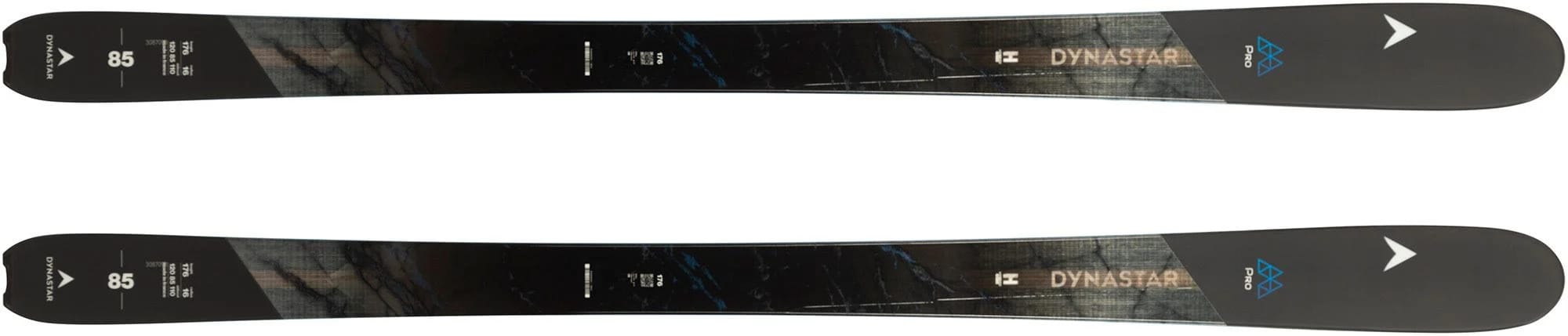 VS | |
| Waist Width | 80 mm | 85 mm |
| Turn Radius | 14.5 m at 168 cm (12.8-15.8 m by size) | 16 m at 176 cm (12-17 m by size) |
| Rocker Profile | Nordica On Piste rocker (rocker-camber blend) | Directional tip and tail rocker, camber underfoot |
| Included Binding | Nordica TP2 Light 11 FDT (DIN 3-11) | US sets include Look Xpress 11 GW (DIN 3.5-11) |
| Weight | 8.4 lb per pair (179 cm, Nordica figure) | 4.1 lb at 176 cm (retailer listing) |
| Length Range | 156, 162, 168, 174, 179 cm | 158, 167, 176, 185 cm |
| Warranty | 2 Years (Tecnica Group policy) | 2 Years (Rossignol Group US policy) |
| Sidecut | 132-80-111 mm (179 cm) | 120-85-110 mm (176 cm) |
| Core Material | Lite Performance Wood + Pulse Core elastomer | Hybrid Core: poplar + PU |
| Construction | Double Core with elastomer layer, sidewall | Full sidewall with Rocket Frame Ti insert |
| Ability Level | Not specified by Nordica | Intermediate to expert (Dynastar) |
| Nordica Steadfast 80 DC | Dynastar M-Pro 85 |
|---|---|
| |
| Waist Width | |
80 mm | 85 mm |
| Turn Radius | |
14.5 m at 168 cm (12.8-15.8 m by size) | 16 m at 176 cm (12-17 m by size) |
| Rocker Profile | |
Nordica On Piste rocker (rocker-camber blend) | Directional tip and tail rocker, camber underfoot |
| Included Binding | |
Nordica TP2 Light 11 FDT (DIN 3-11) | US sets include Look Xpress 11 GW (DIN 3.5-11) |
| Weight | |
8.4 lb per pair (179 cm, Nordica figure) | 4.1 lb at 176 cm (retailer listing) |
| Length Range | |
156, 162, 168, 174, 179 cm | 158, 167, 176, 185 cm |
| Warranty | |
2 Years (Tecnica Group policy) | 2 Years (Rossignol Group US policy) |
| Sidecut | |
132-80-111 mm (179 cm) | 120-85-110 mm (176 cm) |
| Core Material | |
Lite Performance Wood + Pulse Core elastomer | Hybrid Core: poplar + PU |
| Construction | |
Double Core with elastomer layer, sidewall | Full sidewall with Rocket Frame Ti insert |
| Ability Level | |
Not specified by Nordica | Intermediate to expert (Dynastar) |
Stability
Steadfast 80 DC
M-Pro 85
Stability matters for beginners because a ski that stays steady at speed and on uneven snow makes it easier to focus on technique instead of recovering from wobbles. The Steadfast 80 DC is described by buyers as very sturdy, retaining torsional stiffness and staying composed at higher speeds without feeling twitchy, which gives it a confident, planted character. Some buyers note that it runs on the stiff side for progressing beginners, so the sturdiness comes with a firmer feel that takes some getting used to. The M-Pro 85 is lighter and more playful, and buyers say it gives up some stability and dampness compared with full-metal skis, and it is not built for very aggressive or high-speed skiing. For a beginner who will mostly ski at moderate speeds, the Steadfast offers the more reassuring platform, while the M-Pro asks for more care when speeds build. Overall, Nordica has the clear edge here.
Forgiveness
Steadfast 80 DC
M-Pro 85
Forgiveness describes how much a ski tolerates mistakes such as sitting back, skiing with feet together, or releasing out of a turn awkwardly. Buyers consistently describe the Steadfast 80 DC as a friendly front-side ski that does not fight the skier when they release from a turn, and they report no nasty tip banging when skiing with feet together. It is also described as accessible for progressing intermediates who are gaining confidence. The M-Pro 85 gets some praise for being available without much demand on the skier and for its user-friendly tip shape, but buyers also point out that its stiff tail can be demanding and requires active input from the skier. That makes the M-Pro less forgiving of imperfect technique. A beginner who wants a ski that quietly covers for early errors should lean toward the Steadfast 80 DC.
Ease Of Use
Steadfast 80 DC
M-Pro 85
Ease of use covers how readily a ski starts turns, changes direction, and moves across the fall line without much effort. Buyers say the Steadfast 80 DC is very easy to turn and maneuver at slower speeds, with camber and rocker making turn entry and exit simple, and that the binding and overall setup make things easier for intermediate skiers to get out and enjoy the hill. The M-Pro 85 earns praise for quick, agile handling, short-radius turns, and an easy approach across the fall line, with its progressive tip rocker helping entry into the turn. Some buyers say the M-Pro's responsive feel depends on centered, balanced input. Both skis score very closely here, and each suits a different style of learning: the Nordica is more relaxed and steady, while the Dynastar rewards quicker, more deliberate movements.
Edge Grip
Steadfast 80 DC
M-Pro 85
Edge grip determines how confidently a ski bites into the snow when you tip it onto an edge, which is important for controlled turns on firm snow. Buyers describe the Steadfast 80 DC as having really strong edge hold, with its long effective edge hooking into the turn and moving easily from edge to edge, and they say it holds an edge very well through turns. The M-Pro 85 is praised for carving short arcs cleanly, holding well on edge even without metal, and offering great grip from the tail during carving turns. Camber underfoot helps it hold well on edge. In practice both skis grip reliably for beginner and intermediate carving, with the Nordica feeling more linear across longer arcs and the Dynastar more precise in tight, short-radius turns.
Smoothness
Steadfast 80 DC
M-Pro 85
Smoothness affects fatigue and comfort, since a ski that absorbs chatter and vibration lets beginners stay relaxed over a full day. The Steadfast 80 DC uses Pulse Core technology, and buyers say it smooths things out, minimizes chatter, and feels incredibly smooth and predictable. The M-Pro 85 uses polyurethane in its Hybrid Core and sidewalls, and buyers describe a quiet, damped ride with lots of smooth energy, though a few note it is less damp than higher-end metal skis. Both skis are described as quiet and composed, and buyer feedback is strongly positive for each. Neither has a clear advantage, so comfort preference and the type of snow you ski will likely decide which feels better.
Versatility
Steadfast 80 DC
M-Pro 85
Versatility matters because most beginners quickly want to ski more than just groomed runs, including softer snow, moguls, and trees. The M-Pro 85 earns notably broader praise, with buyers saying it performs better than expected in soft snow, handles snow, moguls, trees, and changing conditions well, and offers good off-piste performance thanks to its rocket tip and long rocker. Some buyers say it does not have the most float, and that off-trail trees and variable snow require actively unweighting the tail. The Steadfast 80 DC is described as equally at home on and off trail, blending front-side and all-mountain abilities, and as really well at home on groomers. Its all-mountain capability is built in, but buyers rate its versatility a little lower overall. For a beginner planning to explore varied terrain, the Dynastar has the stronger all-round range.
Trust & Transparency
- Data-driven rankings from real user reviews
- Affiliate partnerships don't influence our methodology
We may earn commission from links.
Conclusion & Final Verdict:
Choose the Nordica Steadfast 80 DC if you want the most forgiving, predictable ski for learning and progressing. It is sturdy, friendly when you release out of turns, and strong on edge, making it the safer pick for most first-time buyers who will mostly ski groomed runs and moderate speeds.
Choose the Dynastar M-Pro 85 if you already have some turning ability and want a lighter, quicker ski that handles soft snow, moguls, and trees with more range. Expect it to ask more of your technique and to feel less stable at higher speeds.
Related Comparisons
Dynastar M-Pro 85vsRossignol Arcade 84
The Dynastar M-Pro 85 is the easier, lighter pick for beginners and intermediates who want quick turn entry and a versatile all-rounder. The Rossignol Arcade 84 is a smoother, more planted front-side carver for skiers ready to push speed, but it is less forgiving for newcomers.
Dynastar M-Pro 85vsVölkl Blaze 82
The Blaze 82 is the better fit for a developing skier who wants forgiveness, a friendly feel and stability at speed. The M-Pro 85 suits skiers who want firmer edge grip and a smoother, quieter ride across varied snow.
Dynastar M-Pro 85vsVölkl Blaze 86
The M-Pro 85 is the better choice for carving, edge hold and a quieter ride on groomers. The Blaze 86 suits beginners who want the easiest turn initiation, stronger stability at speed and broader all-mountain versatility.
Nordica Steadfast 80 DCvsBlizzard Black Pearl 88
The Steadfast 80 DC is the easier, friendlier turner for beginners who mostly ski groomers and want a forgiving ride, while the Black Pearl 88 suits skiers who expect to progress into softer snow and varied terrain. Choose the Steadfast for gentle, predictable turns and the Black Pearl for a ski that keeps up as your skills grow.
Nordica Steadfast 80 DCvsHead Pure Joy
The Nordica Steadfast 80 DC is the easier and more confident ride for beginners who want a friendly front-side feel, strong edge hold, and smooth cruising. The Head Pure Joy suits learners who expect to progress onto blues and some blacks, with a forgiving tail and more room to grow, though it chatters more as speed increases.
Nordica Steadfast 80 DCvsK2 Blur 79
The Nordica Steadfast 80 DC is the easier, more forgiving choice for beginners who want effortless turns and strong edge hold, while the K2 Blur 79 is a lighter, smoother all-terrain ski with a supportive feel for learners building technique. Choose the Steadfast for a friendly front-side ride and the Blur if light weight and a damp, composed feel matter more.