
Northstar B 16 vs Esquif Prospecteur 16
Why You Can Trust Us
- Side-by-side analysis based on real user feedback
- Unbiased comparisons, not influenced by partnerships
- Updated as new data becomes available
We may earn from affiliate links at no extra cost to you.
| B 16 | Prospecteur 16 | |
|---|---|---|
 |  VS | |
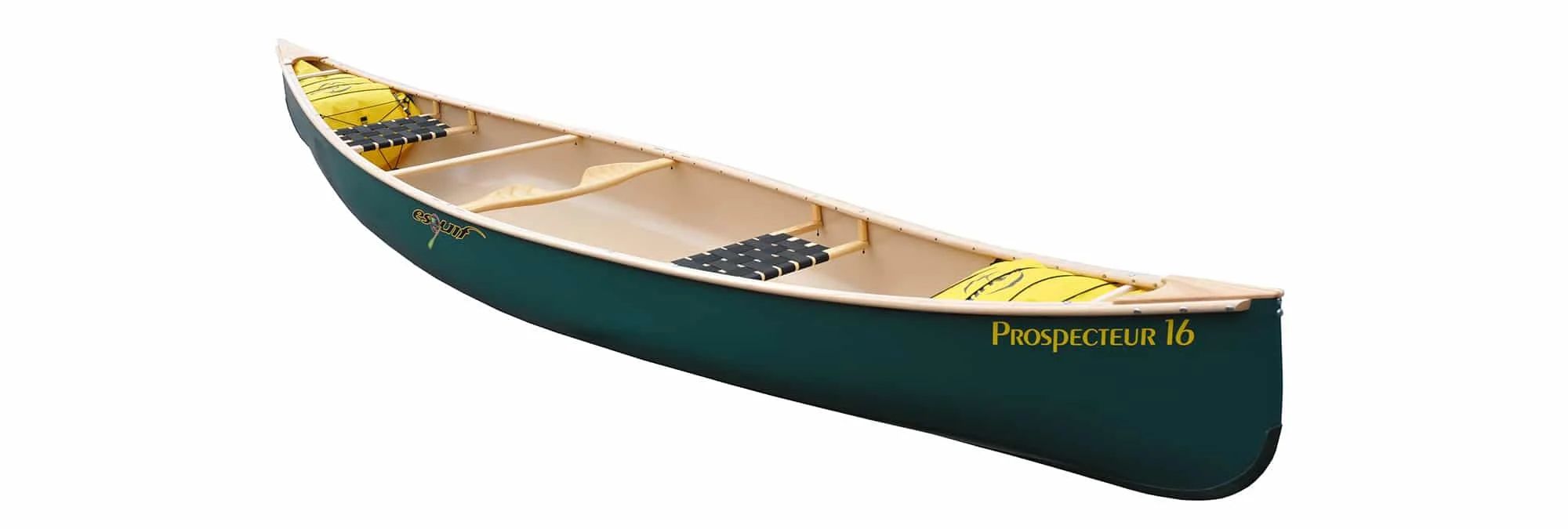
| Dimensions | 16 × 2.96 ft | 16 × 2.9 ft |
| Weight | SL: 38 lb | 65 lb |
| Capacity | Optimal Load: 300–600 lb | 1000 lb |
| Material | BlackLite: Carbon, Innegra, Aramid | T-Formex |
| Seat Count | 2 | N/A |
| Warranty | Usable life of the canoe | 3-year limited warranty |
| Transom | N/A | N/A |
| Rocker | 2.5 in | 2.75 |
| Carrying Handles | Bronze anodized aluminum grab handles | N/A |
| Northstar B 16 | Esquif Prospecteur 16 |
|---|---|
| |
| Dimensions | |
16 × 2.96 ft | 16 × 2.9 ft |
| Weight | |
SL: 38 lb | 65 lb |
| Capacity | |
Optimal Load: 300–600 lb | 1000 lb |
| Material | |
BlackLite: Carbon, Innegra, Aramid | T-Formex |
| Seat Count | |
2 | N/A |
| Warranty | |
Usable life of the canoe | 3-year limited warranty |
| Transom | |
N/A | N/A |
| Rocker | |
2.5 in | 2.75 |
| Carrying Handles | |
Bronze anodized aluminum grab handles | N/A |
Stability
B 16
Prospecteur 16
Stability determines how confidently a canoe tracks in wind, waves and uneven water, directly affecting safety and fatigue. A more stable hull lets paddlers focus on navigation rather than constantly correcting roll. The Northstar B 16 scores higher (3.9) and reviewers praise its solid build, six‑wheel‑drive‑like rigidity and ability to handle choppy conditions. The Esquif Prospecteur 16, while reasonably rigid and good at straight‑line tracking, drops to 3.6 and shows moderate stability in rough water. For paddlers who prioritize a steady platform, the B 16 is the clear winner.
Performance
B 16
Prospecteur 16
Performance covers speed, tracking efficiency and how much effort is needed per stroke—critical for long trips or when navigating currents. The B 16’s sleek hull and high‑performance rating (4.7) translate into effortless gliding and strong handling in choppy water, as users note its motor‑like responsiveness and low latency. The Prospecteur 16 trails at 3.9, offering decent maneuverability but less punch in rapids and lower overall speed. When raw paddling performance matters, the Northstar B 16 leads.
Comfort
B 16
Prospecteur 16
Comfort influences how long you can stay on the water without aches, focusing on seat design, interior space and ergonomics. Both canoes score closely (3.9 vs 3.8), with the B 16 praised for its compact, well‑crafted interior and the Prospecteur 16 lauded for its bench‑style seating and roomy layout. Because the scores are nearly identical and each has distinct but balanced strengths, neither canoe decisively outperforms the other in comfort.
Versatility
B 16
Prospecteur 16
Versatility measures how well a canoe adapts to different water types, loads and trip lengths. The Prospecteur 16 earns a higher rating (4.4) thanks to its lightweight construction, easy portage, and suitability for flatwater, mild rapids, camping and fishing. The B 16, while solid for tandem touring, scores slightly lower (4.2) and is less praised for multi‑environment use. Paddlers seeking an all‑rounder that handles both calm lakes and light whitewater will favor the Prospecteur 16.
Weight & Capacity
B 16
Prospecteur 16
A canoe’s weight affects how easy it is to carry and launch, while capacity determines how much gear you can bring. The Prospecteur 16 shines with a 1,000 lb load rating and a strong 4.4 score, making it ideal for gear‑heavy expeditions. The B 16, though lighter (38‑61 lb depending on model) and rated 3.9, caps at around 600 lb. For trips where cargo volume outweighs the need for ultra‑light weight, the Prospecteur 16 is the superior choice.
Durability
B 16
Prospecteur 16
Durability reflects resistance to impacts, UV, and long‑term wear—essential for rugged shorelines and frequent use. The B 16’s carbon‑Innegra‑Aramid layup earns a 4.1 rating and is praised for its solid, cold‑resistant build. The Prospecteur 16’s T‑Formex polyethylene scores 3.8, offering good impact resistance but less high‑tech reinforcement. When long‑term toughness is a priority, the Northstar B 16 edges ahead.
Trust & Transparency
- Data-driven rankings from real user reviews
- Affiliate partnerships don't influence our methodology
We may earn commission from links.
Conclusion & Final Verdict:
Bottom Line
If you value a lightweight, highly stable canoe that feels like a high‑performance paddlecraft, the Northstar B 16 is the better fit. It excels in stability, performance and durability while staying easy to carry.
If your trips demand maximum gear capacity, versatile use across flatwater and mild rapids, and a design that handles heavy loads with ease, the Esquif Prospecteur 16 wins out. Choose based on whether speed and handling or load‑carrying versatility matters most to you.
Related Comparisons
Esquif Mallard CanoevsEsquif Prospecteur 16
The Mallard offers superior stability, lighter weight and versatile solo‑or‑tandem use, while the Prospecteur 16 trades a bit of stability for double the load capacity and a longer hull for speed. Choose Mallard for everyday paddling; pick Prospecteur for heavy‑gear expeditions.
Esquif Mallard CanoevsNorthstar B 16
The Esquif Mallard excels in stability, comfort and versatile solo‑or‑tandem use, while the Northstar B 16 shines with higher performance, lighter weight and greater load capacity. Pick the Mallard for family or fishing outings; pick the B 16 if speed and payload matter most.
Northstar B 16vsSun Dolphin Scout SS Square Stern Canoe
The Northstar B 16 excels in performance and durability, while the Sun Dolphin Scout SS Square Stern offers superior stability, comfort, and higher load capacity.
Old Town Discovery 119vsEsquif Prospecteur 16
The Old Town Discovery 119 is a lightweight solo canoe with superior handling and versatility, while the Esquif Prospecteur 16 offers greater stability and double the load capacity for tandem or gear‑heavy trips.
Old Town Discovery 119vsNorthstar B 16
The Old Town Discovery 119 is a lightweight solo canoe with superior comfort and versatility, while the Northstar B‑16 delivers stronger stability, higher performance, and a tougher composite build for tandem use.
Old Town Discovery 133vsEsquif Prospecteur 16
The Discovery 133 delivers rock‑solid stability, three seats and a lifetime hull warranty, while the Prospecteur 16 is lighter, longer and can carry more weight. Choose the Discovery for family or fishing stability; pick the Prospecteur for solo, gear‑heavy adventures.