
Pelican Seek 100X vs Intex Recreation Corp. Challenger™ K1 Inflatable
Why You Can Trust Us
- Side-by-side analysis based on real user feedback
- Unbiased comparisons, not influenced by partnerships
- Updated as new data becomes available
We may earn from affiliate links at no extra cost to you.
| Pelican Seek 100X | Challenger™ K1 Inflatable | |
|---|---|---|
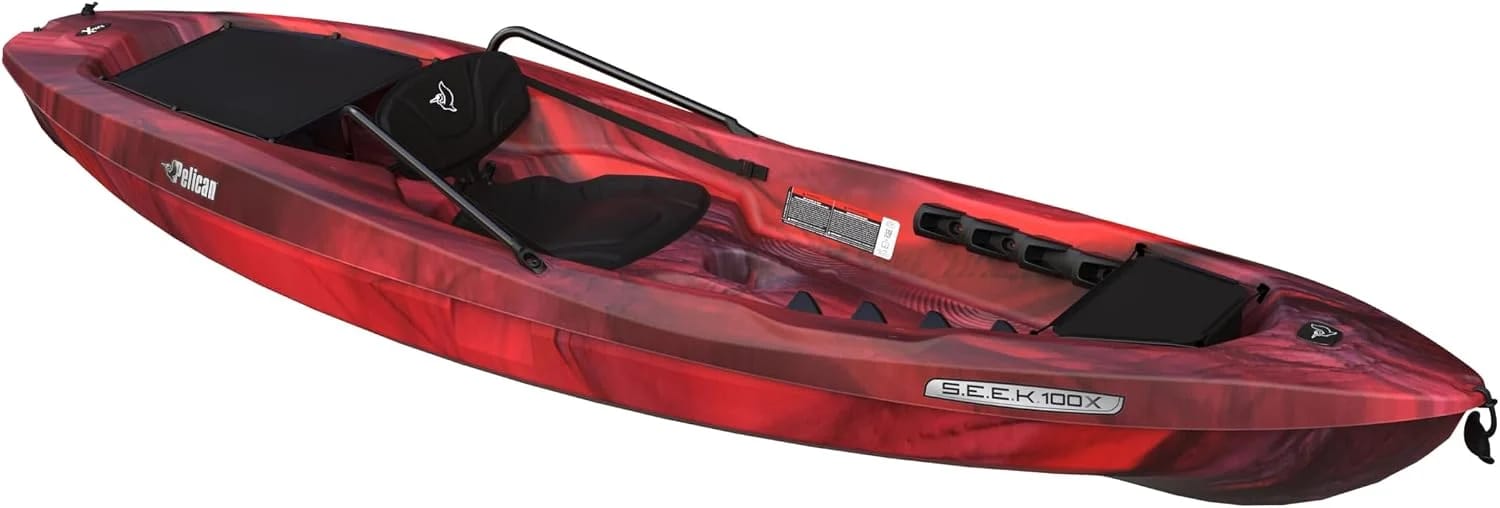 | 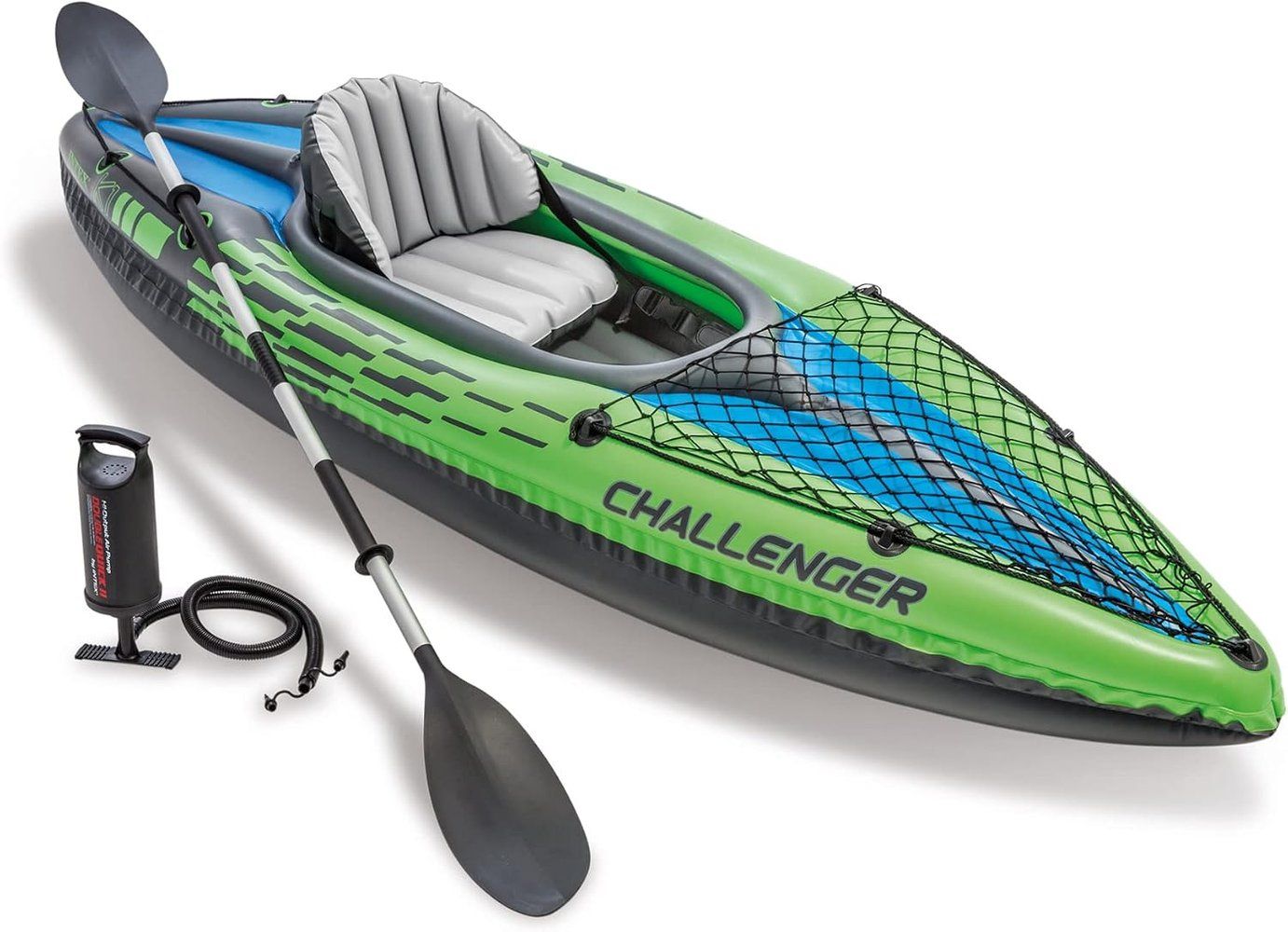 VS | |
| Weight | 43.1 lb | 26.71 lb |
| Length | 10 ft | 9 ft |
| Width | 30 in | 30 in |
| Weight Capacity | 300 lb | 220 lb |
| Hull Type | Hardshell | N/A |
| Warranty | Lifetime Limited Warranty | 1 Year |
| Hull Material | Polyethylene | Vinyl |
| Seating Capacity | 1 | 1 |
| Seat Type | N/A | Adjustable inflatable seat with backrest |
| Storage Features | Ripstop tankwell cover, bow ripstop bag, dual‑position bottle holder | Cargo net |
| Rudder Or Skeg | N/A | Removable skeg |
| Pelican Seek 100X | Intex Recreation Corp. Challenger™ K1 Inflatable |
|---|---|
| |
| Weight | |
43.1 lb | 26.71 lb |
| Length | |
10 ft | 9 ft |
| Width | |
30 in | 30 in |
| Weight Capacity | |
300 lb | 220 lb |
| Hull Type | |
Hardshell | N/A |
| Warranty | |
Lifetime Limited Warranty | 1 Year |
| Hull Material | |
Polyethylene | Vinyl |
| Seating Capacity | |
1 | 1 |
| Seat Type | |
N/A | Adjustable inflatable seat with backrest |
| Storage Features | |
Ripstop tankwell cover, bow ripstop bag, dual‑position bottle holder | Cargo net |
| Rudder Or Skeg | |
N/A | Removable skeg |
Comfort
Pelican Seek 100X
Challenger™ K1 Inflatable
Comfort determines how long you can stay on the water without fatigue, especially on calm lakes or gentle rivers. A kayak with a well‑cushioned, ergonomic seat and foot support lets you relax and focus on the scenery. The Challenger K1’s adjustable inflatable seat, backrest and generous footrest consistently earn higher comfort scores, while the Seek’s thin cushion and basic seat still provide decent support but can feel less plush on longer trips. For paddlers who value a relaxed ride, the Challenger is the clear winner.
Stability
Pelican Seek 100X
Challenger™ K1 Inflatable
Stability is crucial for safety and confidence, keeping the kayak upright in wind or light chop. Both models score similarly, offering a steady platform for beginners and casual anglers. The Seek relies on a wide beam and traction ridges, whereas the Challenger uses an I‑beam floor and buoyant side chambers; each approach has its own strengths. Because the overall stability ratings are tied, neither kayak has a decisive edge in this category.
Performance
Pelican Seek 100X
Challenger™ K1 Inflatable
Performance covers speed, tracking and how efficiently the kayak moves through water. Faster response and good straight‑line tracking are especially valuable for covering distance or chasing fish. The Challenger’s streamlined shape, removable skeg and quick‑inflation setup translate into higher performance scores, while the Seek’s lightweight hull offers decent tracking but lacks pedal assistance and feels slower at higher speeds. For paddlers who prioritize speed and efficient cruising, the Challenger leads.
Maneuverability
Pelican Seek 100X
Challenger™ K1 Inflatable
Maneuverability matters when navigating tight channels, avoiding obstacles, or making quick turns. A kayak that turns sharply without excessive side‑slipping feels more responsive. The inflatable Challenger, despite its length, handles well in calm water and can be fine‑tuned by adjusting the bottom chamber, whereas the Seek’s skeg and rigid hull make tight turns feel sluggish, especially when wind pushes it sideways. The Challenger therefore offers better maneuverability for most recreational scenarios.
Durability
Pelican Seek 100X
Challenger™ K1 Inflatable
Durability reflects how well a kayak stands up to impacts, UV exposure and everyday wear. A durable hull reduces long‑term replacement costs and gives peace of mind on rugged outings. The Seek’s polyethylene construction is praised for impact resistance, while the Challenger’s vinyl is lightweight and puncture‑resistant but can suffer occasional leaks. With scores that are very close, both kayaks are reasonably durable, resulting in a tie for this attribute.
Portability
Pelican Seek 100X
Challenger™ K1 Inflatable
Portability influences how easily you can transport, store and launch a kayak, a key factor for spontaneous trips. Lighter weight and compact packing mean less hassle loading a car or fitting in a closet. The Challenger weighs under 27 lb and folds into a small bag, making it a breeze to carry, whereas the Seek’s 43 lb hardshell requires a trolley and more storage space. For anyone who values easy transport, the Challenger is the clear winner.
Trust & Transparency
- Data-driven rankings from real user reviews
- Affiliate partnerships don't influence our methodology
We may earn commission from links.
Conclusion & Final Verdict:
Bottom Line
If you prioritize comfort, ultra‑light weight and hassle‑free transport, the Intex Challenger K1 is the better fit. It wins on comfort, performance, maneuverability and portability, and its adjustable seat and skeg add real-world value. However, if you need a higher weight capacity, a rigid hardshell that can take a few knocks, and a lifetime warranty, the Pelican Seek 100X makes sense. Choose based on whether you value ease of use and comfort (Challenger) or load capacity and durability (Seek).
Related Comparisons
Pelican Seek 100XvsEddyline Sandpiper 120
The Eddyline Sandpiper 120 outshines the Pelican Seek 100X in comfort, stability and overall performance, making it the top pick for casual paddlers, while the Seek’s lifetime warranty and slightly wider beam may appeal to budget‑focused buyers.
Pelican Seek 100XvsEddyline Sandpiper 130
The Pelican Seek 100X is ultra‑light and easy to carry but offers modest stability, while the Eddyline Sandpiper 130 provides superior comfort, stability, performance and load capacity at a higher weight.
Pelican Seek 100XvsEddyline Sky 100
The Eddyline Sky 100 is lighter, more comfortable and performs better, while the Pelican Seek 100X offers a higher weight capacity and a wider beam for extra stability. Choose the Sky 100 for most paddlers; pick the Seek 100X if you need more load capacity.
Pelican Seek 100XvsHurricane Prima 125
The Hurricane Prima 125 outshines the Pelican Seek 100X in comfort, stability, performance and overall handling, making it the better all‑round recreational kayak; the Seek 100X’s slightly lighter weight and compact size may suit paddlers who prioritize ultra‑easy transport over premium ride quality.
Pelican Seek 100XvsLiquidlogic Liquid Logic Saluda 12
The Pelican Seek 100X is lighter and easier to transport, but the Liquid Logic Saluda 12 delivers superior comfort, stability, performance and maneuverability, making it the better all‑round recreational kayak for most paddlers.
Pelican Seek 100XvsOld Town Heron 9XT
The Old Town Heron 9XT outperforms the Pelican Seek 100X in comfort, stability, performance and durability, making it the stronger all‑round recreational kayak, while the Seek 100X’s lighter weight may suit paddlers who prioritize ultra‑easy transport.