
Völkl M7 Mantra vs Salomon QST 100
Why You Can Trust Us
- Side-by-side analysis based on real user feedback
- Unbiased comparisons, not influenced by partnerships
- Updated as new data becomes available
We may earn from affiliate links at no extra cost to you.
| M7 Mantra | QST 100 | |
|---|---|---|
 |  VS | |
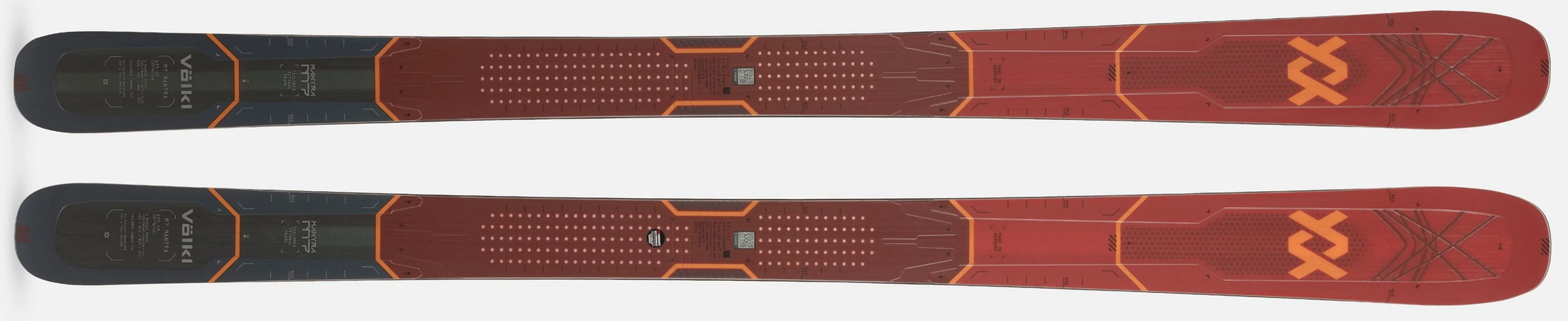
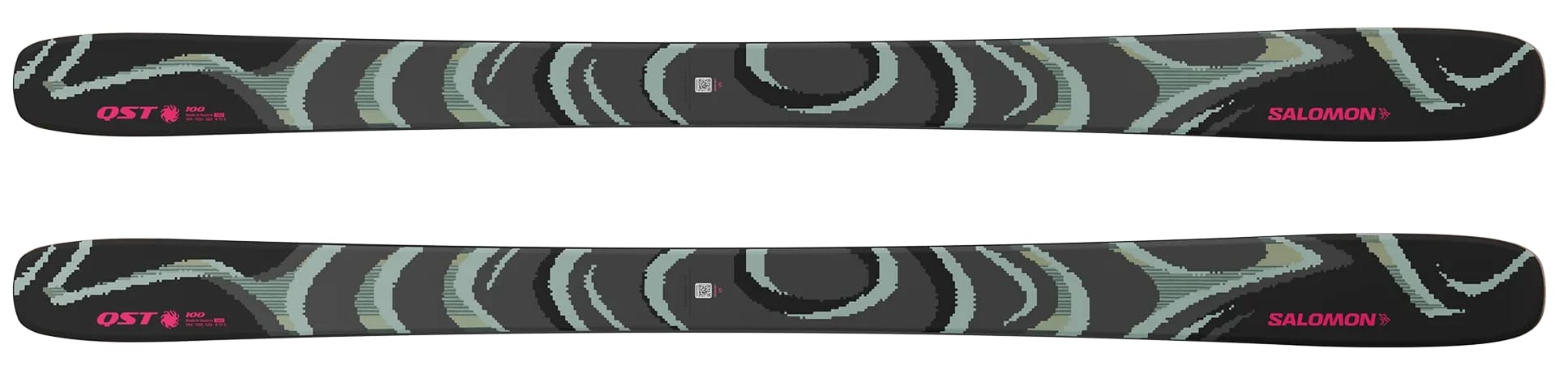
| Waist Width | 96 mm | 100 mm |
| Turn Radius | 4 Radius Drive at 177 cm (25 m tip, 40 m front, 16.8 m center, 22 m tail) | 17.5 m at 180 cm |
| Rocker Profile | Tip and tail rocker, camber underfoot | Freeride profile (17% tip rocker, camber, 21% tail rocker) |
| Metal Layers | Tailored Titanal Frame plus thin titanal layer underfoot | 1 (Ti Binding Reinforcement underfoot) |
| Length Range | 163-191 cm | 148-188 cm |
| Weight | 4.6 lb per ski at 177 cm | 4.1 lb per ski at 180 cm |
| Warranty | N/A | 2 Years |
| Sidecut Dimensions | 139-96-121 mm | 134-100-122 mm |
| Core Material | Multilayer Woodcore | Full poplar woodcore |
| Sidewall | Full Sidewall ABS | Full sandwich |
| Völkl M7 Mantra | Salomon QST 100 |
|---|---|
| |
| Waist Width | |
96 mm | 100 mm |
| Turn Radius | |
4 Radius Drive at 177 cm (25 m tip, 40 m front, 16.8 m center, 22 m tail) | 17.5 m at 180 cm |
| Rocker Profile | |
Tip and tail rocker, camber underfoot | Freeride profile (17% tip rocker, camber, 21% tail rocker) |
| Metal Layers | |
Tailored Titanal Frame plus thin titanal layer underfoot | 1 (Ti Binding Reinforcement underfoot) |
| Length Range | |
163-191 cm | 148-188 cm |
| Weight | |
4.6 lb per ski at 177 cm | 4.1 lb per ski at 180 cm |
| Warranty | |
N/A | 2 Years |
| Sidecut Dimensions | |
139-96-121 mm | 134-100-122 mm |
| Core Material | |
Multilayer Woodcore | Full poplar woodcore |
| Sidewall | |
Full Sidewall ABS | Full sandwich |
Stability
M7 Mantra
QST 100
Stability determines whether a ski stays composed when speed builds or when it runs into crud, chop, and firm bumps. The Salomon QST 100 comes out ahead at 4.6 versus 4.3, with buyers pointing to basalt stringers and cork dampeners in the tip and tail that calm vibration, plus a sturdier tail that helps it track true. Reviewers describe the QST 100 as stable at high speed and more composed than earlier models. The Völkl M7 Mantra has a strong case of its own, as many riders say it stays planted and smooth at speed, carries momentum well, and cuts through crud with very little chatter, and some said they could not unsettle it. Its weak spot is chatter, which some skiers feel in the tips on hard pack, ice, and blind shaded bumps. For a buyer who wants a damp, calm ride across mixed terrain, the QST 100 is the safer choice, while the M7 Mantra suits skiers who want firm-snow composure at high speed.
Edge Grip
M7 Mantra
QST 100
Edge grip determines how confidently a ski holds on ice, firm snow, and steep carves, which matters most for anyone who spends time on groomers or hard conditions. The M7 Mantra scores 4.7 and draws praise for biting hard on ice and firm snow, staying rock solid on edges, and keeping carves intact through heavy or variable snow, with reviewers noting its denser wood under metal edges and its edge engagement on steeper pitches. The QST 100 scores 4.6, and buyers call it an extraordinarily good carving ski, saying the camber feels locked in on groomers and that it has enough grip to rely on in a carve without feeling overly hooky. The gap is small enough that both count as top-tier carvers. The M7 Mantra shows the more aggressive bite on icy surfaces, while the QST 100 offers a more predictable, forgiving hold. A buyer who mostly carves firm groomers and ice may lean toward the M7 Mantra, but a skier who wants strong grip without hookiness will be satisfied with either.
Maneuverability
M7 Mantra
QST 100
Maneuverability determines how quickly a ski starts, shapes, and finishes turns, which matters most in trees, bumps, and tight terrain. The QST 100 leads 4.7 to 4.1, and buyers consistently describe it as very easy to steer through trees and tight spaces, with quick turn initiation, rocker that reduces effort, and a turn radius that makes easy turns feel effortless. Its tip and tail rocker helps riders pop out of bumps and throw the ski sideways without much work. The M7 Mantra is still quick for its class, with a light swing weight and carbon tips, and riders praise its four-radius sidecut for shifting turn shape from short control turns to long GS-style arcs, with snappier turns when more energy goes in. However, several reviewers say its precision demands planning ahead and an engaged, committed style. For a buyer who wants effortless turning in trees and bumps, the QST 100 is clearly easier, while the M7 Mantra rewards skiers who want precise turn shaping on firm terrain.
Forgiveness
M7 Mantra
QST 100
Forgiveness matters because it determines how much a ski helps recover from mistakes and how approachable it feels in variable conditions. The QST 100 wins 3.9 to 1.8, with buyers pointing to softer tips and tails that make it easier to control, a rocker profile that helps correct errors, and a ski that almost finishes the turn for you while absorbing terrain changes. The M7 Mantra is described as stiff, heavy, and demanding, with a high performance ceiling that rewards strong skill and fitness, and reviewers say intermediate and progressing skiers may struggle to reach its top-end performance. It does have some positives, as it feels more forgiving in softer snow, is springier than the previous generation, and is a bit more forgiving than the Mantra M6, though it can feel demanding in longer lengths. The QST 100 is not beginner-proof, since some riders find it less approachable than the QST 98 and off-putting to true beginners. For intermediates and progressing skiers, the QST 100 is the clear choice, while the M7 Mantra fits strong, aggressive skiers.
Powder Performance
M7 Mantra
QST 100
Powder performance matters for anyone who wants float in new snow, trees, or deeper areas without giving up an all-mountain ski. The QST 100 scores 4.6 to 3.3, and buyers say it floats incredibly well, never felt a lack of flotation, and handles deeper areas and new snow in trees with ease, with its broader tip shape credited for the float and reviewers saying it floats better than the QST 98 at speed. The M7 Mantra handles soft snow competently and keeps skiers afloat in medium powder, and some riders said it got through piles of old, scrappy powder without fuss. Its stiffness, however, pushes it to cut through deep snow rather than float on top, and reviewers say it does not thrive in powder. For a buyer who regularly skis deep snow, the QST 100 is the better choice, while the M7 Mantra suits riders who only see occasional powder and prioritize firm-snow performance.
Versatility
M7 Mantra
QST 100
Versatility matters because most all-mountain buyers want one ski that handles groomers, crud, bumps, trees, and variable snow without needing a quiver. Both skis score very high, with the QST 100 at 4.8 and the M7 Mantra at 4.7, and reviewers praise both for handling a wide range of conditions. The M7 Mantra is praised for cutting through crud and chop, handling spring moguls well, and being skiable all over the mountain fast and hard, and some riders say its midwidth lets them do other things without a separate setup. The QST 100 is described as well-rounded and capable across trees, trails, crud, and jumps, with buyers saying it does what is asked, handles nearly all conditions except pure blue ice, and works with alpine or tech bindings. Its tail rise also allows some freestyle play, though reviewers note limited appeal for park-specific use. Both are true one-ski options for strong all-mountain skiers, and the difference is more about feel than capability, so this category is a tie.
Trust & Transparency
- Data-driven rankings from real user reviews
- Affiliate partnerships don't influence our methodology
We may earn commission from links.
Conclusion & Final Verdict:
Choose the Völkl M7 Mantra if you are a strong, aggressive skier who spends most of your time carving firm groomers, ice, and steeps and wants a stiff, powerful ski that stays composed at high speed. Choose the Salomon QST 100 if you want one ski that is easier to turn, more forgiving, better in new snow, and suitable for intermediate to advanced skiers across trees, bumps, and variable conditions. For most all-mountain buyers, especially those who ski a mix of terrain and want a more approachable ride, the QST 100 is the better overall pick.
Related Comparisons
Atomic Bent 100vsSalomon QST 100
The Bent 100 is the lighter, quicker twin tip for skiers who want agile, playful turns through trees and bumps, while the QST 100 is the more stable, better-carving all-mountain ski with stronger float. Choose the Bent 100 for playful intermediate to advanced riding and the QST 100 for a single ski that handles the whole mountain with more confidence.
Atomic Bent 100vsVölkl M7 Mantra
The Atomic Bent 100 is the lighter, playful one-ski choice for quick turns through trees and varied terrain, while the Völkl M7 Mantra is the stiffer, more demanding pick for strong skiers who want locked-in edge grip and composure at speed on firm snow.
Blizzard Black Pearl 94vsSalomon QST 100
The Black Pearl 94 suits intermediate-to-advanced skiers who want a calm, snappy ski with a friendly flex. The QST 100 is the stronger all-rounder for skiers who want carving grip, powder float, and tree agility in one ski.
Völkl M7 MantravsHead Kore 94 Ti
The M7 Mantra is the better choice for confident carving and firm-snow edge hold, but its stiffness suits advanced, aggressive skiers. The Kore 94 Ti is the more forgiving, damper, and approachable option for intermediates who want one versatile all-mountain ski.
Stöckli Stormrider 88vsHead Kore 94 Ti
The Stormrider 88 is the better carver for firm groomers and ice, with stronger edge hold and a quieter, more forgiving feel. The Kore 94 Ti suits buyers who want a damp, stable all-rounder for crud, bumps and changing snow.
Stöckli Stormrider 88vsK2 Mindbender 96
The Stormrider 88 is the better carver with stronger edge hold, quieter ride at speed, and more forgiveness, while the Mindbender 96 is the more stable, versatile option with better powder flotation and quicker short-turn feel. Choose the Stormrider 88 for firm groomers and ice, and the Mindbender 96 for mixed terrain and softer snow.