
Freestanding vs Trekking Pole Tents: Which Should You Choose?
Decide between freestanding and trekking pole backpacking tents by setup style, campsite surfaces, weather, weight, and comfort.
Draft status: Step 9 completed on 2026-07-04. This is article prose only, not the final structured blog object. Internal guide slugs still need verification before object build.
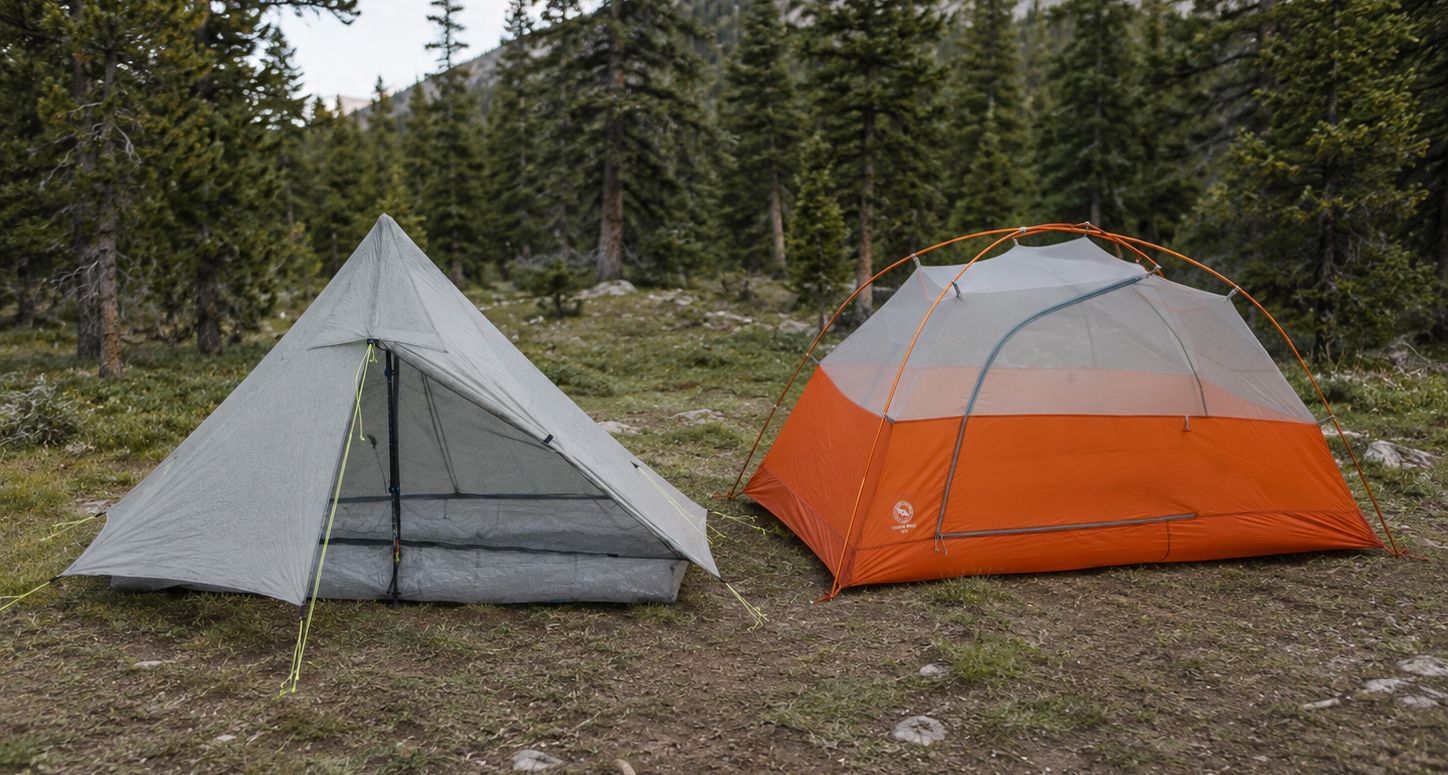
Freestanding tents are usually easier for beginners and more forgiving on hard, rocky, or platform campsites because their pole structure mostly supports the tent. Trekking pole tents can be lighter and more compact, but they depend more on stakes, pitch quality, campsite soil, and whether you already carry trekking poles.
Neither tent type is automatically better. The right choice depends on campsite surfaces, weather, weight target, interior space, setup skill, pole use, and how much patience you have for pitch adjustments.
The REI backpacking tent guide defines freestanding tents as shelters that can stand without stakes and notes that non-freestanding tents can be lighter because they need less dedicated pole structure. Use that as the basic distinction, then layer in real campsite and weather tradeoffs.
Freestanding vs Trekking Pole Tents: Quick Comparison
| Factor | Freestanding tent | Trekking pole tent | Why it matters |
|---|---|---|---|
| Weight | Usually heavier | Often lighter | Trekking pole tents reuse poles you may already carry. |
| Setup | More forgiving | More pitch-dependent | Stake angle, pole height, and tension matter more. |
| Campsite flexibility | Better on platforms, rock, hard ground | Better on soil that accepts stakes | Staking conditions can decide the trip experience. |
| Beginner friendliness | Usually higher | Moderate after practice | Freestanding frames are easier to understand. |
| Weather confidence | Predictable structure | Strong when pitched well | Poor pitch can reduce storm performance. |
| Interior space | Often more consistent | Can be excellent but shape varies | Wall slope and pole placement affect livability. |
| Condensation | Often double-wall options | Many single-wall options | Ventilation and site choice matter for both. |
| Packed bulk | Poles add length and bulk | Smaller if trekking poles are separate | Useful for smaller packs. |
If you camp often on established tent pads, rocky ground, wooden platforms, or compacted soil, freestanding designs are easier. If you hike long miles, already use trekking poles, and camp on stake-friendly ground, trekking pole tents become more appealing.
What Is a Freestanding Tent?
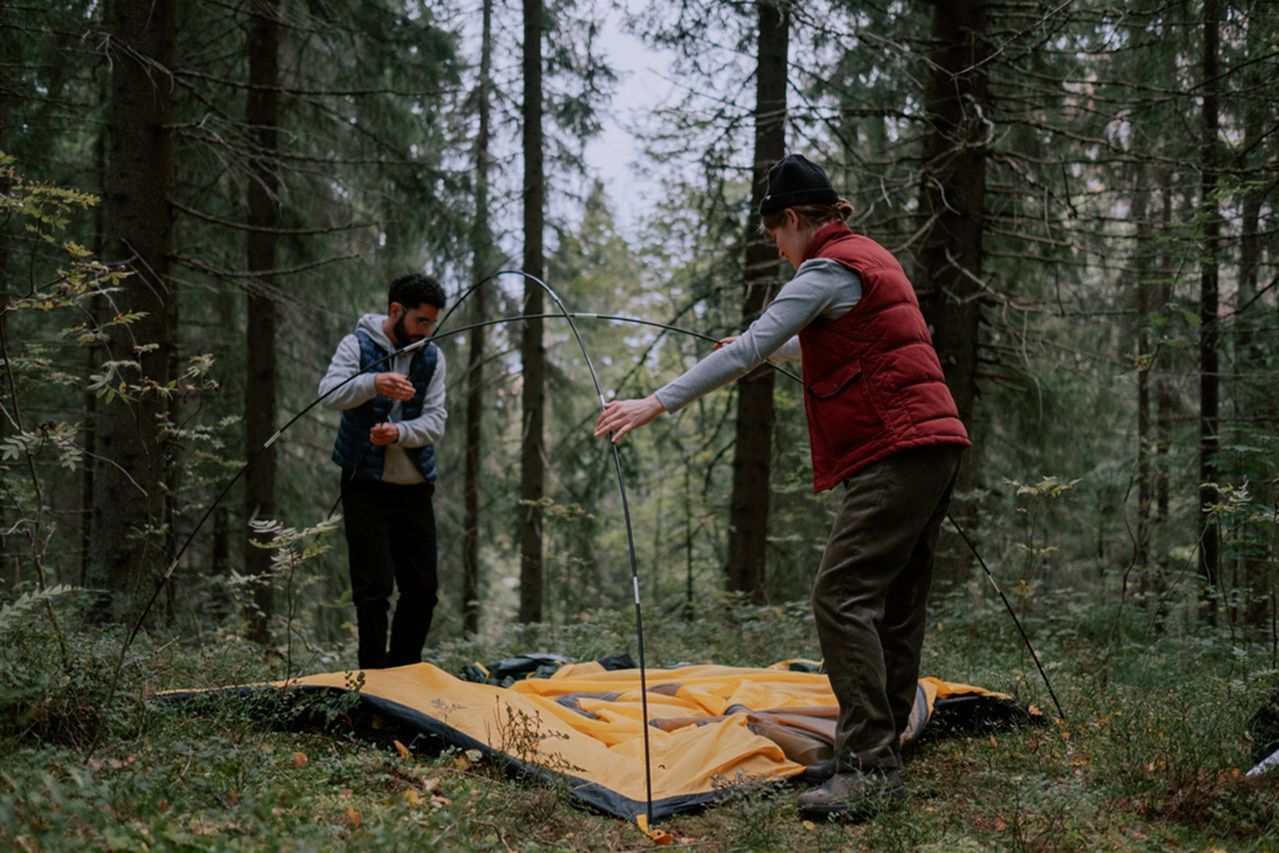
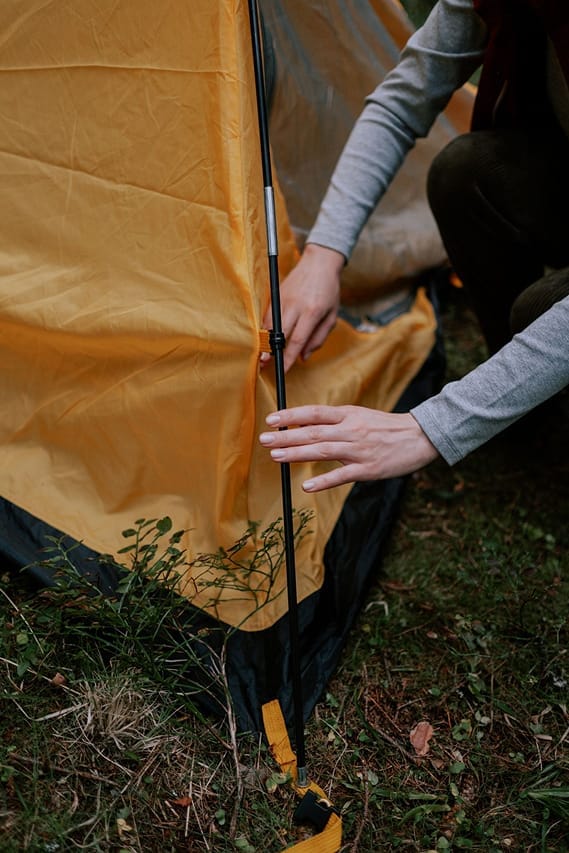
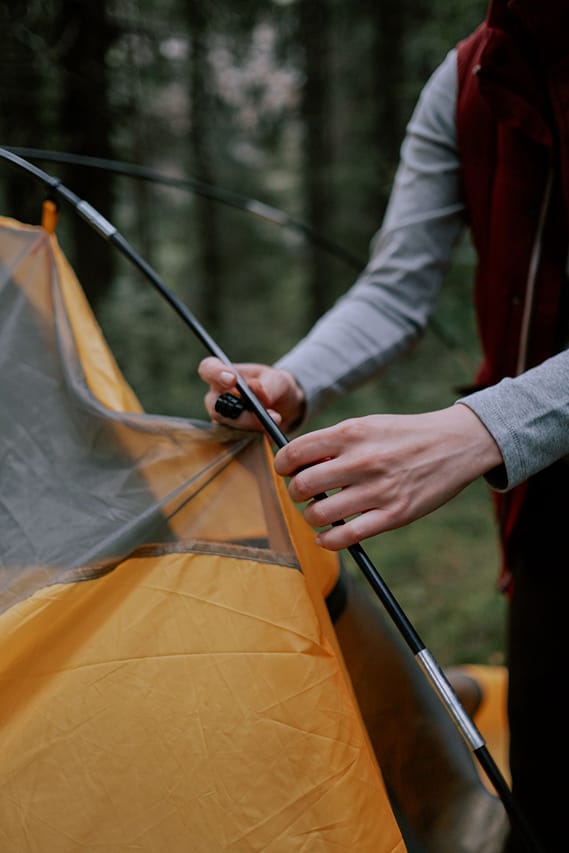
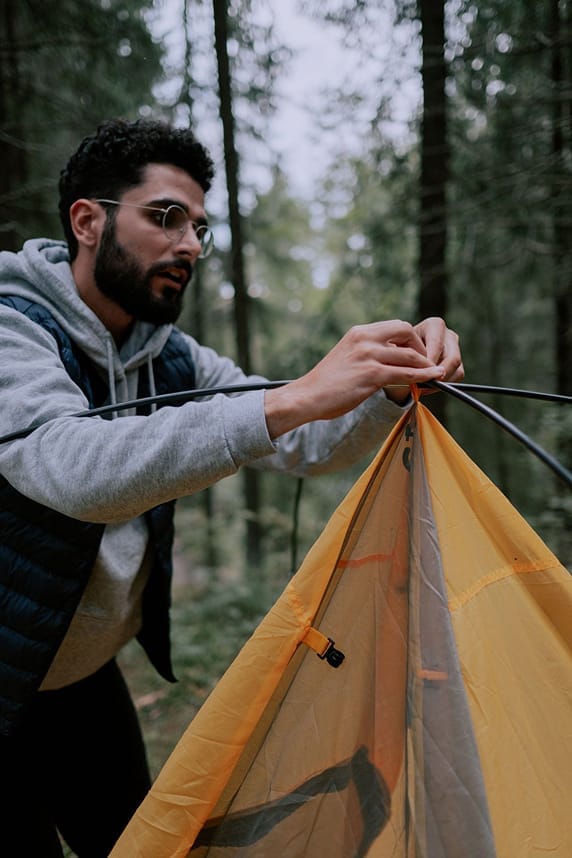
A freestanding tent has a dedicated pole structure that lets the tent body stand up without being fully staked out. That makes it easy to pick up and reposition before staking, shake out dirt, or pitch on awkward surfaces.
"Freestanding" does not mean "no stakes ever." Stakes and guylines still matter for vestibules, wind, rain, airflow, and keeping the tent from moving. In bad weather, an unstaked freestanding tent can still fail or blow away.
Semi-freestanding tents sit between categories. They have dedicated poles and can mostly stand on their own, but they still need stakes to fully tension the footbox, vestibule, or corners.
What Is a Trekking Pole Tent?
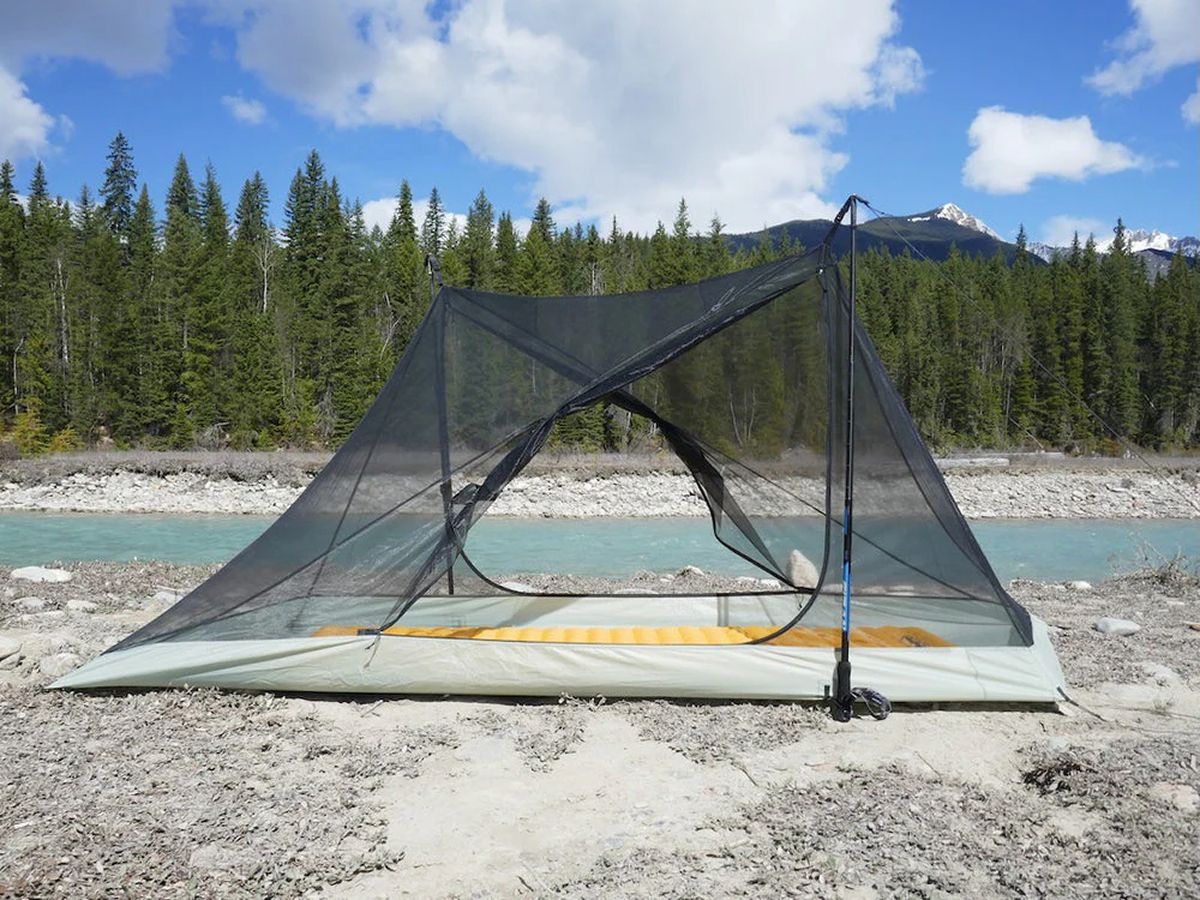
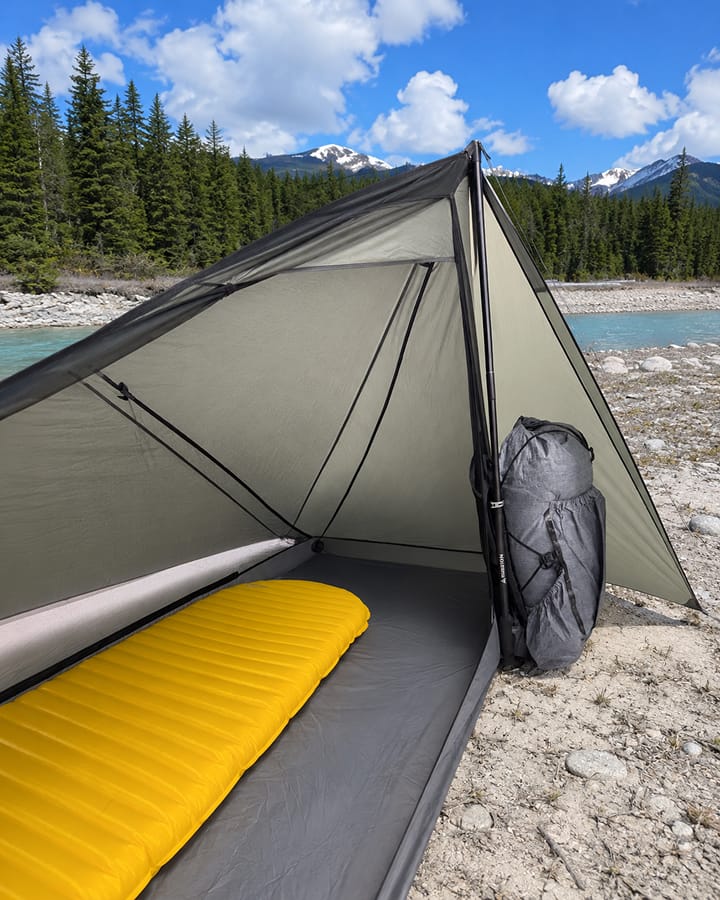
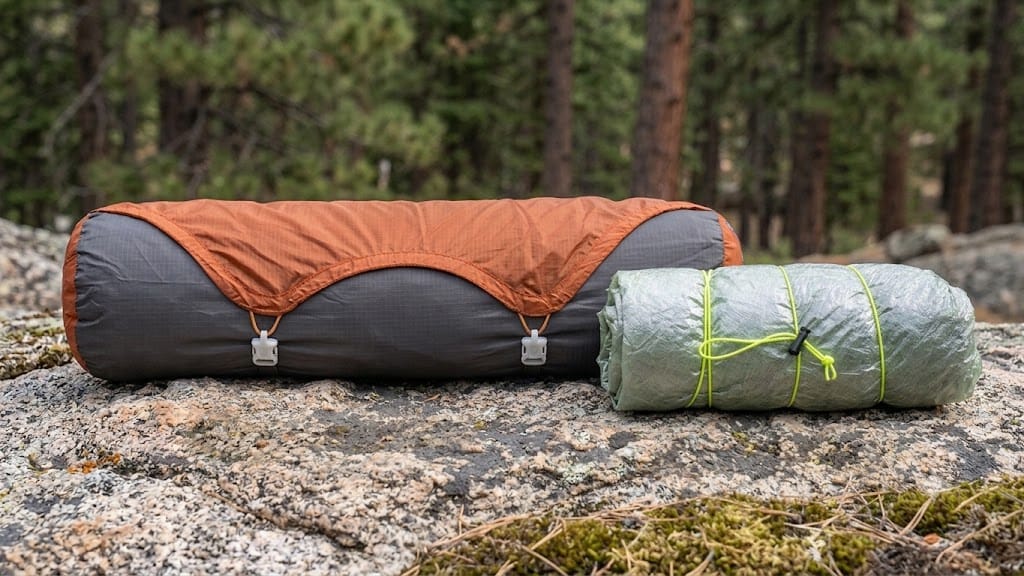
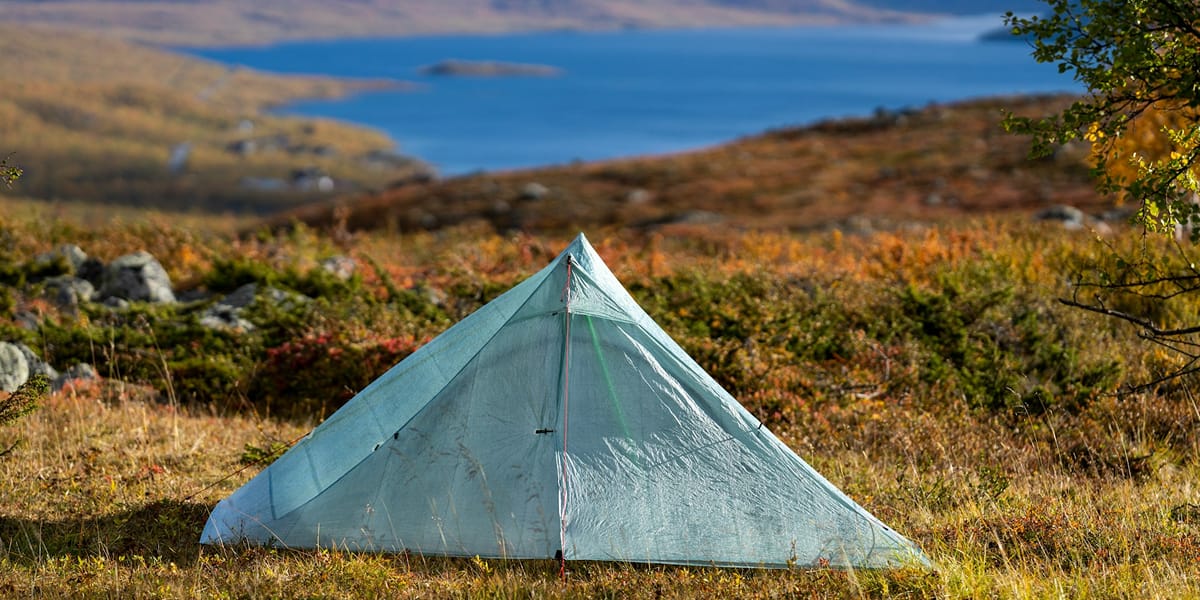
A trekking pole tent uses your trekking poles, or sometimes accessory poles, as the main structure. Because the tent does not need a full dedicated pole set, it can save weight and pack smaller.
The tradeoff is that the shelter depends more on stakes, line tension, pole height, and ground conditions. A good pitch can be strong, roomy, and efficient. A sloppy pitch can sag, flap, collect condensation, or feel cramped.
Many trekking pole shelters are single-wall, which means the canopy and rain protection are combined. Single-wall shelters can save weight, but condensation management becomes more important. Double-wall trekking pole tents exist too, usually with a little more complexity and weight.
Readers comfortable with a more pitch-dependent shelter can also compare dedicated backpacking tarps. For site and setup decisions, see how to choose a tent for rain and wind and reduce tent condensation.
When a Freestanding Tent Is Better
Choose a freestanding or semi-freestanding tent when ease and campsite flexibility matter more than the lowest possible weight.
Good freestanding tent scenarios:
- Your first backpacking tent.
- Trips with wooden platforms, rock slabs, sand, or hard-packed sites.
- Two-person trips where livability matters.
- Routes where you do not carry trekking poles.
- Trips where you want faster, more intuitive setup after a long day.
Freestanding tents are also useful when you frequently need to reposition the tent to avoid roots, rocks, puddles, or slope. You can set the structure, move it, then stake it.
When a Trekking Pole Tent Is Better
Choose a trekking pole tent when weight, packability, and efficiency matter more than plug-and-play setup.
Good trekking pole tent scenarios:
- Long-mileage trips where every pound matters.
- Ultralight backpacking kits.
- Hikers who already use trekking poles.
- Campsites with reliable soil for stakes.
- Users willing to practice the pitch before the trip.
Do not buy a trekking pole tent only because it is lighter on a spec sheet. Buy it because you are comfortable with the setup style and your likely campsites support it.
Tent Type by Trip Scenario
| Trip scenario | Better starting point | Caveat |
|---|---|---|
| First backpacking tent | Freestanding or semi-freestanding | Practice at home anyway. |
| Hard platforms or rocky camps | Freestanding | You may still need creative guyline anchors. |
| Long-distance ultralight route | Trekking pole tent | Best if you already carry poles and can stake reliably. |
| Two-person comfort | Freestanding or roomy trekking pole tent | Compare floor shape, wall slope, and vestibules. |
| Wind-exposed camps | Depends on specific design and pitch | Geometry, guylines, and site choice matter more than category. |
| Humid or condensation-prone areas | Well-ventilated double-wall or careful single-wall setup | Condensation is not limited to one tent type. |
Common Mistakes When Comparing Tent Types
Ignoring stakes and guylines
Freestanding tents still need stakes for security and vestibules. Trekking pole tents need stakes for structure. If you compare weights, include the stakes and guylines you will actually carry.
Comparing minimum weight to packed weight
Minimum weight often excludes some stuff sacks, stakes, or accessories. Packed weight is closer to what most backpackers carry. Use the same weight definition when comparing shelters.
Forgetting campsite surfaces
A trekking pole tent can be frustrating on hard platforms if you do not have a way to anchor it. A freestanding tent can be easier there. On soft soil, the trekking pole tent may pitch quickly and save weight.
Assuming lighter always means easier
Lighter shelters can demand more skill. If you arrive tired, cold, or in wind, a familiar pitch matters more than a few ounces.
Treating condensation as a brand problem only
Condensation depends on humidity, ventilation, site choice, temperature, and shelter design. Single-wall trekking pole shelters get more attention here, but double-wall tents can also collect moisture.
Setup Practice Checklist
Before taking any new tent into the backcountry:
- Pitch it at home at least once.
- Learn the pole heights or pole orientation.
- Check stake count and guyline locations.
- Practice a tight pitch on uneven ground.
- Confirm how the doors, vestibules, and vents work.
- Pack the tent wet or dirty once so you know the real-world process.
This matters for all tents, but it matters more for trekking pole shelters because small setup choices can change the structure.
FAQ
Are trekking pole tents hard to set up?
They are not necessarily hard, but they are less automatic than many freestanding tents. Stake placement, pole height, and tension matter. Practice at home before depending on one in wind, rain, or fading light.
Are freestanding tents better for beginners?
Usually, yes. Freestanding tents are often more intuitive because the pole structure defines the shape. Beginners still need to practice staking, guylines, and rainfly setup.
Do freestanding tents still need stakes?
Yes. A freestanding tent can stand without stakes, but stakes are still important for vestibules, wind, rain, airflow, and keeping the tent in place. Do not treat freestanding as stake-free.
Are trekking pole tents good in wind?
They can be good in wind when the design is appropriate and the pitch is solid. Wind performance depends on shelter geometry, stake security, guylines, campsite choice, and user skill, not only on whether the tent uses trekking poles.
Can you use a trekking pole tent without trekking poles?
Sometimes. Some models accept accessory poles, but not all do. Check the tent design before buying if you do not normally hike with trekking poles.
What is a semi-freestanding tent?
A semi-freestanding tent has a dedicated pole structure but still needs stakes to fully tension part of the tent, such as the footbox, vestibule, or corners. It often saves weight compared with a fully freestanding design.
Are trekking pole tents lighter than freestanding tents?
Often, yes, because they reuse trekking poles instead of carrying a full dedicated pole set. Compare realistic packed weight, including stakes, guylines, accessory poles, and the trekking poles if you would not otherwise carry them.
Related Guides
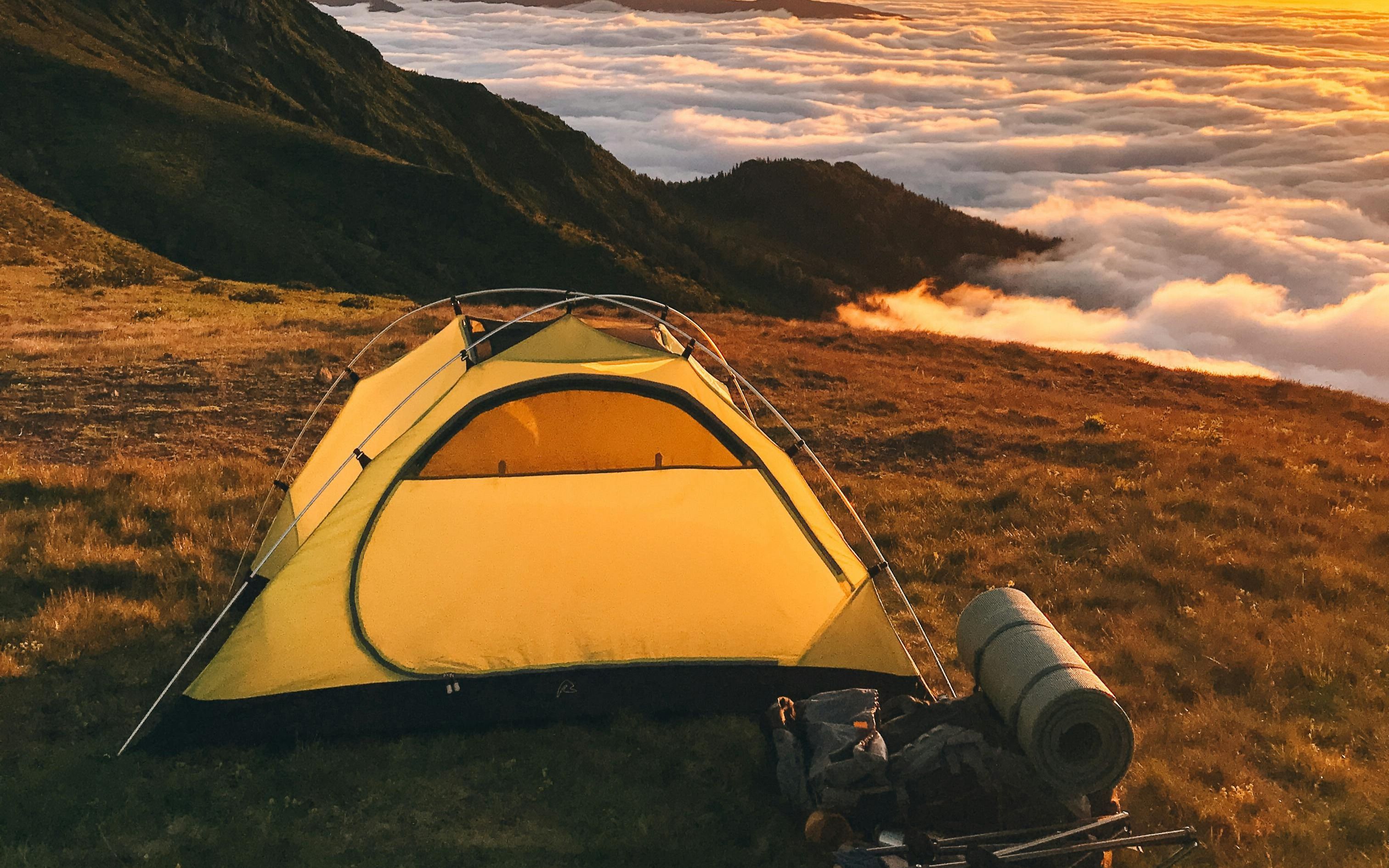
Best Backpacking Tents Of 2026
This guide compares the best backpacking tents of 2026, highlighting top choices for durability, comfort, and weather resistance to help you find the perfect shelter for your adventures.
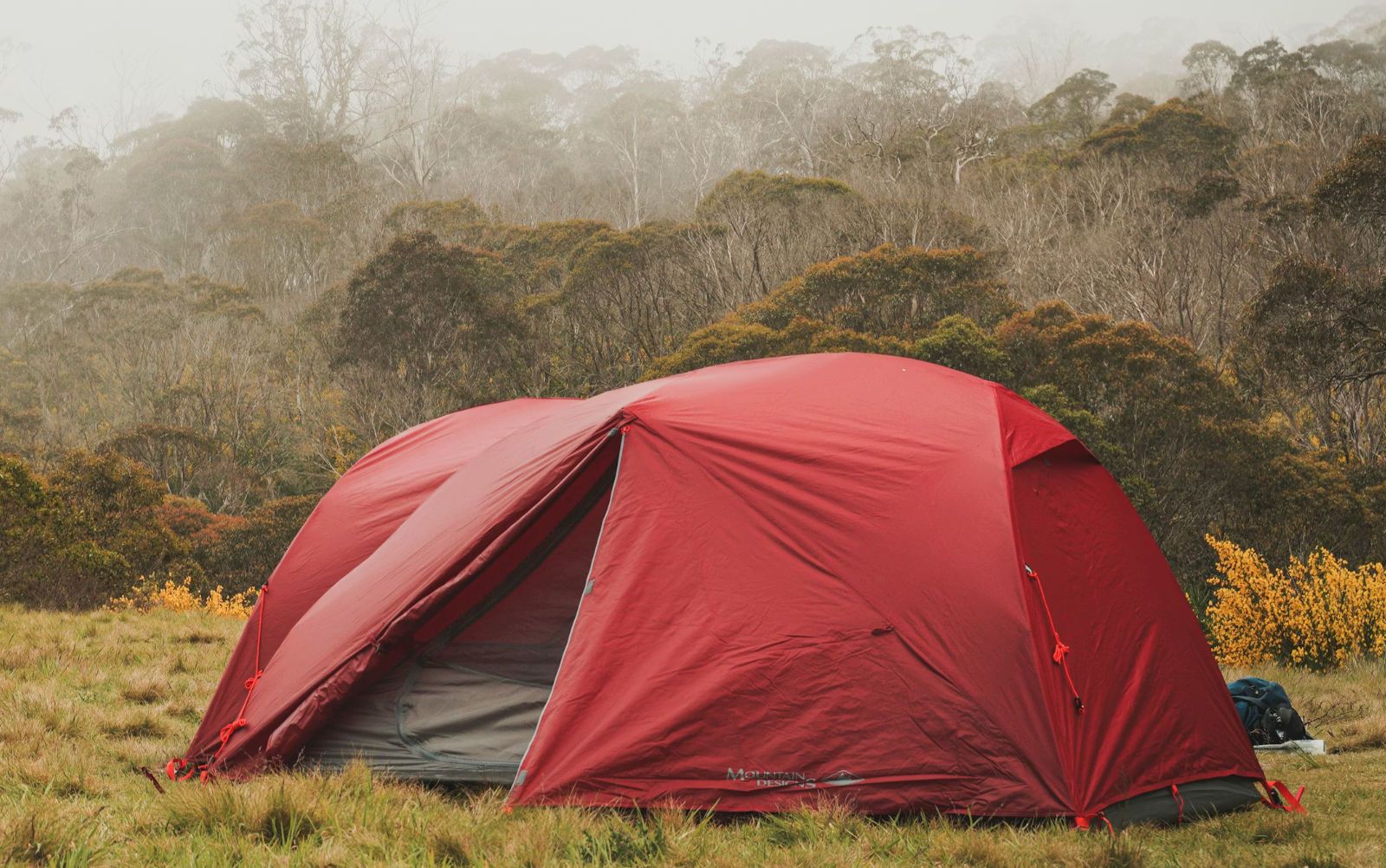
Best 2 Person Backpacking Tents
This guide compares top camping tents to help you find the best balance of comfort, durability, and ease of use for your outdoor adventures.
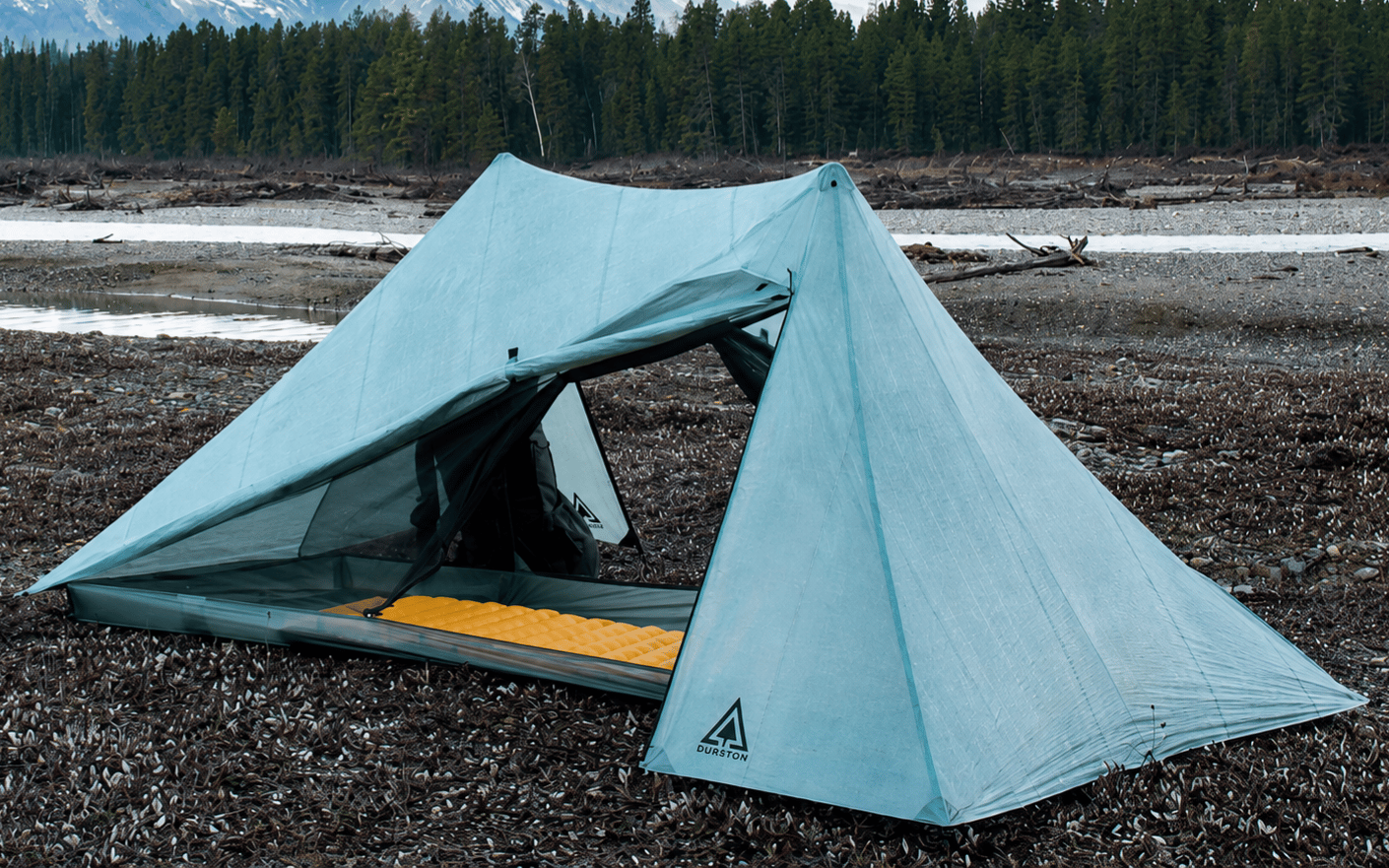
Best Ultralight Backpacking Tents
This guide compares the best ultralight backpacking tents, helping you choose a durable, weather-resistant shelter that balances weight and comfort for long-distance hikes.
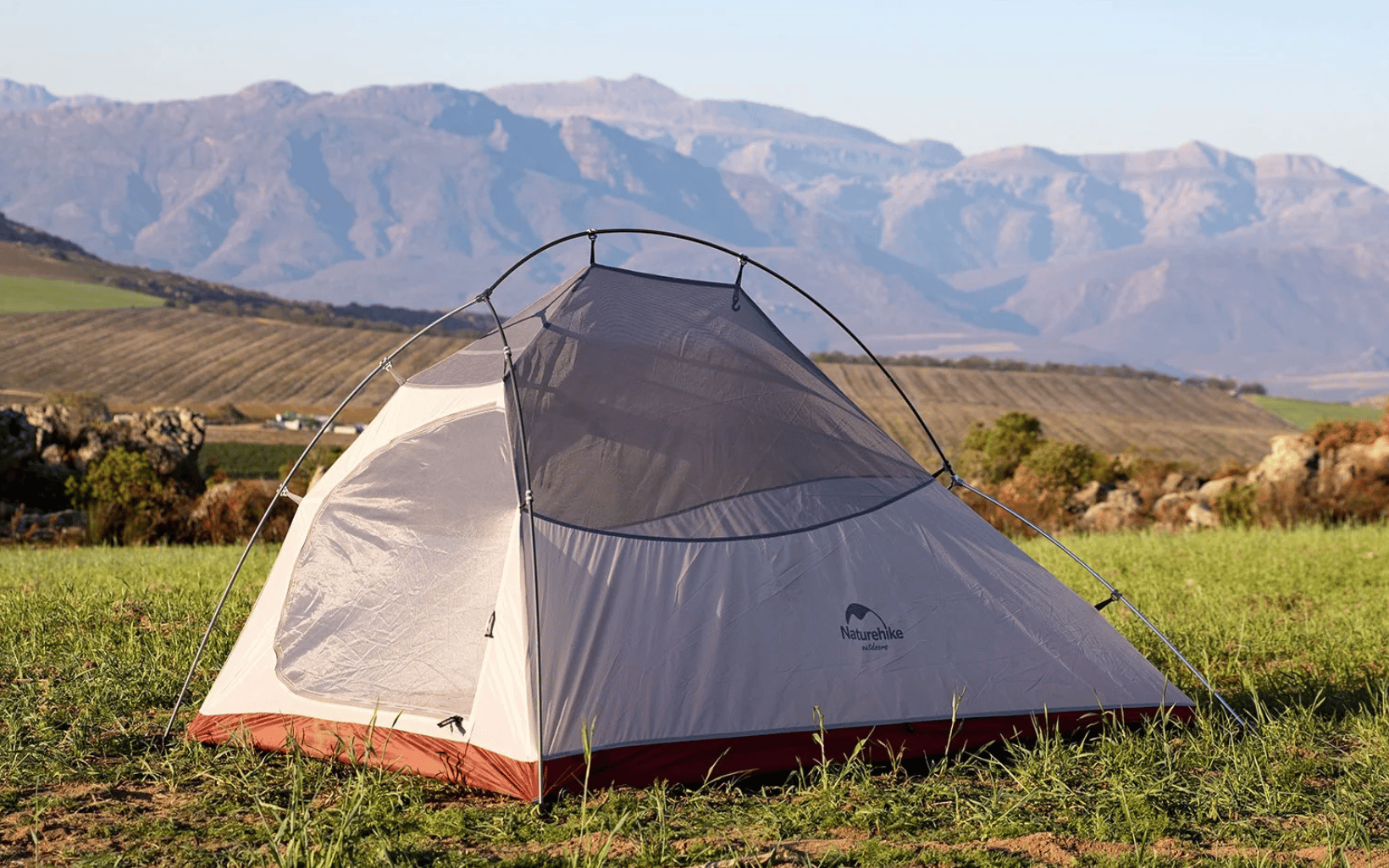
Best Budget Backpacking Tents
This guide compares the best budget backpacking tents, highlighting key features and tradeoffs to help you find the perfect shelter for your outdoor adventures.
How Much Should a Backpacking Tent Weigh?
Understand backpacking tent weight ranges, packed weight vs trail weight, and when a heavier shelter is worth carrying.
How to Choose a Backpacking Tent for Rain and Wind
Evaluate backpacking tents for rain and wind by fly and floor coverage, structure, seams, ventilation, guylines, stakes, site, and pitch quality.