
MSR Evo Trail vs Tubbs Frontier
Why You Can Trust Us
- Side-by-side analysis based on real user feedback
- Unbiased comparisons, not influenced by partnerships
- Updated as new data becomes available
We may earn from affiliate links at no extra cost to you.
| Evo Trail | Frontier | |
|---|---|---|
 |  VS | |
| Max Load | Without tails: Up to 180 lb | 25 in: 120 - 200 lb |
| Dimensions | 22 × 8 in | 25 in, 30 in, 36 in lengths (width not listed) |
| Weight | 3 lb 10 oz per pair | 3 lb 14.4 oz per pair (25 in) |
| Binding Type | Paraglide | 180 EZ |
| Crampon Count | Not specified | 2 (recreational toe and heel) |
| Heel Lift | No | No |
| Warranty | 3 years limited | 1 year limited |
| Modular Tail Extension | 6 in | No |
| Frame Material | Martensitic steel frame, polypropylene deck | Aluminum |
| Bag Included | Not specified | No (optional add-on) |
| MSR Evo Trail | Tubbs Frontier |
|---|---|
| |
| Max Load | |
Without tails: Up to 180 lb | 25 in: 120 - 200 lb |
| Dimensions | |
22 × 8 in | 25 in, 30 in, 36 in lengths (width not listed) |
| Weight | |
3 lb 10 oz per pair | 3 lb 14.4 oz per pair (25 in) |
| Binding Type | |
Paraglide | 180 EZ |
| Crampon Count | |
Not specified | 2 (recreational toe and heel) |
| Heel Lift | |
No | No |
| Warranty | |
3 years limited | 1 year limited |
| Modular Tail Extension | |
6 in | No |
| Frame Material | |
Martensitic steel frame, polypropylene deck | Aluminum |
| Bag Included | |
Not specified | No (optional add-on) |
Traction
Evo Trail
Frontier
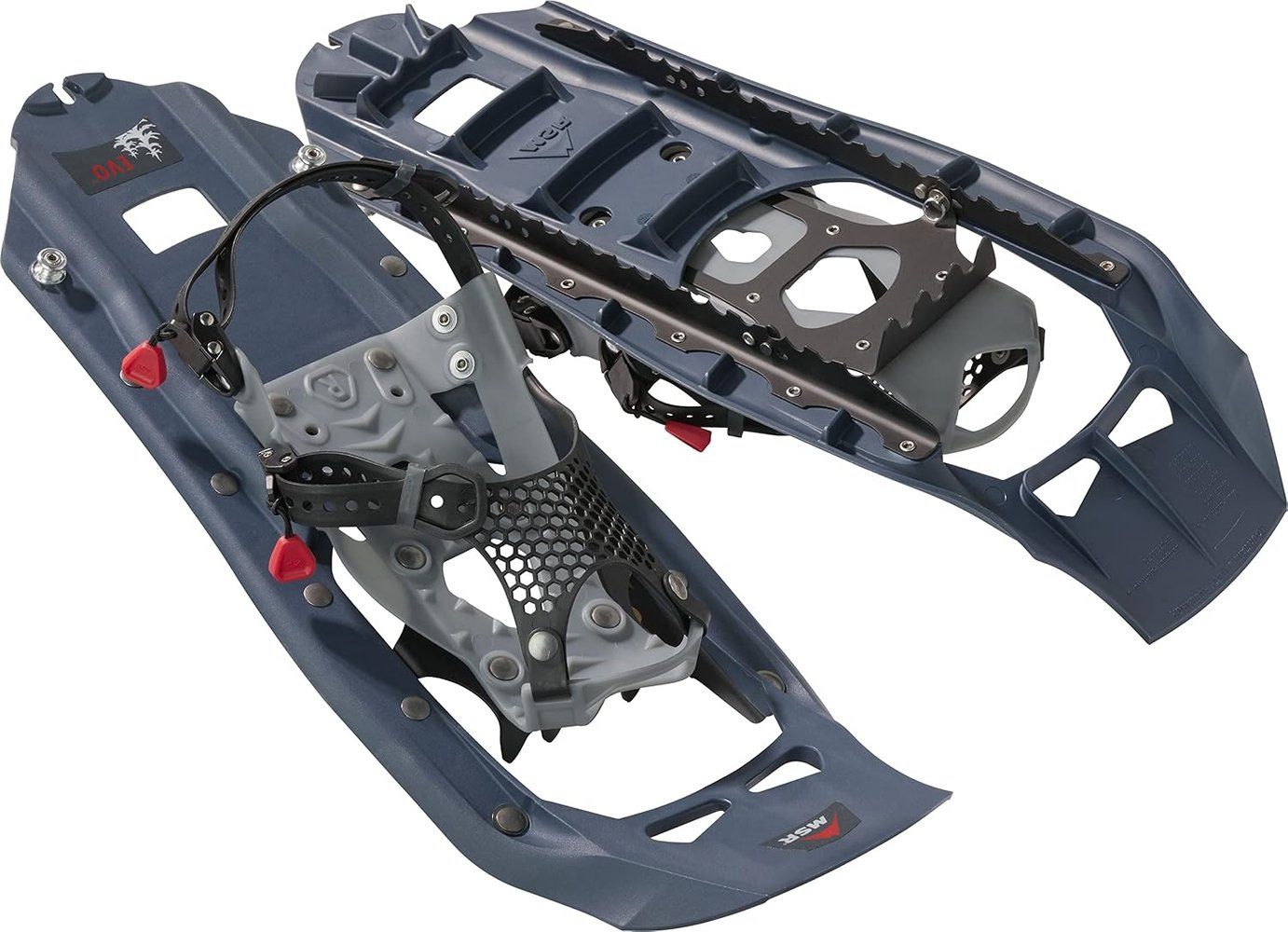
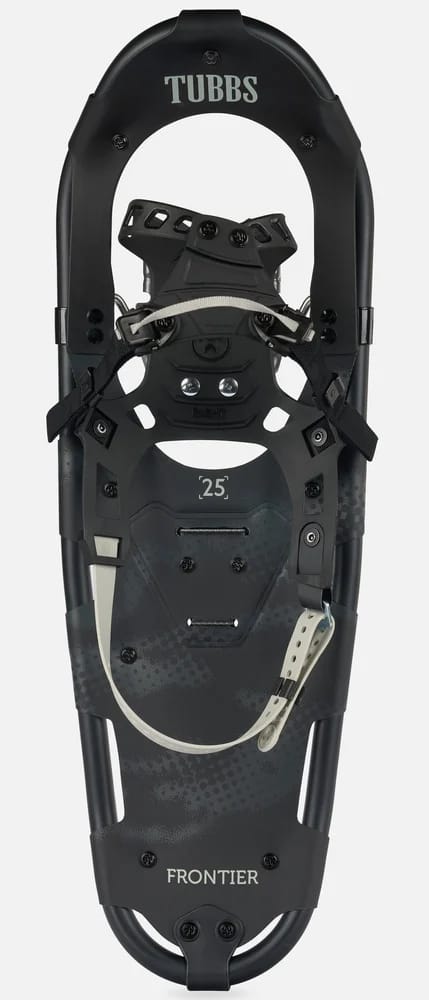
Traction matters most on icy trails, packed snow, and steep climbs, where a slip can end a hike quickly. The Evo Trail relies on steel crampons and steel side rails, and buyers describe the metal track as gripping uneven ground and rock, with heavy cleats slipping very little and the crampons digging into snow on steep hills. Some owners note that the cleats can slide a little on certain surfaces, so it may not match the most aggressive snowshoes. The Frontier uses ice cleats on the underside and an angled grip pattern, and buyers say the cleats keep them from sliding backward on hills, with good grip on the heel area as well. Both products are rated very close, so neither has a clear edge; the Evo Trail suits rocky or icy trail routes, while the Frontier suits buyers who mainly want reliable grip on hill climbs.
Comfort
Evo Trail
Frontier
Comfort affects how a snowshoe feels after several hours on the trail, since pressure points and strap fit can turn a short outing into a painful one. The Evo Trail uses Paraglide stretch-mesh bindings that hug the foot and reduce pressure points, and buyers say the design feels natural in motion and eases calf and lower-leg strain on inclines. Fit is mixed, however, because some owners find it secure when cinched snug while others say the straps loosen during use. The Frontier's comfort signal is thinner, with a single note that the shoes do not feel heavy on the feet, but it is not a clear standout. The Evo Trail has the edge in this category, but buyers should try either product with their own boots before committing.
Flotation
Evo Trail
Frontier
Flotation determines whether you walk on top of soft powder or sink up to the knee, which is the main reason to own a snowshoe at all. The Frontier performs strongly here, with buyers reporting that it keeps sinking to about 6 to 7 inches in two feet of snow while boots sink past the knees, and that it did not sink into powdery snow. The Evo Trail counters with modular float tails that extend the deck to 28 inches and an optional 6-inch fin for deep, fluffy snow and heavier loads. Because the tails are an add-on, the Evo Trail lets you start lean and add flotation only when conditions call for it. For out-of-the-box flotation in deep snow, the Frontier is the stronger choice, while the Evo Trail can match it for heavy loads once the tails are added.
Ease Of Use
Evo Trail
Frontier
Ease of use shapes how quickly you can get geared up in cold weather, especially when your gloves are on. The Frontier scores highest here, with buyers praising its tightening points, quick release, and control wing binding that makes boot entry easier. Its front piece and pull cords work without removing gloves, the buttoning system keeps straps out of the way, and there is no right or left designation, which helps users who struggle with orientation. The Evo Trail also clips in and releases quickly through its ratchet binding and horseshoe design, and its glove-friendly straps are easy to handle, but several owners say the boot entry feels tight, the hooks catch on boots, and the lack of a heel lift makes some footwear awkward. The Frontier is the easier product to live with, and the Evo Trail is best if your boots fit its entry comfortably.
Durability
Evo Trail
Frontier
Durability matters for buyers who expect to use snowshoes for many seasons on rough terrain. The Evo Trail's injection-molded UniBody deck and martensitic steel frame earn strong praise, with owners describing it as time-tested and expecting it to last ten to twenty years on rolling ground. A few reviewers report some wear on boots from the straps over time, so periodic inspection of the bindings is worthwhile. The Frontier is described as looking rugged and using an aluminum frame with synthetic material, but buyer opinion is split, so its long-term durability is less proven. The Evo Trail is the stronger pick for long-term ownership, and the Frontier's durability is better treated as neutral.
Stability
Evo Trail
Frontier
Stability affects how confident you feel when crossing slopes, changing direction, or walking on uneven snow. The Frontier earns good marks here, with buyers saying it tracks well on packed trails without tipping or leaning, which helps when pulling a toboggan. The Evo Trail feels steady on flat trail footing, but owners say it is less consistent on uneven or sloped snow, and some report that the bindings unhook during use. For traveling on variable or steep terrain, the Frontier is the more dependable choice, while the Evo Trail is best kept to flatter trail routes where its footing is most reliable.
Trust & Transparency
- Data-driven rankings from real user reviews
- Affiliate partnerships don't influence our methodology
We may earn commission from links.
Conclusion & Final Verdict:
Choose the MSR Evo Trail if you spend most of your time on icy, packed, or rocky trails, want steel crampons, and plan to use the snowshoes for many seasons. Its longer warranty, tail extension, and strong durability make it the better long-term investment, provided your boots fit its entry area comfortably.
Choose the Tubbs Frontier if you are a beginner, want quick and easy binding, or travel through deep, soft snow and variable hills. Its stronger ease of use, flotation, and stability make it the more forgiving choice out of the box.
Related Comparisons
L.L.Bean Women's Winter WalkervsTubbs Frontier
Choose the Tubbs Frontier for stronger ice grip, better flotation, and the easiest entry, especially if you are a beginner. Pick the L.L.Bean Women's Winter Walker if a natural, comfortable fit and sturdier construction matter more to you.
MSR Evo TrailvsMSR Revo Explore
The Revo Explore is the stronger all-round pick for winter hikers who want aggressive grip, a heel lift, and quicker stability on uneven snow. The Evo Trail suits buyers who want a lighter pair with steel crampons and rugged build for trail use on a tighter budget.
MSR Evo TrailvsTSL Symbioz Hyperflex Elite
The MSR Evo Trail suits buyers who need flotation in deep powder, a lighter pair, and a longer warranty, while the TSL Symbioz Hyperflex Elite is the better choice for icy steep terrain, stability, and uphill comfort with heel lifts.
MSR Evo TrailvsTubbs Flex ALP
The MSR Evo Trail suits trail hikers who want secure steel-edged grip, a quick ratchet binding, and an add-on float tail for deep snow. The Tubbs Flex ALP is the better pick for steep, icy alpine terrain and easier descents, though it offers less flotation.
MSR Evo TrailvsTubbs Mountaineer
The Tubbs Mountaineer is the stronger choice for off-trail travel, with more aggressive grip, a heel lift, and easier binding entry, while the MSR Evo Trail suits trail hikers who want steel traction and add-on flotation tails at a lower price point.
MSR Evo TrailvsTubbs Wilderness
The MSR Evo Trail suits trail hikers who want steel bite on icy and steep snow and the option to add flotation tails for deep powder. The Tubbs Wilderness suits buyers who put a higher priority on quick, glove-friendly bindings, a heel lift, and a lifetime warranty.