
MSR Evo Trail vs Tubbs Wilderness
Why You Can Trust Us
- Side-by-side analysis based on real user feedback
- Unbiased comparisons, not influenced by partnerships
- Updated as new data becomes available
We may earn from affiliate links at no extra cost to you.
| Evo Trail | Wilderness | |
|---|---|---|
 |  VS | |
| Max Load | Without tails: Up to 180 lb | 25 in: 120 - 200 lb |
| Dimensions | 22 × 8 in | 25 in, 30 in, 36 in lengths (30 in model is 9.5 in wide at the front) |
| Weight | 3 lb 10 oz per pair | 4 lb 15.4 oz per pair (30 in) |
| Binding Type | Paraglide | Quick-Fit |
| Crampon Count | Not specified | 2 (Cobra toe, Tubbs heel) |
| Heel Lift | No | Yes (ActiveLift, 16°) |
| Warranty | 3 years limited | Limited lifetime |
| Modular Tail Extension | 6 in | No |
| Frame Material | Martensitic steel frame, polypropylene deck | Aluminum |
| Bag Included | Not specified | No (optional add-on) |
| MSR Evo Trail | Tubbs Wilderness |
|---|---|
| |
| Max Load | |
Without tails: Up to 180 lb | 25 in: 120 - 200 lb |
| Dimensions | |
22 × 8 in | 25 in, 30 in, 36 in lengths (30 in model is 9.5 in wide at the front) |
| Weight | |
3 lb 10 oz per pair | 4 lb 15.4 oz per pair (30 in) |
| Binding Type | |
Paraglide | Quick-Fit |
| Crampon Count | |
Not specified | 2 (Cobra toe, Tubbs heel) |
| Heel Lift | |
No | Yes (ActiveLift, 16°) |
| Warranty | |
3 years limited | Limited lifetime |
| Modular Tail Extension | |
6 in | No |
| Frame Material | |
Martensitic steel frame, polypropylene deck | Aluminum |
| Bag Included | |
Not specified | No (optional add-on) |
Traction
Evo Trail
Wilderness
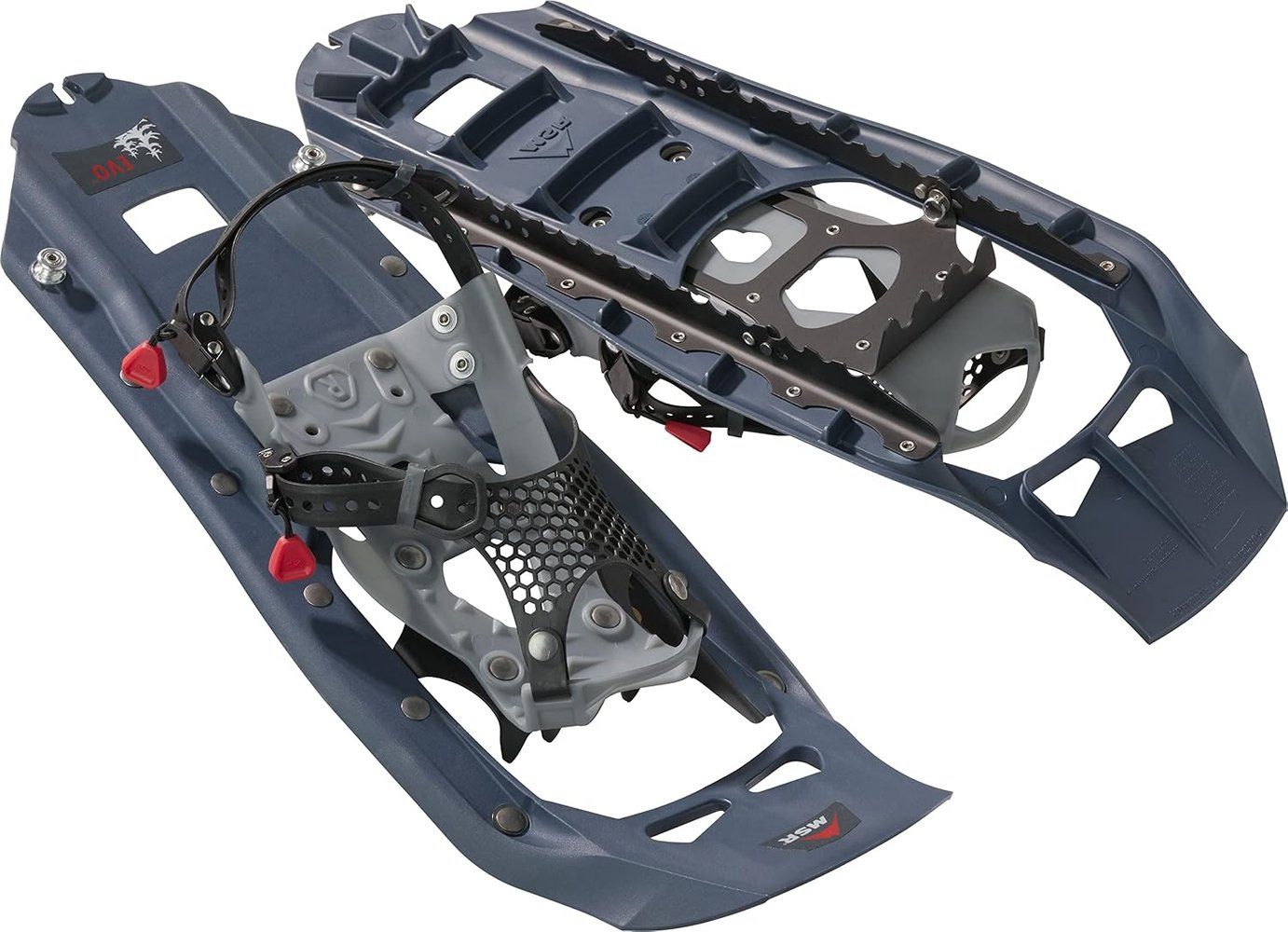
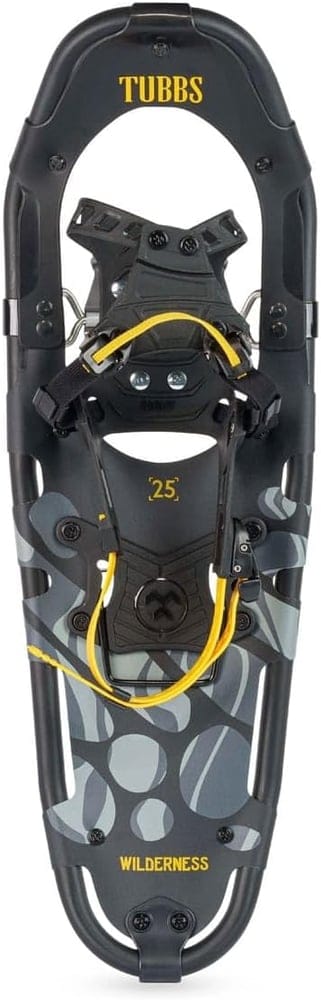
Traction matters most on icy, packed, and steep snow, where a slip can turn a simple trail hike into a risky descent. The Evo Trail's steel crampons and steel side rails give a secure, dependable bite, and buyers say the metal track grips uneven ground and rock as well as snow. Some owners note the cleats can slide a little on certain surfaces, and a few say they slide very little, so results depend on conditions. The Wilderness also earns strong praise, with crampons that bite hard into icy hills and firm crust, cleats that perform well on pure ice, and feet that stay put on steep slopes. Its rear heel lift helps on steep sections, though some buyers say it trails the MSR Lightning on off-camber slopes. The Evo Trail is the stronger pick for mixed trail conditions that include rock and uneven ground, while the Wilderness is a close second that shines on steep, icy hills.
Comfort
Evo Trail
Wilderness
Comfort affects how a snowshoe feels after hours of walking, and it is often where the bindings and fit make the biggest difference. Buyers describe the Evo Trail's Paraglide stretch-mesh bindings as comfortable, reducing pressure points on the feet and easing strain on the calves when climbing. Its televator-free design still feels natural to many hikers, and runners have noted a natural gait. Fit is mixed, however, since some find the straps secure when cinched snug while others report straps that loosen. The Wilderness has fewer comfort reports, with some buyers calling it very comfortable and others less satisfied over long walks. Because the evidence for the Wilderness is thin, the Evo Trail has the edge, but buyers planning long treks should test either model with their own boots before committing.
Flotation
Evo Trail
Wilderness
Flotation determines whether you sink into deep or fluffy snow, which becomes critical on powder days and when carrying a heavy pack. The Evo Trail's modular float tails extend the deck to 28 inches and add an optional 6-inch fin, and buyers say it keeps them on top of deep powder and heavier loads. Because the tails are an add-on, you can start with a lean setup and add flotation only when conditions call for it. The Wilderness keeps most hikers from sinking in packed or moderately deep snow, but buyers say float depends heavily on choosing the right length. It works best on level or packed snow, and buyers planning for deep, soft snow are advised to choose the 30 or 36 inch size. The Evo Trail is the better choice for variable or deep snow, while the Wilderness works well on packed trails once you pick the correct size.
Ease Of Use
Evo Trail
Wilderness
Ease of use shapes how much time and frustration you spend putting on and taking off snowshoes, especially in cold weather with gloves. The Wilderness stands out here, with buyers finding its bindings quick to step into, easy to release, and simple to cinch even with heavy gloves. Its wide-opening straps, release button, and freely rotating binding make repeated on-and-off adjustments straightforward. The Evo Trail's ratchet binding and horseshoe-style design also clip in and release quickly, and its glove-friendly straps are easy to handle. However, some buyers find the boot entry tight, hooks that catch on boots, and the lack of a heel lift to be drawbacks. The Wilderness is the clear winner for frequent on-and-off use, while the Evo Trail works well if your boots fit its entry comfortably.
Durability
Evo Trail
Wilderness
Durability determines how many seasons a snowshoe will last and how much maintenance it needs. The Evo Trail is built with an injection-molded UniBody deck and a martensitic steel frame, and many owners expect it to last for years on rolling terrain, with some describing it as time-tested and rugged. A few reviewers report wear on boots from the straps over time, so periodic inspection is worthwhile. The Wilderness V2 has held up well over three years without frame or deck failures, and buyers describe it as exceptionally well made. Some caution that its very light build could risk breakage over time. Both models earn strong long-term reputations, so neither has a clear advantage, and the choice depends on whether you prefer a steel-based build or a lighter one.
Stability
Evo Trail
Wilderness
Stability matters when you cross slopes, uneven terrain, or variable snow, because a wobbly binding or unsteady deck can cause fatigue and falls. Many buyers find the Evo Trail steady on flat trail footing, but it is less consistent on uneven or sloped snow. Some owners also report that its bindings can come unhooked during use, which is a notable concern for steep or variable routes. The Wilderness uses a swivel frame that adjusts the shoe angle as you shift your weight, which helps some hikers on slopes. Other buyers remain less confident on uneven terrain, so stability feedback is split. Overall, the Wilderness has the edge on sloped and shifting ground, but both models should be tested on your typical terrain before you commit.
Trust & Transparency
- Data-driven rankings from real user reviews
- Affiliate partnerships don't influence our methodology
We may earn commission from links.
Conclusion & Final Verdict:
Choose the MSR Evo Trail if you hike mixed trails with rock, uneven ground, or deep powder and want the lighter pair with the option to add modular flotation tails. Choose the Tubbs Wilderness if you value quick, glove-friendly bindings, a heel lift for steep climbs, and a lifetime warranty, and you mostly travel packed or icy snow. Both are solid picks, so test the fit with your own boots and match the length to your typical snow conditions before buying.
Related Comparisons
MSR Lightning AscentvsTubbs Wilderness
The Lightning Ascent is the stronger choice for aggressive grip, comfort, and float on steep, icy, or deep-powder routes. The Wilderness is the better pick for buyers who want quick, glove-friendly bindings and a longer-lasting build for everyday use.
MSR Lightning ExplorevsTubbs Wilderness
The MSR Lightning Explore suits buyers who want aggressive grip on ice and steep slopes plus a comfortable all-day binding. The Tubbs Wilderness suits buyers who value quick, glove-friendly bindings and a lifetime warranty, with more caution on off-camber terrain and deep snow.
MSR Revo ExplorevsTubbs Wilderness
The MSR Revo Explore suits hikers who want the most aggressive steel traction, modular tails for deep snow, and a lighter build. The Tubbs Wilderness is the easier pick for quick, glove-friendly bindings and a lifetime warranty on icy or firm trails.
Tubbs Flex ALPvsTubbs Wilderness
The Flex ALP suits alpine hikers who need the most aggressive grip on icy, steep slopes and a more cushioned ride, while the Wilderness suits buyers who put binding ease and a lighter, more forgiving float first. Both are solid Tubbs choices, so pick by terrain and how often you adjust your bindings.
Tubbs WildernessvsTSL Symbioz Hyperflex Elite
Choose the Tubbs Wilderness if you want easier binding use, better float in soft snow, and a limited lifetime warranty. Choose the TSL Symbioz Hyperflex Elite if icy steep terrain, comfort on long climbs, and stability matter more.
Tubbs WildernessvsTubbs Frontier
The Tubbs Frontier is the better all-round pick for beginners and deep, soft snow, with stronger flotation and steadier footing on hills. The Tubbs Wilderness suits buyers who hike icy or steep terrain and want a heel lift and a lifetime warranty, but its lighter build and size-dependent float need more care.