
Nordica Steadfast 80 DC vs Völkl Blaze 86
Why You Can Trust Us
- Side-by-side analysis based on real user feedback
- Unbiased comparisons, not influenced by partnerships
- Updated as new data becomes available
We may earn from affiliate links at no extra cost to you.
| Steadfast 80 DC | Blaze 86 | |
|---|---|---|
 | 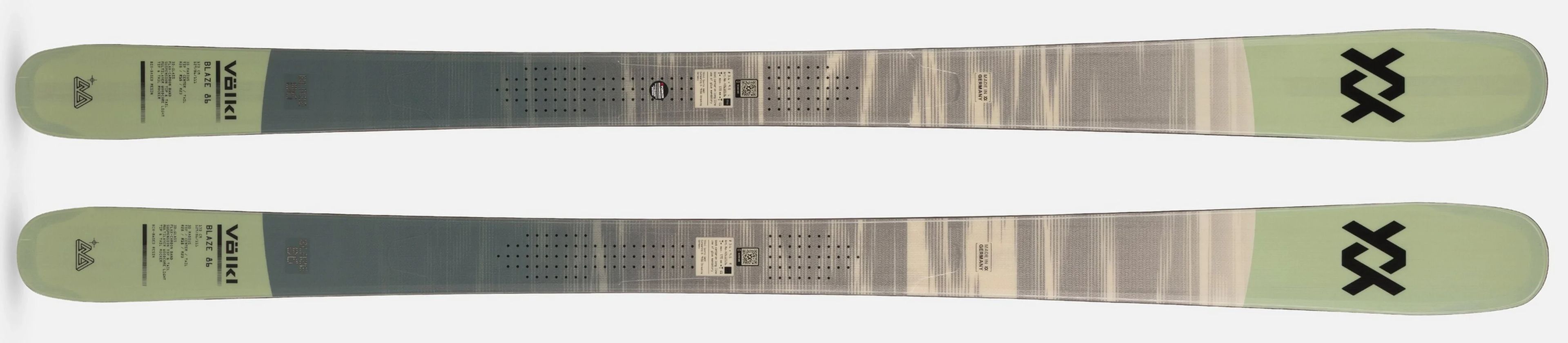 VS | |
| Waist Width | 80 mm | 86 mm |
| Turn Radius | 14.5 m at 168 cm (12.8-15.8 m by size) | 13 m center radius at 166 cm (3D Radius) |
| Rocker Profile | Nordica On Piste rocker (rocker-camber blend) | Tip and tail rocker, camber underfoot |
| Included Binding | Nordica TP2 Light 11 FDT (DIN 3-11) | Flat (no binding included) |
| Weight | 8.4 lb per pair (179 cm, Nordica figure) | 3.2 lb per ski, no binding (166 cm) |
| Length Range | 156, 162, 168, 174, 179 cm | 146, 152, 159, 166, 173, 180 cm |
| Warranty | 2 Years (Tecnica Group policy) | 2 Years (Völkl limited) |
| Sidecut | 132-80-111 mm (179 cm) | 129-86-111 mm |
| Core Material | Lite Performance Wood + Pulse Core elastomer | Multilayer Woodcore Light (FSC wood) |
| Construction | Double Core with elastomer layer, sidewall | Full ABS sidewall, flax-carbon and glass layers, no titanal |
| Ability Level | Not specified by Nordica | Intermediate (Amazon listing) |
| Nordica Steadfast 80 DC | Völkl Blaze 86 |
|---|---|
| |
| Waist Width | |
80 mm | 86 mm |
| Turn Radius | |
14.5 m at 168 cm (12.8-15.8 m by size) | 13 m center radius at 166 cm (3D Radius) |
| Rocker Profile | |
Nordica On Piste rocker (rocker-camber blend) | Tip and tail rocker, camber underfoot |
| Included Binding | |
Nordica TP2 Light 11 FDT (DIN 3-11) | Flat (no binding included) |
| Weight | |
8.4 lb per pair (179 cm, Nordica figure) | 3.2 lb per ski, no binding (166 cm) |
| Length Range | |
156, 162, 168, 174, 179 cm | 146, 152, 159, 166, 173, 180 cm |
| Warranty | |
2 Years (Tecnica Group policy) | 2 Years (Völkl limited) |
| Sidecut | |
132-80-111 mm (179 cm) | 129-86-111 mm |
| Core Material | |
Lite Performance Wood + Pulse Core elastomer | Multilayer Woodcore Light (FSC wood) |
| Construction | |
Double Core with elastomer layer, sidewall | Full ABS sidewall, flax-carbon and glass layers, no titanal |
| Ability Level | |
Not specified by Nordica | Intermediate (Amazon listing) |
Stability
Steadfast 80 DC
Blaze 86
Stability matters for beginners because a ski that stays composed at speed and on firm snow gives you confidence to keep progressing. Buyers report that the Steadfast 80 DC feels very sturdy and holds together well at high speed, and its torsional stiffness keeps it from feeling twitchy. Some buyers note that it runs on the stiff side for progressing beginners, which can take some getting used to. The Blaze 86 earns the stronger stability rating, with buyers describing it as more stable at speed and reliable on fast, firm slopes, thanks to power delivered by its flatter profile. It is also described as less damp than mid-80s groomer skis, which means it can feel more lively underfoot. For a beginner who expects to ride quickly on firm groomers, the Blaze 86 is the more reassuring choice, while the Steadfast 80 DC suits a skier who values a planted but manageable feel at moderate speeds.
Forgiveness
Steadfast 80 DC
Blaze 86
Forgiveness describes how much a ski tolerates imperfect technique, and it is one of the most important traits for a skier still building control. Buyers consistently describe the Steadfast 80 DC as a friendly front-side ski that does not fight you when you release out of a turn. They also report no nasty surprises from the tips when skiing with the feet together, and they find it accessible for progressing intermediates who are gaining confidence. The Blaze 86 has far less feedback on this trait, with the main comment being that it is not too stiff. That is encouraging, but the evidence is limited, so it is hard to call the Blaze 86 equally forgiving with the same certainty. For a buyer who wants a ski that quietly accepts mistakes and rewards smooth release, the Steadfast 80 DC is the more persuasive option.
Ease Of Use
Steadfast 80 DC
Blaze 86
Ease of use reflects how effortlessly a ski initiates and completes turns, especially at slower speeds where beginners spend most of their time. Buyers praise the Steadfast 80 DC for being very easy to turn, hooking into turns without much effort, and making it simpler to start and finish each turn. Its binding setup is also described as making things easier for intermediate skiers who want to enjoy the hill. The Blaze 86 earns an even higher ease rating, with buyers describing it as super maneuverable, easy to shorten, and intuitive to initiate without thinking hard about it. It is also praised for being easy to steer in deeper snow and for offering a high level of mobility in trees. Both skis are easy to handle, but the Blaze 86 feels more nimble and playful, while the Steadfast 80 DC feels more predictable and steady. Buyers who want quick, light turns will likely prefer the Blaze 86.
Edge Grip
Steadfast 80 DC
Blaze 86
Edge grip determines how confidently a ski holds a carved turn, which matters most on firm snow where beginners often feel unsettled. Buyers describe the Steadfast 80 DC as having really strong edge hold that grips well and holds an edge very well through turns. They also say it moves easily from edge to edge, and its long effective edge hooks into turns nicely. The Blaze 86 receives positive but limited feedback, noting decent grip on firmer snow and a longer effective edge when carving. Because the Blaze 86 has far fewer comments, its grip is harder to judge with certainty, though the feedback is consistent with a capable ski on groomed terrain. For a buyer who spends time on hard-packed runs and wants a reassuring hold, the Steadfast 80 DC is the stronger choice.
Smoothness
Steadfast 80 DC
Blaze 86
Smoothness affects fatigue and confidence, since a ski that chatters or buzzes at speed can feel harder to control. Buyers report that the Steadfast 80 DC feels incredibly smooth and predictable, with minimal chatter and vibration, and they credit its Pulse Core for quieting vibration. The Blaze 86 is more of a mixed bag, with some buyers describing a vibration-y feel and others noting that its lighter tips can chatter on pure ice. Suspension in the tips and tails is said to reduce vibration for a smoother ride, which helps explain why feedback is split. Overall, the Steadfast 80 DC is the clearer choice for a smooth, quiet ride, while the Blaze 86 may feel busier, especially on icy or hard surfaces. Buyers who ski mostly on varied snow may find the Blaze 86 acceptable, but those who prioritize calm feel should lean toward the Steadfast 80 DC.
Versatility
Steadfast 80 DC
Blaze 86
Versatility matters because most beginners eventually want one ski that handles groomers, soft snow, and occasional off-trail skiing. Buyers describe the Steadfast 80 DC as equally at home on and off trail, with all-mountain capability built in, and say it works really well on groomers. The Blaze 86 has a much deeper body of feedback, with buyers calling it extremely versatile across all-mountain, resort, and light touring use. Its flatter profile makes different turn shapes easier to achieve, and it is praised for strength in bumps, trees, and soft snow. Buyers also note that it works with a wide range of boots and bindings, from tech pin to alpine, and that it is capable for touring with lighter gear. Its drawbacks are that it is not ideal for all-day touring and can feel a little heavy. For a buyer who wants one ski that can grow with them across many conditions, the Blaze 86 is the more compelling choice.
Trust & Transparency
- Data-driven rankings from real user reviews
- Affiliate partnerships don't influence our methodology
We may earn commission from links.
Conclusion & Final Verdict:
Choose the Nordica Steadfast 80 DC if you want the most forgiving, smooth, and confident ride on groomed terrain. Buyers praise its strong edge hold, calm feel, and friendly release, and the included binding makes it a complete package for a first season.
Choose the Völkl Blaze 86 if you want one quick, versatile ski that handles trees, soft snow, and light touring as well as resort runs. It is more maneuverable and offers a broader length range, but its smoothness is mixed and its forgiveness evidence is thinner.
Related Comparisons
Rossignol Rallybird Soul 92vsVölkl Blaze 86
The Rallybird Soul 92 is the steadier, more damped pick with firmer edge grip and easier tail release for beginners who want to grow into carving on groomers. The Völkl Blaze 86 is the lighter, more versatile choice for skiers who want quick turns in trees, bumps, and soft snow.
Salomon Stance 80vsVölkl Blaze 86
The Salomon Stance 80 is the better pick for a true first-timer who wants an easy-to-start, forgiving ski with a binding included and a solid edge grip. The Völkl Blaze 86 suits a learner who wants quicker, more maneuverable turns and more stability at speed, but it is a bare ski that needs a binding bought separately.
Völkl Blaze 86vsHead Pure Joy
The Völkl Blaze 86 is the more versatile and maneuverable choice, quick and steady across all-mountain terrain for skiers ready to build on the basics. The Head Pure Joy is the easier, more forgiving pick for true beginners, with an included binding and a rockered tip, though it gets chattery at higher speeds.
Völkl Blaze 86vsVölkl Blaze 82
The Blaze 82 is the easier choice for beginners, with a lighter, more forgiving feel and stronger edge grip on groomers. The Blaze 86 suits skiers who want a wider, more versatile ski for trees, soft snow and light touring, accepting some vibration and less smoothness in return.
Rossignol Rallybird Soul 92vsK2 Blur 79
The Rossignol Rallybird Soul 92 is the stronger pick for progressing skiers who want quick, stable turns, firmer edge grip, and room to grow into all-mountain terrain. The K2 Blur 79 suits lighter, easier-going beginners who prioritize a smooth, damped ride in mixed and softer snow.
Rossignol Rallybird Soul 92vsLINE Pandora 92
Rossignol's Rallybird Soul 92 is the steadier, more edge-precise choice for beginners who want confident carving and a calm ride at speed, while LINE's Pandora 92 is the lighter, more playful pick for skiers who value easy turn-to-turn flow and versatility in softer snow and the park.