
Rossignol Sender 100 vs Elan Ripstick 96 Black Edition
Why You Can Trust Us
- Side-by-side analysis based on real user feedback
- Unbiased comparisons, not influenced by partnerships
- Updated as new data becomes available
We may earn from affiliate links at no extra cost to you.
| Sender 100 | Ripstick 96 Black Edition | |
|---|---|---|
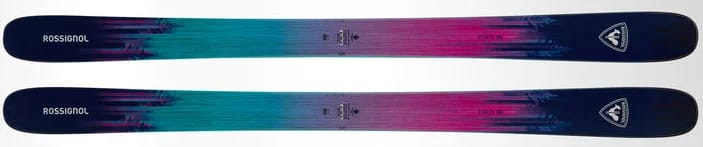 |  VS | |
| Waist Width | 100 mm (99-101 mm across lengths) | 96 mm (93-97 mm across lengths) |
| Turn Radius | 18 m at 178 cm | 17.8 m at 182 cm |
| Rocker Profile | Twin Rocker (tip and tail rocker, camber underfoot) | Amphibio Profile (camber inside edge, rocker outside edge) |
| Metal Layers | No metal | No metal (carbon rods and UD carbon) |
| Length Range | 162-190 cm | 161-189 cm |
| Weight | 4.2 lb per ski at 178 cm | 3.6 lb per ski at 182 cm |
| Warranty | N/A | 2 Years |
| Sidecut Dimensions | 131-100-123 mm | 133-96-114 mm |
| Core Material | PEFC Poplar wood | Tubelite Woodcore with carbon tubes |
| Sidewall | Rectangular full sidewall | SST Slanted Sidewall Technology |
| Rossignol Sender 100 | Elan Ripstick 96 Black Edition |
|---|---|
| |
| Waist Width | |
100 mm (99-101 mm across lengths) | 96 mm (93-97 mm across lengths) |
| Turn Radius | |
18 m at 178 cm | 17.8 m at 182 cm |
| Rocker Profile | |
Twin Rocker (tip and tail rocker, camber underfoot) | Amphibio Profile (camber inside edge, rocker outside edge) |
| Metal Layers | |
No metal | No metal (carbon rods and UD carbon) |
| Length Range | |
162-190 cm | 161-189 cm |
| Weight | |
4.2 lb per ski at 178 cm | 3.6 lb per ski at 182 cm |
| Warranty | |
N/A | 2 Years |
| Sidecut Dimensions | |
131-100-123 mm | 133-96-114 mm |
| Core Material | |
PEFC Poplar wood | Tubelite Woodcore with carbon tubes |
| Sidewall | |
Rectangular full sidewall | SST Slanted Sidewall Technology |
Stability
Sender 100
Ripstick 96 Black Edition
Stability matters for an all-mountain ski because it determines whether the tip stays calm in crud, chatter or fast, long turns. The Sender 100 is generally described as stable in crud and very smooth at speed, with a stiff flex underfoot that holds its shape when skied hard. Buyers do note that the tips can deflect at very high speeds, and the ski still feels best when pushed with some commitment. The Ripstick 96 Black Edition earns praise for its carbon and flax damping, which smooths out vibration and gives a more cohesive ride than its light build suggests. Its weak point is that some skiers find the shovel lacks support when pushed, and the ski can feel light and push through turns without much initiation support. For most buyers who ski fast or in heavy snow, the Sender 100 is the more reassuring choice, while the Ripstick suits those who ski at moderate speeds.
Edge Grip
Sender 100
Ripstick 96 Black Edition
Edge grip determines how confidently a ski holds on groomers, firm snow and ice, which is where many resort skiers spend much of their time. The Sender 100 is praised for locked-in, rock-solid grip on ice and a carving feel that approaches a dedicated carving ski, with a quiet, composed platform on edge. Reviewers also describe it as powerful enough to inspire high-speed carves without releasing or chattering. The Ripstick 96 Black Edition carves well and reviewers enjoy linking turns down steep groomed pitches, with a connected, edgy feel from its carbon laminate. However, multiple reviewers say it is not the strongest carving ski in its class and lacks the total power and precision of a dedicated carver. If carving on hard snow is a priority, the Sender 100 is the clearer pick, while the Ripstick is fine for casual carving.
Maneuverability
Sender 100
Ripstick 96 Black Edition
Maneuverability matters because it governs how easily a ski pivots, releases and changes direction in trees, bumps and tight terrain. The Sender 100 earns strong praise for its light, swivelly tips and tails, its quick pivots in moguls and its easy release and smear out of turns. Buyers describe it as flickable, easy to switch, and effortless in trees, though a few note it can struggle with short swing turns. The Ripstick 96 Black Edition is described as extremely quick, agile and mobile, with an early taper and Amphibio shape that make transitions feel seamless and intuitive. Its lightness and soft tip also make it easy to throw around, though it can lose some agility at longer lengths and some smaller skiers find its turn radius a bit large. The Sender 100 generally feels more precise and athletic in tight spaces, while the Ripstick feels more relaxed and effortless.
Forgiveness
Sender 100
Ripstick 96 Black Edition
Forgiveness matters because it determines how much a ski helps you recover from mistakes, awkward landings and off-balance turns. Buyers of the Sender 100 consistently describe it as forgiving, with its tapered tip and tail making it easy to get out of trouble and comfortable even after big landing errors. Reviewers say it does not feel demanding when skiers end up in a bad position. The Ripstick 96 Black Edition has too little feedback on this trait to be judged confidently, so it cannot be treated as a standout strength or a clear weakness. For buyers who want a reassuring ski that bails them out, the Sender 100 is the safer choice, while Ripstick buyers should expect a more lively and less predictable feel.
Powder Performance
Sender 100
Ripstick 96 Black Edition
Powder performance matters for skiers who want to enjoy fresh snow, soft off-piste and ungroomed terrain without switching skis. The Ripstick 96 Black Edition earns strong praise here, with reviewers saying it blasts through packed powder days, handles ungroomed terrain well and offers fantastic performance in soft off-piste snow. Its 96 mm waist is noted for good float in softer conditions. The Sender 100 is more modest in this area, with buyers noting that it floats through a few inches of fresh powder but is not a dedicated powder ski. Its 100 mm waist offers a bit more surface area, yet feedback suggests it is more at home on firm snow and in the park. Powder skiers should choose the Ripstick, while those who see deep snow only occasionally will find the Sender 100 adequate.
Versatility
Sender 100
Ripstick 96 Black Edition
Versatility matters because most buyers want one ski that can handle groomers, trees, bumps, park features and variable snow. The Sender 100 is widely described as one of the most versatile all-mountain freestyle skis, with reviewers praising its balanced, symmetrical feel, switch riding and its ability to handle the park, freeride lines and the rest of the resort. Some buyers note that its mount point shifts performance away from directional carving toward park capability. The Ripstick 96 Black Edition is praised for excelling across many different types of terrain, handling groomers, trees, moguls and variable conditions, and it has a lighter build that also suits touring with a crossover binding. Reviewers describe it as well suited to intermediate and expert skiers who like mobility rather than speed. Both skis are strongly versatile, so the choice depends on whether you want more park and freestyle range or more lightweight, multi-terrain range.
Trust & Transparency
- Data-driven rankings from real user reviews
- Affiliate partnerships don't influence our methodology
We may earn commission from links.
Conclusion & Final Verdict:
Choose the Rossignol Sender 100 if you want a stiff, stable, freestyle-capable all-mountain ski with strong edge grip on groomers and ice, excellent forgiveness, and a quick, precise feel in trees and bumps. It is the better all-round option for aggressive resort skiers who spend time in the park and value confidence at speed.
Choose the Elan Ripstick 96 Black Edition if you want a lighter, more mobile ski with excellent powder and soft-snow performance, a 2-year warranty, and easy handling for touring or mixed terrain. It suits agile intermediate and expert skiers who prefer relaxed, quick turns over high-speed stability.
Related Comparisons
Rossignol Sender 100vsBlizzard Black Pearl 94
Choose the Rossignol Sender 100 if you want a light, quick, freestyle-friendly all-mountain ski that excels in trees, bumps and the park. Choose the Blizzard Black Pearl 94 if you ski fast, want more stability and powder float, and are an intermediate-to-advanced skier.
Rossignol Sender 100vsHead Kore 94 Ti
The Rossignol Sender 100 is the better pick for buyers who want a quick, playful all-mountain ski that carves with authority on firm snow and excels in trees, bumps, and the park. The Head Kore 94 Ti suits skiers who want one stable, damp, and predictable ski for changing conditions and are willing to steer it into turns.
Rossignol Sender 100vsK2 Mindbender 96
Choose the Rossignol Sender 100 if you want a light, quick, playful all-mountain ski with strong carving grip and park-friendly versatility. Choose the K2 Mindbender 96 if you ski fast over chopped snow and want a more planted, damp, stable ride with a bit more float in soft snow.
Rossignol Sender 100vsNordica Santa Ana 92
The Sender 100 is the more playful, quick and versatile choice, with stronger carving grip and maneuverability for park and tree skiers. The Santa Ana 92 suits skiers who want a damped, planted and more stable ride that floats better in soft snow.
Rossignol Sender 100vsSalomon QST 100
The Rossignol Sender 100 is the playful, lighter choice for skiers who prioritize quick turns in trees and bumps, freestyle fun, and easy release. The Salomon QST 100 suits skiers who want a calmer, more float-friendly all-mountain ski with stronger carving conviction and deep-snow performance.
Rossignol Sender 100vsStöckli Stormrider 88
The Rossignol Sender 100 is the playful, quick-turning choice for trees, bumps and freestyle-leaning all-mountain days, while the Stöckli Stormrider 88 suits skiers who want a calmer, more carving-focused ski with easier forgiveness and quieter speed stability on firm snow and ice.