
Rossignol Sender 100 vs Salomon QST 100
Why You Can Trust Us
- Side-by-side analysis based on real user feedback
- Unbiased comparisons, not influenced by partnerships
- Updated as new data becomes available
We may earn from affiliate links at no extra cost to you.
| Sender 100 | QST 100 | |
|---|---|---|
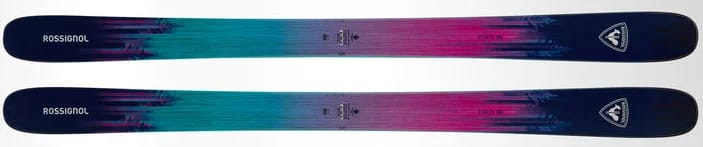 | 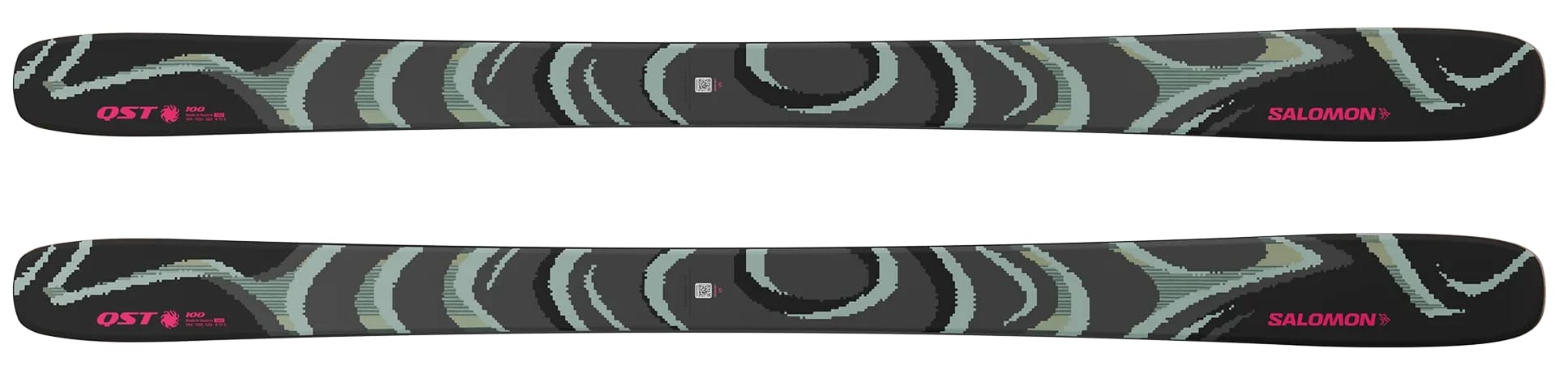 VS | |
| Waist Width | 100 mm (99-101 mm across lengths) | 100 mm |
| Turn Radius | 18 m at 178 cm | 17.5 m at 180 cm |
| Rocker Profile | Twin Rocker (tip and tail rocker, camber underfoot) | Freeride profile (17% tip rocker, camber, 21% tail rocker) |
| Metal Layers | No metal | 1 (Ti Binding Reinforcement underfoot) |
| Length Range | 162-190 cm | 148-188 cm |
| Weight | 4.2 lb per ski at 178 cm | 4.1 lb per ski at 180 cm |
| Warranty | N/A | 2 Years |
| Sidecut Dimensions | 131-100-123 mm | 134-100-122 mm |
| Core Material | PEFC Poplar wood | Full poplar woodcore |
| Sidewall | Rectangular full sidewall | Full sandwich |
| Rossignol Sender 100 | Salomon QST 100 |
|---|---|
| |
| Waist Width | |
100 mm (99-101 mm across lengths) | 100 mm |
| Turn Radius | |
18 m at 178 cm | 17.5 m at 180 cm |
| Rocker Profile | |
Twin Rocker (tip and tail rocker, camber underfoot) | Freeride profile (17% tip rocker, camber, 21% tail rocker) |
| Metal Layers | |
No metal | 1 (Ti Binding Reinforcement underfoot) |
| Length Range | |
162-190 cm | 148-188 cm |
| Weight | |
4.2 lb per ski at 178 cm | 4.1 lb per ski at 180 cm |
| Warranty | |
N/A | 2 Years |
| Sidecut Dimensions | |
131-100-123 mm | 134-100-122 mm |
| Core Material | |
PEFC Poplar wood | Full poplar woodcore |
| Sidewall | |
Rectangular full sidewall | Full sandwich |
Stability
Sender 100
QST 100
Stability matters for an all-mountain ski because it determines whether the ski stays calm and predictable at speed, in crud, and when you are skiing aggressively across variable snow. The Sender 100 earns solid marks here, with buyers describing it as stable in crud, very smooth at speed, and firm enough underfoot that the stiff flex does not buckle when pushed. Its honeycomb air tip and wood core are credited with reducing tip chatter and adding damping, though some skiers note that the tips can deflect at very high speeds and that the ski can get bounced around in rough conditions. The QST 100 is the stronger performer in this category, with basalt stringers and cork dampeners in the tip and tail giving it a notably calm, vibration-damped feel at speed. Buyers say it stays true, tracks well, and is more composed than comparable models, with the sturdier tail adding confidence. The main caveat for the QST is chatter on pure ice, so it rewards skiers who spend most of their time on softer or mixed snow. If you ski fast and want the most composed platform, the QST 100 has the edge.
Edge Grip
Sender 100
QST 100
Edge grip determines how confidently a ski holds an edge on firm snow and ice, which matters most when you want to carve clean arcs on groomers. The Sender 100 holds its own here, with buyers describing locked-in, rock-solid grip on ice, a quiet and composed hold on firm snow, and an edge feel that comes close to a dedicated carving ski. Reviewers also say it carves cleanly without chattering or releasing when it is on edge, and that the powerful grip encourages faster carves. The QST 100 pulls slightly ahead, with buyers calling it a very satisfying and extraordinarily good carving ski. Its camber section feels locked in on groomers, and the taper shape hooks just enough to carve without feeling overly hooky. Its edge grip is praised as strong for a ski without metal in the main construction, and buyers say they can rely on it in a carve. For dedicated groomer carving, the QST 100 is the better choice, while the Sender 100 is still a confident carver for skiers who want one ski that also excels in other terrain.
Maneuverability
Sender 100
QST 100
Maneuverability matters because most all-mountain skiers spend a lot of their day in trees, bumps, and tight terrain where quick turn initiation and easy pivoting are essential. The Sender 100 is one of the most agile skis in this comparison, with buyers praising its light tips and swivelly tails, easy release and smear out of turns, and a flickable feel that makes it simple to pivot in moguls and slither through trees. Its lighter weight and shorter turn radius contribute to a snappy, energetic character that many reviewers describe as natural in tight spots. Some skiers note that it can struggle with shorter swing turns and becomes wigglier when smeared or flat-based. The QST 100 matches that agility with its own strengths: buyers describe it as very easy to steer, off-the-charts maneuverable, and quick to initiate turns, especially in trees and tight technical terrain. Its tip and tail rocker help it pop out of bumps and cut corners, and it handles S-turns and low-effort turns well. Because both skis earn very similar praise in this category, this is effectively a tie, and the choice comes down to whether you prefer the Sender's playful release or the QST's steadier, turnier rhythm.
Forgiveness
Sender 100
QST 100
Forgiveness describes how well a ski recovers from mistakes such as late weight shifts, bad landings, or unexpected terrain, which is important for skiers who are still building consistency or who regularly push into imperfect snow. The Sender 100 is the more forgiving ski here, with buyers saying it stays stable through landing errors that would be harder to recover from on a less forgiving ski. Reviewers credit the tapered tip and tail for a playful, easy feel that does not punish you when you get out of position, and they say it is easy to get out of trouble. The QST 100 is less forgiving by comparison, and some buyers say its tips and tails are firmer and less approachable for beginners. That said, the QST's rocker profile is considered helpful for correcting mistakes, and buyers say it almost finishes the turn for you and absorbs terrain changes smoothly. For a skier who wants a more easygoing ski that tolerates imperfect technique, the Sender 100 is the better fit. For a stronger, more demanding ski that rewards good technique, the QST 100 is the better option.
Powder Performance
Sender 100
QST 100
Powder performance matters for any all-mountain ski because deep snow tests flotation, tip buoyancy, and how easily the ski stays on top when you venture off-piste. The Sender 100 floats through a few inches of fresh snow, which is adequate for occasional soft days but not a strong suit. Buyers describe its powder ability as positive yet limited, suggesting it is best suited to lighter snow rather than deep days. The QST 100 is clearly stronger in this area, with reviewers saying it floats incredibly well, never felt short on flotation, and handles deeper snow with ease. Its broader tip shape and rocker give it high flotation, and buyers say it floats better than the QST 98 at speed and feels especially good in trees with new snow. Even across a wider model range, the QST reads as a dependable floater. If you regularly ski powder or want a ski that handles deep days comfortably, the QST 100 is the clear choice. The Sender 100 works for occasional soft snow, but it is not designed to be a powder-day specialist.
Versatility
Sender 100
QST 100
Versatility is the heart of an all-mountain ski, since it reflects how well one pair handles groomers, trees, bumps, crud, park features, and varied snow without requiring a quiver. The Sender 100 is built for range, with buyers describing it as a versatile freeride and freestyle ski that is equally at home on groomers, in bumps, and in the park. Reviewers praise its symmetrical, balanced feel, its switch skiing, and its butter and tail-press capability, and many say it is one of the most versatile freestyle-leaning all-mountain skis they have used. Its trade-off is that the mount point shift favors park performance over directional skiing, so it is less specialized for big-mountain carving or deep-snow runs. The QST 100 is equally versatile, with buyers saying it handles nearly all snow conditions except pure blue ice and performs well across groomers, trees, crud, and jumps. It is praised as well-rounded, capable across abilities, and broadly usable by intermediates and advanced skiers. Its freestyle capability is solid but less central, and buyers note it has limited appeal for dedicated park use. Both skis earn strong praise, so this is effectively a tie: choose the Sender 100 if park and playful switch riding are part of your day, or the QST 100 if you want a more all-around, one-ski quiver that handles a wider range of conditions.
Trust & Transparency
- Data-driven rankings from real user reviews
- Affiliate partnerships don't influence our methodology
We may earn commission from links.
Conclusion & Final Verdict:
Choose the Rossignol Sender 100 if you want a lighter, quicker, more playful all-mountain ski that excels in trees, bumps, and the park, and you value easy release and a forgiving feel while you develop your technique.
Choose the Salomon QST 100 if you want a calmer, more damped ski with stronger carving conviction, better powder flotation, and a longer warranty, and you are comfortable with a more demanding, more stable platform at speed.
For most skiers who want one ski for everything, the QST 100 is the stronger all-around pick, especially if you ski fast or spend time in softer snow. The Sender 100 is the better fit for freestyle-minded, tight-terrain skiers who want a fun, easygoing companion.
Related Comparisons
Nordica Santa Ana 92vsSalomon QST 100
The Santa Ana 92 is the more damped, forgiving choice for advanced skiers who want a quick, planted daily driver. The QST 100 is the better pick for all-mountain skiers who want stronger carving, float, and turning ease across the whole mountain.
Rossignol Sender 100vsBlizzard Black Pearl 94
Choose the Rossignol Sender 100 if you want a light, quick, freestyle-friendly all-mountain ski that excels in trees, bumps and the park. Choose the Blizzard Black Pearl 94 if you ski fast, want more stability and powder float, and are an intermediate-to-advanced skier.
Rossignol Sender 100vsElan Ripstick 96 Black Edition
The Rossignol Sender 100 is the firmer, more playful choice for skiers who want locked-in edge grip, quick pivots and a park-friendly all-mountain ski. The Elan Ripstick 96 Black Edition is the lighter, better powder and touring option for agile skiers who rarely need high-speed stability.
Rossignol Sender 100vsHead Kore 94 Ti
The Rossignol Sender 100 is the better pick for buyers who want a quick, playful all-mountain ski that carves with authority on firm snow and excels in trees, bumps, and the park. The Head Kore 94 Ti suits skiers who want one stable, damp, and predictable ski for changing conditions and are willing to steer it into turns.
Rossignol Sender 100vsK2 Mindbender 96
Choose the Rossignol Sender 100 if you want a light, quick, playful all-mountain ski with strong carving grip and park-friendly versatility. Choose the K2 Mindbender 96 if you ski fast over chopped snow and want a more planted, damp, stable ride with a bit more float in soft snow.
Rossignol Sender 100vsStöckli Stormrider 88
The Rossignol Sender 100 is the playful, quick-turning choice for trees, bumps and freestyle-leaning all-mountain days, while the Stöckli Stormrider 88 suits skiers who want a calmer, more carving-focused ski with easier forgiveness and quieter speed stability on firm snow and ice.