
Rossignol Sender 100 vs Stöckli Stormrider 88
Why You Can Trust Us
- Side-by-side analysis based on real user feedback
- Unbiased comparisons, not influenced by partnerships
- Updated as new data becomes available
We may earn from affiliate links at no extra cost to you.
| Sender 100 | Stormrider 88 | |
|---|---|---|
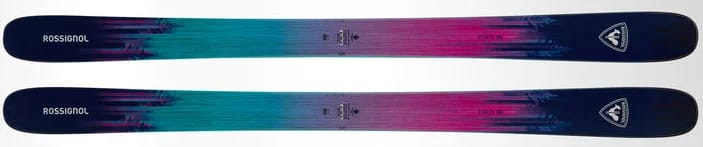 |  VS | |
| Waist Width | 100 mm (99-101 mm across lengths) | 88 mm |
| Turn Radius | 18 m at 178 cm | 18.3 m at 179 cm |
| Rocker Profile | Twin Rocker (tip and tail rocker, camber underfoot) | Powder Rocker and Tail Rocker |
| Metal Layers | No metal | Titanal (layer count not specified) |
| Length Range | 162-190 cm | 169-184 cm |
| Weight | 4.2 lb per ski at 178 cm | 7.8 lb per pair at 179 cm |
| Warranty | N/A | Up to 4 Years |
| Sidecut Dimensions | 131-100-123 mm | 128-88-114 mm |
| Core Material | PEFC Poplar wood | Wood core (Sandwich System) |
| Sidewall | Rectangular full sidewall | POLYWALL |
| Rossignol Sender 100 | Stöckli Stormrider 88 |
|---|---|
| |
| Waist Width | |
100 mm (99-101 mm across lengths) | 88 mm |
| Turn Radius | |
18 m at 178 cm | 18.3 m at 179 cm |
| Rocker Profile | |
Twin Rocker (tip and tail rocker, camber underfoot) | Powder Rocker and Tail Rocker |
| Metal Layers | |
No metal | Titanal (layer count not specified) |
| Length Range | |
162-190 cm | 169-184 cm |
| Weight | |
4.2 lb per ski at 178 cm | 7.8 lb per pair at 179 cm |
| Warranty | |
N/A | Up to 4 Years |
| Sidecut Dimensions | |
131-100-123 mm | 128-88-114 mm |
| Core Material | |
PEFC Poplar wood | Wood core (Sandwich System) |
| Sidewall | |
Rectangular full sidewall | POLYWALL |
Stability
Sender 100
Stormrider 88
Stability matters in an all-mountain ski because it determines whether the ski stays calm when speeds rise, the snow turns to crud, or the surface gets bumpy. The Stormrider 88 is the stronger feel here, with buyers repeatedly describing it as planted, quiet and damp, and noting that the chatter and vibration of hardpack and icy bumps are largely absorbed. Its smoothness at speed also draws praise, with many owners saying it handles high speed well and shows little shuddering until very high speeds. The Sender 100 is also very stable for its weight, with buyers calling it smooth in crud and composed when skied hard, and its honeycomb air tip helps reduce tip chatter. Some owners say its tips can deflect at very high speeds and that it can get bounced around in rough conditions, which keeps it a notch behind on the most demanding terrain. Both scores land very close, so the practical verdict is a tie: the Stormrider 88 feels quieter and more damped, while the Sender 100 stays composed and solid at a lighter weight.
Edge Grip
Sender 100
Stormrider 88
Edge grip determines how confidently an all-mountain ski holds a carve on firm snow and ice, which matters most for skiers who spend time on groomers and in icy conditions. The Stormrider 88 is the more obvious carving ski, with buyers describing clean arcs, a dependable bite on hardpack, and a full, smooth carve that feels rewarding on corduroy. Several owners say the tips bite more than in the previous generation, and some say it can grip especially well on very nice groomers. The Sender 100 holds its own, with owners praising locked-in, rock-solid grip on ice and a carving feel that comes close to a dedicated carving ski. Its edge is described as quiet and stable without releasing or chattering when on edge. A few buyers say the Stormrider's grip does not quite match the power of a dedicated carver, which is also true of the Sender in a broader sense. Both products score the same, so this is a tie, but the Stormrider 88 is the better pick for skiers who prioritize aggressive carving on firm snow.
Maneuverability
Sender 100
Stormrider 88
Maneuverability matters because it determines how easily a ski turns in trees, moguls, tight spots and short-radius turns. The Sender 100 is clearly the more agile ski, and it is one of the strongest signals in this comparison. Buyers repeatedly describe it as quick, flickable and easy to pivot, with light tips and tails that release and smear easily and make it simple to slither through trees and bumps. Owners often say it hops turns on a dime, feels lighter and more energetic, and is easy to switch between directions. Some buyers note it can struggle with shorter swing turns and can be a bit wiggly unless you ask for it. The Stormrider 88 is more maneuverable than a traditional carver, and buyers say its softer tips make initiation accessible and its turn start feels more aggressive than the previous generation. However, many owners say its wider tails limit the ski in tight terrain, and some find it takes more effort to get through bumpy sections than they would like. For skiers who spend most of their time in trees and bumps, the Sender 100 is the clear winner.
Forgiveness
Sender 100
Stormrider 88
Forgiveness matters because it determines how well a ski recovers from late timing, awkward stances and landing errors, which is important for intermediate skiers and anyone who wants a relaxed day on the mountain. The Stormrider 88 stands out here, with buyers describing it as much more forgiving and easier to balance on, and noting that it does not demand perfect timing when loading the ski. Its wide tails are repeatedly praised for helping with balance and for making it easier to hang on the tails when things go wrong, and owners say it remains trustworthy on steeper terrain. The Sender 100 also earns strong praise, with buyers noting it is stable after big landing errors and that its tapered tip and tail add playfulness and forgiveness. It is described as easy to get out of trouble, though fewer buyers have commented on forgiveness overall, so the evidence is thinner. The Stormrider 88 is the more reliable choice for skiers who want a ski that rewards imperfect technique, so it has the edge here.
Powder Performance
Sender 100
Stormrider 88
Powder performance matters for skiers who want to chase fresh snow, but in this pairing neither ski is built primarily for deep days. The Sender 100 is the stronger of the two, with buyers saying it floats through a few inches of fresh snow, which is a respectable result for a lighter all-mountain ski with a 100 mm waist. The Stormrider 88 is more of a mixed story. Some owners say it works through powder, bump zones and soft piles at the side of runs, and that its effective edge surface helps in soft snow, but more owners report that it does not feel good in deep piles. Several buyers describe it as a firm-snow ski first, so powder is not its main strength. For skiers who want to get into soft snow occasionally, the Sender 100 is the better option, while the Stormrider 88 is best kept for resort days on firm snow.
Versatility
Sender 100
Stormrider 88
Versatility matters because most buyers want one pair of skis that can handle groomers, trees, bumps, crud and the occasional park session without switching equipment. The Sender 100 has a strong reputation here, with buyers praising its freestyle and freeride range, its balanced, symmetrical feel, and its ability to switch well and perform in the park. Owners often describe it as a one-ski quiver that can be taken everywhere on the mountain, although some note its mount point trades some directional performance for park capability. The Stormrider 88 is also highly versatile, with buyers calling it a great daily driver and an upscale all-mountain carver that handles bad snow, refrozen crust and warm end-of-day crud. Several owners say it works well in corduroy and in the varied snow between runs, and that it opens up more versatility when unweighted. Some buyers note that versatility is not its biggest highlight, which makes sense for a carver. Both skis score closely, so this is a tie, with the Sender 100 better suited to freestyle-inclined skiers and the Stormrider 88 better suited to those who spend most of their time on firm and mixed snow.
Trust & Transparency
- Data-driven rankings from real user reviews
- Affiliate partnerships don't influence our methodology
We may earn commission from links.
Conclusion & Final Verdict:
Choose the Rossignol Sender 100 if you want a quick, playful all-mountain ski for trees, bumps, park laps and mixed freestyle days, and you value a lighter feel and a wider size range. It is the better pick for skiers who prioritize maneuverability and versatility over pure carving.
Choose the Stöckli Stormrider 88 if you spend most of your time on groomers and icy firm snow, want a quieter, more damped ride at speed, and value a more forgiving ski with a longer warranty. It is the better pick for carving-focused skiers who want reliable confidence rather than a playful feel.
Related Comparisons
Fischer Ranger 96vsStöckli Stormrider 88
The Fischer Ranger 96 is the more versatile daily driver for chop, crud, and soft off-piste snow, while the Stöckli Stormrider 88 is the stronger choice for firm groomers and ice. Pick the Ranger for a playful all-mountain ski that handles mixed conditions, and the Stormrider if carving and edge grip matter most.
Nordica Enforcer 94vsStöckli Stormrider 88
The Nordica Enforcer 94 is a stiff, powerful carver that rewards a strong, fast skier with composed stability and bite, while the Stöckli Stormrider 88 is the more approachable and versatile all-mountain choice for most skiers who want easy, forgiving performance across varied snow.
Rossignol Sender 100vsElan Ripstick 96 Black Edition
The Rossignol Sender 100 is the firmer, more playful choice for skiers who want locked-in edge grip, quick pivots and a park-friendly all-mountain ski. The Elan Ripstick 96 Black Edition is the lighter, better powder and touring option for agile skiers who rarely need high-speed stability.
Rossignol Sender 100vsHead Kore 94 Ti
The Rossignol Sender 100 is the better pick for buyers who want a quick, playful all-mountain ski that carves with authority on firm snow and excels in trees, bumps, and the park. The Head Kore 94 Ti suits skiers who want one stable, damp, and predictable ski for changing conditions and are willing to steer it into turns.
Rossignol Sender 100vsK2 Mindbender 96
Choose the Rossignol Sender 100 if you want a light, quick, playful all-mountain ski with strong carving grip and park-friendly versatility. Choose the K2 Mindbender 96 if you ski fast over chopped snow and want a more planted, damp, stable ride with a bit more float in soft snow.
Rossignol Sender 100vsSalomon QST 100
The Rossignol Sender 100 is the playful, lighter choice for skiers who prioritize quick turns in trees and bumps, freestyle fun, and easy release. The Salomon QST 100 suits skiers who want a calmer, more float-friendly all-mountain ski with stronger carving conviction and deep-snow performance.