
Nordica Santa Ana 92 vs Salomon QST 100
Why You Can Trust Us
- Side-by-side analysis based on real user feedback
- Unbiased comparisons, not influenced by partnerships
- Updated as new data becomes available
We may earn from affiliate links at no extra cost to you.
| Santa Ana 92 | QST 100 | |
|---|---|---|
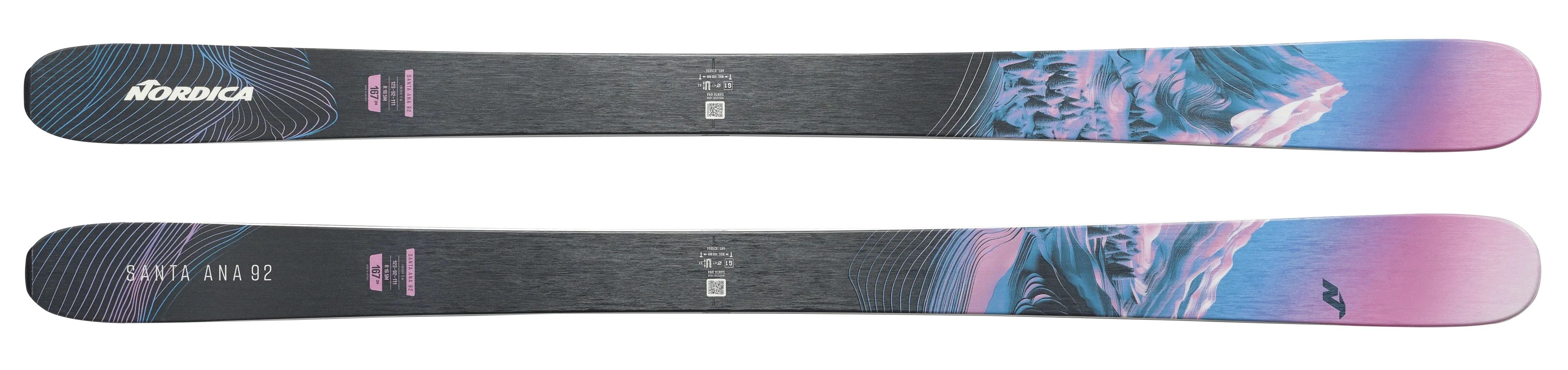 | 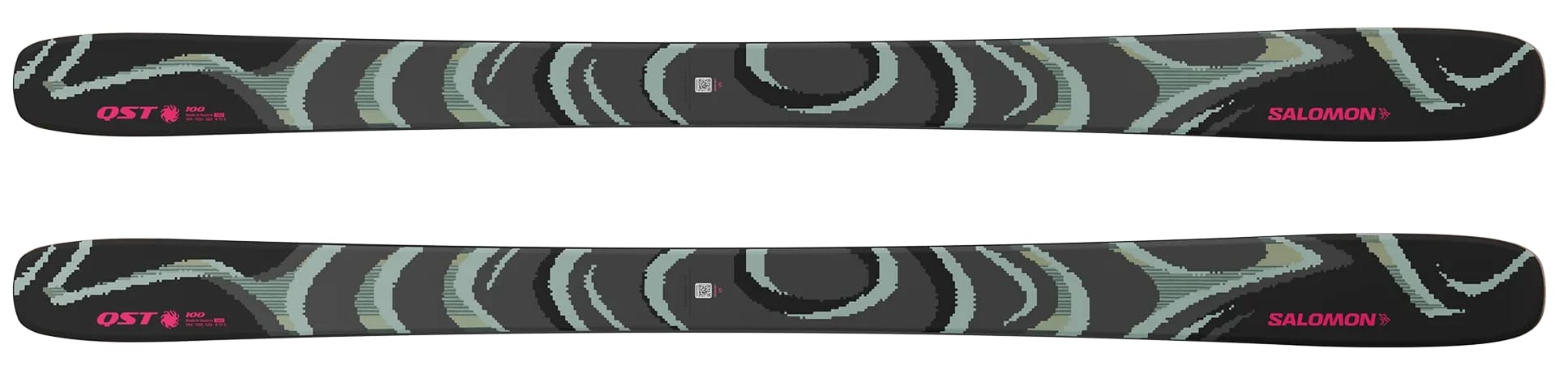 VS | |
| Waist Width | 92 mm | 100 mm |
| Turn Radius | 17.5 m at 179 cm | 17.5 m at 180 cm |
| Rocker Profile | All Mountain rocker with Unlocked Tail shape | Freeride profile (17% tip rocker, camber, 21% tail rocker) |
| Metal Layers | 1 (Terrain Specific Metal titanal sheet) | 1 (Ti Binding Reinforcement underfoot) |
| Length Range | 150-179 cm | 148-188 cm |
| Weight | 9.0 lb per pair at 179 cm | 4.1 lb per ski at 180 cm |
| Warranty | N/A | 2 Years |
| Sidecut Dimensions | 125.5-92-113.5 mm | 134-100-122 mm |
| Core Material | Performance wood core with Pulse elastomer core | Full poplar woodcore |
| Sidewall | Sidewall construction | Full sandwich |
| Nordica Santa Ana 92 | Salomon QST 100 |
|---|---|
| |
| Waist Width | |
92 mm | 100 mm |
| Turn Radius | |
17.5 m at 179 cm | 17.5 m at 180 cm |
| Rocker Profile | |
All Mountain rocker with Unlocked Tail shape | Freeride profile (17% tip rocker, camber, 21% tail rocker) |
| Metal Layers | |
1 (Terrain Specific Metal titanal sheet) | 1 (Ti Binding Reinforcement underfoot) |
| Length Range | |
150-179 cm | 148-188 cm |
| Weight | |
9.0 lb per pair at 179 cm | 4.1 lb per ski at 180 cm |
| Warranty | |
N/A | 2 Years |
| Sidecut Dimensions | |
125.5-92-113.5 mm | 134-100-122 mm |
| Core Material | |
Performance wood core with Pulse elastomer core | Full poplar woodcore |
| Sidewall | |
Sidewall construction | Full sandwich |
Stability
Santa Ana 92
QST 100
Stability matters in an all-mountain ski because it determines whether the ski stays calm at speed, over chopped snow, and through variable conditions. The Santa Ana 92 earns praise for a solid, planted feel in the tip and tail, with its Terrain Specific Metal doing much of the work to smooth out vibration. Buyers describe its damping as predictable and reliable on groomed runs, and many say it feels composed at speed. The QST 100 earns the same overall stability rating, and its buyers emphasize basalt stringers and cork dampeners that keep the ski calm, along with a sturdier tail that helps it track true. The main complaint about the QST 100 is chatter on pure ice, which is a limitation rather than a stability failure elsewhere. In practice, both skis feel stable, so choose the Santa Ana 92 if you prefer a metal-driven, planted ride and the QST 100 if you want a calm, damp feel across a wider range of snow.
Edge Grip
Santa Ana 92
QST 100
Edge grip determines how confidently a ski holds an edge on firm snow, ice, and crud, and it matters most when carving groomers or cutting through hardpack. The Santa Ana 92 is praised for its weight, which helps it cut through ice and crud, and buyers say its tips float up rather than diving into the snow. Its full-width metal underfoot and positive camber add a reliable edge hold on firm snow, and the effective edge lengthens at higher angles. Some buyers feel the metal does not add much bite on its own, which keeps the rating moderate. The QST 100 stands out here, with buyers calling it extraordinarily good in carves. Its camber section feels locked in on groomers, and its taper shape hooks just enough to allow clean carves without feeling overly hooky. For a buyer who carves hard on groomers, the QST 100 is the clear choice, while the Santa Ana 92 remains a dependable option for mixed firm snow.
Maneuverability
Santa Ana 92
QST 100
Maneuverability determines how easily a ski turns through trees, bumps, and tight terrain, which affects how much effort every run takes. The Santa Ana 92 gets credit for its 92 mm waist, which keeps it agile without sacrificing stability, along with a quick response when turning and a tip swivel that helps in trees. Buyers note that its early tail rise helps release from turns, though shorter slalom-style turns take more work and it is not especially precise at slow speeds. The QST 100 is consistently described as very easy to steer, with buyers praising its quick turn initiation, its ability to weave through tight spaces, and its rocker profile that reduces effort in turns. Some buyers mention it still feels a bit wiggly on flat base, and one note cites a small decrease compared with the QST 98. Overall, the QST 100 is the more effortless ski in tight terrain, while the Santa Ana 92 suits skiers who want a lively but more deliberate turn.
Forgiveness
Santa Ana 92
QST 100
Forgiveness matters because it determines how much a ski helps you recover from off-balance moments and how easily it engages for intermediate and advanced skiers. The Santa Ana 92 earns a strong rating, with buyers calling it confidence-inspiring and easier to engage than its predecessor, which punished off-balance skiing. Buyers say its blend balances performance, power, forgiveness, and playfulness, which helps it appeal to a wider range of skiers than its performance orientation might suggest. The QST 100 is more mixed here: its softer tips and tails make it more forgiving than its performance-oriented siblings, and its rocker profile helps correct mistakes, but several buyers find it less approachable than the QST 98 and off-putting for beginners. If you want a ski that rewards good technique and still recovers gracefully, the Santa Ana 92 is the better fit, while the QST 100 suits skiers who already have solid fundamentals.
Powder Performance
Santa Ana 92
QST 100
Powder performance determines how well a ski floats in deep and new snow, which matters for anyone who skis soft snow regularly. The Santa Ana 92 offers good flotation up front thanks to its spoon tip, and buyers say its tips rise instead of diving, though the number of reviews on this category is limited. The QST 100 is clearly stronger here, with buyers repeatedly describing it as floating incredibly well and never lacking flotation even in deeper areas. Its broader tip shape gives it extra lift, and buyers say it floats better than the QST 98 at speed and handles trees in new snow with ease. If powder days are a priority, the QST 100 is the stronger choice, while the Santa Ana 92 still performs adequately for occasional soft snow.
Versatility
Santa Ana 92
QST 100
Versatility matters because most all-mountain buyers want one ski that works across groomers, trees, bumps, crud, and the occasional park feature. The Santa Ana 92 is described as extremely well-rounded, with buyers calling it a viable daily driver across a wide range of conditions. Its main limitation is that it is performance-oriented, so it suits advanced and expert skiers more than beginners and intermediates. The QST 100 earns the higher rating here, and buyers describe it as capable across nearly all snow conditions except pure blue ice, mixing trees, trails, crud, and jumps with ease. Several buyers call it one of the most versatile skis available, with a wide sweet spot for many skier types and a turning radius that works for intermediates. Limited park appeal is its main reservation, though its tail rise adds some freestyle fun. For most skiers who want a single ski for the whole mountain, the QST 100 is the stronger all-around choice.
Trust & Transparency
- Data-driven rankings from real user reviews
- Affiliate partnerships don't influence our methodology
We may earn commission from links.
Conclusion & Final Verdict:
The Santa Ana 92 is the better pick if you want a smooth, planted, and forgiving ski that still feels lively in bumps and trees. It suits advanced skiers who value a metal-driven feel and a ski that works as a daily driver.
The QST 100 is the stronger all-around choice for most all-mountain skiers. It carves more confidently, floats better in new snow, turns more effortlessly through tight terrain, and covers more conditions, though it is less forgiving for beginners and can chatter on pure ice.
Related Comparisons
Nordica Santa Ana 92vsHead Kore 94 Ti
Choose the Nordica Santa Ana 92 if you want a planted, damped, quick-turning ski with stronger edge grip and better tip float, especially if you ski at an advanced level. Pick the Head Kore 94 Ti if you want the most versatile all-mountain option for changing snow, groomers, steeps and unknown conditions.
Nordica Santa Ana 92vsVölkl M7 Mantra
The Santa Ana 92 is the calmer, more forgiving choice, with a damped, planted feel and a lighter, more playful character for advanced skiers who ride a mix of terrain. The M7 Mantra is the stronger carver and all-conditions charger for experienced, aggressive skiers who can handle a stiff, demanding ski.
Rossignol Sender 100vsNordica Santa Ana 92
The Sender 100 is the more playful, quick and versatile choice, with stronger carving grip and maneuverability for park and tree skiers. The Santa Ana 92 suits skiers who want a damped, planted and more stable ride that floats better in soft snow.
Rossignol Sender 100vsSalomon QST 100
The Rossignol Sender 100 is the playful, lighter choice for skiers who prioritize quick turns in trees and bumps, freestyle fun, and easy release. The Salomon QST 100 suits skiers who want a calmer, more float-friendly all-mountain ski with stronger carving conviction and deep-snow performance.
Stöckli Stormrider 88vsNordica Santa Ana 92
The Stöckli Stormrider 88 is the quieter, grippier carver and the stronger all-around pick for groomers and mixed snow, while the Nordica Santa Ana 92 suits skiers who want a livelier ride and better flotation in soft snow.
Stöckli Stormrider 88vsSalomon QST 100
The QST 100 is the stronger all-mountain choice for most skiers, offering better powder float, quicker turning, and more range across conditions. The Stormrider 88 suits carvers who prioritize firm-snow grip, quiet damping, and forgiveness on groomers.