
Stöckli Stormrider 88 vs Salomon QST 100
Why You Can Trust Us
- Side-by-side analysis based on real user feedback
- Unbiased comparisons, not influenced by partnerships
- Updated as new data becomes available
We may earn from affiliate links at no extra cost to you.
| Stormrider 88 | QST 100 | |
|---|---|---|
 | 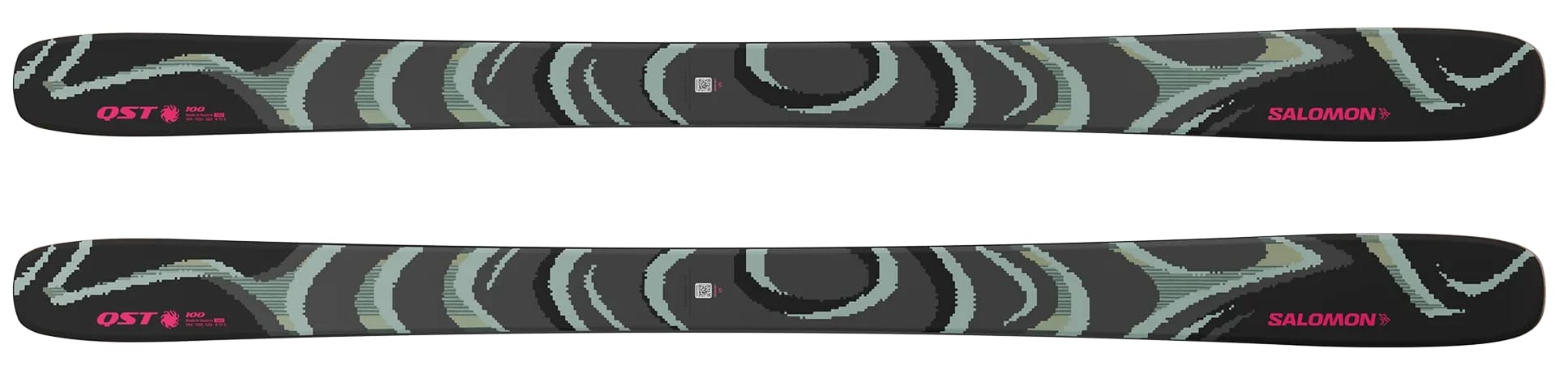 VS | |
| Waist Width | 88 mm | 100 mm |
| Turn Radius | 18.3 m at 179 cm | 17.5 m at 180 cm |
| Rocker Profile | Powder Rocker and Tail Rocker | Freeride profile (17% tip rocker, camber, 21% tail rocker) |
| Metal Layers | Titanal (layer count not specified) | 1 (Ti Binding Reinforcement underfoot) |
| Length Range | 169-184 cm | 148-188 cm |
| Weight | 7.8 lb per pair at 179 cm | 4.1 lb per ski at 180 cm |
| Warranty | Up to 4 Years | 2 Years |
| Sidecut Dimensions | 128-88-114 mm | 134-100-122 mm |
| Core Material | Wood core (Sandwich System) | Full poplar woodcore |
| Sidewall | POLYWALL | Full sandwich |
| Stöckli Stormrider 88 | Salomon QST 100 |
|---|---|
| |
| Waist Width | |
88 mm | 100 mm |
| Turn Radius | |
18.3 m at 179 cm | 17.5 m at 180 cm |
| Rocker Profile | |
Powder Rocker and Tail Rocker | Freeride profile (17% tip rocker, camber, 21% tail rocker) |
| Metal Layers | |
Titanal (layer count not specified) | 1 (Ti Binding Reinforcement underfoot) |
| Length Range | |
169-184 cm | 148-188 cm |
| Weight | |
7.8 lb per pair at 179 cm | 4.1 lb per ski at 180 cm |
| Warranty | |
Up to 4 Years | 2 Years |
| Sidecut Dimensions | |
128-88-114 mm | 134-100-122 mm |
| Core Material | |
Wood core (Sandwich System) | Full poplar woodcore |
| Sidewall | |
POLYWALL | Full sandwich |
Stability
Stormrider 88
QST 100
Stability matters for an all-mountain ski because it determines how calm and controlled the ride feels at speed and on rough snow. Buyers of the Stormrider 88 often describe it as planted, damp, and quiet, with little chatter on hardpack and icy bumps and a smooth feel as speed climbs. The QST 100 also earns strong praise for vibration damping, which buyers credit to basalt stringers and cork dampeners in the tip and tail, and it is described as stable, true-tracking, and composed at high speed. The QST 100 scores slightly higher here, mainly because its sturdier tail and damping package show up consistently across the feedback. The main weak spot for the QST 100 is chatter on pure ice, which the Stormrider 88 handles better. For a buyer who wants the calmest ride on firm groomers, the Stormrider 88 is a strong fit, but for a more balanced stability across varied snow, the QST 100 edges ahead.
Edge Grip
Stormrider 88
QST 100
Edge grip determines how confidently a ski holds a carve on firm snow and ice, which is central to any all-mountain carving experience. The Stormrider 88 gets consistent praise for holding an edge on hardpack and ice, with clean, full carves and a dependable bite that buyers describe as one of its real strengths. The QST 100 is praised for very satisfying, precise carving on groomers, with a camber section that feels locked in and enough hold to rely on without feeling hooky. Some buyers note that the Stormrider 88 does not offer quite the same power and grip as some rivals, while the QST 100 has fewer reported complaints about its edge hold. Because the QST 100 pairs grip with a more forgiving and lively feel, it comes out slightly ahead in this category. If grip on firm groomers is the top priority, either ski will perform well, but the QST 100 gives a little more confidence across a wider range of carving situations.
Maneuverability
Stormrider 88
QST 100
Maneuverability decides how easily a ski initiates turns, changes direction, and works through tight spaces, which matters on crowded runs, in trees, and in bumps. The Stormrider 88 is praised for good turn initiation, with softer tips that make starting turns easier than on many carvers, although some buyers find its tails limit how quickly it can be washed out or pivoted. The QST 100 is consistently described as very easy to steer, quick through trees and bumps, and responsive when rolling into a new turn. Its rocker profile reduces effort in turns, and buyers mention easy turns with low effort, handling S-turns and cutting corners, and being able to throw it sideways. A few buyers note that it can feel a bit wiggly on flat base, but overall the QST 100 is clearly more agile. For anyone who spends time in trees, bumps, or tight terrain, the QST 100 is the better choice.
Forgiveness
Stormrider 88
QST 100
Forgiveness describes how tolerant a ski is of imperfect timing, poor balance, and mistakes, which matters for a wide range of skiers. The Stormrider 88 stands out here, with buyers describing it as very trustworthy, easy to balance on, and much more forgiving than many carvers. Its wider tails make it easier to hang on and less punishing when traversing, and it does not demand perfect timing to load it well. The QST 100 is also approachable, with softer tips and tails and a rocker profile that helps correct mistakes and absorbs terrain changes, but some buyers say it is less approachable than its predecessor and can be intimidating for true beginners. Because the Stormrider 88 receives more consistent praise for easy, confidence-building performance, it takes this category. Buyers who are still building skills or want a relaxed, predictable ride will likely appreciate the Stormrider 88 more.
Powder Performance
Stormrider 88
QST 100
Powder performance matters if you plan to ski new snow, deep trees, or soft off-piste terrain regularly. The QST 100 is strongly praised for flotation, with buyers saying it floats incredibly well, never feels short of lift, and handles deeper areas and trees with new snow easily, thanks largely to its broader tip shape and rocker. The Stormrider 88 gets a mixed response in soft snow: some buyers say it works through powder, bump zones, and soft piles on the sides of runs, but many did not enjoy it in deep snow and find it busts through soft piles. It is best understood as a firm-snow ski first. For skiers who regularly face deep days, the QST 100 is the clear choice, while the Stormrider 88 is better suited to occasional soft snow on groomed-oriented days.
Versatility
Stormrider 88
QST 100
Versatility is what makes an all-mountain ski useful across the whole resort, from groomers to crud, bumps, trees, and the occasional park lap. The Stormrider 88 earns strong praise for handling bad and refrozen snow, working as a great daily driver, and performing well in corduroy and warm end-of-day crud. The QST 100 is described by buyers as well-rounded and capable across nearly all conditions except pure blue ice, handling trees, bumps, groomers, and freestyle features with ease. Its wide range of lengths and sweet spot for many skier types and styles also broaden its appeal. Some buyers note limited appeal for dedicated park use, but overall the QST 100 covers more ground. For a true one-ski quiver across varied terrain, the QST 100 is the stronger choice, while the Stormrider 88 remains a very capable daily carver.
Trust & Transparency
- Data-driven rankings from real user reviews
- Affiliate partnerships don't influence our methodology
We may earn commission from links.
Conclusion & Final Verdict:
Choose the QST 100 if you want one ski that covers the whole mountain, especially if you ski deep snow, trees, bumps, or freestyle features. It is quicker, floats better, and handles a wider range of conditions and skier types.
Choose the Stormrider 88 if you spend most of your time carving groomers and firm snow and value a quiet, planted, forgiving ride. It offers strong edge grip, excellent damping on hardpack and ice, a longer warranty, and an approachable feel for developing skiers.
Related Comparisons
Stöckli Stormrider 88vsHead Kore 94 Ti
The Stormrider 88 is the better carver for firm groomers and ice, with stronger edge hold and a quieter, more forgiving feel. The Kore 94 Ti suits buyers who want a damp, stable all-rounder for crud, bumps and changing snow.
Stöckli Stormrider 88vsK2 Mindbender 96
The Stormrider 88 is the better carver with stronger edge hold, quieter ride at speed, and more forgiveness, while the Mindbender 96 is the more stable, versatile option with better powder flotation and quicker short-turn feel. Choose the Stormrider 88 for firm groomers and ice, and the Mindbender 96 for mixed terrain and softer snow.
Stöckli Stormrider 88vsNordica Santa Ana 92
The Stöckli Stormrider 88 is the quieter, grippier carver and the stronger all-around pick for groomers and mixed snow, while the Nordica Santa Ana 92 suits skiers who want a livelier ride and better flotation in soft snow.
Stöckli Stormrider 88vsVölkl M7 Mantra
The Stöckli Stormrider 88 is the more approachable, forgiving all-mountain carver, while the Völkl M7 Mantra offers stronger edge grip and quicker precision for strong skiers. Choose the Stormrider for easier, versatile daily skiing and the Mantra if you want a demanding high-performance ski.
Völkl M7 MantravsSalomon QST 100
The Völkl M7 Mantra is the stiffer, edge-focused charger for strong skiers who want bite and composure at speed, while the Salomon QST 100 is the easier, more versatile pick that floats better and turns with less effort for most all-mountain skiers.
Rossignol Sender 100vsVölkl M7 Mantra
The Sender 100 is the lighter, looser, more playful choice for trees, bumps, park and switch riding, while the M7 Mantra is the stiffer, stronger edge-holder for aggressive skiers who want one ski to charge firm snow and ice. Choose the Sender 100 if you want forgiveness and quick turns; choose the M7 Mantra if you are a confident, powerful skier.