
Stöckli Stormrider 88 vs Nordica Santa Ana 92
Why You Can Trust Us
- Side-by-side analysis based on real user feedback
- Unbiased comparisons, not influenced by partnerships
- Updated as new data becomes available
We may earn from affiliate links at no extra cost to you.
| Stormrider 88 | Santa Ana 92 | |
|---|---|---|
 | 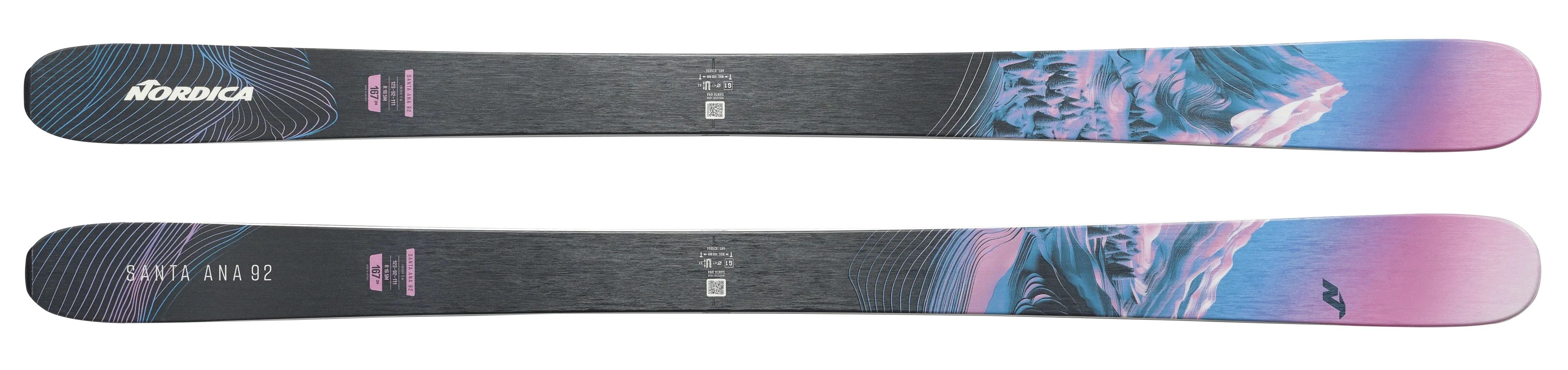 VS | |
| Waist Width | 88 mm | 92 mm |
| Turn Radius | 18.3 m at 179 cm | 17.5 m at 179 cm |
| Rocker Profile | Powder Rocker and Tail Rocker | All Mountain rocker with Unlocked Tail shape |
| Metal Layers | Titanal (layer count not specified) | 1 (Terrain Specific Metal titanal sheet) |
| Length Range | 169-184 cm | 150-179 cm |
| Weight | 7.8 lb per pair at 179 cm | 9.0 lb per pair at 179 cm |
| Warranty | Up to 4 Years | N/A |
| Sidecut Dimensions | 128-88-114 mm | 125.5-92-113.5 mm |
| Core Material | Wood core (Sandwich System) | Performance wood core with Pulse elastomer core |
| Sidewall | POLYWALL | Sidewall construction |
| Stöckli Stormrider 88 | Nordica Santa Ana 92 |
|---|---|
| |
| Waist Width | |
88 mm | 92 mm |
| Turn Radius | |
18.3 m at 179 cm | 17.5 m at 179 cm |
| Rocker Profile | |
Powder Rocker and Tail Rocker | All Mountain rocker with Unlocked Tail shape |
| Metal Layers | |
Titanal (layer count not specified) | 1 (Terrain Specific Metal titanal sheet) |
| Length Range | |
169-184 cm | 150-179 cm |
| Weight | |
7.8 lb per pair at 179 cm | 9.0 lb per pair at 179 cm |
| Warranty | |
Up to 4 Years | N/A |
| Sidecut Dimensions | |
128-88-114 mm | 125.5-92-113.5 mm |
| Core Material | |
Wood core (Sandwich System) | Performance wood core with Pulse elastomer core |
| Sidewall | |
POLYWALL | Sidewall construction |
Stability
Stormrider 88
Santa Ana 92
Stability matters on an all-mountain ski because it shapes how calm the ski feels at speed, how much chatter reaches your feet on hardpack and ice, and how it reacts when bumps or crud knock it around. The Santa Ana 92 scores slightly higher here at 4.6 versus 4.4, and buyers credit its metal laminate and damping core with doing the heavy lifting, giving a solid, planted feel in both tip and tail and noticeably reduced vibration. The Stormrider 88 earns strong praise of its own, with buyers repeatedly describing it as quiet, damp and smooth, with little chatter at speed and almost no shuddering until very high speeds. Some buyers say it can be knocked off line when it hits something in poor visibility and that it is not a charger, which keeps its edge narrow. For most skiers, the Santa Ana feels a touch more settled in rough conditions, while the Stormrider delivers the quieter ride on groomers.
Edge Grip
Stormrider 88
Santa Ana 92
Edge grip determines how confidently a ski holds on firm hardpack and ice and how cleanly it carves through a turn. The Stormrider 88 is the clear leader here at 4.4 versus 3.9, and buyers consistently say it holds an edge on firm hardpack and ice, carves clean arcs on corduroy, and pounds out strong carves on groomers. Several describe the tail as directional and the tips as biting more than the previous generation, and a few call its grip unrivaled for crushing groomers. One buyer felt it does not offer quite the same power and grip as some alternatives, which is the main caveat. The Santa Ana 92 holds up well, with good weight that cuts into ice and crud and an effective edge that lengthens at higher angles, but its tips are designed to float rather than bite, and buyers say the metal adds little extra bite. If you want the most authoritative carving on firm terrain, choose the Stormrider; the Santa Ana is better for mixed snow where you do not need maximum bite.
Maneuverability
Stormrider 88
Santa Ana 92
Maneuverability describes how easily a ski starts and finishes turns and how well it handles trees, bumps and tight spaces. Both skis land at 3.9 out of 5, so each has a real advantage in this area and each has clear limits. The Stormrider 88 gets praise for good turn initiation, with softer tips that are easy to start turns, a clean snap at the end of the arc, and a tip shape that is not hooky; buyers say it feels much more agile than they expected, and its wider tails create a better platform. Its drawbacks are that the tails can limit quick turns, that it lacks the pinpoint precision of more shaped skis, and that some buyers had to work harder than they wanted through the front section. The Santa Ana 92's 92 mm waist keeps it agile without losing stability, and buyers describe a snappy, responsive turn, a tip swivel that helps in trees and tight zones, and an early tail rise that helps release from turns. Its downsides are that short slalom turns take more effort and that it is not especially precise at slower speeds. This is a tie: the Stormrider suits smooth, deliberate initiation, while the Santa Ana rewards playful bump and tree skiing.
Forgiveness
Stormrider 88
Santa Ana 92
Forgiveness matters because it determines how much a ski punishes imperfect technique, such as late weighting, off-balance skiing or a hesitant turn start. The Stormrider 88 edges ahead at 4.4 versus 4.2, with buyers calling it much more forgiving and more approachable than many alternatives, easy to balance on, and not punishing while traversing. Its wide tails are a big reason, giving room for imperfect timing and letting skiers hang on the tails without needing perfect technique, and buyers say it is easy to ride for less experienced skiers and on steeper terrain. The Santa Ana 92 is also confidence-inspiring, and buyers say its blend balances performance, power, forgiveness and playfulness, that it is easier to engage without a full forward pilot mode than the prior model, and that it is less demanding overall. The previous version punished off-balance skiing, so the current model is a clear step forward, but it still rewards committed technique more than the Stormrider does.
Powder Performance
Stormrider 88
Santa Ana 92
Powder performance is about how well a ski floats, turns and stays stable when the snow is deep or soft. The Santa Ana 92 wins clearly at 4.1 versus 2.8, with buyers pointing to its spoon tip, which provides good flotation up front so the tips rise instead of diving. The Stormrider 88 has more mixed feedback: some buyers say it works through powder, bump zones and soft piles along trail edges, and that its effective edge surface area helps in soft snow, but more buyers were unhappy in deep piles, where it busts through soft snow rather than floating over it. Because the Stormrider is a firm-snow ski first, powder is the weak spot to plan around. If you ski a lot of deep days, the Santa Ana is the clear pick; if your soft snow is mostly along the sides of groomers, the Stormrider can handle it.
Versatility
Stormrider 88
Santa Ana 92
Versatility measures how well a ski handles the full range of snow, from groomers and crud to refrozen snow, bumps and mixed conditions, and how useful it is as a single-ski quiver. The Stormrider 88 is the top performer at 4.6 versus 4.2, with buyers describing it as incredibly versatile and a great daily driver that cuts crud in warm end-of-day conditions and handles bad and refrozen snow. Buyers also say it is one of the better all-mountain options, works across the whole mountain, and gives experts enough performance with finesse. The Santa Ana 92 is also well-rounded, with buyers finding it consistent across criteria and a good daily driver that appeals to a broader range of skiers than its performance-oriented reputation suggests. Its main reservation is that it is aimed more at advanced and expert skiers than at all levels. The Stormrider is the more broadly suited ski for varied conditions, while the Santa Ana behaves more like a specialist.
Trust & Transparency
- Data-driven rankings from real user reviews
- Affiliate partnerships don't influence our methodology
We may earn commission from links.
Conclusion & Final Verdict:
Choose the Stöckli Stormrider 88 if you spend most of your time on groomers, firm snow and ice, and want a quiet, forgiving, versatile ski that works across the mountain and carries a longer warranty. Choose the Nordica Santa Ana 92 if deep and soft snow, bump and tree skiing, and a lively, agile feel matter more to you, and you are comfortable with a ski aimed at advanced and expert skiers.
Related Comparisons
Nordica Santa Ana 92vsSalomon QST 100
The Santa Ana 92 is the more damped, forgiving choice for advanced skiers who want a quick, planted daily driver. The QST 100 is the better pick for all-mountain skiers who want stronger carving, float, and turning ease across the whole mountain.
Stöckli Stormrider 88vsHead Kore 94 Ti
The Stormrider 88 is the better carver for firm groomers and ice, with stronger edge hold and a quieter, more forgiving feel. The Kore 94 Ti suits buyers who want a damp, stable all-rounder for crud, bumps and changing snow.
Stöckli Stormrider 88vsK2 Mindbender 96
The Stormrider 88 is the better carver with stronger edge hold, quieter ride at speed, and more forgiveness, while the Mindbender 96 is the more stable, versatile option with better powder flotation and quicker short-turn feel. Choose the Stormrider 88 for firm groomers and ice, and the Mindbender 96 for mixed terrain and softer snow.
Stöckli Stormrider 88vsSalomon QST 100
The QST 100 is the stronger all-mountain choice for most skiers, offering better powder float, quicker turning, and more range across conditions. The Stormrider 88 suits carvers who prioritize firm-snow grip, quiet damping, and forgiveness on groomers.
Stöckli Stormrider 88vsVölkl M7 Mantra
The Stöckli Stormrider 88 is the more approachable, forgiving all-mountain carver, while the Völkl M7 Mantra offers stronger edge grip and quicker precision for strong skiers. Choose the Stormrider for easier, versatile daily skiing and the Mantra if you want a demanding high-performance ski.
Rossignol Sender 100vsVölkl M7 Mantra
The Sender 100 is the lighter, looser, more playful choice for trees, bumps, park and switch riding, while the M7 Mantra is the stiffer, stronger edge-holder for aggressive skiers who want one ski to charge firm snow and ice. Choose the Sender 100 if you want forgiveness and quick turns; choose the M7 Mantra if you are a confident, powerful skier.