
Rossignol Sender 100 vs Völkl M7 Mantra
Why You Can Trust Us
- Side-by-side analysis based on real user feedback
- Unbiased comparisons, not influenced by partnerships
- Updated as new data becomes available
We may earn from affiliate links at no extra cost to you.
| Sender 100 | M7 Mantra | |
|---|---|---|
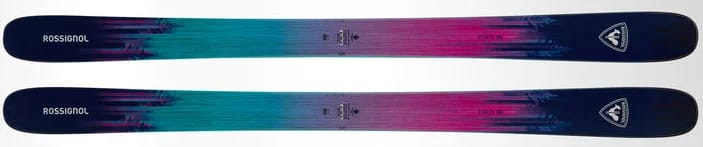 | 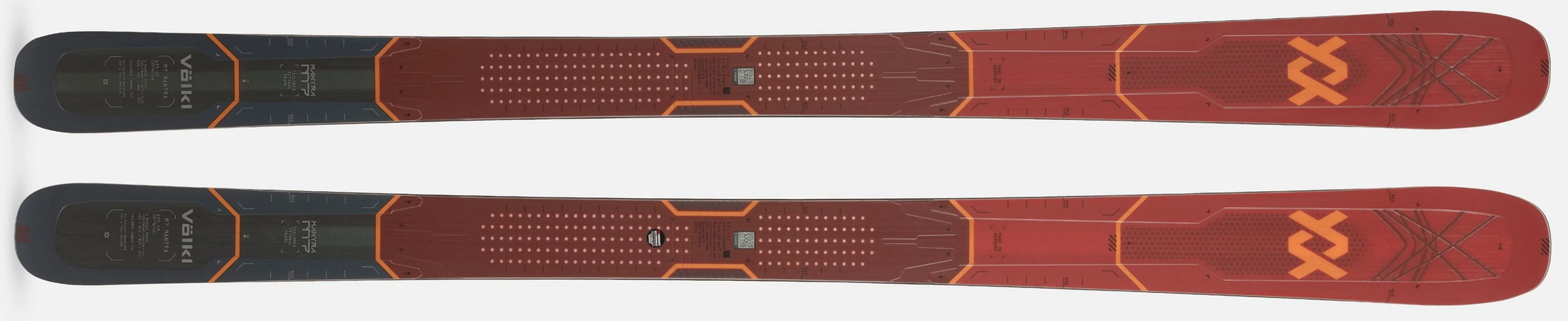 VS | |
| Waist Width | 100 mm (99-101 mm across lengths) | 96 mm |
| Turn Radius | 18 m at 178 cm | 4 Radius Drive at 177 cm (25 m tip, 40 m front, 16.8 m center, 22 m tail) |
| Rocker Profile | Twin Rocker (tip and tail rocker, camber underfoot) | Tip and tail rocker, camber underfoot |
| Metal Layers | No metal | Tailored Titanal Frame plus thin titanal layer underfoot |
| Length Range | 162-190 cm | 163-191 cm |
| Weight | 4.2 lb per ski at 178 cm | 4.6 lb per ski at 177 cm |
| Warranty | N/A | N/A |
| Sidecut Dimensions | 131-100-123 mm | 139-96-121 mm |
| Core Material | PEFC Poplar wood | Multilayer Woodcore |
| Sidewall | Rectangular full sidewall | Full Sidewall ABS |
| Rossignol Sender 100 | Völkl M7 Mantra |
|---|---|
| |
| Waist Width | |
100 mm (99-101 mm across lengths) | 96 mm |
| Turn Radius | |
18 m at 178 cm | 4 Radius Drive at 177 cm (25 m tip, 40 m front, 16.8 m center, 22 m tail) |
| Rocker Profile | |
Twin Rocker (tip and tail rocker, camber underfoot) | Tip and tail rocker, camber underfoot |
| Metal Layers | |
No metal | Tailored Titanal Frame plus thin titanal layer underfoot |
| Length Range | |
162-190 cm | 163-191 cm |
| Weight | |
4.2 lb per ski at 178 cm | 4.6 lb per ski at 177 cm |
| Warranty | |
N/A | N/A |
| Sidecut Dimensions | |
131-100-123 mm | 139-96-121 mm |
| Core Material | |
PEFC Poplar wood | Multilayer Woodcore |
| Sidewall | |
Rectangular full sidewall | Full Sidewall ABS |
Stability
Sender 100
M7 Mantra
Stability matters in an all-mountain ski because it determines whether the ski stays composed when speed builds or snow gets chopped up. The Sender 100 earns strong praise for staying stable in crud, feeling very smooth at speed, and resisting folding under hard skiing thanks to its stiff flex underfoot. Some buyers note that its tips can deflect at very high speeds, which is a limit worth knowing if you regularly push big lines. The M7 Mantra also feels composed and planted at speed, carrying momentum and cutting through crud and chop with very little chatter on most terrain. Its drawback is that some skiers notice tip chatter on hard pack, ice and blind shaded bumps. Both skis score the same here, so buyers should choose based on whether they prefer the Sender's forgiving smoothness or the M7's momentum-carrying composure.
Edge Grip
Sender 100
M7 Mantra
Edge grip matters most for skiers who spend time on firm snow, ice and steep groomers, where a ski either holds or slides. The M7 Mantra is the standout here, with buyers describing it as biting hard and holding an edge reliably on ice and firm snow. It also keeps carving well through heavy or variable snow, and reviewers say edge engagement stays strong on steeper pitches. The Sender 100 is no slouch, with a locked-in, rock-solid feel on ice and a carving-ski-like footprint on firm snow that feels quiet and composed on edge. Still, most buyers who rank edge hold as a top priority will find the M7 Mantra has the edge. If your skiing is mostly groomers and icy days, the M7 Mantra is the more convincing pick.
Maneuverability
Sender 100
M7 Mantra
Maneuverability shapes how a ski feels in trees, bumps, tight spots and quick direction changes. The Sender 100 is the clear leader here, with buyers repeatedly praising its light weight, swivelly tails and tips that release and pivot easily. Reviewers describe it as slithering through trees and moguls, flicking sideways with ease and switching effortlessly in either direction. Its main limitation is some trouble with shorter swing turns for certain skiers. The M7 Mantra is also responsive, with a light swing weight, tailored carbon tips and a side cut that changes turn shape with input, from short control turns to long GS-style arcs. However, its precision asks for more planning ahead, and some riders find it less effortless in tight terrain. If you want a ski that feels nimble in tight places, the Sender 100 is the better fit.
Forgiveness
Sender 100
M7 Mantra
Forgiveness matters for skiers who are still building skill, get knocked off line, or want a ski that tolerates mistakes. The Sender 100 scores well here, with reviewers saying landing errors feel stable and that the tapered tip and tail make it easy to recover from bad situations. Its playful nature also means it does not feel demanding when things go wrong. The M7 Mantra is noticeably less forgiving: it is stiff and heavy, rewards strong skill and fitness, and can feel demanding in longer lengths. Intermediate or progressing skiers may find it a tough entry point and may not reach its top-end performance. Buyers who want a confidence-building ski should lean strongly toward the Sender 100, while the M7 Mantra suits only experienced, aggressive skiers.
Powder Performance
Sender 100
M7 Mantra
Powder performance matters for skiers who regularly find soft snow on the mountain, even if it is not their main focus. The Sender 100 earns a modest edge here, with buyers saying it floats through a few inches of fresh powder. It is not a dedicated powder ski, but it handles lighter soft snow comfortably. The M7 Mantra handles soft snow competently and keeps skiers afloat in medium powder, though its stiffness tends to make it cut through deep snow rather than float on top. Reviewers describe it as not a powder ski, so buyers who chase deep days should look at a wider, softer option. For occasional soft snow, the Sender 100 is slightly better, but neither ski is a powder specialist.
Versatility
Sender 100
M7 Mantra
Versatility matters because most buyers want one pair that can handle groomers, trees, bumps, crud and the park without constant swapping. The Sender 100 shines in freestyle use, with buyers praising its symmetrical, balanced feel, switch skiing and strong performance in the park, while still performing across the resort. The M7 Mantra covers a different range of conditions, handling crud and chop, spring moguls, groomers and variable terrain, and its midwidth is credited with allowing it to do a wide variety of things. Both skis earn very strong marks for versatility, but they serve different versatility profiles: the Sender 100 is the freestyle-leaning all-rounder, while the M7 Mantra is the aggressive, all-conditions one-ski quiver. Either ski can be a true one-ski choice, so the decision comes down to whether you prefer park and playful skiing or high-speed, mixed-condition charging.
Trust & Transparency
- Data-driven rankings from real user reviews
- Affiliate partnerships don't influence our methodology
We may earn commission from links.
Conclusion & Final Verdict:
The Rossignol Sender 100 is the better pick for skiers who want a lighter, more playful, forgiving all-mountain ski for trees, bumps, park laps and mixed resort days. It is especially good for intermediate to advanced skiers who value quick turns and an easy-to-live-with feel.
The Völkl M7 Mantra is the better pick for strong, aggressive skiers who spend time on firm snow and ice and want serious edge hold and stability at speed. It rewards skill and fitness, so it is a tough fit for progressing skiers.
If you are unsure, ask yourself whether you want a ski that forgives mistakes and turns easily (choose the Sender 100) or one that bites hard and charges through crud at high speed (choose the M7 Mantra).
Related Comparisons
Nordica Santa Ana 92vsVölkl M7 Mantra
The Santa Ana 92 is the calmer, more forgiving choice, with a damped, planted feel and a lighter, more playful character for advanced skiers who ride a mix of terrain. The M7 Mantra is the stronger carver and all-conditions charger for experienced, aggressive skiers who can handle a stiff, demanding ski.
Rossignol Sender 100vsK2 Mindbender 96
Choose the Rossignol Sender 100 if you want a light, quick, playful all-mountain ski with strong carving grip and park-friendly versatility. Choose the K2 Mindbender 96 if you ski fast over chopped snow and want a more planted, damp, stable ride with a bit more float in soft snow.
Rossignol Sender 100vsStöckli Stormrider 88
The Rossignol Sender 100 is the playful, quick-turning choice for trees, bumps and freestyle-leaning all-mountain days, while the Stöckli Stormrider 88 suits skiers who want a calmer, more carving-focused ski with easier forgiveness and quieter speed stability on firm snow and ice.
Stöckli Stormrider 88vsVölkl M7 Mantra
The Stöckli Stormrider 88 is the more approachable, forgiving all-mountain carver, while the Völkl M7 Mantra offers stronger edge grip and quicker precision for strong skiers. Choose the Stormrider for easier, versatile daily skiing and the Mantra if you want a demanding high-performance ski.
Völkl M7 MantravsHead Kore 94 Ti
The M7 Mantra is the better choice for confident carving and firm-snow edge hold, but its stiffness suits advanced, aggressive skiers. The Kore 94 Ti is the more forgiving, damper, and approachable option for intermediates who want one versatile all-mountain ski.
Völkl M7 MantravsSalomon QST 100
The Völkl M7 Mantra is the stiffer, edge-focused charger for strong skiers who want bite and composure at speed, while the Salomon QST 100 is the easier, more versatile pick that floats better and turns with less effort for most all-mountain skiers.