
Tecnica Mach Sport HV 65 W vs Tecnica Cochise 130
Why You Can Trust Us
- Side-by-side analysis based on real user feedback
- Unbiased comparisons, not influenced by partnerships
- Updated as new data becomes available
We may earn from affiliate links at no extra cost to you.
| Mach Sport HV 65 W | Cochise 130 | |
|---|---|---|
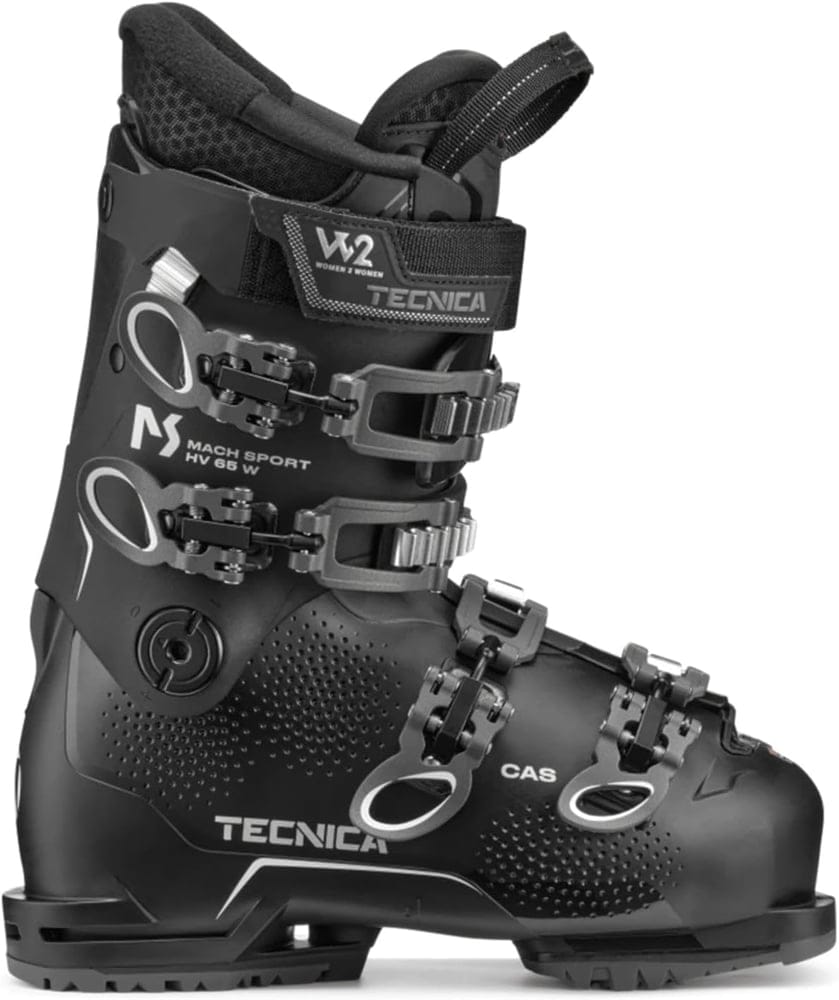 | 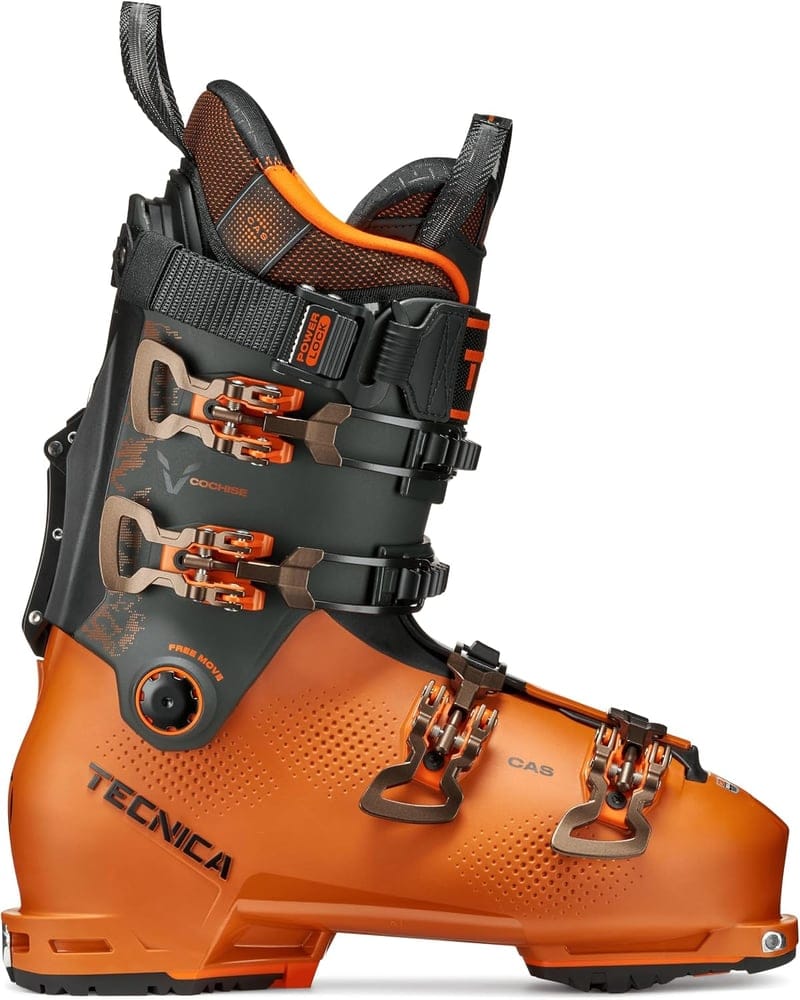 VS | |
| Flex Rating | 65 | 130 |
| Last Width | 103 mm | 99 mm |
| Closure System | 4 micro-adjustable aluminum buckles + 35 mm Velcro strap | 4 micro-adjustable aluminum buckles + 45 mm Power Lock strap |
| Walk Mode | No | Yes – T-Ride walk mechanism, 55° range of motion |
| Sole Norm | GripWalk (ISO 23223) | GripWalk (ISO 23223) with DYN tech inserts |
| Weight | 3.71 lb (single boot, MP 26.5) | 4.16 lb (single boot, MP 26.5) |
| Warranty | Limited manufacturer warranty (term not published) | Limited manufacturer warranty (term not published) |
| Liner Type | Ecodesign W.S.D. Comfort | Ecodesign High Performance Full C.A.S., lace-ready |
| Shell Material | PP shell / PP cuff | PU shell / carbon-PP bi-injected cuff |
| Forward Lean | 12° | 12.5° (+2° or +3.5° with spoiler) |
| Ramp Angle | Not specified | Not specified |
| Size Range | 22.5–27.5 (Mondopoint) | 24.5–30.5 (Mondopoint) |
| Tecnica Mach Sport HV 65 W | Tecnica Cochise 130 |
|---|---|
| |
| Flex Rating | |
65 | 130 |
| Last Width | |
103 mm | 99 mm |
| Closure System | |
4 micro-adjustable aluminum buckles + 35 mm Velcro strap | 4 micro-adjustable aluminum buckles + 45 mm Power Lock strap |
| Walk Mode | |
No | Yes – T-Ride walk mechanism, 55° range of motion |
| Sole Norm | |
GripWalk (ISO 23223) | GripWalk (ISO 23223) with DYN tech inserts |
| Weight | |
3.71 lb (single boot, MP 26.5) | 4.16 lb (single boot, MP 26.5) |
| Warranty | |
Limited manufacturer warranty (term not published) | Limited manufacturer warranty (term not published) |
| Liner Type | |
Ecodesign W.S.D. Comfort | Ecodesign High Performance Full C.A.S., lace-ready |
| Shell Material | |
PP shell / PP cuff | PU shell / carbon-PP bi-injected cuff |
| Forward Lean | |
12° | 12.5° (+2° or +3.5° with spoiler) |
| Ramp Angle | |
Not specified | Not specified |
| Size Range | |
22.5–27.5 (Mondopoint) | 24.5–30.5 (Mondopoint) |
Comfort
Mach Sport HV 65 W
Cochise 130
Comfort matters in ski boots because pressure points and circulation problems can end a day on the hill before the skiing does. The Cochise 130 has the stronger comfort signals, with buyers describing a quick instep, a softer plastic that eases on and off, and few pressure points after a moldable liner has been shaped. Buyers also say it stays comfortable on the uphill and feels more natural than snowboard boots, and that Booster Straps help reduce shin discomfort. The Mach Sport HV 65 W has not gathered enough buyer detail to show a clear comfort advantage or drawback, so its comfort rating sits at a neutral level. For a buyer who wants a boot with proven, well-described comfort across long days and touring, the Cochise 130 is the safer pick. The Mach Sport HV 65 W may still feel fine, but you should confirm that in person.
Fit
Mach Sport HV 65 W
Cochise 130
Fit is where these two boots take different approaches. The Mach Sport HV 65 W gives buyers an adjustable upper cuff for different calf shapes and a movable cleat adjustment to dial in the fit around the lower leg, and buyers praise how easily it fits out of the box. The Cochise 130 relies on a custom adaptive liner, a movable tongue, and an anatomical last that buyers say can be personalized, with some describing it as fitting like a second skin. Its 99 mm last and low-to-mid volume shape suit many feet, but buyers note it is not a low-volume fit and that the cuff sits a little low, so the HV version is the better option for slightly wider feet. Overall, both earn strong fit impressions, so this is a tie. Choose the Mach Sport HV 65 W if lower-leg adjustment is your main concern, and the Cochise 130 if you want a moldable, foot-focused fit with a touring-ready feel.
Performance
Mach Sport HV 65 W
Cochise 130
Performance matters most for skiers who want their boot to handle both climbing and descending well. The Cochise 130 has the stronger performance profile, with buyers praising its lightweight build, the T-Ride walk and lock mechanism that secures and unlocks easily, and efficient uphill movement. On the downhill, buyers describe alpine-like performance, a solid on-piste feel, and a sense that it skis well as an everyday resort boot once you adjust to it. Some buyers mention an initial hesitance before they trust it, which is a small caveat. The Mach Sport HV 65 W has no comparable performance detail in buyer feedback, so its performance rating stays at a neutral level. If you plan to tour or want a boot that feels confident on hard snow, the Cochise 130 is the clear choice; if you ski mainly on groomed resort terrain without a touring plan, the Mach Sport HV 65 W can still be considered.
Heel Hold
Mach Sport HV 65 W
Cochise 130
Heel hold affects control, heel lift, and how precisely your foot transfers energy into the ski. The Cochise 130 gets positive mentions here, with buyers noting that its added volume helps hold the heel and that the oven-baked liner pulled the heel back into the heel pocket effectively. The feedback is encouraging but limited, so the score is measured rather than outstanding. The Mach Sport HV 65 W has no buyer detail on heel hold, which leaves it at a neutral rating rather than a proven strength or weakness. A buyer with a narrow heel or a history of heel lift should try both boots, but the Cochise 130 currently has the more positive signal in this area.
Power Response
Mach Sport HV 65 W
Cochise 130
Power response describes how quickly and strongly a boot transmits your movements into the ski, which matters most when you push hard on steeper or faster runs. The Cochise 130 is described by buyers as incredibly stiff on the descent, and its power lock strap cinches up to add forward flex support, while its stiffer upper cuff plastic adds to that sense of control. A small number of buyers raised minor concerns, but the overall impression is positive. The Mach Sport HV 65 W has no buyer detail on power response, so it lands at a neutral rating. If you want an aggressive, responsive boot for hard charging, the Cochise 130 is the better match, while the Mach Sport HV 65 W is less clearly suited to that style.
Lateral Stiffness
Mach Sport HV 65 W
Cochise 130
Lateral stiffness determines how precisely a boot holds an edge and responds to side-to-side movement, which is important for carving and quick turns. The Cochise 130 benefits from a carbon inlay that creates a rigid spine, and buyers describe stiffer lateral movement that helps with side cut and precision. The number of buyer comments is still limited, so the rating is measured. The Mach Sport HV 65 W has no buyer detail in this area, leaving its rating neutral. Buyers who prioritize edge control should favor the Cochise 130, while those who mainly want an easier-going boot may not need the extra lateral rigidity.
Trust & Transparency
- Data-driven rankings from real user reviews
- Affiliate partnerships don't influence our methodology
We may earn commission from links.
Conclusion & Final Verdict:
Choose the Cochise 130 if you want a boot that handles touring, has a walk mode and DYN tech inserts, and delivers a stiffer, more powerful downhill feel with stronger comfort and performance feedback. Choose the Mach Sport HV 65 W if you mainly ski resort terrain, have wider feet, and want adjustable cuff and cleat fit for different lower-leg shapes, with a lighter weight. Try both in a shop before you buy, since the Mach Sport HV 65 W's appeal depends heavily on how its adjustments suit your leg.
Related Comparisons
Tecnica Cochise 130vsArmada AR One 130 MV
The Tecnica Cochise 130 suits skiers who want one boot for resort skiing and occasional touring, thanks to its walk mode, lighter weight and better fit feedback. The Armada AR One 130 MV is the better choice for buyers who put heel lock and aggressive carving first and climb less often.
Tecnica Cochise 130vsAtomic Remedy 130
The Cochise 130 suits skiers who want one boot for resort and touring days, with a much lighter build, a walk mode and a more comfortable, personalized fit. The Remedy 130 suits resort skiers who prioritize a firm, damp, locked-in feel for carving and charging, and who are willing to work on liners and footbeds.
Tecnica Cochise 130vsLange Shadow 130 MV
The Cochise 130 suits skiers who want one boot for resort skiing and occasional touring, with a walk mode and a stiffer, more alpine-like downhill feel. The Shadow 130 MV is the better pick for comfort-first skiers with average-width feet who mostly ski on-piste and want an easy, plush fit out of the box.
Tecnica Mach Sport HV 65 WvsNordica Pro Machine 3 130 S
Choose the Tecnica Mach Sport HV 65 W if lower-leg fit is your main concern, since its adjustable cuff and movable cleat let you tune the fit, and it suits wide feet. Pick the Nordica Pro Machine 3 130 S if you want a stiffer, more powerful boot with a close, low-volume fit and livelier energy transfer.
Tecnica Mach Sport HV 65 WvsNordica Speedmachine 3 130 BOA DD
The Mach Sport HV 65 W is the better choice for wide feet or buyers whose main problem is lower-leg fit, thanks to its adjustable cuff and movable cleat. The Speedmachine 3 130 BOA DD suits skiers who want a stiffer, more precise performance boot and can accept a harder entry.
Tecnica Mach Sport HV 65 WvsSalomon S/Pro Alpha C BOA 130
The Tecnica Mach Sport HV 65 W suits skiers whose biggest problem is lower-leg and calf fit, thanks to its adjustable cuff and movable cleat, and it is the better choice for wider feet. The Salomon S/Pro Alpha C BOA 130 is the stronger performer for aggressive skiers who want locked-in heel hold and quick power transfer, though its snug 98 mm fit is best for narrower feet.