
Tecnica Cochise 130 vs Atomic Remedy 130
Why You Can Trust Us
- Side-by-side analysis based on real user feedback
- Unbiased comparisons, not influenced by partnerships
- Updated as new data becomes available
We may earn from affiliate links at no extra cost to you.
| Cochise 130 | Remedy 130 | |
|---|---|---|
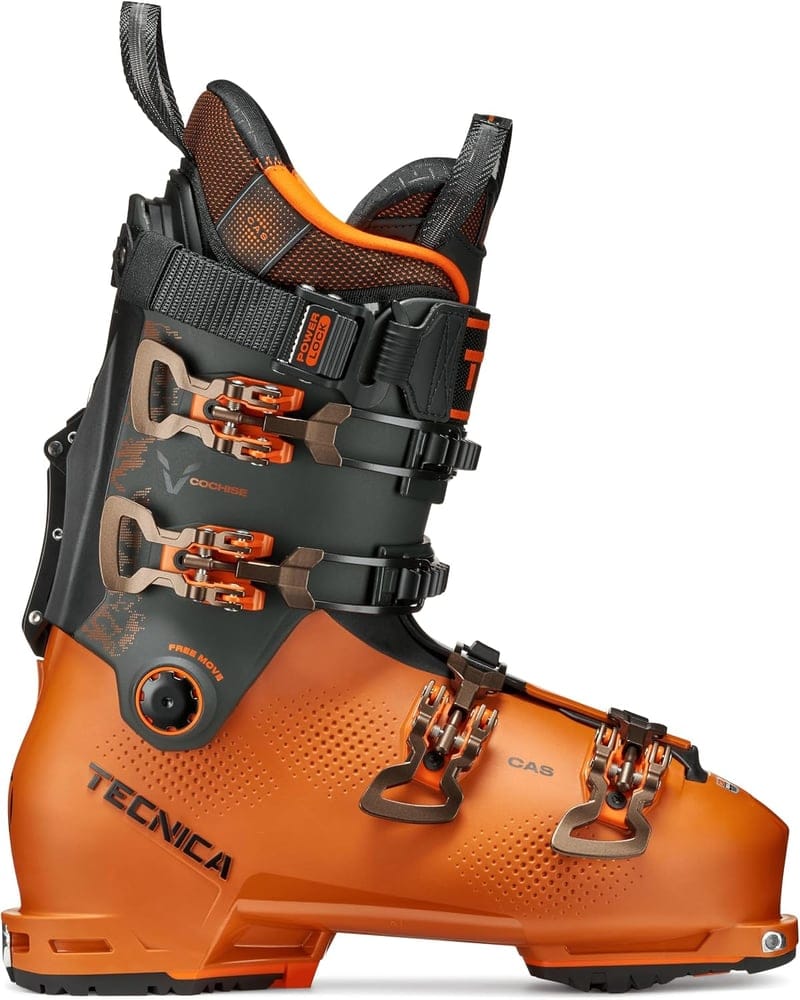 | 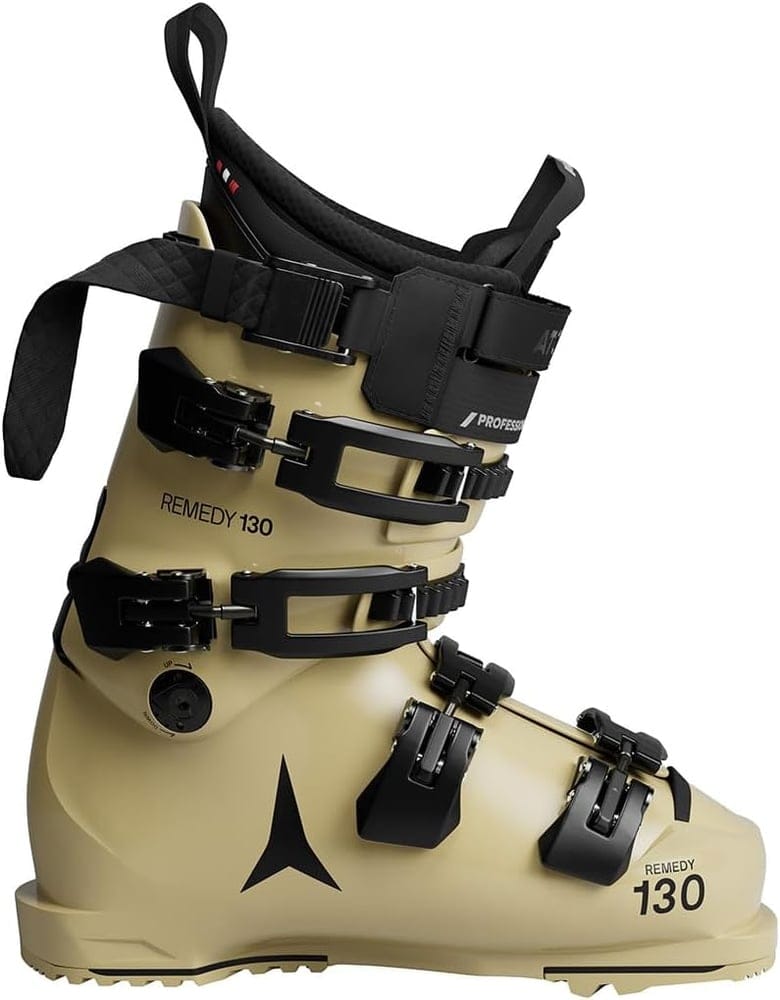 VS | |
| Flex Rating | 130 | 130 |
| Last Width | 99 mm | 96 mm |
| Closure System | 4 micro-adjustable aluminum buckles + 45 mm Power Lock strap | 4 micro-adjustable magnesium buckles + 55 mm dual strap |
| Walk Mode | Yes – T-Ride walk mechanism, 55° range of motion | No |
| Sole Norm | GripWalk (ISO 23223) with DYN tech inserts | GripWalk (ISO 23223) |
| Weight | 4.16 lb (single boot, MP 26.5) | 5.10 lb (single boot, MP 26.5) |
| Warranty | Limited manufacturer warranty (term not published) | 2 Years |
| Liner Type | Ecodesign High Performance Full C.A.S., lace-ready | Competition Elite Liner |
| Shell Material | PU shell / carbon-PP bi-injected cuff | Formula PU shell / PU cuff |
| Forward Lean | 12.5° (+2° or +3.5° with spoiler) | 16° (default) / 18° |
| Ramp Angle | Not specified | 4° |
| Size Range | 24.5–30.5 (Mondopoint) | 24–29.5 (Mondopoint) |
| Tecnica Cochise 130 | Atomic Remedy 130 |
|---|---|
| |
| Flex Rating | |
130 | 130 |
| Last Width | |
99 mm | 96 mm |
| Closure System | |
4 micro-adjustable aluminum buckles + 45 mm Power Lock strap | 4 micro-adjustable magnesium buckles + 55 mm dual strap |
| Walk Mode | |
Yes – T-Ride walk mechanism, 55° range of motion | No |
| Sole Norm | |
GripWalk (ISO 23223) with DYN tech inserts | GripWalk (ISO 23223) |
| Weight | |
4.16 lb (single boot, MP 26.5) | 5.10 lb (single boot, MP 26.5) |
| Warranty | |
Limited manufacturer warranty (term not published) | 2 Years |
| Liner Type | |
Ecodesign High Performance Full C.A.S., lace-ready | Competition Elite Liner |
| Shell Material | |
PU shell / carbon-PP bi-injected cuff | Formula PU shell / PU cuff |
| Forward Lean | |
12.5° (+2° or +3.5° with spoiler) | 16° (default) / 18° |
| Ramp Angle | |
Not specified | 4° |
| Size Range | |
24.5–30.5 (Mondopoint) | 24–29.5 (Mondopoint) |
Comfort
Cochise 130
Remedy 130
Comfort matters in a 130-flex boot because stiffness is only useful if you can wear the boot all day without pain or circulation problems. The Cochise 130 earns strong buyer feedback here, with owners describing a softer instep area that eases entry and exit, few pressure points after the liner is molded, and a more natural feel while touring than many alpine boots. Buyers also note that the Booster Straps reduce shin pressure and that the boot is comfortable enough to walk uphill in. The Remedy 130 is rated lower, and feedback is more mixed: owners praise its better-quality liner and thick plastic that absorbs shock on jumps and in the park, and they say it stays comfortable at full lockdown. However, several buyers report painful clamping when liners are not fitted properly, and some find it too restrictive for long days or uphill use. For most skiers who want comfort across both descents and walks, the Cochise is the more forgiving choice, while the Remedy rewards those who accept a firmer, more clamped feel for the sake of control.
Fit
Cochise 130
Remedy 130
Fit is the most important factor in choosing a ski boot, because a boot that does not match your foot will limit everything else. The Cochise 130 has a 99 mm last with a low-to-mid volume shape, a custom adaptive liner, a movable tongue, and a heat-moldable liner that many buyers describe as fitting like a second skin, with the shell bulging only where needed. Owners also note that it may be a little low in the cuff and is not a true low-volume boot, so the HV version is the better option for wider feet. The Remedy 130 has a narrower 96 mm last with a low-volume Goldilocks fit and anatomic sculpting, and buyers repeatedly describe a snug forefoot and a roomy toe box for circulation. The same buyers, however, frequently report that aftermarket liners and footbeds do not fit properly, that liners often need to be world cupped, and that the Zip Fit liner does not work in this shell. Feedback on the Remedy is therefore more polarized, and it is best suited to narrow feet that can accept the OEM liner. Buyers with average or wider feet will find the Cochise far easier to fit.
Performance
Cochise 130
Remedy 130
Performance is what most skiers buy a 130-flex boot for, and both models earn strong feedback here, though they perform differently. The Cochise 130 is praised for its lightweight build, alpine-like downhill feel, and the T-Ride walk and lock mechanism, which buyers say secures and releases reliably and makes climbing efficient. Owners consider it one of the better freeride boots and say it skis like an everyday resort boot, with a few initial hesitations that faded after a day or two. The Remedy 130 earns very positive comments for carving, variable snow and charging, with buyers describing a precise, powerful and dampened feel, a strong one-piece buckle, and a good 16 degree forward lean with a 4 degree ramp that improves the carving position. A few buyers report a washout on the first run until they adjusted stance, and the boot's added weight is seen as a benefit for stability but a drawback for touring. The Cochise is the better all-round choice when you want a boot that moves well uphill and skis well on piste, while the Remedy is the better pick for a resort-only skier who wants a dampened, aggressive ride.
Heel Hold
Cochise 130
Remedy 130
Heel hold determines whether your foot stays planted in the boot during hard turns and when you load the front of the ski. The Remedy 130 is the clear leader here, with buyers repeatedly saying the heel is pulled firmly into the pocket, there is no hinging or lift, and the boot keeps the foot locked in and prevents sliding. Owners describe this as one of the boot's most persuasive strengths. The Cochise 130 earns a positive but more limited rating, based on a smaller number of comments that credit its added volume and oven-baked liner for pulling the heel back into the pocket. Because the Cochise has fewer heel-specific reports, the gap is meaningful but not conclusive. If stable heel lockdown is a priority, the Remedy is the stronger choice, while those who value heel hold alongside uphill comfort may find the Cochise adequate.
Power Response
Cochise 130
Remedy 130
Power response describes how quickly and directly a boot transfers your forward pressure into the ski, which matters most for aggressive skiers who want a boot to drive through turns. The Remedy 130 has the more intense reputation, with buyers describing it as very firm and powerful when first used and as delivering maximum power when carving, especially with the OEM setup. Several owners note that the booster strap offers more flex and springier recoil than the included power strap, and that the stock configuration gives the most power. Some say the power gain is only about 10 percent over other shells and is not worth giving up a better liner or footbed. The Cochise 130 is rated slightly higher, with owners calling it incredibly stiff on the descent and noting that the power lock strap cinches up and adds forward flex support, along with a stiffer upper cuff plastic. Its rating is only a little higher, and the margin is narrow, so both boots suit a powerful skier. The Cochise is marginally the better pick for a stiff, precise feel, while the Remedy is preferable for skiers who want the most direct, drive-oriented response.
Lateral Stiffness
Cochise 130
Remedy 130
Lateral stiffness affects edge control and precision on side cut, which is important for carving and for holding an edge on firm snow. The Cochise 130 has a limited but positive set of comments, with owners noting that its carbon inlay adds a rigid spine that sharpens lateral movement and precision in side cut. The Remedy 130 has very little feedback on this attribute, so buyers cannot judge it with much confidence and its rating reflects that uncertainty. Because the Cochise has a clearer, though small, set of supporting comments, it is the better-supported choice for skiers who want a stiff, precise edge. Skiers who care most about this trait should still test both boots before buying, since the evidence on the Remedy is thin.
Trust & Transparency
- Data-driven rankings from real user reviews
- Affiliate partnerships don't influence our methodology
We may earn commission from links.
Conclusion & Final Verdict:
Choose the Cochise 130 if you want one boot for resort skiing and touring. It is lighter, has a walk mode and tech compatibility, and most buyers find it comfortable and easier to fit, especially with average or wider feet.
Choose the Remedy 130 if you ski mostly on piste, carve hard and charge through variable snow, and you have a narrow foot. Its heel hold and dampened, direct power are excellent, but you should be ready to invest in careful liner fitting and avoid aftermarket parts.
Related Comparisons
Nordica Speedmachine 3 130 BOA DDvsTecnica Cochise 130
The Cochise 130 is the stronger all-round choice, with better climbing, a stiffer downhill feel, and a fit that suits more skiers. The Speedmachine 3 130 BOA DD appeals to resort skiers who value its shin wrap and BOA closure and can accept a difficult entry.
Salomon S/Pro Alpha C BOA 130vsAtomic Remedy 130
The Salomon S/Pro Alpha C BOA 130 is the snappier, more versatile choice with a roomier, more forgiving fit and stronger heel lock. The Atomic Remedy 130 suits skiers who want a damp, powerful carver and will commit to dialing in its narrow, liner-sensitive fit.
Tecnica Cochise 130vsArmada AR One 130 MV
The Tecnica Cochise 130 suits skiers who want one boot for resort skiing and occasional touring, thanks to its walk mode, lighter weight and better fit feedback. The Armada AR One 130 MV is the better choice for buyers who put heel lock and aggressive carving first and climb less often.
Tecnica Cochise 130vsLange Shadow 130 MV
The Cochise 130 suits skiers who want one boot for resort skiing and occasional touring, with a walk mode and a stiffer, more alpine-like downhill feel. The Shadow 130 MV is the better pick for comfort-first skiers with average-width feet who mostly ski on-piste and want an easy, plush fit out of the box.
Tecnica Mach Sport HV 65 WvsAtomic Remedy 130
The Mach Sport HV 65 W suits wide-footed or lower-leg-fit-focused skiers who want adjustable cuff and cleat fit, while the Remedy 130 is the stiffer, more powerful, heel-locking choice for aggressive skiers who will accept a narrow, picky fit.
Tecnica Mach Sport HV 65 WvsTecnica Cochise 130
The Cochise 130 is the stronger choice for skiers who want touring walk mode and a stiffer, more powerful downhill feel. The Mach Sport HV 65 W suits wider-footed skiers who mainly want adjustable calf and lower-leg fit.