
Tecnica Mach1 MV 130 TD2 GW vs Tecnica Cochise 130
Why You Can Trust Us
- Side-by-side analysis based on real user feedback
- Unbiased comparisons, not influenced by partnerships
- Updated as new data becomes available
We may earn from affiliate links at no extra cost to you.
| Mach1 MV 130 TD2 GW | Cochise 130 | |
|---|---|---|
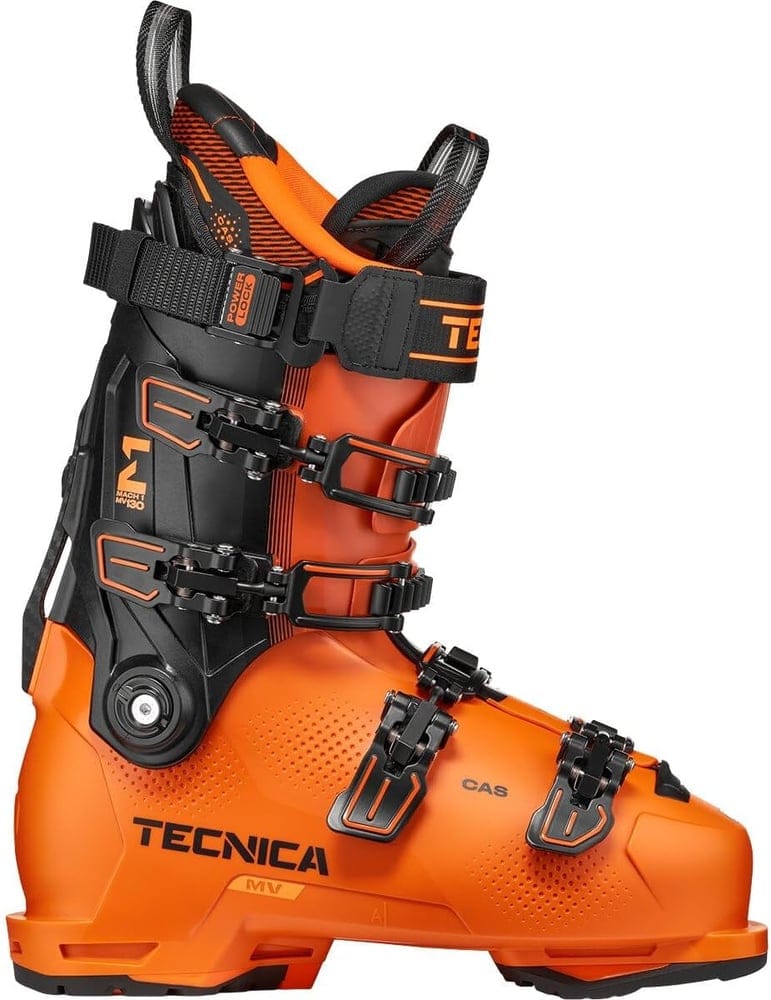 | 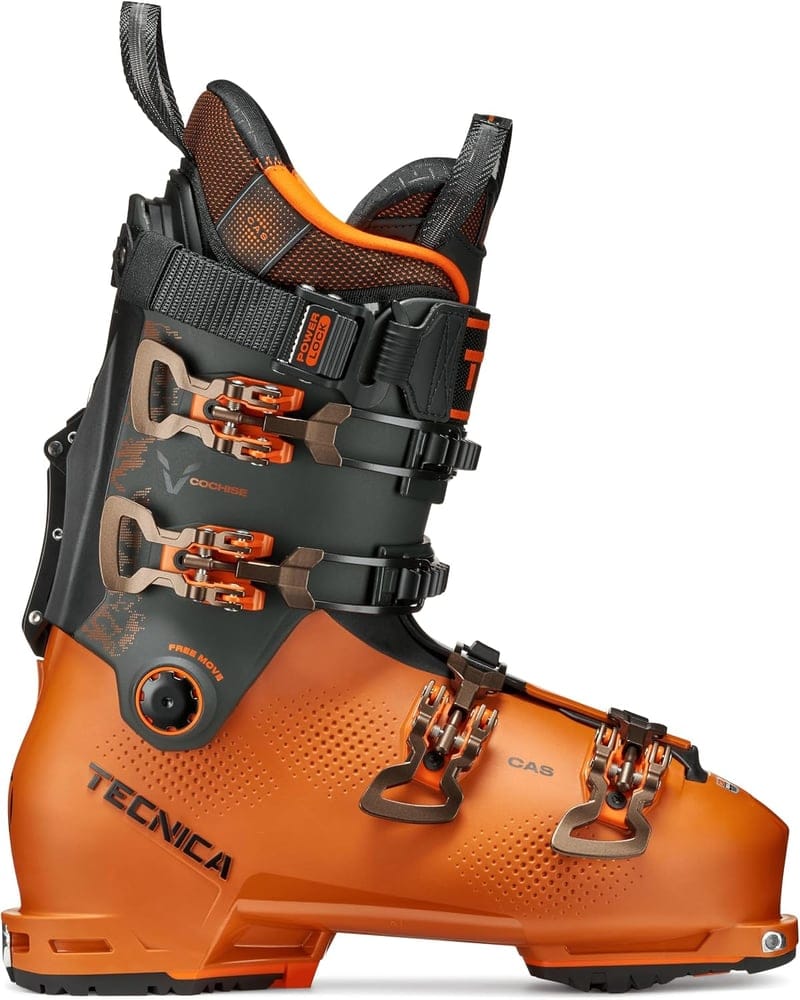 VS | |
| Flex Rating | 130 | 130 |
| Last Width | 100 mm | 99 mm |
| Closure System | 4 micro-adjustable aluminum buckles + Power Lock strap | 4 micro-adjustable aluminum buckles + 45 mm Power Lock strap |
| Walk Mode | No | Yes – T-Ride walk mechanism, 55° range of motion |
| Sole Norm | GripWalk (ISO 23223) | GripWalk (ISO 23223) with DYN tech inserts |
| Weight | 4.20 lb (single boot, MP 26.5) | 4.16 lb (single boot, MP 26.5) |
| Warranty | Limited manufacturer warranty (term not published) | Limited manufacturer warranty (term not published) |
| Liner Type | Ecodesign High Performance Full C.A.S., adjustable tongue | Ecodesign High Performance Full C.A.S., lace-ready |
| Shell Material | PU shell / Grilamid-carbon co-injected cuff | PU shell / carbon-PP bi-injected cuff |
| Forward Lean | 13.3° (+2° or +3.5° with spoiler) | 12.5° (+2° or +3.5° with spoiler) |
| Ramp Angle | Not specified | Not specified |
| Size Range | 24.5–30.5 (Mondopoint) | 24.5–30.5 (Mondopoint) |
| Tecnica Mach1 MV 130 TD2 GW | Tecnica Cochise 130 |
|---|---|
| |
| Flex Rating | |
130 | 130 |
| Last Width | |
100 mm | 99 mm |
| Closure System | |
4 micro-adjustable aluminum buckles + Power Lock strap | 4 micro-adjustable aluminum buckles + 45 mm Power Lock strap |
| Walk Mode | |
No | Yes – T-Ride walk mechanism, 55° range of motion |
| Sole Norm | |
GripWalk (ISO 23223) | GripWalk (ISO 23223) with DYN tech inserts |
| Weight | |
4.20 lb (single boot, MP 26.5) | 4.16 lb (single boot, MP 26.5) |
| Warranty | |
Limited manufacturer warranty (term not published) | Limited manufacturer warranty (term not published) |
| Liner Type | |
Ecodesign High Performance Full C.A.S., adjustable tongue | Ecodesign High Performance Full C.A.S., lace-ready |
| Shell Material | |
PU shell / Grilamid-carbon co-injected cuff | PU shell / carbon-PP bi-injected cuff |
| Forward Lean | |
13.3° (+2° or +3.5° with spoiler) | 12.5° (+2° or +3.5° with spoiler) |
| Ramp Angle | |
Not specified | Not specified |
| Size Range | |
24.5–30.5 (Mondopoint) | 24.5–30.5 (Mondopoint) |
Comfort
Mach1 MV 130 TD2 GW
Cochise 130
Comfort matters in a ski boot because pressure points can ruin a day on the hill long before the skiing does. The Mach1 earns praise for a liner that feels very comfortable, a custom tongue and quick instep feature that ease instep pressure and aid circulation, and a softer shell that makes getting in and out simpler. Buyers also like the easy back-hole closing, though one note says the stiffer inner liner plastic can push pressure toward the inside edge. The Cochise draws comments about a moldable liner and anatomical last that produce few pressure points, a softer plastic at the instep that eases on and off, and Booster Straps that reduce shin discomfort. Its feedback also highlights comfort while touring and walking uphill, and several buyers say it feels more natural than snowboard boots. Both boots score 4.4 and 4.3 with strongly positive feedback, so this category is effectively a tie and the better choice depends on which shape of foot and which downhill-plus-touring balance each buyer needs.
Fit
Mach1 MV 130 TD2 GW
Cochise 130
Fit is the single most important factor in a ski boot, because a correct fit controls heel lock, toe comfort, and how directly the boot transmits movement to the ski. The Mach1 is offered in mid, low, and high volume options with 100, 98, and 103 mm lasts, so buyers can match the instep height of their foot, and reviewers say the toe box is opened up and the fine-tunable rear spoiler helps dial in the setup. One caution is that choosing the right volume matters, since the instep height should be checked before buying, and the manufacturer's volume note fits roughly nine in ten users. The Cochise uses a 99 mm last with a low-to-mid volume shell, a custom adaptive liner, a movable tongue, and an anatomical last that buyers describe as fitting like a second skin, with the shell bulging only where needed. Its feedback is more extensive and mostly positive, but several comments say it is not a low-volume boot, its cuff sits a little low, and an HV version is the better pick for wider feet. The Mach1 scores 4.6 against 4.2 for the Cochise, so it gets the edge for buyers who want volume choices, while the Cochise suits those who are happy to mold a liner to a mid-volume foot.
Performance
Mach1 MV 130 TD2 GW
Cochise 130
Performance covers how the boot skis, climbs, and responds on the descent, and it is where the two designs diverge most. The Cochise scores 4.7 with strongly positive feedback, with buyers highlighting its lightweight polyurethane build, efficient climbing, and a T-Ride walk mechanism that locks and unlocks securely across a 55 degree range of motion. Reviewers also say its alpine-like downhill performance is strong, that it is one of the better freeride boots, and that pin tech toe compatibility makes it a serious touring option. A few buyers initially hesitated but later found it works well as an everyday resort boot, and one note questions performance in a few situations. The Mach1 scores 4.1, with buyers saying the carbon T Drive keeps its efficiency and shape across temperatures, that it works from slopes to freeride, and that the cant screws help tune the setup for a more aggressive feel. Because the Mach1 has no walk mode, it is better suited to resort-first skiers, while the Cochise is the stronger choice when touring and downhill performance both matter.
Heel Hold
Mach1 MV 130 TD2 GW
Cochise 130
Heel hold determines whether the heel stays locked in the pocket during turns, which affects control and fatigue on longer runs. Evidence for both boots is limited, with only a handful of mentions each, so this category should be read with caution. The Mach1 has feedback saying the heel still feels secure, which is encouraging but thin. The Cochise has comments noting that the added volume improves heel hold and that the oven-baked liner successfully pulls the heel back into the pocket, which suggests the heel fit can be tuned through liner work and volume choice. Both scores sit close together, at 3.6 and 3.7, and both are described as positive but measured because the feedback is limited. Buyers with narrow heels or a history of heel lift should try both boots with a proper fitter, and the Cochise may have a slight advantage for those who want a heel-tuning option through its volume and liner choices.
Power Response
Mach1 MV 130 TD2 GW
Cochise 130
Power response describes how quickly and precisely a boot transfers leg movement into ski edge pressure, which matters for carving and charging. The Mach1 earns a 3.9 with feedback that its T-Drive plate adds rebound, kickback, and leverage, and that the aft pressure provides instant feedback to the ski edge. Buyers describe a more progressive flex with better edge-to-edge transition and transmission. The Cochise scores 3.6, with buyers calling it incredibly stiff on the descent and noting that the power lock strap cinches up and adds forward flex support, along with a stiffer upper cuff. One buyer note is less positive, and the feedback suggests a more aggressive, stiffer feel that some skiers will enjoy and others may find demanding. Overall, the Mach1 has the edge for progressive, responsive power transfer, while the Cochise suits skiers who want a more direct, firmer feel on the descent.
Lateral Stiffness
Mach1 MV 130 TD2 GW
Cochise 130
Lateral stiffness determines how well a boot resists sideways flex, which influences edge grip and precision during side cut and in hard snow. The Cochise has the only substantial evidence in this category, with comments that the carbon inlay creates a rigid spine that increases lateral stiffness and makes side-to-side movement more precise for aggressive turns. Its score of 3.6 reflects a positive but limited sample. The Mach1 has no aspect-level feedback, and its score of 3.0 reflects a lack of detail rather than a known weakness. Because the evidence is thin on both sides, the Cochise is the safer choice for buyers who specifically want a stiffer lateral platform, but the gap is not wide enough to be a deciding factor for most skiers without a test ride.
Trust & Transparency
- Data-driven rankings from real user reviews
- Affiliate partnerships don't influence our methodology
We may earn commission from links.
Conclusion & Final Verdict:
Choose the Mach1 MV 130 TD2 GW if your skiing is mostly resort and freeride, you want to choose between three volume options to match your instep, and you prefer a progressive, responsive power feel. It wins on fit and power response, and its comfort is strong enough to make it a dependable everyday boot.
Choose the Cochise 130 if you plan to tour or bootpack, want a stiffer downhill feel with a carbon-reinforced spine, or need lighter weight and tech-binding compatibility. It wins on performance and lateral stiffness, and its walk mode and DYN tech inserts make it the more versatile option when climbing matters.
Both boots are highly rated and close in overall score, so a fitting with an experienced bootfitter matters more than the spec sheet.
Related Comparisons
Atomic Hawx Prime 100 BOAvsTecnica Cochise 130
The Atomic Hawx Prime 100 BOA suits skiers who want a secure, comfortable all-mountain boot with a softer, more forgiving feel and a better fit for larger calves. The Tecnica Cochise 130 is the better choice for resort-first skiers who also want to tour, offering a stiffer, more powerful downhill feel and an efficient walk mode.
Atomic Hawx Prime 100 BOAvsTecnica Mach1 MV 130 TD2 GW
The Atomic Hawx Prime 100 BOA suits skiers who want a moldable, easy-closing all-mountain boot with quicker recoil and a softer feel. The Tecnica Mach1 MV 130 TD2 GW is the stronger pick for buyers who want a stiffer high-performance boot and can choose a volume option to dial in their fit.
Tecnica Mach1 MV 130 TD2 GWvsNordica Speedmachine 3 130 BOA DD
The Tecnica Mach1 MV 130 TD2 GW leads on fit, comfort, and power transfer thanks to three volume lasts and an easier entry, while the Nordica Speedmachine 3 130 BOA DD offers a precise, shin-hugging feel but is harder to get into. Choose the Tecnica for a customizable, comfortable fit and the Nordica if you prefer BOA closure and can manage a tighter entry.
Tecnica Mach1 MV 130 TD2 GWvsSalomon S/Pro Alpha C BOA 130
The Tecnica Mach1 MV 130 TD2 GW suits skiers who need a adjustable fit across three volume options, while the Salomon S/Pro Alpha C BOA 130 is the stronger choice for locked-in heel hold, quick power transfer, and aggressive carving.
Tecnica Mach1 MV 130 TD2 GWvsTecnica Mach Sport HV 65 W
The Mach1 MV 130 TD2 GW is the performance pick for skiers who want a stiffer, more responsive boot with volume options to fine-tune fit. The Mach Sport HV 65 W suits wide-footed or softer-flexing skiers who want easy out-of-box fitting and adjustable cuff and cleat positions.
Tecnica Mach Sport HV 65 WvsSalomon S/Pro Alpha C BOA 130
The Tecnica Mach Sport HV 65 W suits skiers whose biggest problem is lower-leg and calf fit, thanks to its adjustable cuff and movable cleat, and it is the better choice for wider feet. The Salomon S/Pro Alpha C BOA 130 is the stronger performer for aggressive skiers who want locked-in heel hold and quick power transfer, though its snug 98 mm fit is best for narrower feet.