
Tecnica Mach1 MV 130 TD2 GW vs Salomon S/Pro Alpha C BOA 130
Why You Can Trust Us
- Side-by-side analysis based on real user feedback
- Unbiased comparisons, not influenced by partnerships
- Updated as new data becomes available
We may earn from affiliate links at no extra cost to you.
| Mach1 MV 130 TD2 GW | S/Pro Alpha C BOA 130 | |
|---|---|---|
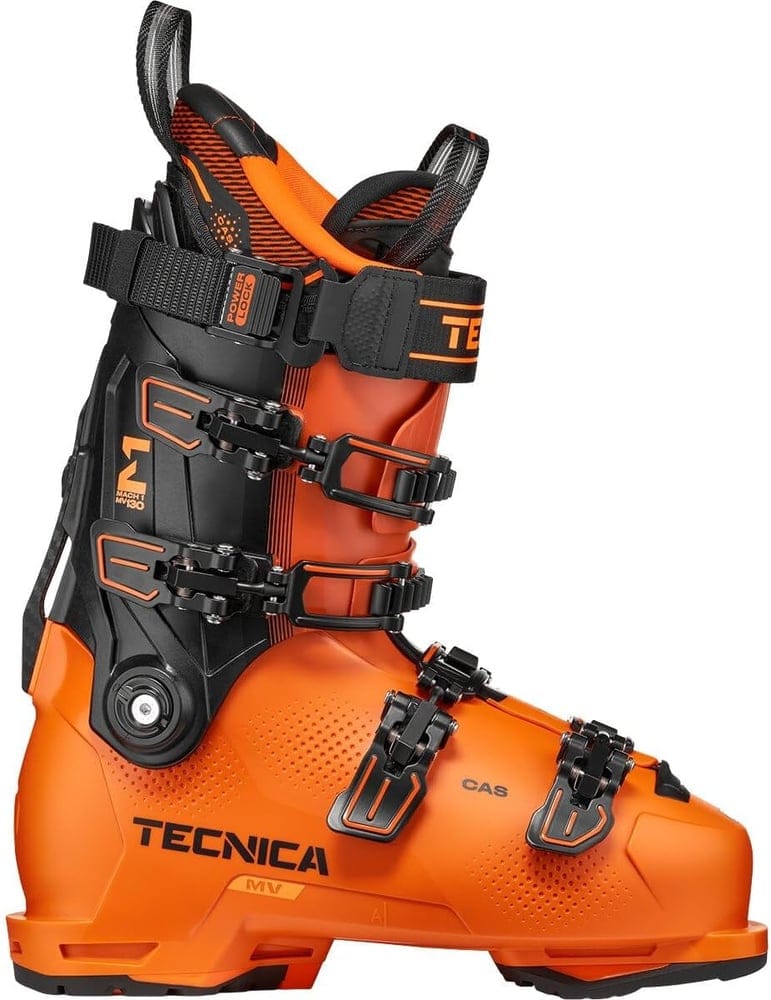 | 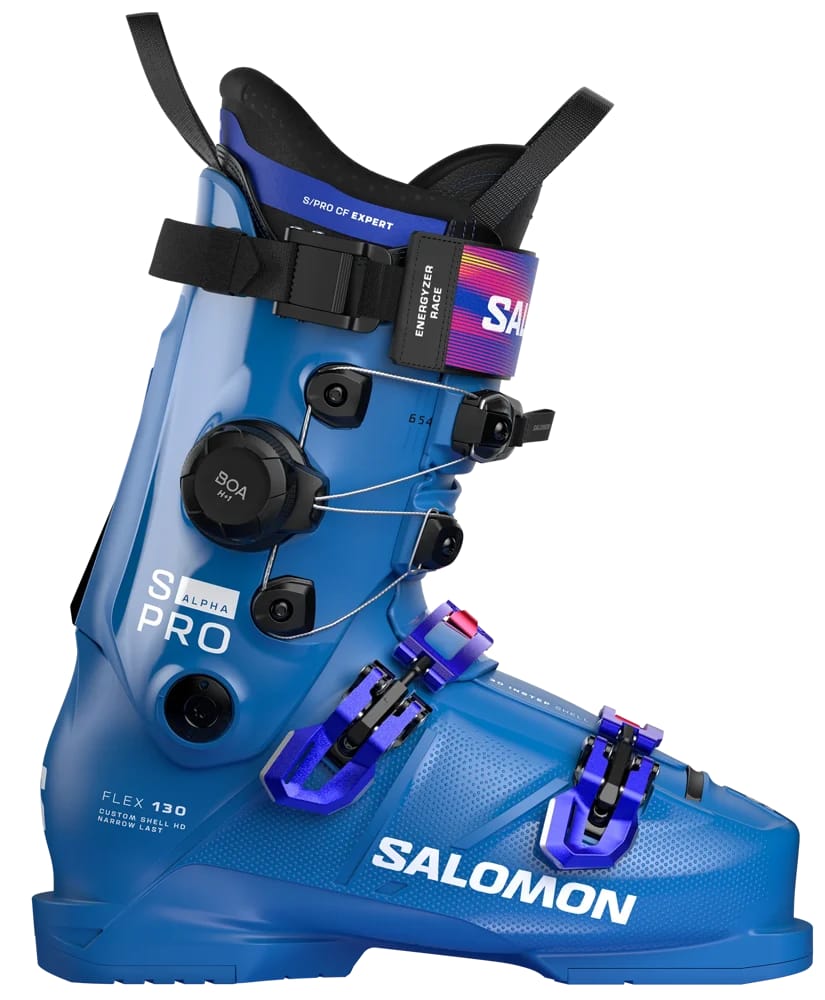 VS | |
| Flex Rating | 130 | 130 |
| Last Width | 100 mm | 98 mm |
| Closure System | 4 micro-adjustable aluminum buckles + Power Lock strap | Cuff BOA Fit System + 2 aluminum buckles |
| Walk Mode | No | No |
| Sole Norm | GripWalk (ISO 23223) | ISO 5355 alpine pads; GripWalk (ISO 23223) compatible |
| Weight | 4.20 lb (single boot, MP 26.5) | 4.25 lb (single boot) |
| Warranty | Limited manufacturer warranty (term not published) | Not specified |
| Liner Type | Ecodesign High Performance Full C.A.S., adjustable tongue | S/Pro CF Expert pre-shaped liner, Custom Tongue 2.0 |
| Shell Material | PU shell / Grilamid-carbon co-injected cuff | Polyurethane |
| Forward Lean | 13.3° (+2° or +3.5° with spoiler) | Not specified |
| Ramp Angle | Not specified | Not specified |
| Size Range | 24.5–30.5 (Mondopoint) | 22–30.5 (Mondopoint) |
| Tecnica Mach1 MV 130 TD2 GW | Salomon S/Pro Alpha C BOA 130 |
|---|---|
| |
| Flex Rating | |
130 | 130 |
| Last Width | |
100 mm | 98 mm |
| Closure System | |
4 micro-adjustable aluminum buckles + Power Lock strap | Cuff BOA Fit System + 2 aluminum buckles |
| Walk Mode | |
No | No |
| Sole Norm | |
GripWalk (ISO 23223) | ISO 5355 alpine pads; GripWalk (ISO 23223) compatible |
| Weight | |
4.20 lb (single boot, MP 26.5) | 4.25 lb (single boot) |
| Warranty | |
Limited manufacturer warranty (term not published) | Not specified |
| Liner Type | |
Ecodesign High Performance Full C.A.S., adjustable tongue | S/Pro CF Expert pre-shaped liner, Custom Tongue 2.0 |
| Shell Material | |
PU shell / Grilamid-carbon co-injected cuff | Polyurethane |
| Forward Lean | |
13.3° (+2° or +3.5° with spoiler) | Not specified |
| Ramp Angle | |
Not specified | Not specified |
| Size Range | |
24.5–30.5 (Mondopoint) | 22–30.5 (Mondopoint) |
Comfort
Mach1 MV 130 TD2 GW
S/Pro Alpha C BOA 130
Comfort matters for a 130-flex boot because stiff, high-performance shells can easily become painful over a full day of skiing if the liner and shell do not accommodate the foot. The Mach1 MV 130 earns strong praise for its comfortable liner, custom tongue that eases pressure on the instep, and a softer shell that is easier to step into and out of, with buyers noting that the 100 mm version feels comfortable and that the back-hole closure is easy to use. The S/Pro Alpha C BOA 130 also earns strong comfort marks, with reviewers calling the reworked seamless liner high quality and well designed, saying the boot feels good all day on and off the trail, and praising the easy entry. Its main complaints centre on the need to stretch the forefoot and a thick neoprene liner that some buyers dislike. Overall both boots deliver a comfortable experience for most skiers, so comfort is essentially a tie, with the Mach1 MV 130 better for those who want a plush, forgiving feel out of the box and the S/Pro Alpha C BOA 130 better for those willing to break in a more precise fit.
Fit
Mach1 MV 130 TD2 GW
S/Pro Alpha C BOA 130
Fit is where these two boots diverge most, and it is often the factor that decides whether a boot performs well at all. The Mach1 MV 130 is strongly praised for its nice medium fit, opened toe box, and fine-tunable rear spoiler, and its three volume options (100, 98, and 103 mm lasts) let most buyers find a close match for instep height. The main caveat is that choosing the wrong volume can undermine the fit, so skiers should try the options before committing. The S/Pro Alpha C BOA 130 has a lower-volume, low-profile 98 mm last that many buyers find secure and very comfortable once dialled in, and its BOA micro-adjustment and individual toe buckles give precise control. However, the same low-volume shape creates problems for many feet, with reviewers reporting a tight forefoot, pressure on the toes, and a snug shell over the ankle, and some saying the boot needs stretching or heat molding before it feels right. For most buyers, the Mach1 MV 130 is the more reliable fit choice, while the S/Pro Alpha C BOA 130 only suits narrower feet or those prepared to customise.
Performance
Mach1 MV 130 TD2 GW
S/Pro Alpha C BOA 130
Performance is what makes a 130-flex boot worth buying for skiers who charge, carve hard, and push into aggressive terrain. The S/Pro Alpha C BOA 130 stands out here with buyers describing it as a phenomenal carving boot that feels direct, smooth, and confidence-inspiring, with many saying it is reactive in bumps and trees and light for its stiffness. Reviewers also praise the control it gives on hard grippy snow and the way it lets them push harder without concern. A few buyers note that it demands an adjusted skiing style and feels stiffer than other 130s, which is a trade-off rather than a flaw for experienced skiers. The Mach1 MV 130 is described as a polished, high-performance boot that works from groomed slopes through freeride terrain, and buyers say its carbon T Drive keeps its efficiency across temperatures. Its performance reputation is positive but less intense, and fewer buyers commented on it. For skiers who want a sharp, aggressive carving boot, the S/Pro Alpha C BOA 130 is clearly the stronger performer, while the Mach1 MV 130 is a capable all-terrain option.
Heel Hold
Mach1 MV 130 TD2 GW
S/Pro Alpha C BOA 130
Heel hold matters because a loose heel causes instability, reduced control, and blisters, especially when skiing aggressively. The S/Pro Alpha C BOA 130 is the clear leader here, with buyers repeatedly describing heel retention as excellent, saying the heel and ankle stay locked in the pocket, and crediting the upper BOA and instep buckle with holding the heel back and down. Reviewers consistently say the ankle does not move at all during skiing, which is a strong endorsement for a performance boot. The Mach1 MV 130 has far less feedback on this point, with only a couple of buyers commenting that the boot still feels secure, so its heel hold is positive but unproven at the same level. Skiers who have struggled with heel movement in other boots should lean toward the S/Pro Alpha C BOA 130, while the Mach1 MV 130 is a reasonable choice for those who mainly need a secure but not extreme heel fit.
Power Response
Mach1 MV 130 TD2 GW
S/Pro Alpha C BOA 130
Power response describes how quickly and efficiently a boot transfers the skier's leg movements into the ski's edge, which is central to how a stiff boot feels on snow. The S/Pro Alpha C BOA 130 receives strong feedback here, with buyers describing energy transfer as quick and snappy, the plastic storing and returning energy effectively, and a sense of more power transmission than similar boots. Reviewers mention that the power link design channels force into the inside edge earlier in the turn and gives a progressive, linear power curve, and some say they can generate a surprising amount of power with little effort. A few note that it can feel less reactive in certain situations, but the overall impression is of a direct and energetic boot. The Mach1 MV 130 has a positive but less detailed response, with buyers noting that the T-drive plate adds rebound and leverage and that the aft pressure gives immediate feedback to the edge, along with a more progressive flex that improves edge-to-edge transitions. For skiers who want maximum energy return and a snappy response, the S/Pro Alpha C BOA 130 is the more compelling choice.
Lateral Stiffness
Mach1 MV 130 TD2 GW
S/Pro Alpha C BOA 130
Lateral stiffness determines how well a boot resists sideways flex, which affects how precisely it holds an edge when you load the ski hard on one side. The S/Pro Alpha C BOA 130 is widely described as stiff, with buyers praising its lateral stiffness and noting the lot of stiffness it provides, though some point out that the give at the calf makes it less rigid and precise than a buckle-based system and that the medial side feels stiffer than the lateral. A few reviewers feel it is stiff and tight for park use, and one says it is not as laterally quick as the Mach1. The Mach1 MV 130 has almost no detailed feedback on lateral stiffness, which means its performance here cannot be confidently judged beyond a neutral rating. Buyers who prioritise a rigid, precise sideways response should favour the S/Pro Alpha C BOA 130, while buyers of the Mach1 MV 130 should expect a more moderate and less well-documented feel.
Trust & Transparency
- Data-driven rankings from real user reviews
- Affiliate partnerships don't influence our methodology
We may earn commission from links.
Conclusion & Final Verdict:
Choose the Tecnica Mach1 MV 130 TD2 GW if fit adjustability and all-day comfort matter most, especially if you need to select between mid, low, and high volume options to suit your instep. It is the more versatile all-terrain boot and the safer pick for skiers who are unsure of their foot shape.
Choose the Salomon S/Pro Alpha C BOA 130 if you are a precise, aggressive skier who wants a locked-in heel, direct carving feel, and strong energy return. Its narrower fit and firm forefoot can be a challenge, so try it on before buying and plan on some stretching or molding if your forefoot is wide.
Related Comparisons
Atomic Hawx Prime 100 BOAvsSalomon S/Pro Alpha C BOA 130
The Hawx Prime 100 BOA is the more forgiving, versatile choice, with a roomier fit that settles in and a comfortable liner for all-day all-mountain skiing. The S/Pro Alpha C BOA 130 suits aggressive skiers who want a stiffer, more precise boot with stronger heel lock, carving performance and power transfer.
Tecnica Mach Sport HV 65 WvsSalomon S/Pro Alpha C BOA 130
The Tecnica Mach Sport HV 65 W suits skiers whose biggest problem is lower-leg and calf fit, thanks to its adjustable cuff and movable cleat, and it is the better choice for wider feet. The Salomon S/Pro Alpha C BOA 130 is the stronger performer for aggressive skiers who want locked-in heel hold and quick power transfer, though its snug 98 mm fit is best for narrower feet.
Tecnica Mach1 MV 130 TD2 GWvsNordica Speedmachine 3 130 BOA DD
The Tecnica Mach1 MV 130 TD2 GW leads on fit, comfort, and power transfer thanks to three volume lasts and an easier entry, while the Nordica Speedmachine 3 130 BOA DD offers a precise, shin-hugging feel but is harder to get into. Choose the Tecnica for a customizable, comfortable fit and the Nordica if you prefer BOA closure and can manage a tighter entry.
Tecnica Mach1 MV 130 TD2 GWvsTecnica Cochise 130
The Mach1 MV 130 TD2 GW leads on fit with three volume options, while the Cochise 130 offers a touring walk mode and a stiffer downhill feel. Pick the Mach1 for a customizable resort and freeride fit, or the Cochise if climbing matters as much as skiing.
Tecnica Mach1 MV 130 TD2 GWvsTecnica Mach Sport HV 65 W
The Mach1 MV 130 TD2 GW is the performance pick for skiers who want a stiffer, more responsive boot with volume options to fine-tune fit. The Mach Sport HV 65 W suits wide-footed or softer-flexing skiers who want easy out-of-box fitting and adjustable cuff and cleat positions.
Tecnica Mach Sport HV 65 WvsTecnica Cochise 130
The Cochise 130 is the stronger choice for skiers who want touring walk mode and a stiffer, more powerful downhill feel. The Mach Sport HV 65 W suits wider-footed skiers who mainly want adjustable calf and lower-leg fit.