
Backcountry Access Tracker 3+ vs Backcountry Access Tracker 4
Why You Can Trust Us
- Side-by-side analysis based on real user feedback
- Unbiased comparisons, not influenced by partnerships
- Updated as new data becomes available
We may earn from affiliate links at no extra cost to you.
| Tracker 3+ | Tracker 4 | |
|---|---|---|
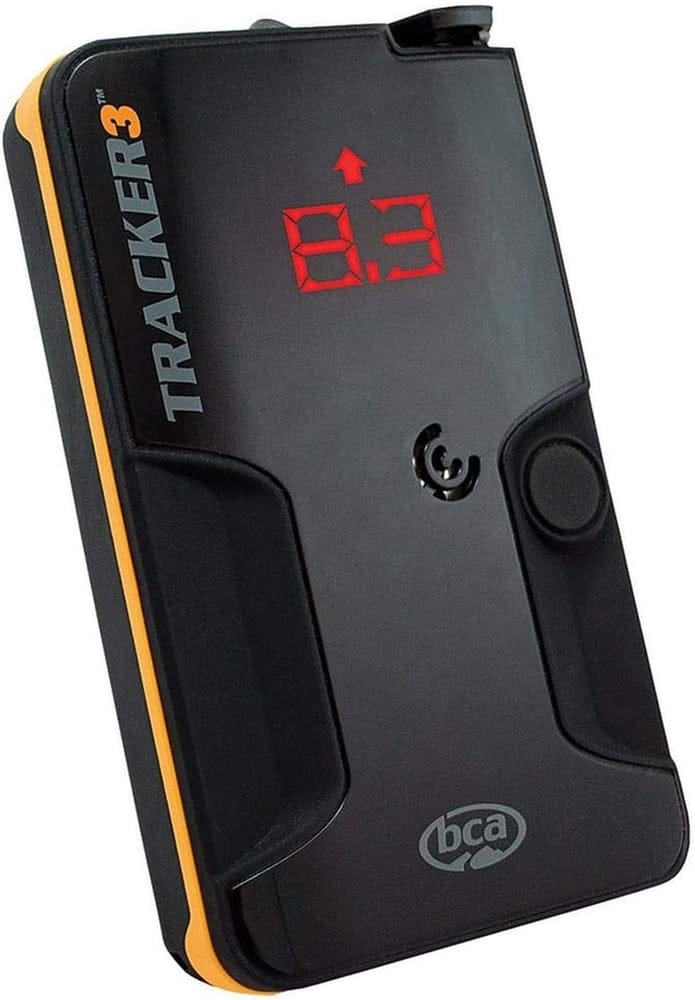 | 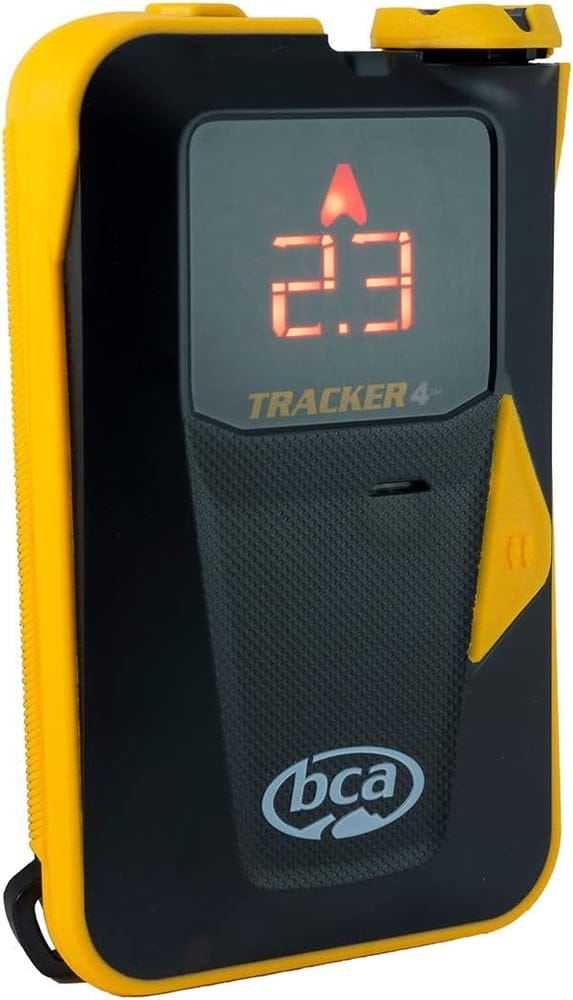 VS | |
| Antenna Count | 3 | 3 |
| Range | 164 ft (50 m max range) | 164 ft (50 m max range) |
| Multiple Burial Marking | Yes (signal suppression) | Yes (signal suppression) |
| Weight | 5.8 oz (164 g, without harness) | 6.2 oz (176 g, without harness) |
| Battery Life | ≈250 hr send | ≈50 hr search | ≈250 hr send | ≈50 hr search |
| Warranty | 5 years (limited) | 5 years (limited) |
| Frequency | 457 kHz | 457 kHz |
| Auto Revert Timer | Yes (motion-sensing) | Yes (motion-sensing) |
| Battery Type | 3 × AAA alkaline | 3 × AAA alkaline |
| Bluetooth | No | No |
| Dimensions | 4.57 × 2.80 × 0.91 in | 4.72 × 2.95 × 1.02 in |
| Backcountry Access Tracker 3+ | Backcountry Access Tracker 4 |
|---|---|
| |
| Antenna Count | |
3 | 3 |
| Range | |
164 ft (50 m max range) | 164 ft (50 m max range) |
| Multiple Burial Marking | |
Yes (signal suppression) | Yes (signal suppression) |
| Weight | |
5.8 oz (164 g, without harness) | 6.2 oz (176 g, without harness) |
| Battery Life | |
≈250 hr send | ≈50 hr search | ≈250 hr send | ≈50 hr search |
| Warranty | |
5 years (limited) | 5 years (limited) |
| Frequency | |
457 kHz | 457 kHz |
| Auto Revert Timer | |
Yes (motion-sensing) | Yes (motion-sensing) |
| Battery Type | |
3 × AAA alkaline | 3 × AAA alkaline |
| Bluetooth | |
No | No |
| Dimensions | |
4.57 × 2.80 × 0.91 in | 4.72 × 2.95 × 1.02 in |
Accuracy
Tracker 3+
Tracker 4
Accuracy matters because a beacon search depends on how quickly a rescuer can narrow in on a buried transceiver, and in multi-victim situations the ability to sort out the closest signal is critical. The Tracker 3+ earns the edge here, with buyers describing its approximate distance and direction readings to a buried transceiver as practical for narrowing in, along with distance readings of roughly 20 to 45 meters reported in use. Its pinpointing lock-on helps identify the closest unit when several beacons are close together, which is especially useful for multi-burial searches. The Tracker 4 gets far less feedback on accuracy, with reviewers pointing to its fine final reading down to about 0.1 before probing, but that praise is thin and mixed. For buyers who want the most confident guidance during a search, the Tracker 3+ is the stronger choice, while the Tracker 4 remains workable with a less well documented accuracy record.
Durability
Tracker 3+
Tracker 4
Durability matters because avalanche beacons get dropped, jammed into packs, and tossed around on long, cold tours where a failure at the wrong moment has serious consequences. The Tracker 4 is the clear standout here, with buyers consistently describing it as a tough workhorse built for people who are hard on their gear. Its rubberized overmold replaces traditional gasket construction, the recessed screen adds protection against knocks, and the robust case feels solid in hand. The Tracker 3+ receives little specific durability feedback, so its rating reflects a lack of detailed evidence rather than a known weakness, and buyers have no strong reason to expect rugged handling from it. If you carry your beacon through rough terrain or handle your gear roughly, the Tracker 4 is the safer bet, while the Tracker 3+ suits more careful users.
Ease Of Use
Tracker 3+
Tracker 4
Ease of use matters because a searcher under stress needs to switch modes, follow directions, and read the unit without fumbling. The Tracker 3+ is one of the most praised options for simple operation, with a basic startup, a follow-the-arrow search process, and a quick switch back to transmit mode that reviewers find easy to learn under pressure. Buyers also appreciate that its design avoids confusing features, and its search demonstration looks very straightforward. One minor catch is that the auto revert to transmit must be set at each startup, a small step that is easy to forget. The Tracker 4 also gets positive comments for a straightforward, user-friendly interface, and some reviewers say it feels a little snappier in use, though that feedback base is much smaller. Overall the Tracker 3+ is the stronger pick for buyers who want the simplest controls, while the Tracker 4 is a capable alternative.
Field Reliability
Tracker 3+
Tracker 4
Field reliability matters because consistent performance in cold, wet, or long-duration trips and complex burials is what separates a dependable beacon from a risky one. Feedback on the Tracker 3+ is mixed: some buyers praise its 50 m range as strong for a transceiver and report that it detects double burials, while others raise concerns about its double burial indication performance. The Tracker 4 has very limited and split feedback, with some uncertainty about continuing to find multiple beacons in sequence after marking one. It holds a narrow edge on this measure, but that reflects thin evidence rather than proven strength. Neither beacon has enough consistent field data to be called confidently reliable, so buyers who prioritize multi-burial performance should read the cautions carefully and practice with either unit before relying on it.
Signal Clarity
Tracker 3+
Tracker 4
Signal clarity matters because a rescuer has to interpret what the screen and audio are telling them in the chaos of a live search. The Tracker 3+ earns strong praise, with a multiple-signal icon and bracket that appears when victims are within about 6 m, Big Picture Mode that shows two separate signals at once, and distinctive audio tones that change with distance. Its single number and arrow display is easy to read, and signal suppression locks onto the next strongest beacon as you move on to it. A few reviewers found the busier graphics on competing beacons confusing by comparison. The Tracker 4 offers a larger, brighter display than earlier Tracker models, and its distance readout counts down toward zero as you close in, which helps when reading the screen in the field. Its signal feedback is more modest overall, so the Tracker 3+ is the clearer choice for multi-signal display, while the Tracker 4 is appealing if you mainly want a big, easy-to-read countdown.
Comfort
Tracker 3+
Tracker 4
Comfort matters because a beacon worn all day on a long tour needs to be light, compact, and easy to carry without getting in the way. The Tracker 3+ is noticeably lighter and smaller than many earlier models, with reviewers describing a sleek, low-profile design that is about 20% smaller and saves roughly 15 g. The Tracker 4 is also praised as slim enough to slip into a pocket on long backcountry tours, though that feedback is limited. The spec sheet shows the Tracker 3+ is the lighter and smaller of the two, so pocket carry is still comfortable with either unit. Comfort on the body will depend on how the included harness fits each user. Because the two are close in comfort feedback, this category is a tie, and buyers should choose based on whether they value the lighter unit or the Tracker 4's extra case protection.
Trust & Transparency
- Data-driven rankings from real user reviews
- Affiliate partnerships don't influence our methodology
We may earn commission from links.
Conclusion & Final Verdict:
Choose the Tracker 3+ if you want the strongest signal display, clearer approximate distance guidance, simple controls, and a lighter, smaller unit for long tours. It is the better pick for most searchers, especially those who expect multi-victim scenarios.
Choose the Tracker 4 if your gear takes rough handling and you want a rubberized overmold, a recessed screen, and a larger, brighter countdown display. Accept a slightly heavier and larger unit and thinner field feedback on multi-burial performance.
Related Comparisons
Backcountry Access Tracker 3+vsBlack Diamond Guide BT
The Tracker 3+ is the simpler, cleaner choice for buyers who want fast startup, clear signal display, and a slimmer unit for long tours. The Guide BT suits buyers who want Bluetooth app settings, water resistance, and better field stability, provided they confirm recall status and are willing to train on its analog mode.
Backcountry Access Tracker 3+vsMammut Barryvox 2
The Tracker 3+ is the stronger pick for buyers who want clearer signal display, simpler startup and better multi-victim guidance. The Barryvox 2 suits those who prioritize longer send-mode battery life, a 70 m range and a slightly more compact feel.
Backcountry Access Tracker 3+vsMammut Barryvox S2
The Barryvox S2 is the better choice for most buyers who value field reliability, Bluetooth settings, voice-guided searching, and a slimmer, longer-running unit. The Tracker 3+ suits buyers who want its clear multi-signal display and simple controls and can accept weaker reliability feedback.
Backcountry Access Tracker 3+vsOrtovox Diract Voice
The Tracker 3+ is the better pick for buyers who put search accuracy, clear signal display and battery endurance first, with simple operation and a slim pocket-friendly build. The Diract Voice suits buyers who want spoken direction prompts, steadier field performance and a more comfortable carry, while accepting less precise distance readings in multi-victim searches.
Backcountry Access Tracker 3+vsPIEPS Pro IPS
The Tracker 3+ is the better choice for buyers who want simple controls, clear multi-signal display, and a lighter, smaller unit for long tours. The Pro IPS suits those who put field range and very long transmit battery life first, and who are willing to learn its less intuitive button layout.
Backcountry Access Tracker 4vsBlack Diamond Guide BT
The Tracker 4 is the better pick for rough-use buyers who want a slim, rugged transceiver with a brighter countdown display and a longer limited warranty. The Guide BT suits searchers who value app-based settings, Bluetooth updates, directional guidance, and longer maximum range, and who will confirm recall status before buying used.