
Backcountry Access Tracker 3+ vs Black Diamond Guide BT
Why You Can Trust Us
- Side-by-side analysis based on real user feedback
- Unbiased comparisons, not influenced by partnerships
- Updated as new data becomes available
We may earn from affiliate links at no extra cost to you.
| Tracker 3+ | Guide BT | |
|---|---|---|
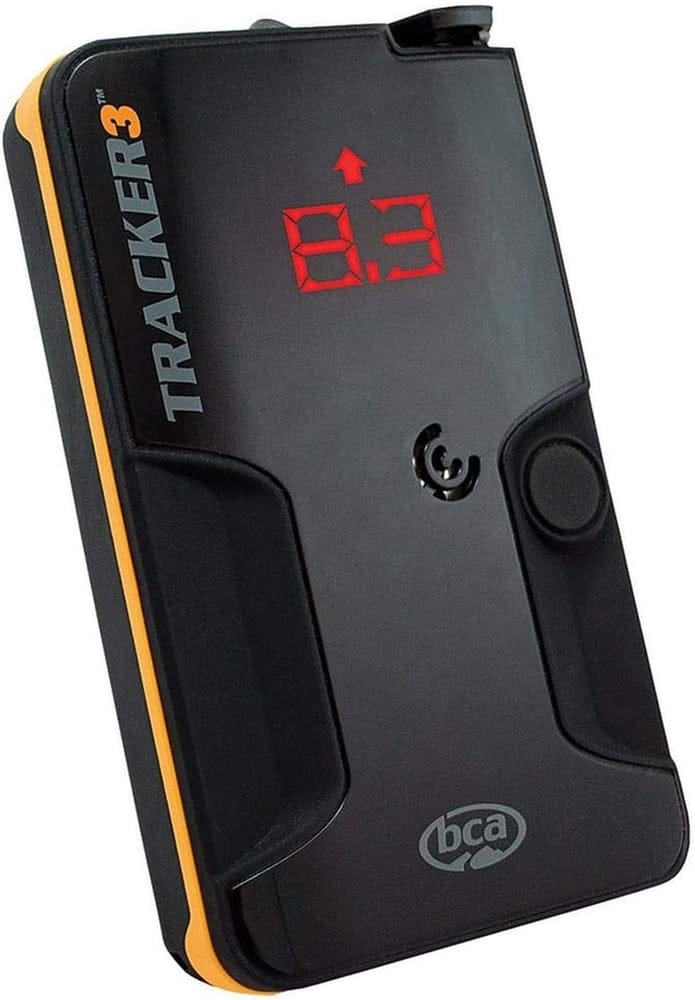 | 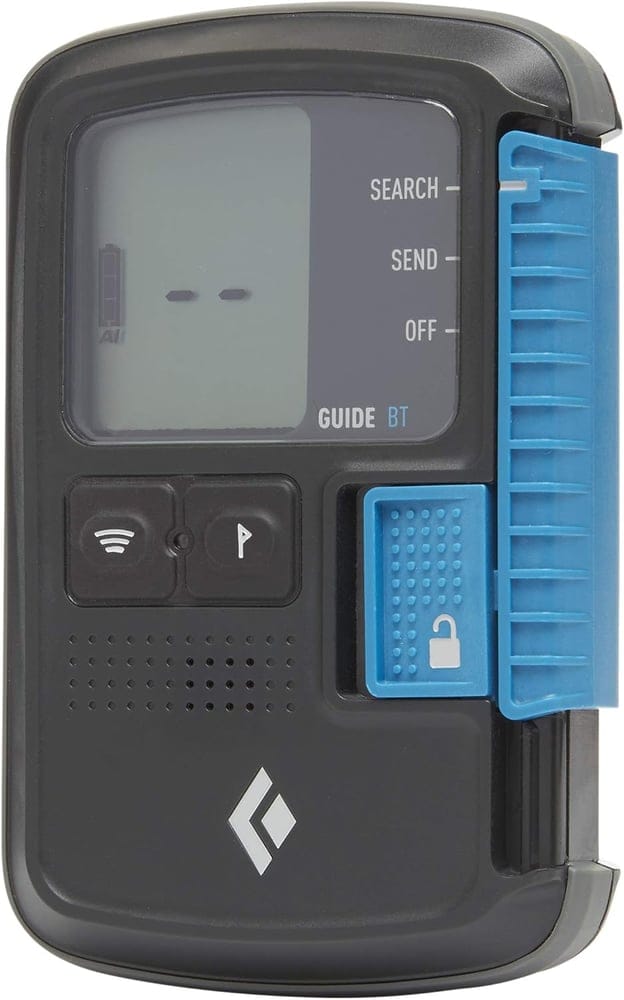 VS | |
| Antenna Count | 3 | 3 |
| Range | 164 ft (50 m max range) | 197 ft (60 m max range) |
| Multiple Burial Marking | Yes (signal suppression) | Yes |
| Weight | 5.8 oz (164 g, without harness) | 7.9 oz (225 g, with batteries) |
| Battery Life | ≈250 hr send | ≈50 hr search | ≈400 hr send (alkaline) | ≈600 hr (lithium) |
| Warranty | 5 years (limited) | 2 years; 5 years with registration |
| Frequency | 457 kHz | 457 kHz |
| Auto Revert Timer | Yes (motion-sensing) | Yes |
| Battery Type | 3 × AAA alkaline | 3 × AAA (alkaline or lithium) |
| Bluetooth | No | Yes |
| Dimensions | 4.57 × 2.80 × 0.91 in | 4.53 × 2.95 × 1.10 in |
| Backcountry Access Tracker 3+ | Black Diamond Guide BT |
|---|---|
| |
| Antenna Count | |
3 | 3 |
| Range | |
164 ft (50 m max range) | 197 ft (60 m max range) |
| Multiple Burial Marking | |
Yes (signal suppression) | Yes |
| Weight | |
5.8 oz (164 g, without harness) | 7.9 oz (225 g, with batteries) |
| Battery Life | |
≈250 hr send | ≈50 hr search | ≈400 hr send (alkaline) | ≈600 hr (lithium) |
| Warranty | |
5 years (limited) | 2 years; 5 years with registration |
| Frequency | |
457 kHz | 457 kHz |
| Auto Revert Timer | |
Yes (motion-sensing) | Yes |
| Battery Type | |
3 × AAA alkaline | 3 × AAA (alkaline or lithium) |
| Bluetooth | |
No | Yes |
| Dimensions | |
4.57 × 2.80 × 0.91 in | 4.53 × 2.95 × 1.10 in |
Accuracy
Tracker 3+
Guide BT
Accuracy matters because a beacon is only useful if its distance and direction readings get you to the buried transceiver quickly. The Tracker 3+ gives clear approximate distance and direction, and its pinpointing lock-on helps sort out the closest victim when several beacons are close together. Reviewers describe its readings as practical for narrowing in on a burial, although very tight multi-burial situations still depend on careful search technique. The Guide BT is also described as precise when pinpointing buried transceivers, with GPS-referenced readings generally close to real distances. Some users noted a small overestimate at longer range, and one reading ran a few meters high at close range, so buyers should expect a slight margin of error when working multiple victims. Overall, the Tracker 3+ has the edge for buyers who want consistent, easy-to-trust narrowing toward a burial, while the Guide BT is a solid alternative that rewards leaving a small safety margin.
Durability
Tracker 3+
Guide BT
Durability determines whether a beacon survives the knocks, cold, and moisture of a typical backcountry trip. The Guide BT has built-in water resistance in both of its models, which gives it a practical edge on wet, snowy days when gear gets soaked during transitions and descents. Feedback on long-term toughness against drops and impacts is limited for both units, so buyers should not assume either one is especially rugged. The Tracker 3+ received little specific durability feedback, which means there is no strong evidence of either a standout strength or a major weakness. For buyers who expect wet conditions, the Guide BT's water resistance is the more reassuring point, but neither product offers enough proven rugged-use evidence to set it apart from more established options.
Ease Of Use
Tracker 3+
Guide BT
Ease of use matters most in a real avalanche rescue, when stress is high and there is little time to read a manual. The Tracker 3+ is one of the most praised options for simple operation, with a basic startup, a safety slide and dial turn to transmit or search, a follow-the-arrow search process, and a quick switch back to transmit mode. Reviewers describe it as easy to learn under pressure, and it avoids confusing features. Its main quirk is that the auto revert to transmit must be set at each startup, which is a small step to remember. The Guide BT is praised for its app-based settings and Fleet manager app, which make configuration very easy and allow Bluetooth updates of the beacon hardware. Directional arrow guidance and a mark function also help during an actual search, but its analog mode is more advanced and takes practice to master. For a buyer who wants the simplest controls out of the box, the Tracker 3+ is the stronger pick, while the Guide BT rewards owners who set up the app and train with its advanced modes.
Field Reliability
Tracker 3+
Guide BT
Field reliability reflects whether a beacon keeps performing in cold, wet, and interference-heavy conditions over a full day of touring. The Guide BT's smart antenna switches to another antenna when interference is detected, which helps it keep working in tricky terrain and near other electronics. Its scan mode widens detection tolerance, which can reduce effective range, so buyers should expect a tradeoff between broad detection and maximum distance. The Tracker 3+ offers a 50 m range that some buyers consider strong for a transceiver, but feedback is mixed, and concerns about double burial indication performance appear repeatedly. Buyers who depend on consistent results in cold, wet, or long-duration trips should review these cautions carefully. Based on the available evidence, the Guide BT has the more reassuring field reliability profile, though its scan mode trade-offs and recall history mean it still requires due diligence before purchase.
Signal Clarity
Tracker 3+
Guide BT
Signal clarity determines how quickly you can understand what the beacon is telling you when several transceivers are close together. The Tracker 3+ earns strong praise for its multiple-signal icon and bracket, which appears when victims are within close range, and for Big Picture Mode, which shows two separate signals at once. Its signal suppression locks onto one beacon while moving to the next, its single number and arrow display is easy to read, and its distinctive audio tones change with distance. A few reviewers found busy graphics confusing on competing beacons, which makes the Tracker 3+'s simpler layout stand out. The Guide BT's scan mode groups signals by distance bands, offering a clearer overall picture of nearby transceivers, and its three circular antennas support reception. Some users, however, reported weak or intermittent signals and shifting numbers that caused confusion. For buyers who prioritize quick, readable multi-signal feedback, the Tracker 3+ is the clearer choice, while the Guide BT's distance-band view is useful after some practice.
Comfort
Tracker 3+
Guide BT
Comfort affects how willingly you carry a beacon on long tours, where weight and size add up over many hours. The Tracker 3+ is about 20 percent lighter and smaller than many earlier models, saving roughly 15 grams and offering a sleek, low-profile, pocket-friendly design. Reviewers highlight its slim shape, though how comfortable it feels on the body will still depend on how the included harness fits each user. The Guide BT received little specific comfort feedback, so there is no strong evidence that it is either more or less comfortable in use. Its listed weight is higher, but the figures are not directly comparable because the Tracker 3+ weight excludes its harness while the Guide BT includes batteries. Overall, buyers who prioritize a slim, light unit for carrying all day should lean toward the Tracker 3+, while those who mainly wear the beacon in a harness may find the difference less important.
Trust & Transparency
- Data-driven rankings from real user reviews
- Affiliate partnerships don't influence our methodology
We may earn commission from links.
Conclusion & Final Verdict:
Choose the Tracker 3+ if you want the simplest controls, the clearest multi-signal display, a slimmer and lighter unit, and a longer no-registration warranty. It is the stronger pick for buyers who want to learn quickly and trust straightforward readings under stress.
Choose the Guide BT if you want Bluetooth app settings, a longer range of 60 m, lithium battery flexibility, built-in water resistance, and better field stability through its smart antenna. Before buying, confirm that any unit, especially a used one, was inspected or replaced under the 2022 CPSC recall, and plan training time for its analog mode.
Related Comparisons
Backcountry Access Tracker 3+vsBackcountry Access Tracker 4
The Tracker 3+ leads on signal clarity, accuracy, and simple operation, making it the better pick for fast, clear searches. The Tracker 4 is the tougher choice for buyers who are hard on their gear and want a larger, brighter countdown display.
Backcountry Access Tracker 3+vsMammut Barryvox 2
The Tracker 3+ is the stronger pick for buyers who want clearer signal display, simpler startup and better multi-victim guidance. The Barryvox 2 suits those who prioritize longer send-mode battery life, a 70 m range and a slightly more compact feel.
Backcountry Access Tracker 3+vsMammut Barryvox S2
The Barryvox S2 is the better choice for most buyers who value field reliability, Bluetooth settings, voice-guided searching, and a slimmer, longer-running unit. The Tracker 3+ suits buyers who want its clear multi-signal display and simple controls and can accept weaker reliability feedback.
Ortovox Diract VoicevsBlack Diamond Guide BT
The Diract Voice is the easier, more pocket-friendly choice for searchers who want spoken direction and a simple one-hand setup with gloves on. The Guide BT suits buyers who want app-based settings, slightly better distance readings, built-in water resistance and much longer battery life.
Ortovox Diract VoicevsPIEPS Pro IPS
The Ortovox Diract Voice suits buyers who want a simple, low-stress beacon with clear spoken search prompts and easy gloved operation. The PIEPS Pro IPS is the better pick for buyers who prioritize long-range lock-on and interference handling, and who are willing to learn its less intuitive button layout.
PIEPS Pro IPSvsOrtovox Focus Voice
The PIEPS Pro IPS suits buyers who want the longest battery life and strong field range, though its unclear controls and overstated distance readout count against it. The Ortovox Focus Voice is the better pick for anyone who wants spoken search guidance, simpler operation, and a lighter build.