
Ortovox Diract Voice vs Black Diamond Guide BT
Why You Can Trust Us
- Side-by-side analysis based on real user feedback
- Unbiased comparisons, not influenced by partnerships
- Updated as new data becomes available
We may earn from affiliate links at no extra cost to you.
| Diract Voice | Guide BT | |
|---|---|---|
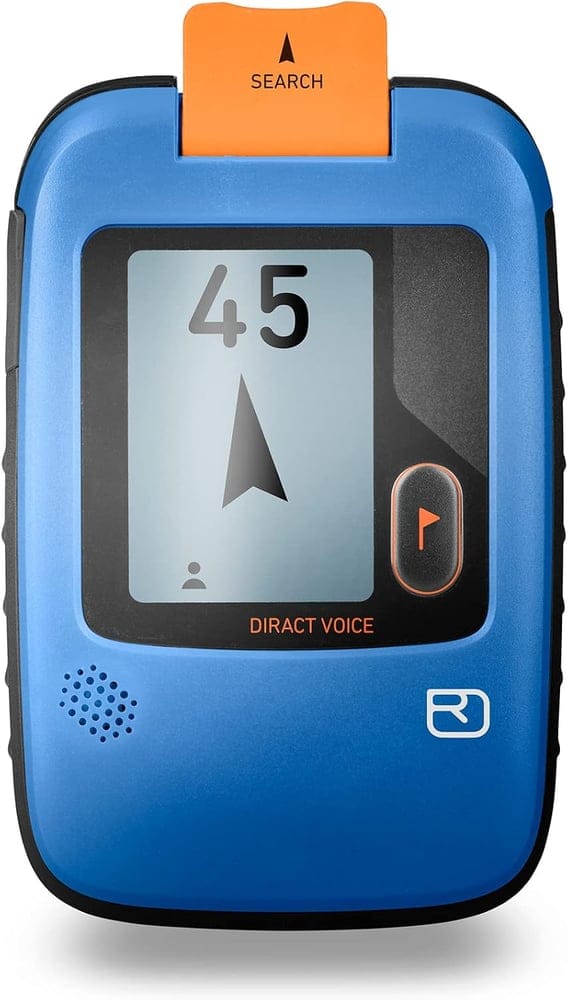 | 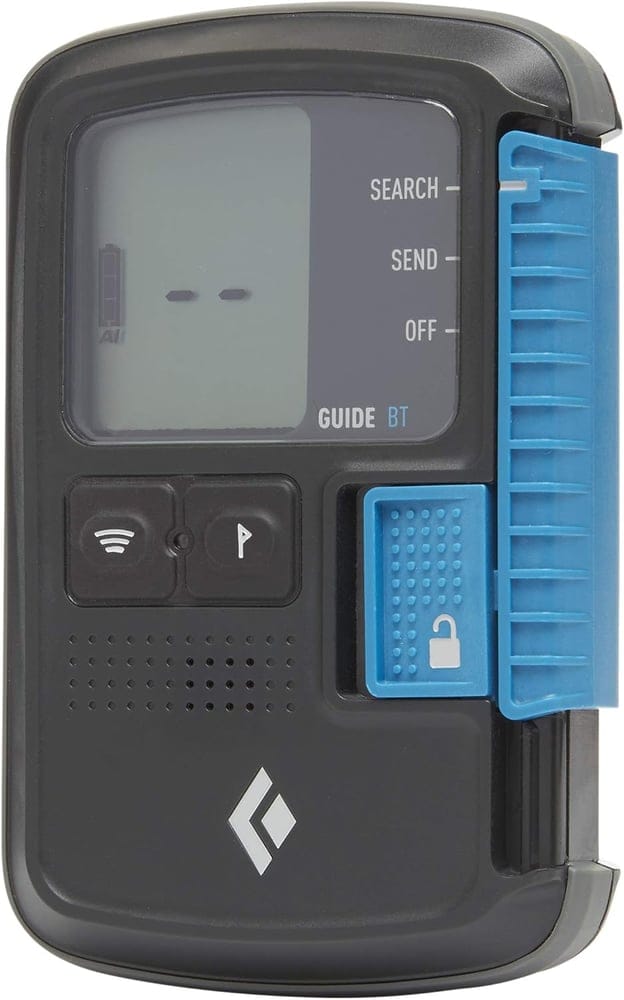 VS | |
| Antenna Count | 3 | 3 |
| Range | 164 ft (50 m search strip width) | 197 ft (60 m max range) |
| Multiple Burial Marking | Yes (up to 4 victims) | Yes |
| Weight | 7.4 oz | 7.9 oz (225 g, with batteries) |
| Battery Life | ≈200 hr send + 1 hr search | ≈400 hr send (alkaline) | ≈600 hr (lithium) |
| Warranty | 5 years with registration | 2 years; 5 years with registration |
| Frequency | 457 kHz | 457 kHz |
| Auto Revert Timer | Yes (secondary-avalanche switchover) | Yes |
| Battery Type | Built-in rechargeable Li-ion (USB-C) | 3 × AAA (alkaline or lithium) |
| Bluetooth | Yes | Yes |
| Dimensions | 4.72 × 3.11 × 0.91 in | 4.53 × 2.95 × 1.10 in |
| Ortovox Diract Voice | Black Diamond Guide BT |
|---|---|
| |
| Antenna Count | |
3 | 3 |
| Range | |
164 ft (50 m search strip width) | 197 ft (60 m max range) |
| Multiple Burial Marking | |
Yes (up to 4 victims) | Yes |
| Weight | |
7.4 oz | 7.9 oz (225 g, with batteries) |
| Battery Life | |
≈200 hr send + 1 hr search | ≈400 hr send (alkaline) | ≈600 hr (lithium) |
| Warranty | |
5 years with registration | 2 years; 5 years with registration |
| Frequency | |
457 kHz | 457 kHz |
| Auto Revert Timer | |
Yes (secondary-avalanche switchover) | Yes |
| Battery Type | |
Built-in rechargeable Li-ion (USB-C) | 3 × AAA (alkaline or lithium) |
| Bluetooth | |
Yes | Yes |
| Dimensions | |
4.72 × 3.11 × 0.91 in | 4.53 × 2.95 × 1.10 in |
Accuracy
Diract Voice
Guide BT
Distance and pinpointing accuracy matter most when several buried victims are close together, because a misleading reading can send a rescuer digging in the wrong spot. Buyers report that the Diract Voice can misdirect the ground prompt when a second transceiver is nearby, and that it tends to overestimate distance, with one test showing 38 m displayed against roughly 30 m actual. Those reports mean the Diract Voice needs careful cross-checking in multi-victim searches rather than being trusted at face value. The Guide BT earns a modest edge here, since owners generally describe its GPS-referenced distance readings as accurate and close to real distances when pinpointing buried units. It is not flawless, as some users noted a 19 m reading against an actual 15 m and a slight overestimate at longer range, but that margin is easier to plan around. For a buyer who expects to work multiple victims, the Guide BT is the more reliable choice on this measure, while the Diract Voice demands more disciplined verification.
Durability
Diract Voice
Guide BT
Durability is important for a beacon that spends its life in cold, wet and rough conditions, where a failure at the wrong moment has serious consequences. Buyer feedback on the Diract Voice does not give enough detail to call it a standout or a drawback, so its toughness remains largely an open question. The Guide BT gains a practical advantage from built-in water resistance in both models, which suits wet, snowy backcountry days when moisture is a constant threat. Long-term resilience against drops and impacts has received little feedback for either unit, so neither can be considered proven under heavy abuse. Overall, the Guide BT has the stronger documented durability signal, but buyers who regularly ski hard should still weigh it against more established rugged beacons.
Ease Of Use
Diract Voice
Guide BT
Ease of use shapes how quickly a rescuer can switch modes under stress, and this is where the Diract Voice clearly stands out. Owners consistently describe it as intuitive straight out of the box, with a one-hand switch to search mode, simple controls and a flick-tab power-on that works well with gloves. Buyers also praise the absence of fiddly buttons, the lack of confusion when switching to transmit, and the battery status prompt at power-on. The Guide BT is also praised for its Fleet manager app and app-based settings, which many find very easy to adjust, along with Bluetooth firmware updates for the hardware. However, its analog mode is more advanced and takes practice to master, and some buyers found the display workflow less immediate in the field. For a buyer who wants a fast, low-stress beacon without learning a menu system, the Diract Voice is the better pick, while the Guide BT rewards owners who enjoy configuring their gear through an app.
Field Reliability
Diract Voice
Guide BT
Field reliability determines whether a beacon keeps performing across repeated tests and changing conditions, which matters for anyone heading into remote terrain. The Diract Voice earned praise for steady performance across a dozen test runs and for detecting a transceiver at about 60 m, making it a dependable choice for cold, wet tours. Its tab design also helps prevent accidentally switching into send mode. Some buyers, however, reported electronic interference from phones and GPS devices, so those gadgets should be kept away from the beacon during a search. The Guide BT counters interference with a smart antenna that switches automatically when disruption is detected, which helps it keep working in tricky conditions. Its wider scan tolerance can shorten effective range, so buyers have to accept a tradeoff between broad detection and maximum distance. Both beacons show a similar balance of strengths and caveats here, so this category is effectively a tie.
Signal Clarity
Diract Voice
Guide BT
Signal clarity matters because a searcher must quickly understand what the beacon is saying about direction and distance while under pressure. The Diract Voice is strong here, with spoken prompts such as run straight or bear right and rising and falling tones that signal whether you are getting closer or farther. Buyers say the voice cues are easy to understand, help isolate and flag individual signals, and let the searcher keep their head up and attention on the terrain. The Guide BT approaches clarity differently, grouping signals into distance bands in scan mode and using three circular antennas to support reception, which gives a broader picture of nearby transceivers. Some owners, though, reported weak or intermittent signals and numbers that rise and fall in confusing ways, so the display needs practice before it can be trusted. For most buyers, the Diract Voice delivers the clearer and more intuitive feedback, while the Guide BT suits those willing to learn its display.
Comfort
Diract Voice
Guide BT
Comfort affects how a beacon feels to carry all day and how it behaves when you need it on short notice. The Diract Voice performs well here, with a slim, rounded body that fits in a ski pant pocket, a fully adjustable harness and a textured grip that feels good in hand on long tours. Many users also find its calm voice prompts reassuring when the pressure is high. Buyer feedback on the Guide BT does not provide enough detail to call its comfort a standout benefit or a drawback, so its ergonomics remain harder to judge. Its slightly heavier and thicker build may feel less pocket-friendly to some skiers. Based on the available feedback, the Diract Voice is the more comfortable choice for all-day carrying and stress-free use.
Trust & Transparency
- Data-driven rankings from real user reviews
- Affiliate partnerships don't influence our methodology
We may earn commission from links.
Conclusion & Final Verdict:
Choose the Ortovox Diract Voice if you want a beacon that is simple to operate with gloves, gives clear spoken direction and distance cues, and fits comfortably in a pocket on long tours. Cross-check its readings carefully when several victims are close together.
Choose the Black Diamond Guide BT if you value app-based settings, slightly more reliable distance readings, built-in water resistance and much longer battery life. Plan time to practice its analog mode and display, and confirm any used unit was inspected under the 2022 CPSC recall.
Related Comparisons
Black Diamond Guide BTvsPIEPS Pro IPS
The Guide BT is the better pick for buyers who want easy app-based settings, directional arrow guidance and built-in water resistance. The PIEPS Pro IPS suits searchers who prioritize longer-feeling field range, earlier detection of interfered signals and longer battery life.
Mammut Barryvox 2vsOrtovox Diract Voice
The Barryvox 2 suits buyers who want a lighter, simpler beacon with long send-mode endurance and a 70 m range, while the Diract Voice suits those who value spoken search guidance, a comfortable carry, and easy gloved operation. Pick based on whether you prioritize battery and field steadiness or clearer voice direction during a search.
Ortovox Diract VoicevsOrtovox Focus Voice
The Diract Voice suits buyers who want the simplest, most comfortable beacon, with clear voice prompts and easy gloved operation. The Focus Voice is the better choice for buyers who prioritize field reliability, stronger antenna options, and lighter weight.
Ortovox Diract VoicevsPIEPS Pro IPS
The Ortovox Diract Voice suits buyers who want a simple, low-stress beacon with clear spoken search prompts and easy gloved operation. The PIEPS Pro IPS is the better pick for buyers who prioritize long-range lock-on and interference handling, and who are willing to learn its less intuitive button layout.
Backcountry Access Tracker SvsPIEPS Pro IPS
The Backcountry Access Tracker S suits beginners who want a simple, compact beacon with an easy-to-learn interface. The PIEPS Pro IPS is the better choice for experienced users who prioritize field range, lock-on, and longer battery life, and can accept less intuitive buttons.
Mammut Barryvox S2vsOrtovox Focus Voice
Choose the Mammut Barryvox S2 if you want simpler guided searching, a clearer screen in bright sun, longer battery life and a slimmer carry. Choose the Ortovox Focus Voice if you want its antenna selection for unfavorable burials, its 180-degree direction correction and a dual-option power setup, but confirm the Barryvox S2 recall status before buying.