
PIEPS Pro IPS vs Ortovox Focus Voice
Why You Can Trust Us
- Side-by-side analysis based on real user feedback
- Unbiased comparisons, not influenced by partnerships
- Updated as new data becomes available
We may earn from affiliate links at no extra cost to you.
| Pro IPS | Focus Voice | |
|---|---|---|
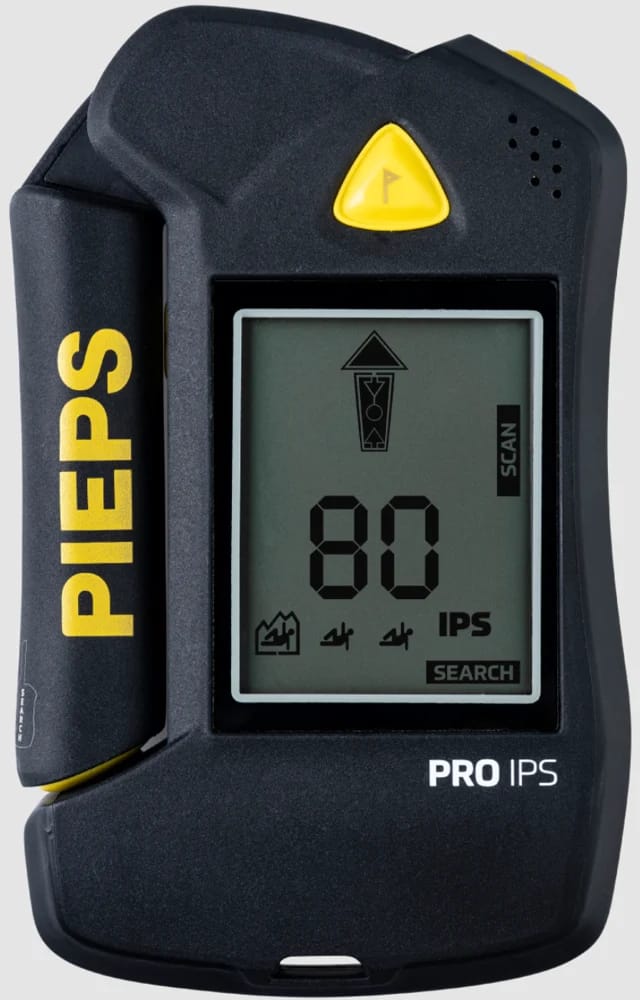 | 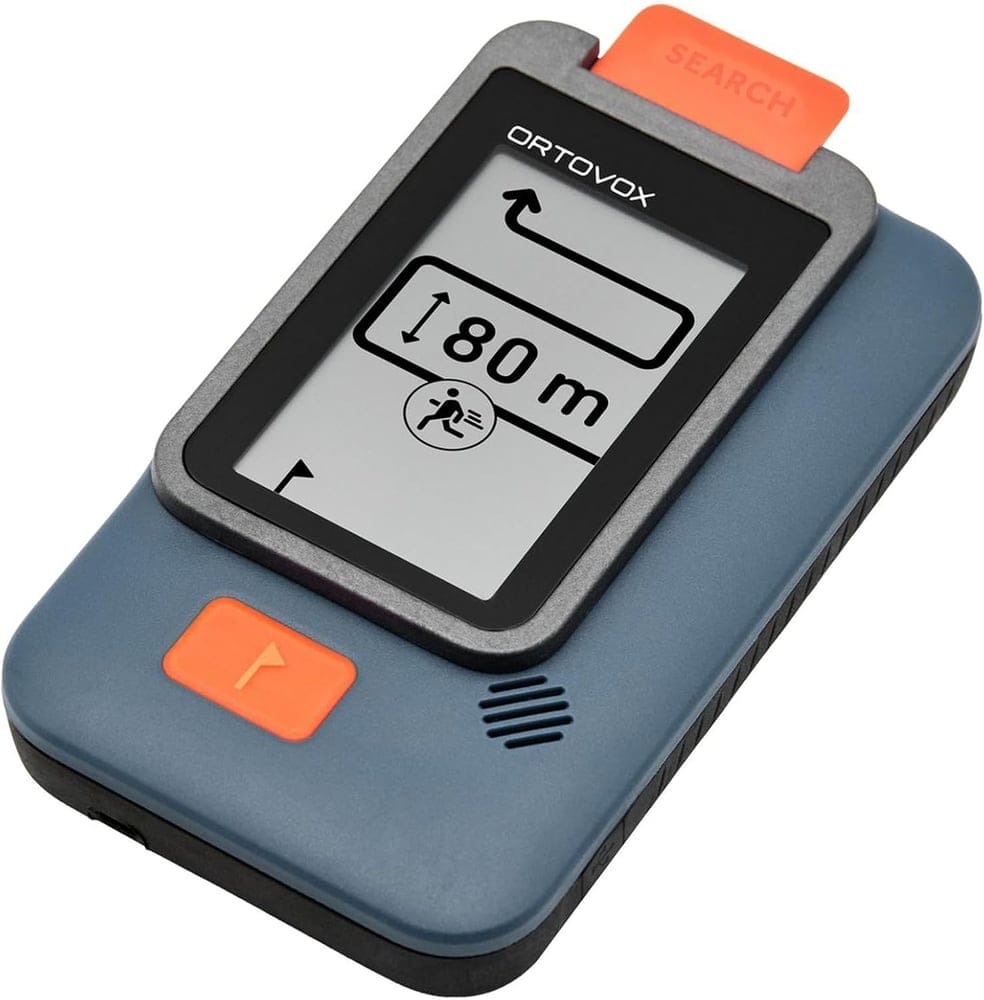 VS | |
| Antenna Count | 3 | 3 |
| Range | 230 ft (70 m max range) | 262 ft (80 m search strip width, ICAR) |
| Multiple Burial Marking | Yes | Yes (up to 4 victims) |
| Weight | 7.5 oz (212 g, with batteries) | 6.5 oz (185 g) |
| Battery Life | ≥600 hr send (alkaline) | ≥800 hr (lithium) | ≈200 hr send |
| Warranty | 2 years; 5 years with app registration | 5 years with app registration |
| Frequency | 457 kHz | 457 kHz |
| Auto Revert Timer | Yes (secondary-avalanche switchover) | Yes, 2 min |
| Battery Type | 3 × AAA (alkaline or lithium) | Built-in rechargeable Li-ion (USB-C) |
| Bluetooth | Yes | Yes |
| Dimensions | 4.72 × 2.95 × 0.94 in | 4.72 × 2.76 × 0.91 in |
| PIEPS Pro IPS | Ortovox Focus Voice |
|---|---|
| |
| Antenna Count | |
3 | 3 |
| Range | |
230 ft (70 m max range) | 262 ft (80 m search strip width, ICAR) |
| Multiple Burial Marking | |
Yes | Yes (up to 4 victims) |
| Weight | |
7.5 oz (212 g, with batteries) | 6.5 oz (185 g) |
| Battery Life | |
≥600 hr send (alkaline) | ≥800 hr (lithium) | ≈200 hr send |
| Warranty | |
2 years; 5 years with app registration | 5 years with app registration |
| Frequency | |
457 kHz | 457 kHz |
| Auto Revert Timer | |
Yes (secondary-avalanche switchover) | Yes, 2 min |
| Battery Type | |
3 × AAA (alkaline or lithium) | Built-in rechargeable Li-ion (USB-C) |
| Bluetooth | |
Yes | Yes |
| Dimensions | |
4.72 × 2.95 × 0.94 in | 4.72 × 2.76 × 0.91 in |
Accuracy
Pro IPS
Focus Voice
Accuracy matters because a beacon is only useful if it tells you how far away the victim is and which way to move, especially under time pressure in debris. The Pro IPS gets strong praise for guiding searchers directly to a buried transmitter from a long distance, and small arrows correct off-course attempts. That feedback is split, however, because one reading showed 61 m when the true distance was about 40 m, so the distance number can overstate how far away the signal is. The Focus Voice has less buyer feedback but is praised for pinpointing the smallest distance before probing. For buyers this means the Focus Voice has the more reassuring accuracy story, while the Pro IPS still gets you to the buried signal even when its distance figure is off. Choose the Focus Voice if you want a cleaner distance read before probing, and treat the Pro IPS distance display with some caution.
Durability
Pro IPS
Focus Voice
Durability is about whether a beacon holds up to repeated drops, cold, snow, and wet conditions over several seasons. Buyer feedback on the Pro IPS does not say much here, so its score is a neutral reading rather than a sign of strength or weakness. The Focus Voice earns positive comments on its waterproof design, though that feedback is limited in volume. The practical result is a modest edge for the Focus Voice backed by some evidence, while the Pro IPS remains an open question. Buyers who expect rough handling should look for hands-on reports before deciding, but on current feedback the Focus Voice is the safer bet.
Ease Of Use
Pro IPS
Focus Voice
Ease of use matters because in a burial you need to press the right button quickly and read the screen at a glance. The Pro IPS draws the most criticism here, with buyers saying it is unclear which button to press, that some presses do nothing, and that they had to read the manual after the beacon auto reverted. The Focus Voice is praised on nearly every point, including voice navigation in nine languages, step-by-step spoken prompts through each search stage, and a one-button interface that keeps interaction simple. Buyers call it intuitive and say voice guidance cuts the time they spend decoding the screen. The gap is wide, so the Focus Voice is the clear choice for anyone who wants to learn the beacon quickly or search with less distraction. The Pro IPS asks you to study its controls before the tour.
Field Reliability
Pro IPS
Focus Voice
Field reliability is what counts when a real search is underway, because a beacon has to lock on and keep working when the stakes are highest. Both products earn strong and nearly identical praise here. Buyers say the Pro IPS locks onto transceivers reliably, that its range feels significantly longer, and that they would trust it to about 50 meters in the field. The Focus Voice earns positive comments on its antenna selection, which can provide up to twice the transmitting range in an unfavorable burial position, along with interference protection, permanent self-testing, and an automatic switch back to transmit after two minutes without movement for secondary avalanche protection. Its effective range reached up to 70 m in field tests. Because both sides score the same, the choice comes down to which feature set fits your style: the Pro IPS for its lock-on and range, or the Focus Voice for its burial-position antenna and self-testing.
Signal Clarity
Pro IPS
Focus Voice
Signal clarity describes how well a beacon separates a real transmitter from interference and how easy the display is to read in the moment. The Pro IPS earns praise for detecting interfered transceivers earlier and for amplifying its transmit signal above interference, and buyers note that its longer antenna reduces screen interference. A smaller set of complaints keeps it from feeling flawless. The Focus Voice is praised for a high readability display, clear and instant prompts, and a 180-degree correction that shows when to change direction. That combination gives the Focus Voice the edge, particularly for searchers who want unambiguous direction cues while moving through a search. The Pro IPS is still a capable signal performer, so this is a clear but not dramatic advantage for the Focus Voice.
Comfort
Pro IPS
Focus Voice
Comfort matters on long tours, when a beacon sits against your chest for hours and its weight adds up. Buyer feedback on the Pro IPS does not provide enough detail to call it a strength or a weakness, so its score is neutral. The Focus Voice earns encouraging notes for its 185 g weight and practical chest harness. The spec sheet supports the weight point: the Focus Voice weighs 6.5 oz (185 g) against 7.5 oz (212 g) for the Pro IPS, a difference of roughly 27 grams. For skiers who carry a beacon all day, that weight gap and the harness feedback make the Focus Voice the more comfortable choice, though comfort evidence is limited for both products.
Trust & Transparency
- Data-driven rankings from real user reviews
- Affiliate partnerships don't influence our methodology
We may earn commission from links.
Conclusion & Final Verdict:
Choose the Ortovox Focus Voice if you want the easiest beacon to learn, spoken search guidance, a lighter build, and a stronger accuracy and signal story. Choose the PIEPS Pro IPS if battery life is your top priority, since it runs far longer than the Focus Voice, and you are willing to study its controls before the tour. Field reliability is a tie, so the decision rests on whether simplicity or endurance matters more to you.
Related Comparisons
Backcountry Access Tracker 3+vsOrtovox Focus Voice
The Tracker 3+ is the better pick for buyers who want the clearest visual signal display, pinpointing lock-on, and a lighter unit, while the Focus Voice suits those who want spoken search guidance and stronger field reliability features. Both are capable beacons, so choose based on whether you value visual clarity or voice-led searching.
Backcountry Access Tracker 3+vsPIEPS Pro IPS
The Tracker 3+ is the better choice for buyers who want simple controls, clear multi-signal display, and a lighter, smaller unit for long tours. The Pro IPS suits those who put field range and very long transmit battery life first, and who are willing to learn its less intuitive button layout.
Mammut Barryvox S2vsPIEPS Pro IPS
The Barryvox S2 suits buyers who want simple, glove-friendly guided searching and a lighter carry, while the Pro IPS fits buyers who prioritize longer field range and battery life and can accept a less intuitive button layout.
Ortovox Diract VoicevsOrtovox Focus Voice
The Diract Voice suits buyers who want the simplest, most comfortable beacon, with clear voice prompts and easy gloved operation. The Focus Voice is the better choice for buyers who prioritize field reliability, stronger antenna options, and lighter weight.
Ortovox Diract VoicevsPIEPS Pro IPS
The Ortovox Diract Voice suits buyers who want a simple, low-stress beacon with clear spoken search prompts and easy gloved operation. The PIEPS Pro IPS is the better pick for buyers who prioritize long-range lock-on and interference handling, and who are willing to learn its less intuitive button layout.
Ortovox Diract VoicevsBlack Diamond Guide BT
The Diract Voice is the easier, more pocket-friendly choice for searchers who want spoken direction and a simple one-hand setup with gloves on. The Guide BT suits buyers who want app-based settings, slightly better distance readings, built-in water resistance and much longer battery life.