
Backcountry Access Tracker 4 vs Mammut Barryvox 2
Why You Can Trust Us
- Side-by-side analysis based on real user feedback
- Unbiased comparisons, not influenced by partnerships
- Updated as new data becomes available
We may earn from affiliate links at no extra cost to you.
| Tracker 4 | Barryvox 2 | |
|---|---|---|
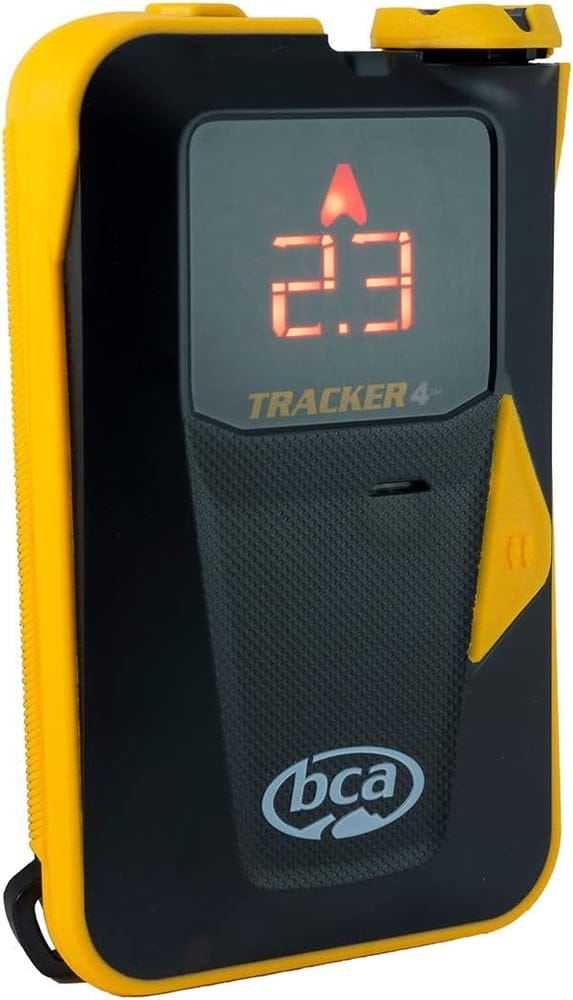 | 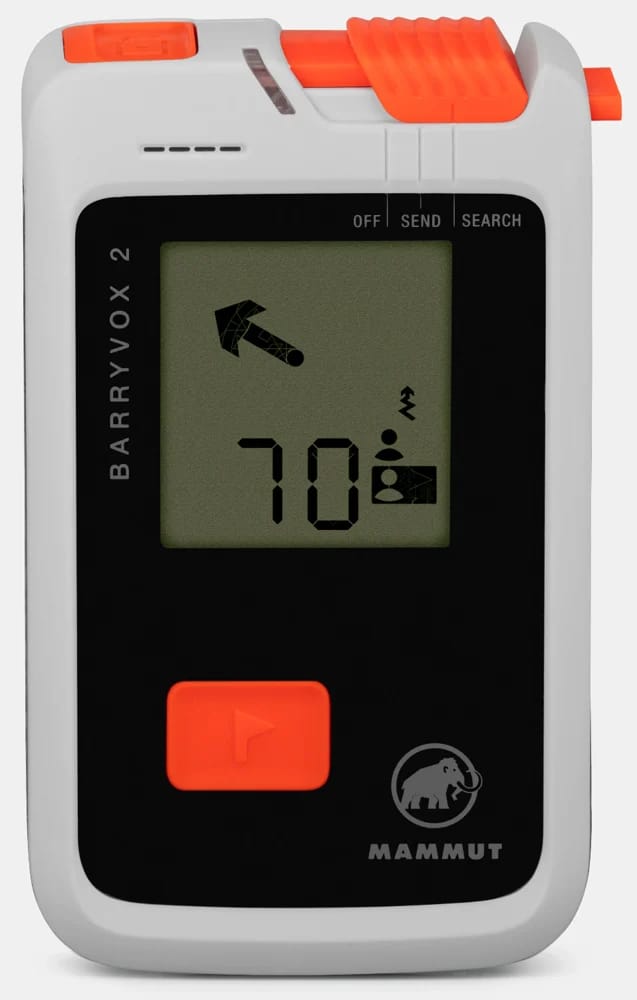 VS | |
| Antenna Count | 3 | 3 |
| Range | 164 ft (50 m max range) | 230 ft (70 m max range) |
| Multiple Burial Marking | Yes (signal suppression) | Yes |
| Weight | 6.2 oz (176 g, without harness) | 6.3 oz (180 g, with batteries) |
| Battery Life | ≈250 hr send | ≈50 hr search | ≈450 hr send (alkaline) |
| Warranty | 5 years (limited) | 2 years; 5 years with registration |
| Frequency | 457 kHz | 457 kHz |
| Auto Revert Timer | Yes (motion-sensing) | Yes, 4 min (motion sensor) |
| Battery Type | 3 × AAA alkaline | 2 × AAA alkaline |
| Bluetooth | No | Yes |
| Dimensions | 4.72 × 2.95 × 1.02 in | 4.53 × 2.68 × 0.83 in |
| Backcountry Access Tracker 4 | Mammut Barryvox 2 |
|---|---|
| |
| Antenna Count | |
3 | 3 |
| Range | |
164 ft (50 m max range) | 230 ft (70 m max range) |
| Multiple Burial Marking | |
Yes (signal suppression) | Yes |
| Weight | |
6.2 oz (176 g, without harness) | 6.3 oz (180 g, with batteries) |
| Battery Life | |
≈250 hr send | ≈50 hr search | ≈450 hr send (alkaline) |
| Warranty | |
5 years (limited) | 2 years; 5 years with registration |
| Frequency | |
457 kHz | 457 kHz |
| Auto Revert Timer | |
Yes (motion-sensing) | Yes, 4 min (motion sensor) |
| Battery Type | |
3 × AAA alkaline | 2 × AAA alkaline |
| Bluetooth | |
No | Yes |
| Dimensions | |
4.72 × 2.95 × 1.02 in | 4.53 × 2.68 × 0.83 in |
Accuracy
Tracker 4
Barryvox 2
Accuracy matters because a beacon that narrows a victim's position quickly saves precious minutes before you start probing. Buyer feedback on accuracy is limited for both models, so neither result should be treated as a firm guarantee. The Tracker 4 is noted for fine pinpointing down to a final reading of about 0.1 before probing, which reviewers see as a precise final-reading approach. The Barryvox 2 receives a slightly higher score, with feedback pointing to a display that shows distance, direction and number of victims together. Because the margin is small and the sample is thin, the Barryvox 2 gets a narrow edge here rather than a decisive win. Buyers who value a clear multi-victim display may lean toward the Barryvox 2, while those who want a fine final reading before probing should still find the Tracker 4 capable.
Durability
Tracker 4
Barryvox 2
Durability matters because avalanche beacons spend much of their lives in pockets, packs and cold, wet conditions, and they are often dropped or knocked around on rough terrain. The Tracker 4 has the clearest durability story, with buyers repeatedly describing it as a tough workhorse beacon. Its rubberized overmold replaces traditional gasket technology, and its recessed screen adds protection to the display. Buyers also praise the robust look and feel of the case, which suits people who abuse their gear. The Barryvox 2 has no meaningful durability feedback, so its score reflects a lack of detail rather than a known weakness. For a buyer who wants a beacon built to take punishment, the Tracker 4 is the stronger and more confidently recommended option.
Ease Of Use
Tracker 4
Barryvox 2
Ease of use matters because a beacon has to be operated correctly by stressed searchers, often in poor conditions and with little time. The Barryvox 2 leads clearly here, with buyers describing simple on and off operation and a design that is quick for new partners to learn and start using. Its beacon check also shortens the search strip, which makes quick buddy checks faster in practice. The Tracker 4 is also described as straightforward and user-friendly, and some reviewers say it feels a little snappier in use. The feedback base for the Tracker 4 on this point is smaller, so its advantage over a simple interface is less clear. Teams that rotate partners or want the fastest possible learning curve should favor the Barryvox 2, while experienced users may find the Tracker 4 equally comfortable.
Field Reliability
Tracker 4
Barryvox 2
Field reliability matters because a beacon must keep working through long tours, repeated checks and complex multi-burial scenarios. The Barryvox 2 has the stronger reliability picture, with buyers pointing to long battery life in send mode and automatic switching to send mode after four minutes stationary. Its main drawback is that it uses only two batteries, which means less power reserve and more careful battery checks before a tour. The Tracker 4 has very limited and split feedback, including some uncertainty about continuing to find multiple beacons in sequence after marking one. That makes it harder to recommend confidently for complex multi-burial rescues based on current evidence. Buyers who prioritize endurance and a well-documented field record should lean toward the Barryvox 2, provided they manage battery checks carefully.
Signal Clarity
Tracker 4
Barryvox 2
Signal clarity matters because a clear display and reliable direction cues help searchers close in on a victim without confusion. The Tracker 4 earns praise for a larger, brighter display than earlier Tracker models, along with a distance readout that counts down toward zero as you approach. Those features make the screen easier to read in the field, especially in bright or difficult conditions. The Barryvox 2 emphasizes its triple antenna design with a 70 m range and audio cues that guide you toward a buried victim. Both products have a modest amount of feedback, so the scores are close and neither has a decisive lead. Buyers who prefer a visual countdown may favor the Tracker 4, while those who want audio guidance and a longer stated range may prefer the Barryvox 2.
Comfort
Tracker 4
Barryvox 2
Comfort matters because a beacon that is easy to carry is more likely to be worn all day and kept on the body where it belongs. Both models are praised for being slim and light. The Tracker 4 is described as one of the slimmest transceivers, fitting easily into a pocket on long backcountry tours. The Barryvox 2 is noted as thinner and lighter than previous models, with a slimmer, smaller and lighter design. The spec sheet shows the Barryvox 2 as somewhat smaller in dimensions, while the Tracker 4 is noticeably larger in each direction. Weight figures are measured on different bases, so they cannot be compared directly. Because buyer feedback is limited and roughly equal, comfort is best treated as a tie that depends on how you carry the beacon.
Trust & Transparency
- Data-driven rankings from real user reviews
- Affiliate partnerships don't influence our methodology
We may earn commission from links.
Conclusion & Final Verdict:
Choose the Tracker 4 if durability is your top priority. Its rubberized overmold, recessed screen and workhorse reputation make it the better fit for buyers who are rough on their gear, and its 5-year limited warranty is simple to rely on.
Choose the Barryvox 2 if you want simpler operation, longer send-mode battery life and a 70 m range. It is easier for new partners to learn, its beacon check speeds up buddy checks, and its smaller footprint suits long tours. Before buying a Barryvox 2, confirm that your unit is not affected by Mammut's 2024 voluntary recall of certain 2024/25-season units.
Related Comparisons
Backcountry Access Tracker 3+vsMammut Barryvox 2
The Tracker 3+ is the stronger pick for buyers who want clearer signal display, simpler startup and better multi-victim guidance. The Barryvox 2 suits those who prioritize longer send-mode battery life, a 70 m range and a slightly more compact feel.
Backcountry Access Tracker 4vsBlack Diamond Guide BT
The Tracker 4 is the better pick for rough-use buyers who want a slim, rugged transceiver with a brighter countdown display and a longer limited warranty. The Guide BT suits searchers who value app-based settings, Bluetooth updates, directional guidance, and longer maximum range, and who will confirm recall status before buying used.
Backcountry Access Tracker 4vsMammut Barryvox S2
The Barryvox S2 is the better all-round choice for most searchers, with guided voice operation, a clearer screen, stronger field reliability, and a smaller body, though its durability is less proven. The Tracker 4 suits buyers who abuse their gear and want a rugged, slim beacon with a 5-year limited warranty.
Backcountry Access Tracker 4vsOrtovox Diract Voice
The Tracker 4 is the better choice for rough handling and a slim pocket carry, while the Diract Voice stands out for simple one-hand operation and voice-guided searching. Pick the Tracker 4 if gear abuse is your main concern and the Diract Voice if you want the easiest beacon to use under stress.
Backcountry Access Tracker 4vsOrtovox Focus Voice
The Backcountry Access Tracker 4 is the better pick for rough-use backcountry skiers who want a tough, slim beacon with simple controls. The Ortovox Focus Voice suits searchers who want spoken guidance, stronger burial-position range, and a smaller, rechargeable body.
Backcountry Access Tracker 4vsPIEPS Pro IPS
The Tracker 4 suits backcountry users who are hard on their gear, with a rubberized overmold, slim pocket-friendly body and simpler controls. The Pro IPS suits those who prioritize field range, lock-on reliability and long battery life, provided they accept a less intuitive button layout.