
Backcountry Access Tracker 4 vs PIEPS Pro IPS
Why You Can Trust Us
- Side-by-side analysis based on real user feedback
- Unbiased comparisons, not influenced by partnerships
- Updated as new data becomes available
We may earn from affiliate links at no extra cost to you.
| Tracker 4 | Pro IPS | |
|---|---|---|
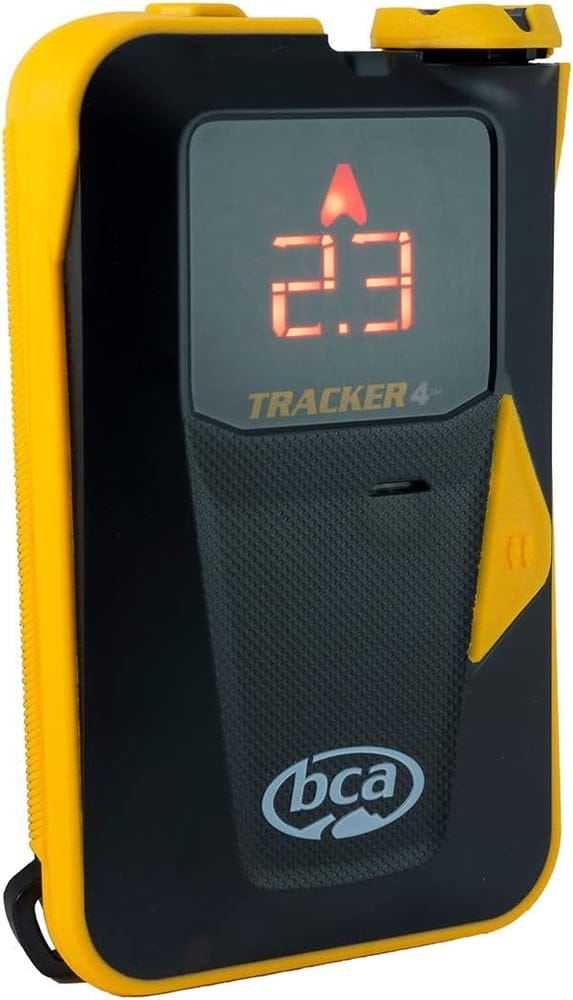 | 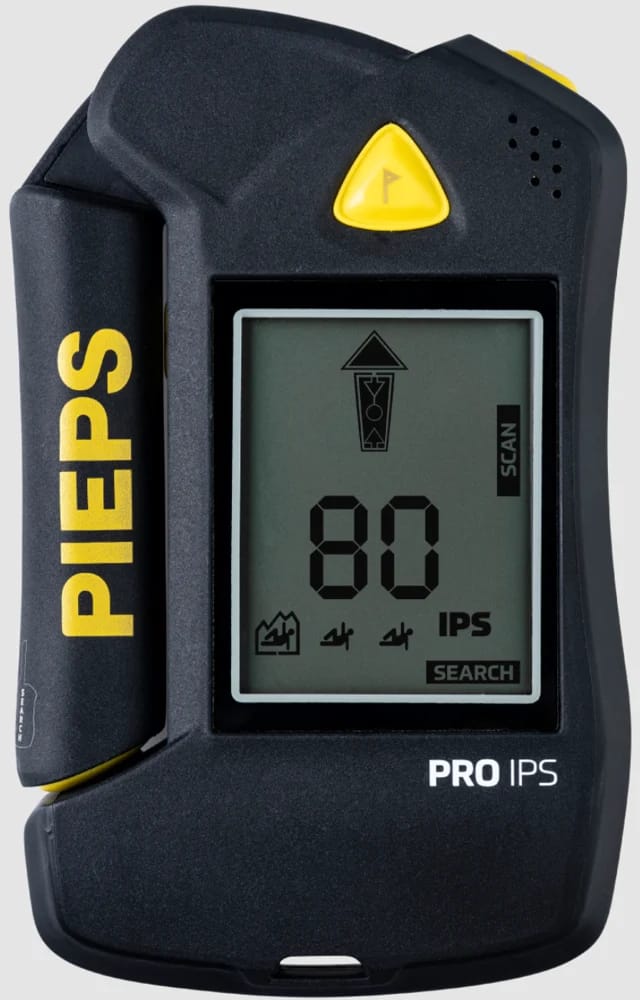 VS | |
| Antenna Count | 3 | 3 |
| Range | 164 ft (50 m max range) | 230 ft (70 m max range) |
| Multiple Burial Marking | Yes (signal suppression) | Yes |
| Weight | 6.2 oz (176 g, without harness) | 7.5 oz (212 g, with batteries) |
| Battery Life | ≈250 hr send | ≈50 hr search | ≥600 hr send (alkaline) | ≥800 hr (lithium) |
| Warranty | 5 years (limited) | 2 years; 5 years with app registration |
| Frequency | 457 kHz | 457 kHz |
| Auto Revert Timer | Yes (motion-sensing) | Yes (secondary-avalanche switchover) |
| Battery Type | 3 × AAA alkaline | 3 × AAA (alkaline or lithium) |
| Bluetooth | No | Yes |
| Dimensions | 4.72 × 2.95 × 1.02 in | 4.72 × 2.95 × 0.94 in |
| Backcountry Access Tracker 4 | PIEPS Pro IPS |
|---|---|
| |
| Antenna Count | |
3 | 3 |
| Range | |
164 ft (50 m max range) | 230 ft (70 m max range) |
| Multiple Burial Marking | |
Yes (signal suppression) | Yes |
| Weight | |
6.2 oz (176 g, without harness) | 7.5 oz (212 g, with batteries) |
| Battery Life | |
≈250 hr send | ≈50 hr search | ≥600 hr send (alkaline) | ≥800 hr (lithium) |
| Warranty | |
5 years (limited) | 2 years; 5 years with app registration |
| Frequency | |
457 kHz | 457 kHz |
| Auto Revert Timer | |
Yes (motion-sensing) | Yes (secondary-avalanche switchover) |
| Battery Type | |
3 × AAA alkaline | 3 × AAA (alkaline or lithium) |
| Bluetooth | |
No | Yes |
| Dimensions | |
4.72 × 2.95 × 1.02 in | 4.72 × 2.95 × 0.94 in |
Accuracy
Tracker 4
Pro IPS
Accuracy matters because a beacon that guides you precisely to a buried victim saves critical minutes, especially in multi-burial scenarios where you need to move quickly from one signal to the next. Buyers describe the Tracker 4 as helpful for fine pinpointing, with its final readings counting down to about 0.1 before probing, though feedback on this point is limited and mixed. The Pro IPS draws praise for guiding searchers directly to a buried transmitter from great distance and for small arrows that correct off-course movement, but some buyers reported a distance readout of 61 m when the true distance was about 40 m. Neither product has a clear lead here, so the Tracker 4 may appeal to those who value a precise final reading, while the Pro IPS is better for long-range direction, provided you treat the distance figure with caution.
Durability
Tracker 4
Pro IPS
Durability is a major concern for backcountry users who carry their beacon through rough terrain, wet snow and repeated drops, and a beacon that survives those conditions is worth more than one that fails at a critical moment. The Tracker 4 earns consistent praise from buyers, who describe it as a tough workhorse with a rubberized overmold, a recessed screen that protects the display and a robust case. Buyers repeatedly call it super durable and say it suits people who abuse their gear, which makes it a strong choice for hard-use situations. The Pro IPS received no specific durability feedback from buyers, so its ruggedness cannot be confirmed from the available evidence. For anyone who puts gear through heavy use, the Tracker 4 is the clear choice.
Ease Of Use
Tracker 4
Pro IPS
Ease of use affects how quickly you can switch modes and find a victim when adrenaline is high and your hands are cold. Buyers find the Tracker 4 straightforward and user-friendly, and some note that it feels a little snappier in use, which is an advantage in a stressful search. The Pro IPS receives more negative than positive feedback on controls, with buyers reporting unclear button functions, cases where pressing a button does nothing and the need to read the manual after the auto revert timer switched modes. Those issues are a real concern if you plan to use the beacon without much practice. For most buyers, the Tracker 4 is the easier beacon to operate under pressure, while the Pro IPS requires more training before the first tour.
Field Reliability
Tracker 4
Pro IPS
Field reliability determines whether a beacon keeps locking onto transceivers consistently when you are searching in the snow, and it is one of the most important factors for a rescue. The Pro IPS is the standout here, with buyers reporting that it locks on reliably, that its range feels significantly longer and that they trust it to work at about 50 m in the field. Buyers also say overall performance is solid and expect no problems with the transceiver. The Tracker 4 has very little field feedback, and the one reported concern involves continuing to locate multiple beacons in sequence after marking one, with feedback split. For multi-burial searches where dependable lock-on matters most, the Pro IPS is the more persuasive option.
Signal Clarity
Tracker 4
Pro IPS
Signal clarity matters because a beacon that struggles with interference can hide a second victim behind the first or delay detection in a crowded search zone. The Pro IPS receives positive feedback for detecting interfered transceivers earlier, for pushing its transmit signal above interference and for a longer antenna that reduces screen interference, although a few buyers raised concerns. The Tracker 4 has a larger and brighter display than earlier Tracker models, and its distance readout counts down toward zero as you close in, which helps you read the screen in bright or stressful conditions. Buyers have described the display as brighter than earlier TFT models, but overall feedback on the Tracker 4 is still modest. Both products offer meaningful clarity advantages in different ways, so the choice depends on whether you value earlier detection through interference or a clearer countdown display.
Comfort
Tracker 4
Pro IPS
Comfort affects how willing you are to carry a beacon all day, since a transceiver that is easy to keep in a pocket is more likely to be worn correctly on every tour. Buyers say the Tracker 4 is one of the slimmest transceivers available and that it slides easily into a pocket on long backcountry days. The Pro IPS received no specific comfort feedback from buyers, so there is no direct evidence to compare its carry experience. The published dimensions show the Pro IPS is slightly thinner at 0.94 inches against 1.02 inches for the Tracker 4, but buyers consistently highlight the Tracker 4 for pocket carry. For buyers who prioritize pocket carry on long tours, the Tracker 4 has the stronger reputation.
Trust & Transparency
- Data-driven rankings from real user reviews
- Affiliate partnerships don't influence our methodology
We may earn commission from links.
Conclusion & Final Verdict:
Choose the Tracker 4 if you want a rugged, slim and simple beacon for demanding backcountry use, especially if you want a beacon that is easy to operate under stress and carry in a pocket on long tours.
Choose the Pro IPS if your priority is dependable lock-on, longer range in the field and extended battery life, and you are willing to learn its button layout before heading out. Practice with either beacon before your tour, and read the manual if you choose the Pro IPS.
Related Comparisons
Backcountry Access Tracker 3+vsPIEPS Pro IPS
The Tracker 3+ is the better choice for buyers who want simple controls, clear multi-signal display, and a lighter, smaller unit for long tours. The Pro IPS suits those who put field range and very long transmit battery life first, and who are willing to learn its less intuitive button layout.
Backcountry Access Tracker 4vsBlack Diamond Guide BT
The Tracker 4 is the better pick for rough-use buyers who want a slim, rugged transceiver with a brighter countdown display and a longer limited warranty. The Guide BT suits searchers who value app-based settings, Bluetooth updates, directional guidance, and longer maximum range, and who will confirm recall status before buying used.
Backcountry Access Tracker 4vsMammut Barryvox 2
Tracker 4 is the better choice for buyers who are hard on their gear, thanks to its rubberized overmold, recessed screen and slim pocket-friendly body. Barryvox 2 suits teams that want quick, simple operation, longer send-mode battery life and a 70 m range, so pick it if you train new partners often.
Backcountry Access Tracker 4vsMammut Barryvox S2
The Barryvox S2 is the better all-round choice for most searchers, with guided voice operation, a clearer screen, stronger field reliability, and a smaller body, though its durability is less proven. The Tracker 4 suits buyers who abuse their gear and want a rugged, slim beacon with a 5-year limited warranty.
Backcountry Access Tracker 4vsOrtovox Diract Voice
The Tracker 4 is the better choice for rough handling and a slim pocket carry, while the Diract Voice stands out for simple one-hand operation and voice-guided searching. Pick the Tracker 4 if gear abuse is your main concern and the Diract Voice if you want the easiest beacon to use under stress.
Backcountry Access Tracker 4vsOrtovox Focus Voice
The Backcountry Access Tracker 4 is the better pick for rough-use backcountry skiers who want a tough, slim beacon with simple controls. The Ortovox Focus Voice suits searchers who want spoken guidance, stronger burial-position range, and a smaller, rechargeable body.