
Backcountry Access Tracker 4 vs Mammut Barryvox S2
Why You Can Trust Us
- Side-by-side analysis based on real user feedback
- Unbiased comparisons, not influenced by partnerships
- Updated as new data becomes available
We may earn from affiliate links at no extra cost to you.
| Tracker 4 | Barryvox S2 | |
|---|---|---|
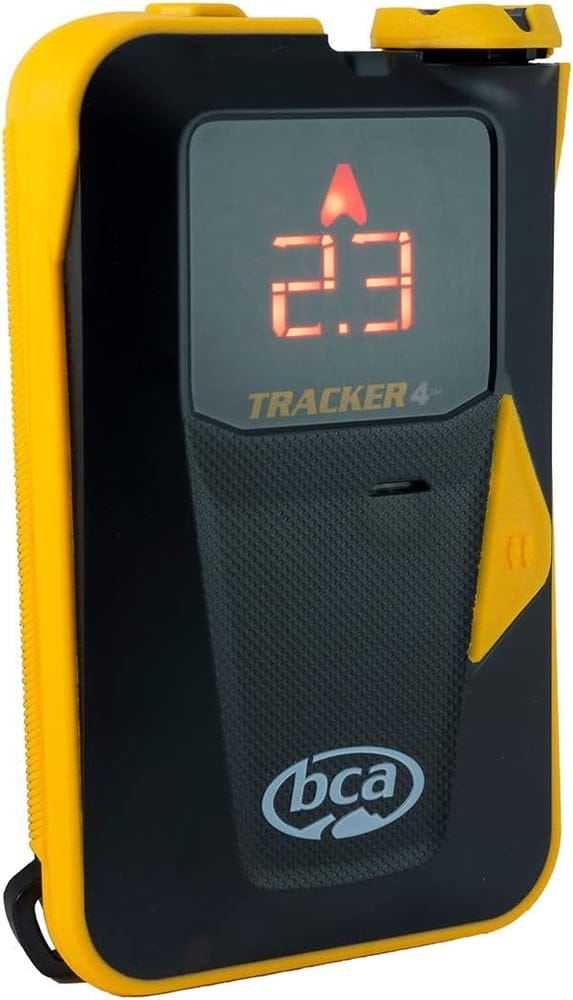 | 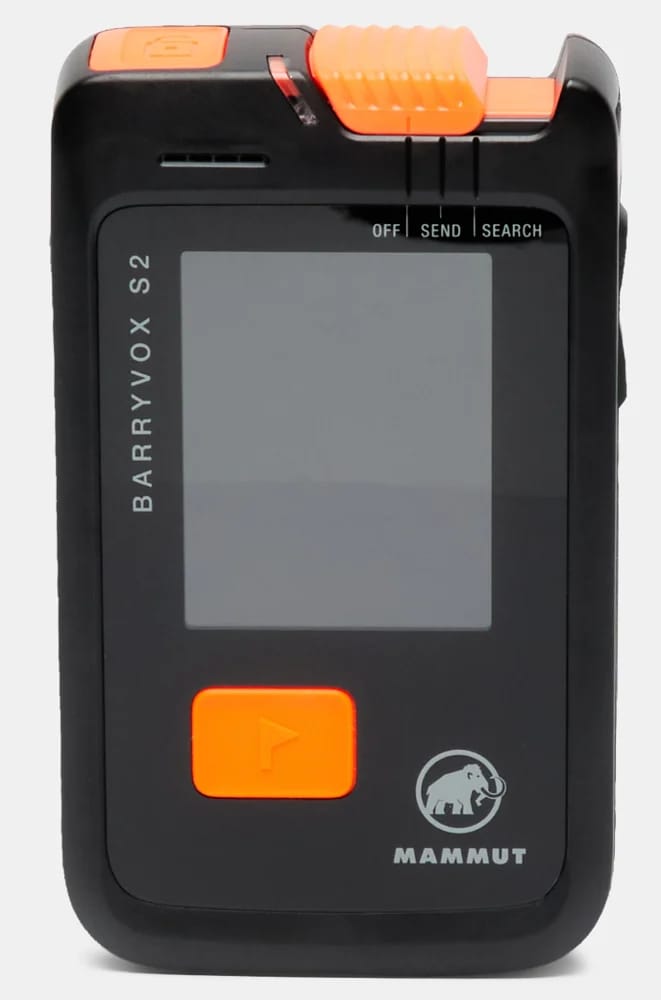 VS | |
| Antenna Count | 3 | 3 |
| Range | 164 ft (50 m max range) | 230 ft (70 m max range) |
| Multiple Burial Marking | Yes (signal suppression) | Yes (overview of up to 16) |
| Weight | 6.2 oz (176 g, without harness) | 6.3 oz (180 g, with batteries) |
| Battery Life | ≈250 hr send | ≈50 hr search | ≈450 hr send (alkaline) | ≈550 hr (lithium) |
| Warranty | 5 years (limited) | 2 years; 5 years with registration |
| Frequency | 457 kHz | 457 kHz |
| Auto Revert Timer | Yes (motion-sensing) | Yes, 4 min (motion sensor) |
| Battery Type | 3 × AAA alkaline | 2 × AAA (alkaline or lithium) |
| Bluetooth | No | Yes |
| Dimensions | 4.72 × 2.95 × 1.02 in | 4.53 × 2.68 × 0.83 in |
| Backcountry Access Tracker 4 | Mammut Barryvox S2 |
|---|---|
| |
| Antenna Count | |
3 | 3 |
| Range | |
164 ft (50 m max range) | 230 ft (70 m max range) |
| Multiple Burial Marking | |
Yes (signal suppression) | Yes (overview of up to 16) |
| Weight | |
6.2 oz (176 g, without harness) | 6.3 oz (180 g, with batteries) |
| Battery Life | |
≈250 hr send | ≈50 hr search | ≈450 hr send (alkaline) | ≈550 hr (lithium) |
| Warranty | |
5 years (limited) | 2 years; 5 years with registration |
| Frequency | |
457 kHz | 457 kHz |
| Auto Revert Timer | |
Yes (motion-sensing) | Yes, 4 min (motion sensor) |
| Battery Type | |
3 × AAA alkaline | 2 × AAA (alkaline or lithium) |
| Bluetooth | |
No | Yes |
| Dimensions | |
4.72 × 2.95 × 1.02 in | 4.53 × 2.68 × 0.83 in |
Accuracy
Tracker 4
Barryvox S2
Accuracy matters because once a beacon gets you close, fine pinpointing decides how quickly you can locate the victim and start probing. The Barryvox S2 earns the edge here at 3.9 out of 5, with buyers pointing to probe hits registered in the app and a W-link that improves accuracy between beacons. The Tracker 4 scores 3.1 out of 5, and the praise centers on its pinpointing down to a fine final reading of about 0.1 before probing, though feedback on this is limited and mixed. For buyers, the Barryvox S2 offers more confidence in its precision, while the Tracker 4's fine-reading approach is promising but thinly tested.
Durability
Tracker 4
Barryvox S2
Durability matters because transceivers get dropped, jammed into packs, and exposed to cold, wet, and rough handling on every tour. The Tracker 4 is the clear leader at 4.3 out of 5, with buyers repeatedly describing it as a tough workhorse. Its rubberized overmold, which replaces gasket technology, and its recessed screen are the features most often cited as protection, alongside a robust case look and feel. Reviewers call it super durable and more durable than alternatives, and it is specifically recommended for people who are hard on their gear. The Barryvox S2 scores 3.3 out of 5, and the only durability comment is positive about its horizontal slider lock, which avoids an up-and-down component that can fatigue over time, but that is limited feedback. Buyers who expect hard use should choose the Tracker 4, and should not count on the Barryvox S2 as a durability standout.
Ease Of Use
Tracker 4
Barryvox S2
Ease of use matters most when your hands are cold and the search is chaotic, because a beacon must be operated by feel under stress. The Barryvox S2 leads at 4.3 out of 5, with buyers praising voice guidance that gives clear verbal instructions under stress, oversized buttons that work with gloves, and a single main button that makes it intuitive and really simple to operate. Buyers also mention that the Bluetooth app handles firmware and settings seamlessly, the out-of-box setup is simple with customizable options, and the unit automatically reverts to search mode after four minutes without movement. The Tracker 4 earns 3.6 out of 5 for a straightforward, user-friendly interface that some find a little snappier in use, which suits searchers who want simple controls, though the feedback base is small. For most buyers, the Barryvox S2's guided operation is the bigger advantage, while the Tracker 4 remains uncomplicated but offers no voice help or app support.
Field Reliability
Tracker 4
Barryvox S2
Field reliability matters because a beacon has to keep working through long tours, multi-burial scenarios, and signal interference. The Barryvox S2 scores 4.4 out of 5, with buyers reporting battery life as good as or better than the prior model, battery lifespan maintained with two batteries, and range maintained despite the slimmer housing. It starts at 9 m range and uses three antennas, and buyers praise its rescue send feature for safety. Its overview mode shows up to 16 burials for triage, and it keeps giving direction through GPS-like signal gaps instead of stopping. The Tracker 4 earns 3.1 out of 5 on thin, split feedback, with one concern about continuing to locate multiple beacons in sequence after marking one, so complex multi-burial searches are less proven. The Barryvox S2 is covered by Mammut's 2024 voluntary recall of 2024/25-season units, where a misaligned main switch could flip SEND to SEARCH or turn the unit off, so confirm that yours has been checked or repaired before relying on it.
Signal Clarity
Tracker 4
Barryvox S2
Signal clarity covers how easily you can read the screen in bright light and how well the beacon handles interference and signal patterns during a search. The Barryvox S2 scores 4.4 out of 5, with buyers highlighting improved contrast and visibility in bright sunlight, a screen that is clearer than the prior model, and interference that did not increase despite compact electronics. Reviewers also single out triangulation with another beacon that avoids signal gaps and creates a spherical field, a high interference warning from metal and electronics, and a rescue mark mode that avoids distracting beeps. Multiple direction pointers and turn-around guidance help when you are heading the wrong way. The Tracker 4 scores 3.7 out of 5 thanks to a larger, brighter display than earlier Tracker models and a distance readout that counts down toward zero as you close in, which is practical in the field, though overall feedback is modest. Buyers who prioritize reading the screen in sunlight and navigating interference should lean toward the Barryvox S2, while the Tracker 4 remains a sound choice with an easy-to-read countdown display.
Comfort
Tracker 4
Barryvox S2
Comfort matters because a beacon you carry all day should be easy to stow, quick to grab, and not bulky on a long tour. The Barryvox S2 scores 3.9 out of 5, with buyers praising its thinner, lighter slimmed design and slimmed-down housing profile. Reviewers describe it as 22% lighter and 17% smaller than the prior pocket beacon, and it attaches to a tether for immediate access. The Tracker 4 scores 3.6 out of 5 and is noted as one of the slimmest transceivers, fitting easily into a pocket for long backcountry tours, though feedback on this point is limited. Its dimensions are 4.72 by 2.95 by 1.02 inches compared with 4.53 by 2.68 by 0.83 inches for the Barryvox S2, so the S2 is noticeably smaller in every direction. Buyers who prioritize a thin, light carry get the edge with the Barryvox S2, while the Tracker 4 is also very pocketable and a fine choice if you value its sturdier build.
Trust & Transparency
- Data-driven rankings from real user reviews
- Affiliate partnerships don't influence our methodology
We may earn commission from links.
Conclusion & Final Verdict:
Verdict: The Barryvox S2 is the better all-round pick for most backcountry users, thanks to guided voice operation, a clearer screen, stronger field reliability, better interference handling, and a slimmer body. Confirm that any S2 you buy has been checked or repaired under Mammut's 2024 recall. The Tracker 4 is the choice if durability is your top priority and you want a rugged, simple beacon with a 5-year limited warranty, but accept that its feedback on multi-burial sequencing and accuracy is thinner.
Related Comparisons
Backcountry Access Tracker 3+vsMammut Barryvox S2
The Barryvox S2 is the better choice for most buyers who value field reliability, Bluetooth settings, voice-guided searching, and a slimmer, longer-running unit. The Tracker 3+ suits buyers who want its clear multi-signal display and simple controls and can accept weaker reliability feedback.
Backcountry Access Tracker 4vsBlack Diamond Guide BT
The Tracker 4 is the better pick for rough-use buyers who want a slim, rugged transceiver with a brighter countdown display and a longer limited warranty. The Guide BT suits searchers who value app-based settings, Bluetooth updates, directional guidance, and longer maximum range, and who will confirm recall status before buying used.
Backcountry Access Tracker 4vsMammut Barryvox 2
Tracker 4 is the better choice for buyers who are hard on their gear, thanks to its rubberized overmold, recessed screen and slim pocket-friendly body. Barryvox 2 suits teams that want quick, simple operation, longer send-mode battery life and a 70 m range, so pick it if you train new partners often.
Backcountry Access Tracker 4vsOrtovox Diract Voice
The Tracker 4 is the better choice for rough handling and a slim pocket carry, while the Diract Voice stands out for simple one-hand operation and voice-guided searching. Pick the Tracker 4 if gear abuse is your main concern and the Diract Voice if you want the easiest beacon to use under stress.
Backcountry Access Tracker 4vsOrtovox Focus Voice
The Backcountry Access Tracker 4 is the better pick for rough-use backcountry skiers who want a tough, slim beacon with simple controls. The Ortovox Focus Voice suits searchers who want spoken guidance, stronger burial-position range, and a smaller, rechargeable body.
Backcountry Access Tracker 4vsPIEPS Pro IPS
The Tracker 4 suits backcountry users who are hard on their gear, with a rubberized overmold, slim pocket-friendly body and simpler controls. The Pro IPS suits those who prioritize field range, lock-on reliability and long battery life, provided they accept a less intuitive button layout.